
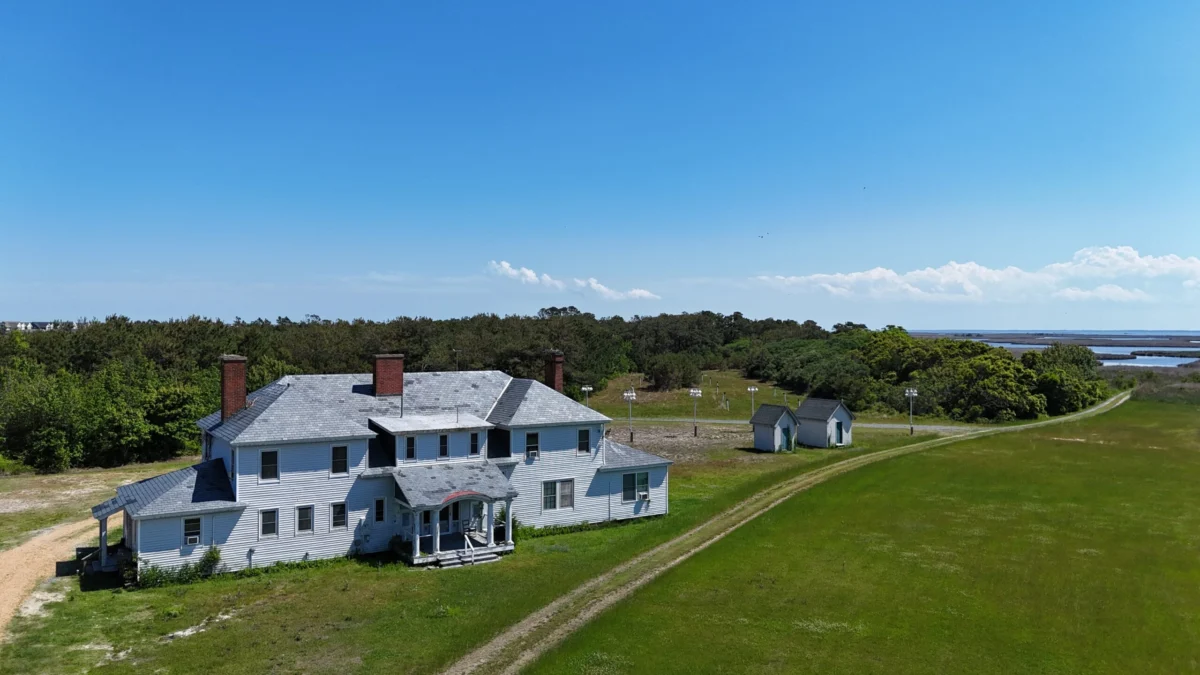
This spring, the Pine Island Sanctuary on the Outer Banks has emerged as a beacon of innovative conservation, marrying cutting-edge technology with dedicated volunteer efforts and strategic habitat restoration. The sanctuary, a critical ecological outpost in North Carolina’s fragile coastal environment, has witnessed a resurgence of nesting birds, including Osprey, Purple Martins, and Tree Swallows, alongside the deployment of revolutionary acoustic monitoring devices designed to unlock the secrets of elusive marsh bird populations. These initiatives, coupled with ongoing habitat improvements and community engagement, underscore a holistic approach to preserving the rich biodiversity of the Outer Banks.
Advancing Avian Surveillance: The Dawn of Autonomous Recording Units (ARUs)
One of the most significant developments at Pine Island is the installation of Autonomous Recording Units (ARUs) to enhance the monitoring of secretive marsh birds. Traditionally, tracking species like the Virginia Rail, King Rail, Least Bittern, and the critically imperiled Black Rail has presented considerable challenges. These birds are often elusive, inhabiting dense marsh vegetation, and are most vocal during twilight hours or deep into the night, making human-led surveys inherently limited by observer presence and auditory perception.
"Every spring our team heads into the marsh during the early morning and late evening to listen for the grunts, squawks, and chuckles of secretive marsh birds," explained Sara Marschhauser, Senior Coordinator of Habitat Management. "We repeat these surveys in the same spots to track population trends. But just because you don’t hear them, doesn’t mean they’re not there. It’s kind of like the old saying, if a tree falls in the woods and no one is around to hear it, did it make a sound? So, we wanted a way to detect these secretive birds even when we weren’t around to listen for them."
The solution arrived in the form of ARUs. These sophisticated devices are strategically placed at key survey points across the sanctuary, programmed to record audio every hour and continuously during designated survey windows. Unlike human observers, ARUs possess an indefatigable capacity to listen, capturing an unparalleled volume of acoustic data. This technological leap allows conservationists to overcome the limitations of traditional methods, providing a more comprehensive understanding of species presence, activity patterns, and population dynamics, particularly for nocturnal callers.
The data gathered by these ARUs contributes directly to the National Inventory of Marsh Birds, a crucial initiative coordinated by the U.S. Fish and Wildlife Service. This broader collaboration aggregates data from sites across the nation, providing vital insights into the health and distribution of these sensitive populations. Furthermore, the sanctuary is leveraging ARU data to establish critical baselines for bird occupancy in areas near its four marsh restoration pilot projects. This foresight will enable scientists to meticulously track how bird populations respond to habitat interventions, providing evidence-based insights into restoration effectiveness.
A particular focus for the ARUs is the Black Rail, a species listed as federally threatened in the U.S. due to significant population declines driven by habitat loss and degradation. "The ARUs will be especially helpful for our Black Rail management work," Marschhauser emphasized. "We installed them along the high marsh edge where Black Rails like to forage and breed. We’re hoping they can help us find out if they’re calling in the middle of the night when no one is around." Understanding the precise nocturnal calling patterns and habitat use of Black Rails is paramount for developing targeted conservation strategies to protect this vulnerable species. Ultimately, the robust data collected by these recording units will serve as a cornerstone for guiding future marsh restoration and management decisions at Pine Island, ensuring efforts are maximally effective.
Restoring Vital Habitats: A Thriving Landscape for Diverse Wildlife
Beyond technological innovation, the Pine Island Sanctuary remains deeply committed to hands-on habitat restoration, yielding immediate and tangible benefits for a wide array of wildlife. A notable success story is the newly reconstructed pond, which has undergone a significant transformation from its previous state.
"We were excited to see turtles finally being able to use the pond so soon after our restoration work," remarked Center Director Robbie Fearn. He elaborated on the crucial ecological distinction, stating, "The hard edges of the old impoundment provided poor habitat for them, but now, with a natural shoreline covered with native plants, turtles have found a home at last." This project exemplifies how restoring natural features, such as gently sloping banks and diverse native vegetation, can dramatically improve habitat quality, providing essential basking sites, foraging grounds, and protective cover for amphibians, reptiles, and invertebrates. The immediate response from the turtle population underscores the effectiveness of such ecologically informed restoration practices.
Another cornerstone of habitat management at Pine Island is controlled marsh burning. This ancient land management technique, employed judiciously by conservationists, plays a critical role in maintaining the ecological health and resilience of marsh ecosystems. Controlled burns help manage the spread of invasive plant species that can outcompete native flora, promote the growth of healthy root systems, increase plant species diversity, and recycle nutrients back into the soil, fostering a more robust and productive environment. This winter, the sanctuary conducted controlled burns on two islands for the first time in seven years, as part of an ongoing research effort to determine the optimal burn frequency that maximizes benefits for both the plant communities and the diverse animal species that depend on them.
The return of nesting birds this spring was also greatly facilitated by the tireless efforts of dedicated volunteers. These invaluable individuals visited the sanctuary to meticulously clear out and prepare nest boxes, ensuring a safe and welcoming environment for returning migratory species. These strategically placed nest boxes provide crucial nesting sites for Purple Martins and Tree Swallows, both species that readily utilize artificial cavities. The sanctuary’s nest box program also benefits other cavity-nesting birds endemic to the region, including Eastern Bluebird, Brown-headed Nuthatch, Carolina Chickadee, Prothonotary Warbler, and Wood Duck, highlighting the broad ecological impact of volunteer stewardship. This proactive preparation directly contributed to the early success observed this season, with two pairs of Osprey already establishing nests – one on the lodge’s chimney and another on a dedicated platform overlooking the nature trail. Osprey, as top predators, are excellent indicators of ecosystem health, and their successful nesting underscores the vitality of Pine Island’s aquatic and marsh habitats.
Long-Term Monitoring: Unveiling the Secrets of Nocturnal and Terrestrial Species
Beyond the seasonal influx of migratory birds, Pine Island maintains a year-round commitment to understanding its resident wildlife through a variety of ongoing survey efforts. Nightjar surveys, for instance, continued this spring, providing critical data on this enigmatic, nocturnal family of birds. Species like the Chuck-will’s-widow, known for their distinctive calls and crepuscular habits, are surveyed during a precise five-day window centered around the full moon. This specific timing is crucial as nightjars are more active and vocal during periods of higher lunar illumination, allowing researchers to gather more accurate data on their presence and distribution. Understanding nightjar populations is vital, as many species face threats from habitat loss and pesticide use impacting their insect prey.
Terrestrial inhabitants also receive close attention. Box turtles, a vulnerable species in North Carolina, are meticulously tracked across the sanctuary. Following their emergence from winter hibernation, many turtles are marked, and a select few are fitted with radio telemetry transmitters. This technology allows researchers to monitor their movements, understand their territories, and identify critical areas that require protection for their long-term survival. One fascinating finding from this tracking initiative revealed that a particular turtle hibernated in the exact same spot as the previous year, demonstrating strong site fidelity – a behavior that would remain unknown without such dedicated tracking efforts. The data collected from these box turtle surveys is shared with the Box Turtle Connection, a research initiative based at the University of North Carolina Greensboro, contributing to a broader understanding of this species and its role as a bio-indicator of habitat health.
Preserving Heritage: The Waterfowl Heritage Weekend
The Pine Island Sanctuary also plays a pivotal role in celebrating and preserving the rich cultural heritage of the Outer Banks. This spring, it hosted a significant lunch as part of the Waterfowl Heritage Weekend, an event that honors Currituck County’s deep-seated connection to waterfowl hunting, the intricate traditions of decoy carving, and coastal conservation – pillars of the local culture since the late 1800s.
The historic lunch offered guests a unique culinary experience that paid homage to the region’s wild bounty, featuring an exquisite menu that included Cream of Chestnut "Cappuccino," Wild Game Charcuterie, and Duck Leg Confit. This event served as a powerful reminder of how conservation efforts are intrinsically linked to cultural preservation. "We enjoyed hosting this unique lunch celebrating the wild history of the Outer Banks," Fearn commented. "We hope the habitat and infrastructure work we’re doing helps preserve this rich culture for generations to come." By connecting the ecological health of the sanctuary to the traditions and history of the community, Pine Island fosters a deeper appreciation for the interconnectedness of nature and culture.
Engaging the Public: Accessing the Pine Island Sanctuary
The Pine Island Sanctuary recognizes the importance of public engagement and education in its conservation mission. Visitors are actively encouraged to explore the sanctuary and its surrounding natural wonders. Options include signing up for commercially guided kayak trips in the expansive Currituck Sound, offering an intimate perspective of the coastal ecosystem and its wildlife.
For those preferring terrestrial exploration, the sanctuary offers a 2.5-mile nature trail, which is conveniently located south of the sanctuary’s main gates and is open to the public every day of the year, from sunrise to sunset. This accessible trail provides an opportunity for visitors to experience the diverse habitats, observe wildlife, and connect with the natural beauty of the Outer Banks firsthand. Further information about Pine Island and detailed trip planning resources are readily available online, inviting broader participation in the sanctuary’s mission.
A Holistic Approach to Coastal Conservation
The spring activities at Pine Island Sanctuary exemplify a forward-thinking, multi-faceted approach to conservation. By integrating advanced technological solutions like ARUs with vital hands-on habitat restoration, rigorous long-term monitoring, and meaningful community engagement, the sanctuary is setting a precedent for effective environmental stewardship. From the meticulous preparation of nest boxes by volunteers to the strategic application of controlled burns, and from the detailed tracking of box turtles to the innovative acoustic surveillance of secretive marsh birds, every effort contributes to a comprehensive strategy for protecting and enhancing the critical coastal ecosystems of the Outer Banks. These ongoing endeavors not only safeguard vulnerable species and their habitats but also ensure that the rich ecological and cultural heritage of the region endures for generations to come.
