
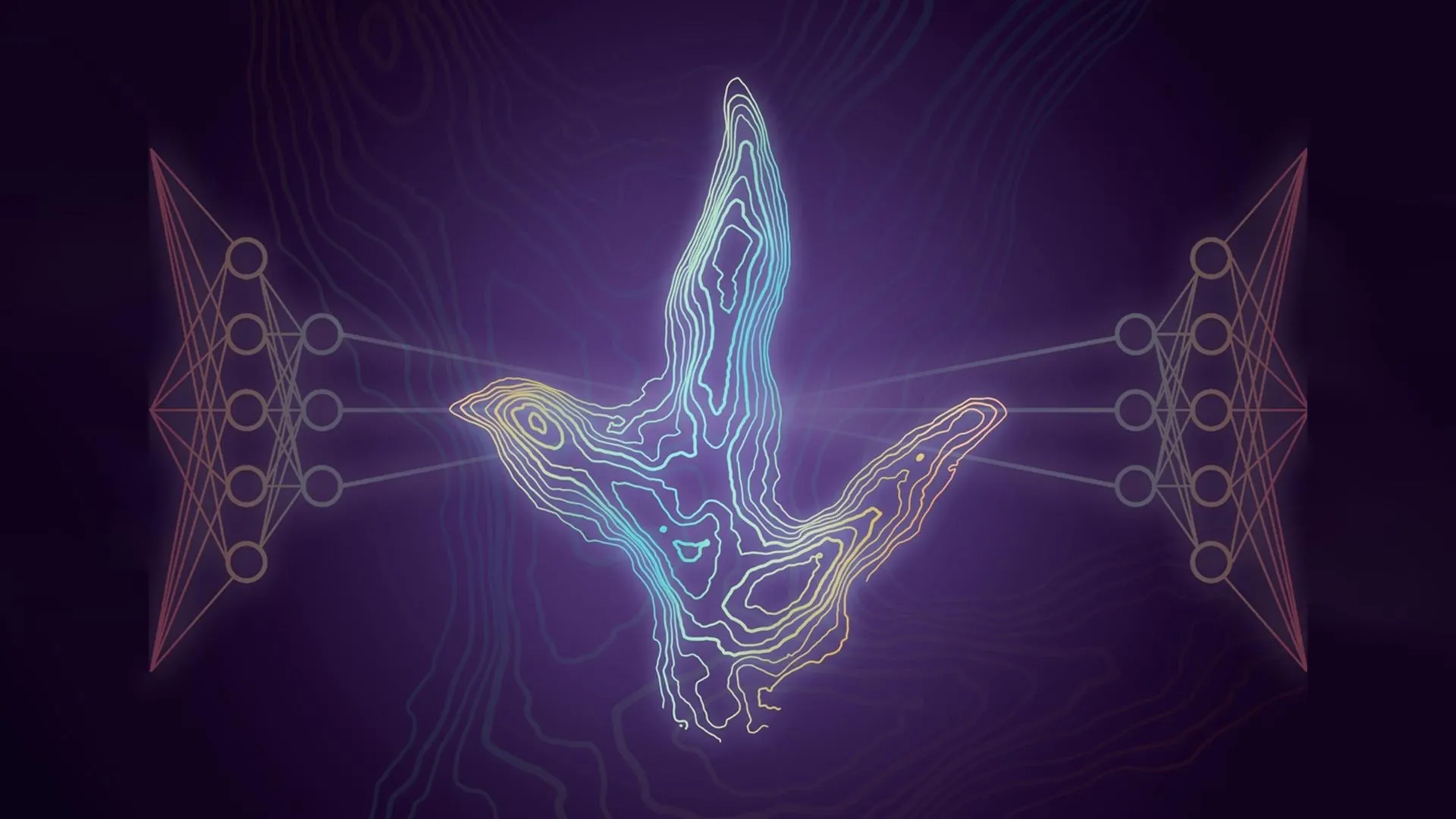
A groundbreaking application powered by artificial intelligence (AI) is providing scientists and the public with an innovative method to identify dinosaur footprints, or ichnites, that have been preserved for millions of years. This cutting-edge technology, named DinoTracker, is designed to demystify fossil tracks that have long posed significant challenges to paleontological researchers, offering an unprecedented level of precision and accessibility in the field of ichnology.
For centuries, the study of ancient footprints has been a cornerstone of paleontology, offering unique windows into the locomotion, behavior, and paleoecology of extinct creatures. However, identifying the precise animal responsible for a particular track has historically been fraught with debate and uncertainty. Paleontologists have grappled with distinguishing between the prints of various theropods (meat-eating predators), ornithischians (plant-eating dinosaurs), and even early avian species, leading to numerous scholarly disputes and unresolved mysteries in the fossil record. The inherent variability in footprint morphology, influenced by factors such as substrate consistency, animal gait, and post-depositional alteration, often obscures definitive identification, making ichnology a particularly complex discipline.
The Enigma of Ichnology: A Historical Challenge
The scientific study of fossil footprints, known as ichnology, dates back to the early 19th century, with significant discoveries in places like the Connecticut River Valley in the United States. These early finds sparked immense curiosity and debate, as scientists attempted to link these enigmatic impressions to the fossilized bones of animals. Unlike skeletal remains, which offer direct anatomical evidence, footprints provide indirect clues about an animal’s presence and movement. This indirect nature introduces a layer of interpretative difficulty.
One of the primary challenges in ichnology is the phenomenon of taphonomy, the processes by which organisms become fossilized. Footprints, being ephemeral impressions in soft sediment, are highly susceptible to alteration by erosion, compaction, and subsequent geological events. A single dinosaur species might leave behind several different types of footprints depending on the type of mud or sand, the speed at which it was moving, and even variations in individual foot anatomy. For example, a track left in firm, wet sand will differ significantly from one made in soft, deep mud, even if both were made by the same dinosaur. This plasticity often led to an abundance of ichnospecies (species based solely on trace fossils) that might, in reality, belong to far fewer biological species. Prior to the advent of sophisticated digital tools, researchers largely relied on manual comparison, qualitative descriptions, and extensive experience to make their assessments, a process inherently susceptible to subjective bias.
DinoTracker’s Genesis: A New Paradigm
The new DinoTracker app represents a significant leap forward, moving beyond these traditional, often subjective, methods. Researchers and dinosaur enthusiasts alike can now upload a photograph or even a detailed drawing of a footprint directly from a mobile phone. The app then leverages advanced AI algorithms to perform an immediate analysis, evaluating the shape, structure, and distinctive features of the track to estimate the most probable dinosaur type responsible for its creation. This democratizes access to paleontological analysis, allowing citizen scientists to contribute to data collection and preliminary identification, potentially accelerating the pace of discovery.
The development of DinoTracker was a collaborative effort, spearheaded by a research team from the Helmholtz-Zentrum research centre in Berlin, working in conjunction with the University of Edinburgh. Their objective was to develop a system that could learn and identify the subtle, often complex, variations in dinosaur footprints with an objectivity that human analysis, even by seasoned experts, sometimes struggles to achieve. Traditional computer databases, which relied on manually entered data linking specific footprint morphologies to known dinosaur species, often suffered from inherent biases or struggled with ambiguous cases. If a track’s identity was uncertain or disputed, the database might reflect the prevailing expert opinion rather than an unbiased assessment of its morphological characteristics.
Training the Algorithm: From Fossils to Simulations
To address these limitations, the research team developed sophisticated deep learning algorithms, a subset of AI particularly adept at pattern recognition in complex datasets. The core innovation lies in the system’s ability to "learn on its own" how dinosaur footprints vary in shape and structure. This learning process involved an extensive training regimen, utilizing a vast dataset comprising nearly 2,000 real fossil footprints collected from various sites around the world. These real-world examples provided the AI with a foundational understanding of actual ichnite diversity.
Crucially, the training data was augmented with millions of additional simulated examples. These synthetic footprints were meticulously designed to reflect the myriad realistic changes that can occur as footprints are formed and subsequently preserved over geological timescales. This included variations in compression, where the weight of the animal distorts the impression; edge displacement, where the sides of the track might collapse or spread; and changes due to different substrate consistencies. By training on such a diverse and comprehensive dataset, the AI system developed a robust understanding of the spectrum of footprint variability, enabling it to distinguish between genuine morphological differences and those caused by taphonomic processes. This innovative approach to data augmentation is a hallmark of modern AI development, ensuring the model’s resilience and accuracy when confronted with real-world complexities.
Unveiling Prehistoric Puzzles: Key Findings and Accuracy
During its training, the AI model learned to recognize eight key morphological features that are critical for distinguishing one footprint type from another. These included parameters such as the splay of the toes (how far they spread apart), the precise positioning of the heel, the total surface area that contacted the ground during locomotion, and the distribution of weight across different parts of the foot. By analyzing these quantitative and qualitative features, the system could build a detailed internal model of various footprint types.
Once trained, the AI system was put to the test, comparing new, unidentified footprints with its vast knowledge base of known fossil examples. Its performance was remarkably accurate, matching the classifications made by human experts approximately 90 percent of the time. This high level of agreement is particularly significant given that the evaluation included species classifications that are often considered controversial or notoriously difficult for human paleontologists to identify definitively. This validation underscores the AI’s potential to provide an objective and consistent method for ichnite classification, potentially resolving long-standing debates within the scientific community.
Rewriting Avian History? The Early Bird Connection
One of the most profound and unexpected findings generated by the DinoTracker analysis emerged from tracks dating back more than 200 million years, placing them squarely in the Late Triassic period. The AI system detected striking morphological similarities between some of these ancient dinosaur footprints and the feet of both extinct and modern birds. This discovery opens a fascinating new avenue of inquiry into avian evolution.
For decades, the prevailing scientific consensus, largely based on skeletal fossil evidence, has placed the emergence of birds, true avians, in the Late Jurassic period, around 150 million years ago, with iconic fossils like Archaeopteryx serving as key transitional forms. The AI’s findings suggest a provocative alternative: that birds, or at least their direct ancestors with remarkably similar foot anatomies, might have emerged tens of millions of years earlier than currently believed. If confirmed by further research and skeletal fossil discoveries, this could necessitate a significant revision of the avian evolutionary timeline, pushing back the origins of one of Earth’s most diverse vertebrate groups.
The research team acknowledged that another possibility exists: that some early dinosaurs, perhaps small, bipedal forms, happened to possess feet that convergently evolved to closely resemble bird feet. Such instances of convergent evolution, where unrelated species develop similar traits due to similar environmental pressures, are common in the natural world. However, the strength of the AI’s detected similarities warrants serious consideration and undoubtedly will spur intensified research into Triassic period ichnofossils and skeletal remains to explore this hypothesis further. The implications for understanding the deep evolutionary roots of birds are immense, potentially connecting them to a much earlier and more diverse array of Triassic archosaurs.
Scotland’s Ancient Shores: Solving the Isle of Skye Mystery
Beyond its broad evolutionary insights, DinoTracker also offered specific clues to localized paleontological puzzles. The system provided new analytical perspectives on mysterious footprints discovered on the Isle of Skye, off the coast of Scotland. These tracks, formed approximately 170 million years ago during the Middle Jurassic period, were preserved on the muddy edges of an ancient lagoon. For decades, these particular footprints have baffled scientists due to their unique characteristics and the challenges of attributing them to known dinosaur groups of that era.
The AI’s rigorous analysis suggests that these perplexing footprints may have been left by some of the oldest known relatives of duck-billed dinosaurs, scientifically known as hadrosaurs or their ancestral forms within the ornithopod lineage. Hadrosaurs are famous for their broad, toothless beaks and often crests, thriving primarily during the Late Cretaceous. Identifying their early relatives in Middle Jurassic Scotland is a significant finding, potentially making these Isle of Skye tracks among the earliest definitive examples of this major herbivorous dinosaur group identified anywhere in the world. This discovery not only sheds light on the paleogeography of Jurassic Scotland but also contributes vital data to understanding the early diversification and global dispersal of ornithopod dinosaurs, a group that would eventually dominate herbivorous niches across continents.
Beyond the Lab: Democratizing Paleontological Discovery
The researchers emphasize that this AI-powered technology extends far beyond mere academic research, creating exciting new opportunities for public engagement in scientific discovery. By making a sophisticated analytical tool accessible via a mobile app, DinoTracker empowers enthusiasts, amateur paleontologists, and even casual hikers to participate actively in fossil research. This "citizen science" approach could dramatically increase the volume of data collected from remote or previously unexplored locations, potentially leading to new discoveries that might otherwise go unnoticed by professional teams.
Dr. Gregor Hartmann of the Helmholtz-Zentrum research centre underscored this point, stating, "Our method provides an unbiased way to recognize variation in footprints and test hypotheses about their makers. It’s an excellent tool for research, education, and even fieldwork." This highlights the versatility of the app, from supporting in-depth academic studies to serving as an educational resource in classrooms and an invaluable aid for paleontologists working directly in the field. Imagine a field researcher instantly validating a preliminary identification on-site, or a student gaining immediate insight into the type of dinosaur that roamed their local area millions of years ago.
Expert Perspectives and the Road Ahead
Professor Steve Brusatte, Personal Chair of Palaeontology and Evolution at the University of Edinburgh’s School of GeoSciences, lauded the study as a pivotal contribution to paleontology. "This study is an exciting contribution for paleontology and an objective, data-driven way to classify dinosaur footprints — something that has stumped experts for over a century," he commented. His remarks underscore the long-standing challenge that ichnology has presented and the revolutionary potential of AI to overcome these historical hurdles.
Professor Brusatte further emphasized the broader implications: "It opens up exciting new possibilities for understanding how these incredible animals lived and moved, and when major groups like birds first evolved. This computer network might have identified the world’s oldest birds, which I think is a fantastic and fruitful use for AI." His statement captures both the immediate utility of the app for classification and its profound capacity to reshape fundamental understandings of evolutionary history.
The study, which details the development and findings of the DinoTracker system, was published in the prestigious journal PNAS (Proceedings of the National Academy of Sciences). Its development was made possible through significant funding from various institutions, including the innovations pool of the BMBF-Project: Data-X, the Helmholtz project ROCK-IT, the Helmholtz-AI project NorMImag, the National Geographic Society, and the Leverhulme Trust. These diverse funding sources reflect the broad recognition of the project’s potential and its interdisciplinary nature, combining cutting-edge AI research with deep paleontological expertise.
The Broader Impact: Reshaping Our Understanding
The introduction of DinoTracker marks a paradigm shift in ichnology. By providing an objective, data-driven, and highly accurate method for footprint identification, it promises to resolve long-standing debates, clarify ambiguous classifications, and accelerate the pace of new discoveries. The ability to distinguish between subtle variations with machine precision allows for a more nuanced understanding of dinosaur locomotion, behavior, and even the substrate conditions of ancient environments.
Furthermore, the implications for evolutionary biology, particularly regarding avian origins, are immense. If further evidence supports the AI’s findings of bird-like feet in the Triassic, it would necessitate a fundamental re-evaluation of one of the most significant evolutionary transitions in vertebrate history. The connection to early duck-billed dinosaur relatives in Scotland similarly enriches our understanding of dinosaur diversification and biogeography.
Ultimately, DinoTracker represents a powerful convergence of artificial intelligence and natural history. It not only equips professional paleontologists with a robust new tool but also invites the public to become active participants in the ongoing quest to unravel the mysteries of prehistoric life. As AI continues to evolve, its application in fields like paleontology promises to unlock secrets that have remained hidden for millions of years, fundamentally reshaping our understanding of Earth’s ancient past and the incredible creatures that once roamed it.
