
The annual phenomenon of spring migration transforms landscapes across North America, bringing vibrant colors, intricate songs, and fascinating behaviors as millions of birds return to their breeding grounds. To illuminate the remarkable diversity and individual characteristics of these avian travelers, ornithological observers have playfully assigned a series of "superlatives," akin to those found in human social settings, but grounded in observable traits and ecological significance. This approach offers an engaging lens through which to appreciate the extraordinary adaptations and roles of these vital species, primarily focusing on neotropical migrants whose epic journeys define the season.
The Grand Spectacle of Spring Migration
Spring migration is one of nature’s most impressive feats, involving billions of birds traversing vast distances from their wintering grounds in Central and South America to their breeding territories in North America. This seasonal movement is driven by instinct, the availability of food resources, and the lengthening daylight hours that signal optimal breeding conditions. Neotropical migrants, which constitute a significant portion of these travelers, undertake journeys spanning thousands of miles, often facing immense physiological and environmental challenges. Their arrival is a celebrated event for birdwatchers, ecologists, and conservationists alike, marking the renewal of ecosystems and providing critical data points for long-term population monitoring. The journey is not merely a flight but a race against time, requiring immense energy reserves, precise navigation, and resilience against unpredictable weather patterns, predation, and habitat fragmentation along their migratory corridors.
Curated Avian Accolades: Highlighting Unique Traits
The following superlatives serve to underscore specific attributes that make these spring migrants stand out, drawing on decades of field observations, scientific research, and the collective experience of the birding community. While presented in a lighthearted manner, each selection is rooted in factual characteristics, behaviors, and ecological impact, offering a deeper understanding of avian biodiversity.
Most Popular: Scarlet Tanager
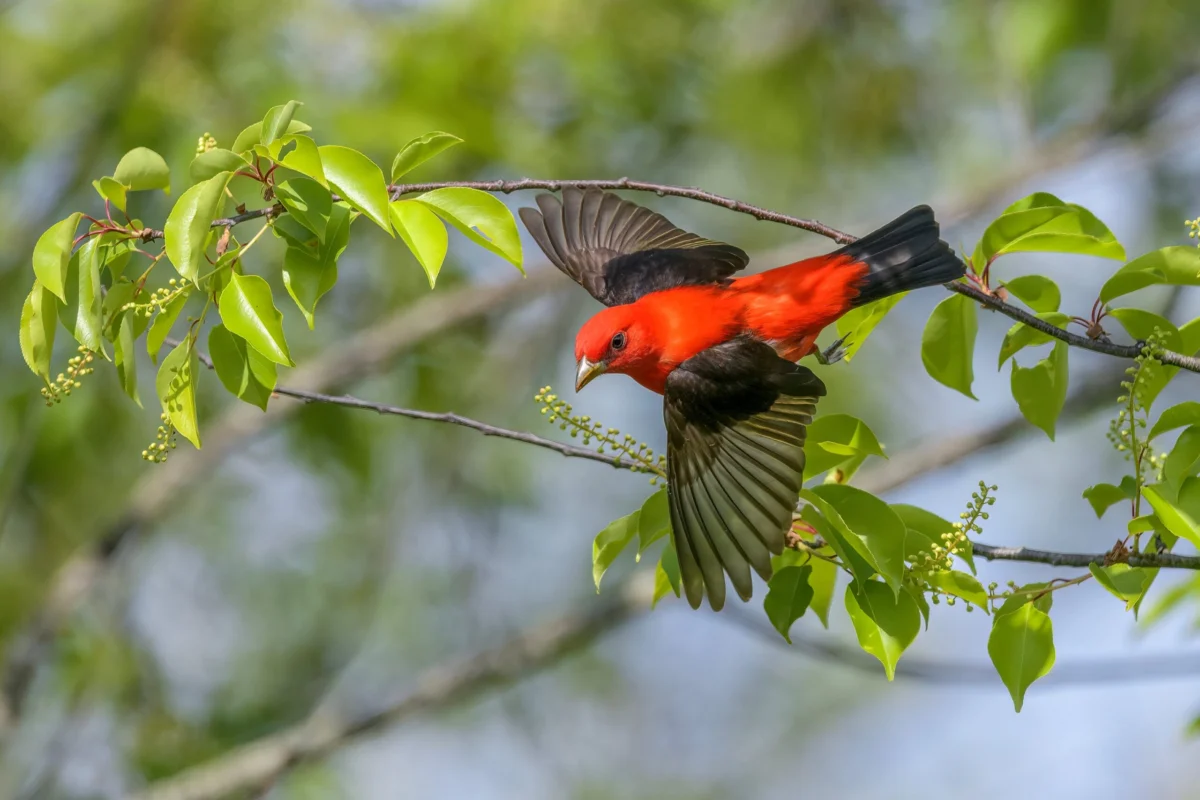
The Scarlet Tanager stands out as a unanimous crowd-pleaser, captivating both novice and seasoned birders with its extraordinarily vivid plumage. The male’s striking crimson body, starkly contrasted by jet-black wings and tail, makes it an unforgettable sight against the fresh green canopy of spring. Its popularity is not merely aesthetic; its relatively larger size compared to many warblers, coupled with its bright coloration, often makes it easier to spot even high in the trees. Observations logged through platforms like eBird consistently show high reporting rates and enthusiastic comments, underscoring its broad appeal. This species serves as an excellent ambassador for neotropical migrants, frequently inspiring new individuals to delve deeper into birdwatching. Its presence in eastern woodlands signals the full swing of spring, bringing a burst of tropical color to temperate forests.
Runners-up in desirability often include the Cerulean Warbler, Blackburnian Warbler, Indigo Bunting, and Prothonotary Warbler, all celebrated for their distinctive beauty and often more challenging sightings.
Best Dressed: Black-throated Blue Warbler
This superlative recognizes not merely flashiness but a refined elegance in avian attire. The male Black-throated Blue Warbler exemplifies understated chic, with a deep indigo-blue back, a contrasting black throat and face, and a pristine white belly. What truly elevates its "fashion" status is the distinctive white patch on its wing, often referred to by birders as its "handkerchief." This unique field mark is present in both sexes, though the female sports a more subdued olive-green and grayish-blue palette, still accented by the subtle white wing patch. This consistent detail across sexes speaks to an inherent taste, transcending the more flamboyant displays seen in other species. Research into avian plumage often highlights such specific markings as crucial for species recognition and mate selection, suggesting a deeper, evolutionary "design" behind their appearance.
Other contenders for sartorial excellence include the Bay-breasted Warbler, Canada Warbler, Chestnut-sided Warbler, and Western Tanager, each with their own intricate patterns and color combinations.
Most Musical: Wood Thrush
The Wood Thrush is an undisputed virtuoso of the avian choir, universally praised for its ethereal, flute-like song. Its vocalizations are so complex and beautiful that they are often described in bird guides using terms like "liquid" and "mystical." Scientific studies on the avian syrinx, the bird’s vocal organ, reveal that thrushes, including the Wood Thrush, possess specialized muscles that allow them to produce two independent melodic lines simultaneously, creating a rich, harmonic quality that is unparalleled. This ability enables them to produce complex, multi-layered phrases that resonate through eastern forests, particularly at dawn and dusk. The captivating quality of its song has not only enchanted birders but has also inspired classical composers, cementing its status as a true musical genius of the natural world.
Noteworthy vocalists in this category include the Swainson’s Thrush, Veery, Brown Thrasher, and Gray Catbird, all recognized for their distinct and often intricate songs.
Best Song: Baltimore Oriole
Distinct from sheer musical talent, the "Best Song" category celebrates the most memorable and cheerful tune—an earworm that brightens any spring day. The Baltimore Oriole’s song is a hallmark of the season: a series of rich, clear, whistled notes that carry far and wide. Its vibrant, full-throated serenade instantly captures attention, evoking smiles and often prompting immediate attempts to locate the brilliant orange-and-black male as it hops energetically through the treetops. The song’s cheerful cadence is often one of the first indicators of spring for many, cutting through the ambient sounds with its distinct melody. Its consistency and pleasantness make it an iconic sound of the eastern and central North American spring, a truly uplifting auditory experience.
Other species with equally memorable tunes include the Rose-breasted Grosbeak, White-throated Sparrow, Summer Tanager, and Indigo Bunting, each contributing unique melodies to the spring soundscape.
Most Talkative: Warbling Vireo
Many birds are vocal, but the Warbling Vireo distinguishes itself by its relentless and seemingly endless stream of song. Whether it’s the eastern or western subspecies, this small, unassuming bird is known for its persistent, rambling vocalizations. A birder can pass under a singing Warbling Vireo, return hours later, and often find the same bird still engaged in its continuous, warbling monologue. This remarkable stamina and vocal output make it a constant presence in its chosen habitat, filling the air with its cheerful, if somewhat monotonous, chatter. Its ceaseless song is a significant acoustic marker of its presence, often leading to its detection even when the bird itself remains hidden in the foliage.
Other highly vocal species that could contend for this title include the Gray Catbird, Yellow-breasted Chat, Northern House Wren, and Red-eyed Vireo, all known for their extensive vocal repertoires.
Teacher’s Pet: Ovenbird
The Ovenbird earns its "Teacher’s Pet" designation not just for its distinctive "teacher, teacher, teacher!" call, which is a perfect mnemonic, but also for its surprisingly accommodating behavior during migration. These small, brown-and-orange-striped warblers are typically ground-dwelling birds of the forest understory. While they can be frustratingly difficult to spot when singing from a hidden perch, during migration, they often become more visible, hopping around on the forest floor in plain view. This willingness to be observed, combined with their easily recognizable vocalization, makes them an accessible and memorable species for birders, almost as if they are actively trying to engage and be identified.
Other cooperative and often visible species during migration include the White-throated Sparrow, Black-and-white Warbler, Yellow-rumped Warbler, and Ruby-crowned Kinglet.
Friendliest: Black-and-white Warbler
The Black-and-white Warbler is a standout for its approachable nature, making it arguably the "Friendliest" spring migrant. Its distinctive zebra-striped plumage makes it relatively easy to identify. Unlike many warblers that flit quickly through the canopy, Black-and-whites have a unique foraging strategy: they creep along tree trunks and branches, probing bark crevices for insects. This behavior often brings them to eye-level and within close proximity to observers, seemingly unconcerned by human presence. This combination of widespread distribution (even in urban parks), ease of identification, and willingness to forage near people has earned it the affectionate moniker "The People’s Warbler" among many in the birding community, fostering a sense of connection with this active migrant.
The White-throated Sparrow, Yellow-rumped Warbler, Common Yellowthroat, and Palm Warbler are also known for their relative approachability and visibility.
Shyest: Mourning Warbler
In stark contrast to the Black-and-white Warbler, the Mourning Warbler embodies extreme shyness and elusiveness. This species is notorious among birders for its skulking habits, preferring dense undergrowth and thickets. Many anecdotes recount birders hearing its distinctive song nearby, sometimes just feet away, only for the bird to vanish into the shadows the moment an observer attempts to get a visual. Its ability to melt seamlessly into its dense habitat makes it one of the most challenging warblers to observe clearly. This persistent secretiveness, despite its presence, firmly establishes the Mourning Warbler as the undisputed "Shyest" avian migrant, a true lord of the shrubs.
Other notoriously shy species include the Swainson’s Warbler, Worm-eating Warbler, Kentucky Warbler, and the Yellow-billed/Black-billed Cuckoo, all masters of concealment.
Class Clown: American Woodcock
The American Woodcock, with its eccentric appearance and peculiar behaviors, easily earns the title of "Class Clown." Normally elusive and nocturnal, during spring migration, these birds can pop up in unexpected places, sometimes even urban green spaces, generating considerable buzz. Their most famous act is the elaborate "sky dance" courtship display performed by males at dusk and dawn. This involves a comical, spiraling ascent accompanied by whistling wings, followed by a dramatic, twittering descent back to the ground. Additionally, their foraging method—a peculiar rocking gait believed to help them detect earthworms—adds to their whimsical charm. These unique displays and surprising appearances make the American Woodcock a source of pure entertainment and a delightful oddity of the spring season. Recent sightings in unexpected urban locations, such as Bryant Park in New York City, further underscore their capacity for surprise.
The Gray Catbird, Common Yellowthroat, Northern House Wren, and Great Crested Flycatcher also exhibit behaviors that can be described as playfully eccentric.
Most Creative: Northern Parula
Creativity in the avian world often manifests in nest construction, and the Northern Parula demonstrates exceptional ingenuity in this regard. The industrious female constructs a hanging, cup-shaped nest by meticulously repurposing a dense clump of Spanish moss or beard moss, common epiphytes in its preferred southern breeding habitats. This ingenious choice of material allows the nest to be perfectly camouflaged, blending seamlessly with its surroundings and providing excellent insulation. The result is a cozy, well-hidden abode that is both structurally sound and remarkably difficult for predators to spot. This specialized use of natural materials for shelter highlights a sophisticated adaptation to its specific ecological niche.
Other creative nest builders include the Baltimore Oriole, Anna’s Hummingbird, Ovenbird, and Barn Swallow, each with unique architectural approaches.
Cutest Couple: American Redstart
The American Redstart pair presents an undeniably attractive and dynamic duo, making them a strong contender for "Cutest Couple." The male’s striking black plumage accented with vibrant blaze-orange patches on its wings and tail, contrasting with a clean white belly, is visually stunning. The female, while more subtly colored, perfectly complements him with coordinating golden-yellow patches and a softer gray body. Together, they are a spectacle of coordinated activity, flitting actively through the foliage, fanning their tails flamboyantly to flush out insects, a behavior known as "flash-pursuit." Their energetic foraging and visually appealing sexual dimorphism create a lively and charming presence in the spring woods, embodying a playful and attractive partnership.
Other beautifully paired species include the Black-throated Blue Warbler, Painted Bunting, Northern Parula, and Scarlet Tanager, each with their own unique pair aesthetics.
Most Likely to Succeed (at Breeding): Gray Catbird
This classic superlative, with an avian twist, goes to the Gray Catbird, a species demonstrating exceptional reproductive success. Several factors contribute to its high likelihood of breeding success. Firstly, Catbirds typically produce two to three clutches per year, significantly increasing their overall reproductive output compared to many other species. Secondly, they exhibit a remarkable ability to identify and remove eggs of brood parasites, such as the Brown-headed Cowbird, from their nests. This critical defense mechanism ensures that their own chicks do not face competition from parasitic young for food and parental care. Thirdly, long-term data from citizen science initiatives like the Audubon Christmas Bird Count reveal a consistent and encouraging increase in Gray Catbird populations since the 1980s across North America. This sustained growth is a clear indicator of their robust breeding strategies and adaptability, demonstrating that they are indeed "doing something right."
The American Redstart, Yellow-rumped Warbler, Black-throated Blue Warbler, and American Woodcock also exhibit strong breeding success rates and adaptive strategies.
Most Athletic: Ruby-throated Hummingbird
While many birds undertake incredible migrations, the Ruby-throated Hummingbird’s feats of endurance are nothing short of astounding, earning it the "Most Athletic" title. These tiny birds, weighing as little as a penny, undertake a legendary migration between Mexico or Central America and the eastern United States. Their journey often includes a non-stop, 500-mile crossing of the Gulf of Mexico, a feat that boggles the mind given their size and metabolic demands. They flap their wings at an astonishing rate of 50-70 times per second, maintaining an incredibly high metabolic rate that requires constant refueling. Covering over 2,000 miles in just a couple of weeks, they are true aerial marathoners, showcasing unparalleled endurance and navigational prowess.
Other incredible avian athletes include the Bar-tailed Godwit (known for the longest non-stop flight), Red Knot, Blackpoll Warbler, and Swainson’s Thrush, all undertaking epic migrations.
Most Likely to Miss Graduation (Migration): Blackpoll Warbler
The Blackpoll Warbler is the quintessential "late bloomer" of spring migration, making it "Most Likely to Miss Graduation." Its high-pitched, insect-like song is often one of the last warbler calls heard emanating from the treetops as spring progresses into early summer. These black-capped, orange-legged migrants peak in mid to late May and can extend their arrival into June in northern breeding grounds. Their protracted spring journey from northern South America often involves significant stopovers in the West Indies and Florida before finally reaching their boreal forest breeding territories in Canada and Alaska. Interestingly, their fall migration is a much more expedited affair, involving one of the longest non-stop oceanic flights of any warbler, traversing the entire Atlantic Ocean in a single epic journey. This contrasting pace highlights a strategic adaptation to seasonal resource availability and weather patterns.
Other species known for their later spring arrivals include the Willow Flycatcher, Alder Flycatcher, Yellow-bellied Flycatcher, and Red-eyed Vireo.
Best All-Around: Rose-breasted Grosbeak
The male Rose-breasted Grosbeak truly has it all, earning it the "Best All-Around" distinction. Visually stunning with its crisp black-and-white plumage and a vibrant, rose-red patch on its breast, it is incredibly popular among birders. Its song is equally enchanting: a rich, melodic warble reminiscent of an American Robin but with a more refined and fluent quality. Furthermore, unlike many elusive canopy dwellers, the Rose-breasted Grosbeak occasionally visits bird feeders during migration, especially if sunflower seeds are available. This accessibility, combined with its striking appearance and beautiful song, makes it a cherished and highly anticipated spring arrival. The female, though less flamboyant with her streaky brown plumage and bold white eyebrow, is also a beautiful sight, often mistaken for a female Purple Finch, adding another layer of interest to this well-rounded species.
Strong contenders for this comprehensive award include the Baltimore Oriole, Scarlet Tanager, Black-throated Blue Warbler, and Magnolia Warbler, all possessing a remarkable combination of desirable traits.
Broader Implications: Conservation and Citizen Science
These avian superlatives, while a fun way to engage with nature, underscore the profound importance of spring migration and the individual characteristics that make each species unique. The journeys undertaken by these birds are fraught with peril, from habitat loss and degradation on both wintering and breeding grounds to dangers posed by climate change, window collisions, and pesticide use.
The very act of observing and identifying these species contributes to critical conservation efforts. Citizen science platforms like eBird, Project FeederWatch, and the venerable Christmas Bird Count provide invaluable data on bird populations, migratory patterns, and distribution shifts. These long-term datasets are essential for scientists and conservationists to understand population trends, identify species at risk, and inform targeted conservation strategies. By highlighting the distinct traits of these migrants, from the Scarlet Tanager’s widespread popularity to the Gray Catbird’s breeding prowess, we foster a deeper appreciation for avian biodiversity and encourage continued vigilance in protecting the habitats and flyways crucial for their survival. The intricate beauty and resilience of these birds are a testament to nature’s enduring wonder, reminding us of our shared responsibility to safeguard these annual spectacles for generations to come.
