
A groundbreaking study led by researchers from Tel Aviv University has unveiled compelling evidence that some feathered dinosaurs, far from being direct ancestors of flying birds, had already shed the ability to fly millions of years ago. This discovery, centered on remarkably preserved fossils, significantly complicates the long-held narrative of avian evolution, suggesting that the journey to powered flight was not a simple, linear progression but a complex tapestry of acquisition, adaptation, and even loss. The research team, spearheaded by Dr. Yosef Kiat from the School of Zoology and the Steinhardt Museum of Natural History, highlights that seemingly minor biological details, such as feather molting patterns, can profoundly reshape our understanding of pivotal evolutionary transitions.
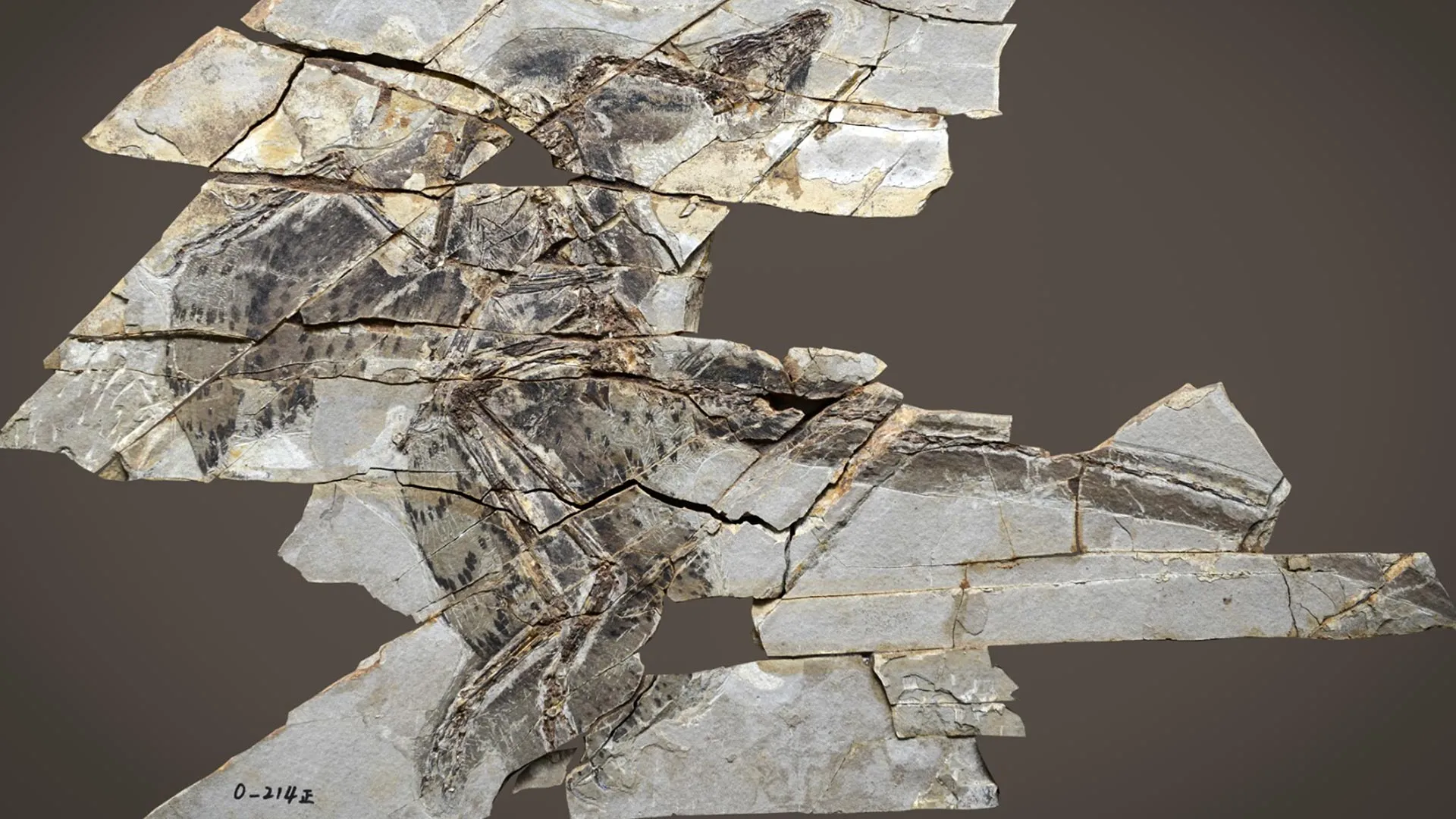
The study, published in the esteemed journal Communications Biology by Nature Portfolio, focused on nine exquisitely preserved fossils of Anchiornis, a small, feathered dinosaur from the Late Jurassic period. These specimens, unearthed from the fossil-rich geological formations of eastern China, provided an unprecedented window into the biology of animals that roamed the Earth approximately 160 million years ago. What makes these fossils exceptionally rare is not merely the presence of intact feathers, but the preservation of their original coloration and structural details – a testament to unique fossilization conditions that captured the fleeting beauty of ancient life. The analysis revealed that these Anchiornis individuals exhibited molting patterns inconsistent with sustained flight, thereby challenging the assumption that all feathered dinosaurs were either nascent aviators or their direct flying progenitors.
A Glimpse into the Mesozoic Era: The Age of Feathered Dinosaurs
To fully appreciate the significance of this finding, it is essential to contextualize the evolutionary landscape of the Mesozoic Era, a period spanning from roughly 252 to 66 million years ago, often dubbed the "Age of Dinosaurs." Dinosaurs themselves emerged from earlier reptilian ancestors approximately 240 million years ago during the Triassic period. Over millions of years, an incredible diversification occurred, leading to a myriad of forms, including the eventual appearance of feathers.
Feathers, those intricate protein-based structures, are far more versatile than mere instruments of flight. Their initial evolutionary purpose is widely believed to have been for thermoregulation – providing insulation for warm-blooded or endothermic dinosaurs – or for display, attracting mates or intimidating rivals. It was much later, around 175 million years ago, that a specialized group of feathered dinosaurs known as Pennaraptora appeared. This clade includes iconic genera like Archaeopteryx, often considered the earliest known bird, and a diverse array of other feathered dinosaurs that shared increasingly bird-like features. Pennaraptorans are crucial to the narrative of avian evolution as they represent the lineage from which modern birds ultimately descended, being the sole dinosaurian group to survive the cataclysmic mass extinction event at the close of the Cretaceous period 66 million years ago.
For decades, the prevailing scientific consensus posited a relatively straightforward progression: feathers evolved, then they adapted for flight, leading directly to the birds we know today. However, the Anchiornis discovery suggests a more convoluted path, one where certain species might have developed basic aerial capabilities only to abandon them later in their evolutionary trajectory, mirroring the fate of many modern flightless birds.
The Enigmatic Anchiornis and the Jehol Biota
The focus of Dr. Kiat’s study, Anchiornis huxleyi, is a small paravian dinosaur, roughly the size of a crow or a pigeon, weighing perhaps around 110 grams. Its name, meaning "near bird," reflects its pivotal position in the debate surrounding bird origins. Discovered in the rich fossil beds of Liaoning Province in northeastern China, Anchiornis is part of the renowned Jehol Biota, an extraordinary assemblage of fossils from the Early Cretaceous and Late Jurassic periods known for their exceptional preservation. The volcanic ashfalls and fine-grained sediments in this region created an anaerobic environment that minimized decay, allowing for the fossilization of soft tissues, including fur, skin impressions, and, critically, feathers and melanosomes.
The specific Anchiornis fossils examined in this study were remarkable for preserving not only the feather structures but also their original coloration. Through advanced paleontological techniques, including electron microscopy to analyze melanosomes (pigment-containing organelles), researchers could reconstruct the color patterns. Each wing feather specimen exhibited a distinct pattern: predominantly white with a striking black spot at the tip. This level of detail is exceedingly rare in the fossil record and proved instrumental for the research team, providing insights into biological functions usually impossible to ascertain from mere skeletal remains.
The Silent Language of Molting: Deciphering Flight Ability
At the heart of Dr. Kiat’s methodology lies the sophisticated understanding of feather growth and molting – a biological process that, as it turns out, can serve as an ancient biomarker for flight capability. Feathers are complex integumentary structures that, once fully grown, become "dead" material, detached from the blood supply that nourished them during their two to three weeks of growth. Over time, these feathers wear out due to environmental exposure and mechanical stress, necessitating their periodic replacement through a process called molting.
The manner in which an animal molts is deeply intertwined with its lifestyle, particularly its reliance on flight. As Dr. Kiat explains, "Birds that depend on flight, and thus on the feathers enabling them to fly, molt in an orderly, gradual process that maintains symmetry between the wings and allows them to keep flying during molting." This symmetrical, sequential molting ensures that the bird’s aerodynamic integrity is minimally compromised, allowing it to maintain lift and maneuverability even as old feathers are shed and new ones emerge. Losing too many flight feathers simultaneously or in an asymmetrical pattern would render a flying bird vulnerable, potentially grounding it.
In contrast, "In birds without flight ability, on the other hand, molting is more random and irregular." Flightless birds, unburdened by the immediate aerodynamic demands, can afford to shed feathers less methodically. Their molting patterns are often more synchronous or asynchronous across the wings without strict regard for maintaining symmetrical lift. This distinction provided Dr. Kiat with a crucial analytical framework. By meticulously examining the fossilized feathers of Anchiornis, the research team searched for these tell-tale molting patterns.
The distinctive black spots at the tips of the Anchiornis wing feathers proved to be the key. Researchers identified a continuous line of these black spots along the edges of the fully grown wings. However, they also observed developing feathers where the black spots were conspicuously out of alignment, indicating that these feathers were still in various stages of growth and replacement. A detailed analysis of these irregularities in the fossilized molting sequence pointed towards a pattern that was distinctly disorderly rather than the orderly, symmetrical molting characteristic of volant (flying) birds.
Evidence for Flightlessness in Anchiornis
Based on his extensive knowledge of modern ornithology and the biomechanics of flight, Dr. Kiat concluded that the observed molting pattern in Anchiornis strongly suggests that these dinosaurs were flightless. "This is a rare and especially exciting finding," Dr. Kiat stated, "the preserved coloration of the feathers gave us a unique opportunity to identify a functional trait of these ancient creatures – not only the body structure preserved in fossils of skeletons and bones." This remarkable insight underscores the power of integrating diverse scientific disciplines, from paleontology to modern avian biology, to reconstruct the lives of extinct animals.
The implications are profound. Anchiornis, with its well-developed feathers and seemingly "four-winged" morphology (long feathers on both forelimbs and hindlimbs), had long been considered a strong candidate for an early flying or gliding dinosaur. Its potential flight capability was a cornerstone of theories about the arboreal origins of avian flight, where ancestral forms glided down from trees. The new evidence, however, challenges this interpretation, adding Anchiornis to a growing list of feathered dinosaurs that, despite possessing impressive plumage, were not capable of powered flight. Other examples include larger, more robust feathered dinosaurs like Gigantoraptor or the oviraptorosaur Caudipteryx, which were clearly too heavy to fly, but Anchiornis was small enough that flight would have been plausible had its wings been aerodynamically functional and its molting pattern consistent with flight.
Broader Implications for Avian Evolution and Beyond
This study significantly refines our understanding of the origins of flight, suggesting that the evolutionary path was far more complex and multifaceted than a simple linear progression from terrestrial dinosaur to flying bird. The notion that certain species might have evolved basic flight abilities only to lose them later due to environmental or ecological pressures is not unprecedented in the animal kingdom. Modern examples abound, from the flightless ratites like ostriches, emus, and rheas, to island birds like the kakapo of New Zealand, or the iconic penguins, whose wings transformed into powerful flippers for aquatic locomotion. In many cases, the loss of flight occurs in environments where predators are scarce, and food resources are abundant, making the high energetic cost of flight unnecessary or even disadvantageous.
The discovery highlights that feathers themselves were not exclusively "flight adaptations." Their roles in insulation, display, and even potentially aiding in speed or maneuverability on the ground (e.g., for sudden turns or braking) likely predated their full co-option for aerial locomotion. This finding adds another layer to the mosaic evolution of avian features, where different traits evolved at different rates and for different purposes.
The collaboration between researchers from Tel Aviv University, China, and the United States also underscores the global nature of paleontological research and the necessity of international partnerships to unlock the secrets of Earth’s deep past. Future research will undoubtedly build upon these findings, perhaps investigating other feathered dinosaur fossils for similar molting patterns or exploring the biomechanical limits of Anchiornis‘s "wings" in light of its apparent flightlessness.
Dr. Kiat’s concluding remark succinctly captures the essence of this discovery: "Feather molting seems like a small technical detail – but when examined in fossils, it can change everything we thought about the origins of flight. Anchiornis now joins the list of dinosaurs that were covered in feathers but not capable of flight, highlighting how complex and diverse wing evolution truly was." This research serves as a powerful reminder that the narrative of evolution is constantly being revised and enriched by new evidence, revealing a world far more intricate and surprising than we could ever imagine. The ancient skies were not solely the domain of steadily improving aviators; they also witnessed the rise and fall of flight, a testament to evolution’s ceaseless experimentation and adaptation.
