

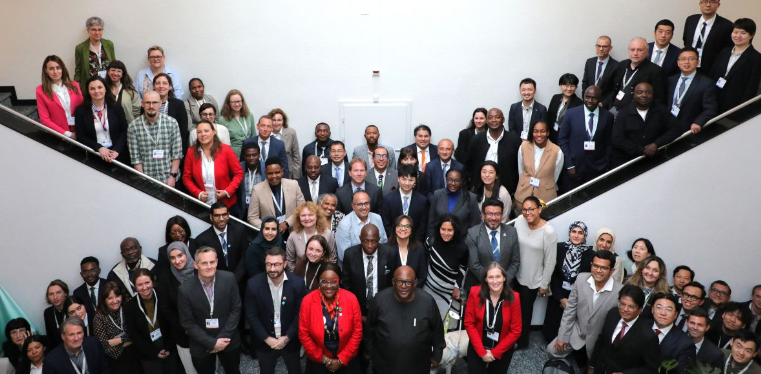
The international wetland community reconvened on the picturesque shores of Lake Geneva in May 2026, marking a significant moment for global wetland conservation efforts. This gathering, the 67th meeting of the Convention on Wetlands Standing Committee (SC67), was the first major in-person assembly of delegates since the landmark Convention on Wetlands COP15 held in Victoria Falls, Zimbabwe, in July 2025. The COP15, often referred to as the Ramsar COP, set ambitious new global targets for wetland protection and wise use, and SC67 served as a crucial platform to assess progress, share vital expertise, and forge actionable pathways for implementation.
Government delegates, alongside experts and observers from key organizations such as Wetlands International, convened to scrutinize the momentum generated by COP15. The agenda was packed, focusing on translating the high-level commitments of the previous year into tangible actions on the ground. The meeting was characterized by a spirit of collaboration and a shared urgency to address the escalating threats facing wetland ecosystems worldwide, which are critical for biodiversity, climate regulation, and human well-being.
Laying the Groundwork: International Organisation Partners Set the Agenda
The proceedings commenced with a powerful opening statement delivered by Wetlands International on behalf of all six International Organisation Partners (IOPs) of the Convention on Wetlands. This collective voice underscored three paramount priorities for immediate and sustained action.
Firstly, the IOPs emphasized the urgent need to tackle the root causes of wetland loss and degradation. This involves a fundamental re-evaluation of financial and economic decision-making processes, which too often overlook or undervalue the indispensable services provided by wetlands. The statement called for a paradigm shift where wetland conservation is integrated into economic planning, rather than being treated as an afterthought.
Secondly, the partners highlighted the necessity of reconfiguring human-wetland relationships. This encompasses embracing innovative approaches like the "Rights of Wetlands," a concept that recognizes the intrinsic value of these ecosystems and advocates for their legal standing. This philosophical shift aims to foster a deeper respect and a more responsible stewardship of these vital landscapes.
Thirdly, the IOPs stressed the critical role of wetlands in achieving the objectives of other Multilateral Environmental Agreements (MEAs). By prioritizing wetlands in national and regional implementation strategies, and by recognizing their interconnectedness with global water cycles that flow through various international environmental commitments, their pivotal contribution to broader sustainability goals can be amplified. This includes their alignment with the outcomes of the 2025 Rio COPs and the UN Water Conference, emphasizing wetlands as vital connectors within the global environmental architecture.
A dedicated IOP information session later in the week provided a deeper dive into their ongoing initiatives. Significant progress was reported across flagship implementation programs, including the Freshwater Challenge, the Mangrove Breakthrough, and the Peatland Breakthrough. These initiatives represent collaborative efforts to restore and protect specific types of vital wetlands, addressing unique challenges and offering tailored solutions. The session also served as a valuable forum for Contracting Parties to offer feedback and suggestions on how the IOPs can enhance their effectiveness in achieving shared wetland objectives.
Measuring Success: The Adoption of a Robust Indicator Framework
A cornerstone achievement of SC67 was the adoption of a comprehensive indicator framework designed to meticulously track progress against the targets set forth in the Convention on Wetlands Strategic Plan for 2025-2034. This framework is not an isolated tool but is deliberately and explicitly aligned with the Global Biodiversity Framework (GBF) and other overarching global goals. This synergy ensures that efforts to conserve wetlands contribute meaningfully to broader biodiversity targets and sustainable development objectives.
Crucially, amendments to the framework allow for greater flexibility in differentiating between wetlands that have been entirely lost and those that have been degraded. This nuanced approach is vital for accurate assessment and targeted interventions. Furthermore, the framework has been refined to enhance alignment with targets aimed at mobilizing finance and reducing harmful incentives, as stipulated by the GBF. This integration is paramount for ensuring that financial flows support, rather than undermine, wetland conservation.
This pivotal decision paved the way for the adoption of the National Report Template for COP16. National reports, due by December 7, 2027, will serve as the foundational data for a comprehensive global implementation report to be presented at the next Conference of the Parties (COP16). A draft guidance document was also presented, signaling ongoing efforts to refine reporting methodologies and ensure the highest quality of data collection and analysis. The quality and consistency of these national reports will be instrumental in demonstrating the global commitment to wetland conservation and identifying areas where greater effort is required.
Safeguarding Avian Life: Advancing Waterbird Population Estimates
Following the establishment of the Global Waterbird Estimates Partnership (GWEP) at COP15, SC67 took another significant step forward by approving an update on its progress and formalizing the creation of a permanent GWEP International Coordination Committee. While the critical need for funding to support the GWEP’s operations was a recurring theme, this formalization places the partnership on a more stable and secure footing.
The GWEP’s mandate is to provide long-term coordination, scientific and technical guidance, and resource mobilization for the production of updated Waterbird Population Estimates. These estimates, slated for 2027 and beyond, are indispensable for effective waterbird and wetland conservation. They inform national-level management decisions and the designation and management of Wetlands of International Importance under the Ramsar Convention. Moreover, these estimates are vital for coordinating conservation actions along global flyways, ensuring the protection of migratory bird populations that traverse vast distances. The GWEP’s work directly contributes to understanding the health of wetland ecosystems, as waterbirds are often considered indicator species for environmental well-being.
The Power of Science: Elevating Wetland Research and Application
The scientific and technical body of the Convention on Wetlands, the Scientific and Technical Review Panel (STRP), presented a report detailing its vital work and future plans. Contracting Parties expressed strong support for strengthening the involvement of early-career researchers, promoting the dissemination of STRP outputs, and expanding collaborative efforts. This focus on nurturing the next generation of wetland scientists and ensuring their findings reach relevant stakeholders is crucial for the long-term sustainability of conservation efforts.
Several prioritized STRP tasks were put forward for consideration. Among these, four highlighted in the IOP opening statement are of particular significance:
- GEOwetlands: This initiative leverages Earth observation technologies for comprehensive wetland inventories, assessments, monitoring, management, and reporting. Such technologies offer unprecedented capabilities for large-scale and consistent data collection, crucial for understanding the vast and often remote wetland landscapes.
- Global Wetland Outlook on Cities: Building on previous editions, this outlook will focus on the unique challenges and opportunities presented by urban wetlands, examining their role in sustainable urban development.
- Analysis of Transformative Change Pathways for Wetlands: This task explores radical shifts in approaches to wetland management and conservation, including the integration of Other Effective area-based Conservation Measures (OECMs).
- Wetlands and the Water Cycle: A report detailing the intricate relationship between wetlands and the global water cycle is slated for launch at the UN Water Conference later in 2026. This will underscore the fundamental role of wetlands in water security and management.
The enthusiastic reception of the STRP’s report signals a growing recognition of the indispensable role of science-based evidence in guiding wetland policy and action.
Urban Wetlands: A Growing Focus for Accreditation and Awareness
The Wetland Cities Accreditation scheme, which recognizes cities that maintain a strong and positive relationship with their local wetlands, received a significant update at SC67. The meeting celebrated the accreditation of 74 cities across 27 countries, highlighting a growing global commitment to integrating wetlands into urban planning and management. Future roundtables of Wetland City Mayors are scheduled to take place in Valdivia, Chile, in 2027, and in Mechelen, Belgium, in 2028.
Preparations are already underway for the current year’s roundtable in Niigata, Japan, with a specific focus on rice paddies and the multifaceted importance of urban wetlands for both waterbirds and human populations. As urbanization continues at an unprecedented pace, the role of urban wetlands in enhancing public awareness and education on wetland conservation and wise use is becoming increasingly critical. These urban oases contribute significantly to global biodiversity targets, particularly those related to urban green and blue spaces, climate adaptation strategies, and the provision of essential ecosystem services.

With the deadline for new applications for the Wetland City Accreditation approaching in December 2026, and the theme for World Wetland Day 2028 set as "Wetlands for sustainable cities" to align with the next wetland COP in Panama City, the momentum behind urban wetland initiatives is expected to accelerate. This accreditation scheme not only provides global recognition but also fosters knowledge exchange and collaboration among cities committed to wetland stewardship.
Embracing Nature’s Rights: The Rise of Rights of Wetlands Approaches
The burgeoning global movement recognizing the Rights of Nature has provided a fertile ground for discussions on the potential of "Rights of Wetlands" approaches. As this movement gains traction at local and national levels worldwide, and with nations like Panama raising the Rights of Nature at the UN, SC67 explored the impactful potential of granting legal rights to wetland ecosystems. This innovative approach offers a powerful avenue for wetland conservation and restoration, aligning with the broader call for transformative change in environmental governance.
Building upon recent IUCN resolutions concerning the rights of rivers and the broader rights of nature, alongside the ongoing work of the Rights of Wetlands Initiative, there is strong support for a new Draft Resolution on the rights of wetlands. This resolution could be brought forward by Contracting Parties to the next wetlands COP, signaling a significant evolution in how we perceive and protect these vital ecosystems. This paradigm shift moves beyond viewing wetlands solely as resources for human exploitation and acknowledges their intrinsic value and right to exist and flourish.
Broader Deliberations and Future Outlook
Beyond these six key highlights, SC67 engaged in a wide array of critical discussions. Concerns were raised regarding the potential dilution of the Water Framework Directive in Europe and the significant threats posed to High Andean wetlands by increased lithium mining operations. These discussions underscore the diverse and often interconnected challenges facing wetlands globally.
The indispensable role of Ramsar Regional Initiatives (RRIs) in driving cross-border implementation was also acknowledged. The confirmation of new funding for the Southern African RRI and the Danube WILD Island RRI signals continued support for these vital regional collaborative platforms. Furthermore, the extensive work required in wetland finance was a central theme, culminating in the adoption of a resource mobilization plan. The IOPs reiterated their commitment to contributing significantly to these financial efforts.
With the next wetlands COP scheduled for Panama City in just over two years, the focus remains resolutely on accelerating action and implementation at all levels – local, landscape, national, and regional. As International Organisation Partners, the assembled organizations expressed their eagerness for continued collaboration with governments, the Convention secretariat, and an ever-expanding network of wetland partners from across civil society. The ultimate goal is to significantly scale up wetland protection and restoration, ensuring the long-term health and resilience of these ecosystems for the benefit of people, nature, and the climate. The resolutions and insights garnered at SC67 provide a robust roadmap for the crucial years ahead.
All SC67 documents are accessible through the Ramsar Convention website, providing a comprehensive record of the discussions and decisions. Further insights into the Convention on Wetlands’ perspective can be found on their news portal, and Wetlands International’s aspirations for the meeting are detailed in their preparatory articles, underscoring the collective commitment to a future where wetlands are recognized, protected, and wisely used.
