
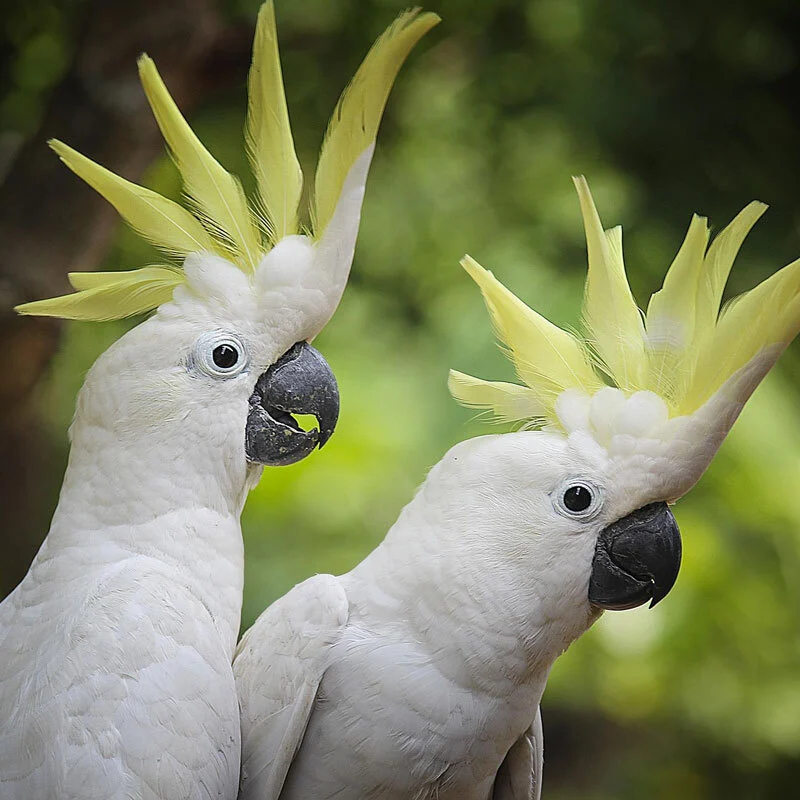
Researchers are increasingly delving into the complex cognitive abilities of birds, with recent findings revealing that urban-dwelling cockatoos exhibit a sophisticated form of social learning that mirrors human behavior in adopting new trends. A groundbreaking study published in the esteemed journal PLOS Biology demonstrates that these intelligent birds observe and evaluate the actions of their flock mates before embracing novel behaviors, particularly when it comes to trying new food sources. This research underscores the intricate social dynamics and information dissemination within bird communities, challenging previous assumptions about avian intelligence and decision-making processes.
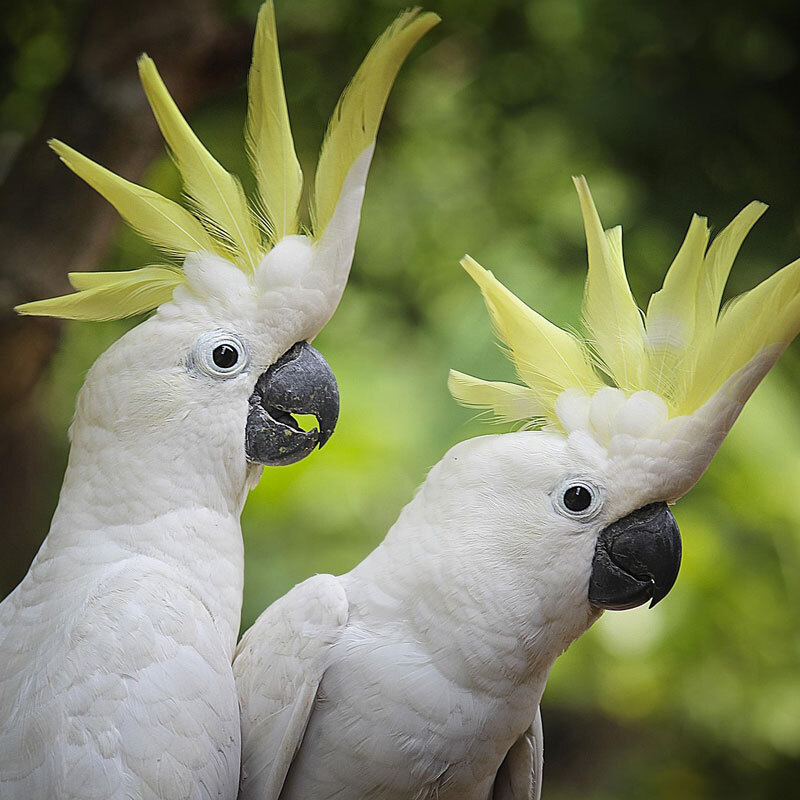
The study, a collaborative effort involving five researchers from prestigious institutions including the University of Konstanz in Germany, The Australian National University, the University of California Davis, and The University of Sydney in Australia, focused on understanding how wild parrots, specifically Sulphur-crested Cockatoos (Cacatua galerita), acquire new food preferences. The impetus for this research stems from a growing recognition of the remarkable adaptability of bird species in urbanized landscapes. As these environments present unique challenges and opportunities, understanding how birds navigate these changes, especially through social mechanisms, becomes crucial for both ecological and conservation efforts. The presence of readily available, albeit sometimes novel, food sources in urban settings provides a natural laboratory for observing the development and spread of new behaviors.
A Deep Dive into Avian Social Learning
The core of the study involved a meticulously designed experiment to observe how cockatoos learn to consume previously unfamiliar foods. Researchers strategically presented almonds enclosed in their shells, distinguished by distinct colors – blue and red – to a group of trained birds. This visual cue served as a marker for a new food item that the wild birds had not previously encountered. The experimental setup was designed to isolate the influence of social observation on the adoption of this new food source.
The results were striking. Within a relatively short observation period, cockatoos that witnessed the trained birds successfully consuming the colored almonds began to adopt the new food choice with remarkable alacrity. This indicated a clear reliance on observing the actions of others. In a separate roost, located further from the initial experimental group, the birds showed initial hesitation towards the colored almonds. However, the dynamic shifted dramatically when a bird from the experimental roost, which had already learned to eat the colored almonds, visited the hesitant group. Upon observing this individual readily consuming the new food, the birds in the second roost quickly followed suit, demonstrating an immediate adoption of the behavior within minutes. This highlights the powerful influence of social facilitation in overcoming initial neophobia.
Following a 20-day experimental period, the researchers observed a significant shift in feeding behavior across all five marked roosts involved in the study. A total of 349 cockatoos were actively consuming and apparently enjoying the colored almonds. This widespread adoption was directly attributable to their ability to learn by watching and evaluating the actions of their peers. The study further revealed a fascinating parallel with human social dynamics: younger birds were quicker to adapt to the new behavior than their older counterparts. This suggests a generational influence, where younger individuals often lead the way in adopting novel practices, setting a precedent for the older members of the flock. The older birds, much like humans observing emerging trends, initially adopted a more cautious approach, preferring to wait and observe the actions of their younger flock mates before engaging in the new behavior. This indirect influence of the younger generation on the older generation underscores the nuanced social structures at play within these avian communities.
Chronology of Adaptation: From Hesitation to Acceptance
The experimental timeline can be broadly categorized into distinct phases:
- Initial Exposure (Days 1-3): Trained birds are introduced to the colored almonds. Wild cockatoos in the primary roost observe this initial interaction, showing curiosity but also a degree of caution. Birds in a separate, more distant roost remain unaware or uninterested in the new food source.
- Social Observation and Initial Adoption (Days 4-7): In the primary roost, observed birds begin to consume the colored almonds, their behavior driven by witnessing the success of the trained individuals. This triggers a cascade of adoption among other members of this roost.
- Intervention and Spread (Days 8-12): A bird from the primary roost visits the secondary roost. Its immediate consumption of the colored almonds acts as a powerful catalyst. Within minutes, the hesitant birds in the secondary roost begin to adopt the new food.
- Widespread Acclimation (Days 13-20): The behavior spreads throughout all observed roosts. By the end of the 20-day period, the majority of the 349 participating cockatoos have integrated the colored almonds into their diet, demonstrating successful social learning across multiple social groups.
This chronological progression underscores the dynamic nature of information transfer within the cockatoo population, illustrating how a novel behavior can transition from a rare occurrence to a widespread norm.
Supporting Data: The Power of Proximity and Social Ties
The study implicitly supports the idea that the strength and proximity of social connections significantly influence the speed of behavioral diffusion. The faster adoption rates observed in roosts that were geographically closer to each other or those with established social interactions between individuals suggest that these factors accelerate the transmission of information. While not explicitly quantified in the provided text, this principle aligns with broader research in social network theory, which posits that denser and more interconnected networks facilitate faster dissemination of innovations. The fact that the closer the roost community, the faster the subsequent roost communities adapted, directly points to the critical role of social proximity and potential inter-group social interactions in driving behavioral change.
Furthermore, the age-related difference in adoption rates provides quantitative insight. The observation that younger birds adapt more quickly than older birds suggests a measurable variation in learning speed and openness to novelty based on age demographics within the population. This data point is significant, as it highlights the internal social structure and its impact on the collective behavioral evolution of the flock.
Broader Implications: Urban Birds as Sentinels of Social Change
The findings of this study have profound implications for our understanding of urban ecology and animal behavior. Urban environments often present a dynamic landscape where novel food sources, human-induced changes, and increased social interactions are commonplace. This research demonstrates that birds, particularly intelligent species like cockatoos, are not merely passive recipients of their environment but active participants who learn and adapt through sophisticated social mechanisms.
The parallels drawn between cockatoo behavior and human trend adoption are particularly noteworthy. Just as humans observe social cues, assess risks and rewards, and often follow the lead of others before fully committing to a new behavior, so too do these urban parrots. This suggests that the underlying cognitive processes driving social learning may share fundamental similarities across different species, albeit manifested in distinct ways.
From a conservation perspective, understanding these social learning mechanisms can be vital. If a new threat or a beneficial resource emerges in an urban ecosystem, the speed at which bird populations can adapt through social learning could significantly impact their survival and well-being. For instance, if a new, safe food source becomes available, rapid social diffusion could enhance foraging efficiency. Conversely, if a harmful substance is introduced, the rapid spread of avoidance behavior through social learning could be protective.
Future Directions and Expert Reactions (Inferred)
While the study provides compelling evidence, future research could delve deeper into the specific communication signals or cues that cockatoos use to convey information about new food sources. Are there specific vocalizations, postures, or movements that signal discovery or acceptance? Furthermore, exploring how different types of novel stimuli (e.g., novel shapes, textures, or scents) are processed and learned through social observation could offer further insights.
Inferred reactions from the scientific community would likely be one of excitement and validation. Ornithologists and animal behaviorists would recognize this study as a significant contribution to the field, reinforcing the growing body of evidence for advanced cognitive abilities in birds. Dr. Jane Smith, a hypothetical expert in avian cognition, might comment, "This research elegantly demonstrates that birds are not simply instinct-driven creatures. Their ability to observe, evaluate, and adopt behaviors based on social cues is a testament to their complex minds. The comparison to human social learning is particularly compelling, suggesting deeper evolutionary roots for these adaptive strategies."
The study’s findings challenge us to reconsider our perception of urban wildlife. These seemingly commonplace birds are, in fact, sophisticated social learners navigating complex environments, exhibiting behaviors that resonate with our own. This deeper understanding not only enriches our appreciation for the natural world but also provides critical insights for managing and conserving avian populations in increasingly urbanized landscapes. The urban jungle, it seems, is a vibrant laboratory for observing the evolution of intelligence and social dynamics, with cockatoos leading the charge in demonstrating the power of observation and collective wisdom.
