
The physiological demands placed upon racing pigeons during marathon events are often compared to those of elite human endurance athletes, requiring a precise balance of macro-nutrients to sustain flight over hundreds of miles. In the competitive world of avian racing, the difference between a podium finish and a lost bird frequently hinges on the contents of the feeding trough. While traditional diets have long relied on a foundation of carbohydrates, modern nutritional science and the practical observations of veteran fanciers have shifted the focus toward high-density lipid sources, most notably the peanut, as a primary fuel for long-distance success.
The Metabolic Engine: Carbohydrates vs. Lipids
The avian digestive system is a highly efficient processor of organic matter, designed to convert dietary intake into accessible energy. In a standard racing mixture consisting of maize, wheat, and peas, the primary energy source is carbohydrates. Once ingested, these complex sugars are transformed into animal proteins and glycogen, which are then sequestered in the bird’s liver and pectoral muscles.
From a biochemical perspective, glycogen serves as the "gasoline" for the pigeon’s internal engine. During the initial stages of a race, the bird combusts this stored glycogen to power its flight. However, the caloric yield of glycogen is relatively modest, providing approximately 4.1 calories per gram. This creates a significant physiological risk: if a pigeon’s "glycogen tank" becomes depleted before it reaches the loft, the body enters a catabolic state. In this emergency mode, the bird begins to metabolize its own muscle tissue—which also yields 4.1 calories per gram—to sustain flight. This leads to the "feathers and bones" phenomenon, where a bird returns in an emaciated state, having sacrificed its physical structure to survive the journey.
The High-Energy Advantage of Lipids
To mitigate the risks of muscle wastage and exhaustion, sports nutritionists and avian experts emphasize the role of fats (lipids). Fat provides a vastly superior energy density compared to both carbohydrates and proteins. A single gram of fat yields 9.3 calories, representing a 2.33-fold increase in energy output over glycogen.
For a pigeon facing a grueling headwind or a race exceeding eight hours of flight time, the availability of fat stores can be the deciding factor in its survival and performance. By offering a diet high in oil-rich seeds and nuts prior to "basketing" (the process of placing birds in transport crates for a race), fanciers can ensure their birds have a "high-octane" reserve. This allows the bird to maintain its body weight and roundness upon its return, as it has burned dietary fat rather than vital muscle tissue.

The Peanut as a Specialized Avian Superfuel
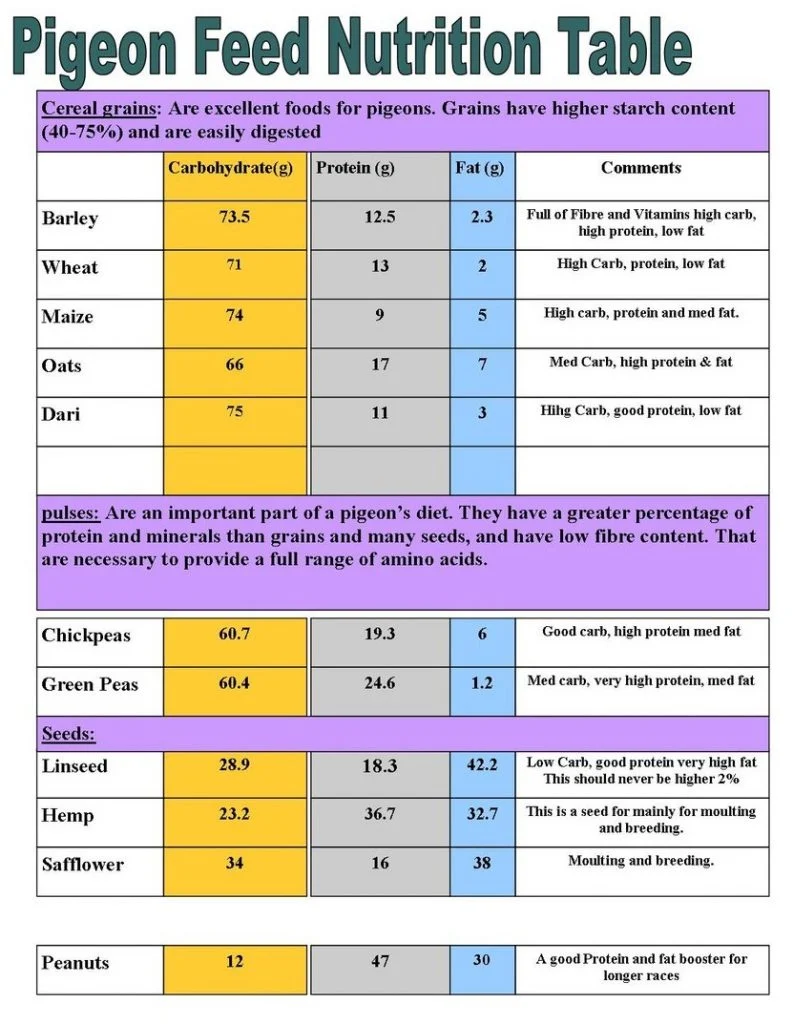
Among the various fat sources available to fanciers, the peanut has emerged as a premier fuel. While maize contains roughly 4% fat and rolled oats offer 7%, oil-rich seeds like sunflower (28%), linseed (34%), hempseed (32%), and rapeseed (42%) provide significantly higher concentrations. However, the peanut stands out not only for its caloric density but also for its palatability and protein profile.
A peanut typically contains 30% protein, a level surpassed only by the soybean among common avian feeds. This makes it an ideal supplement for both energy and recovery. Furthermore, the nutritional makeup of a peanut—consisting primarily of fat and protein—closely mirrors the composition of "crop milk," the substance produced by parent pigeons to nourish their young. This synergy makes peanuts an invaluable tool throughout the entire lifecycle of the racing pigeon, from the breeding loft to the marathon circuit.
Historical Context: The Hamburg Case Study
The use of peanuts as a primary feed source is supported by historical anecdotes that predate modern nutritional studies. Following World War II, Eduard Pape, a port laborer in Hamburg, Germany, began feeding his racing pigeons exclusively on peanuts salvaged from oil mill shipments. At a time when traditional grains were scarce and expensive, Pape discovered that his birds not only survived on the nut-heavy diet but excelled in difficult races.
Dr. Meyer, a contemporary authority on the subject, noted that Pape’s success was contingent on strict portion control. Because 5.7 grams of peanuts provide the energy equivalent of 10 grams of a standard grain mixture, overfeeding can quickly lead to obesity, which is detrimental to flight. Pape’s results demonstrated that when managed correctly, high-fat feeding strategies provide a distinct competitive advantage in endurance events.
Strategic Implementation in Breeding and Development
The utility of peanuts extends beyond the racing season into the critical period of chick development. Experts recommend introducing peanut pieces to breeding pairs between the 6th and 12th day of a youngster’s life. This is the period when squabs transition from the "mush" of crop milk to "rough" solid feed.
For parents who struggle with the transition, the high-fat content of peanuts provides a bridge that ensures the youngsters receive adequate nutrition for rapid growth. Furthermore, weaning young birds on peanuts serves a dual purpose: it provides essential nutrients for skeletal and muscular development while simultaneously "taming" the birds. A young pigeon that associates its handler with the delivery of a delicious peanut treat is far more likely to enter the loft quickly after a training toss—a behavior known as "trapping" that is vital for winning close races.
Psychological Conditioning and Taming
In the competitive environment of a racing loft, the relationship between the fancier and the bird is often overlooked. However, a "tame" bird is less stressed and more manageable. Peanuts are frequently used as a tool for psychological conditioning. Because pigeons find peanuts exceptionally palatable, they can be used to entice even the most timid birds to eat from a handler’s hand.
Fanciers like Dr. Meyer suggest carrying peanut halves in a work coat pocket at all times. This constant availability of treats fosters a bond of trust. In the breeding loft, this bond ensures that birds remain calm during inspections, while in the racing loft, it increases the "love of the nest," encouraging widowers and widows to return home with greater urgency.
Advanced Racing Tactics: Managing Widowers and Widows
The application of peanut feeding varies significantly based on the "widowhood" system—a common racing strategy where mates are separated to increase their motivation to return home.
- Widowers: These male racers are often given a few peanuts after their daily exercise to encourage them to return to their individual nest boxes. During the first half of the week, peanuts are fed sparingly. As the day of the race approaches, the ration is increased to "load" the bird with fat. For birds that are naturally light or poor eaters, peanuts provide a dense source of calories that can bring them up to racing weight quickly.
- Widows: Female racers require even more precise management. Feeding peanuts to widows increases their aggression and territoriality over their boxes, which prevents them from engaging in "lesbian" behavior or laying eggs—both of which can ruin a hen’s racing form. Dr. Meyer noted that by increasing peanut rations on the day of basketing, widows can maintain high energy levels for 14 consecutive weeks of racing without losing their competitive edge.
Environmental Adaptations: Weather-Based Nutritional Planning
Professional fanciers do not feed a static diet; they adjust based on meteorological forecasts. The impact of wind resistance on a pigeon’s caloric burn is substantial.
- Headwinds: If the forecast indicates a struggle against the wind, fanciers provide an extra portion of peanuts in the 48 hours leading up to the race. This ensures the bird has the 9.3 calories per gram of fat necessary to sustain the extra physical effort.
- Tailwinds: In "fast" races where the wind assists the bird, peanuts are used sparingly to prevent the bird from becoming too heavy or "over-fueled," which can lead to a lack of urgency.
- Two-Night Stays: For races where birds spend two nights in the transport basket, a specific strategy is employed. Grains high in carbohydrates are fed in the morning to provide immediate energy, followed by a heavy feeding of peanuts in the afternoon. This "double-loading" allows the bird to effectively store two days’ worth of energy in a single day, ensuring they do not arrive at the release site in a depleted state.
Broader Implications and Recovery
The final aspect of peanut nutrition involves post-race recovery. A bird that returns from a difficult race having lost significant weight requires a specialized diet to repair muscle tissue and replenish fat stores. While "cleansing" rations low in protein are common, they are often insufficient for rapid recovery. The high protein (30%) and high fat content of peanuts allow a worn-out bird to regain its form faster than traditional grains.
In summary, the integration of peanuts into the racing pigeon’s diet represents a sophisticated approach to avian physiology. By understanding the caloric differences between glycogen and lipids, and by strategically timing the delivery of these "superfuels" based on breeding cycles, gender, and weather conditions, fanciers can significantly improve the performance and welfare of their birds. As the sport continues to evolve, the peanut remains a cornerstone of nutritional excellence, providing the energy necessary for the extraordinary feats of endurance that define the racing pigeon.

