
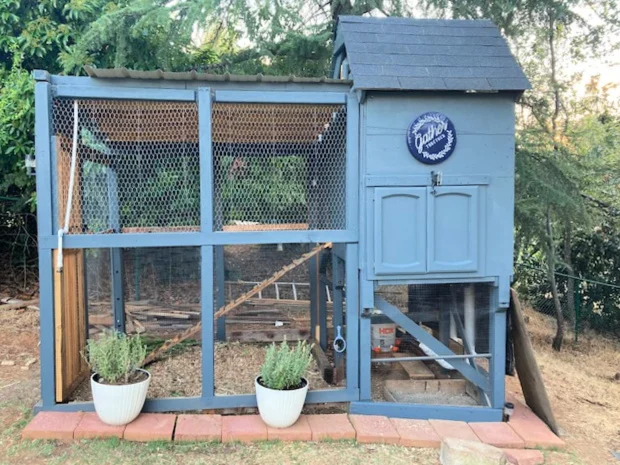
The burgeoning trend of backyard poultry farming has seen a significant uptick across North America over the last decade, driven by a combination of rising grocery costs, a desire for food security, and a shift toward sustainable living. While the benefits of fresh, organic eggs are well-documented, the initial capital investment required to establish a functional and safe habitat for chickens remains a primary barrier for many aspiring hobbyists. However, a growing movement of resourceful homeowners is circumventing these high entry costs through the strategic conversion of existing outbuildings. A recent case study from Redding, California, illustrates how the repurposing of a children’s playhouse can reduce setup costs by more than 70%, transforming a redundant backyard structure into a high-functioning "poultry mansion" for approximately $300.

The Economic Landscape of Backyard Poultry
To understand the significance of the $300 playhouse conversion, one must first examine the broader market for poultry housing. Commercial chicken coops, particularly those designed for small to medium flocks (six to ten birds), typically range in price from $800 to $3,500. High-end models featuring insulated walls, predator-proof windows, and automated door systems can exceed $5,000. These costs do not include the additional expenses of interior fixtures such as nesting boxes, roosting bars, and brooding equipment.

In contrast, the conversion project undertaken by the Redding-based family—comprising parents and four children: Mya (17), Ezra (12), Eden Rose (10), and Joel (8)—demonstrates the financial viability of the "circular economy" in a domestic setting. By utilizing a pre-existing playhouse as the structural shell, the family eliminated the most significant expense: the framing and siding. The remaining budget was allocated toward essential upgrades and safety features, proving that with "elbow grease" and scavenged materials, the barrier to entry for self-sufficient egg production is lower than many assume.

A Chronological Approach to the Conversion Process
The transformation of a playhouse into a coop is not merely an aesthetic endeavor but a structural overhaul that must meet specific biological requirements for avian health. The Redding project followed a logical progression that serves as a blueprint for similar DIY initiatives.

Phase I: Structural Salvaging and Material Sourcing
The first step involved the identification of usable waste materials. The family sourced scrap wood, cabinet components, and an old closet door. Crucially, they leveraged community networks to acquire tin roofing pieces and tiles at no cost. This phase highlights the importance of "material scouting" in DIY projects, where social capital—friends, neighbors, and local digital marketplaces—replaces financial capital.

Phase II: Modification for Avian Habitability
Standard playhouses are designed for human ventilation and height, which differs significantly from the needs of poultry. The conversion required the installation of repurposed cabinet doors to facilitate easy access for cleaning and egg collection. The inclusion of a hinged storage box, formerly used for pool supplies, was a strategic pivot; it was deconstructed and rebuilt into a brooder box, a specialized environment for raising young chicks before they are hardy enough for the main coop.

Phase III: Integration of Safety and Utility
Predator proofing is the most critical technical aspect of any coop build. While the original report focuses on the aesthetic and social aspects, professional standards for such conversions typically involve replacing standard window screens with 1/4-inch hardware cloth to prevent intrusion by raccoons or birds of prey. The Redding family also integrated interior elements designed for chick comfort, such as a warming plate and a feather duster, which mimics the tactile comfort provided by a mother hen’s plumage.

The Role of Family Labor and Educational Development
Beyond the economic savings, the conversion of the Redding playhouse served as a multi-generational educational project. The involvement of the children—ranging from ages 8 to 17—provided a practical application of biology, engineering, and responsibility.

The project faced an early setback when an attempt to hatch eight eggs resulted in only two successful births (Barred Rock chicks). This outcome, while emotionally challenging for the younger children, provided a firsthand lesson in the complexities of avian incubation. Ezra, the 12-year-old son, took on the "labor of love" of turning the eggs three times daily, a task essential for preventing the embryo from sticking to the shell membrane. This level of engagement fosters a "farm-to-table" consciousness that is often lost in modern urban environments.

The social impact extended to the community as well. Friends of the family participated in the final aesthetic phase, helping to paint the coop to match the primary residence. This communal effort underscores the "social glue" aspect of backyard farming, where the project becomes a point of neighborhood interest and cooperation.

Technical Analysis of Upcycled Components
The Redding coop is notable for its creative use of non-traditional materials. A Dollar Tree mirror was installed within the brooder, a common tactic used by poultry keepers to reduce boredom and stress in chicks. When chicks see their reflection, they often perceive it as a companion, which can mitigate the "lonely chick" syndrome if a hatch results in low numbers.

The use of cabinet doors for nesting box access is another high-efficiency choice. In professional coop design, the ability to collect eggs without entering the main structure is preferred to maintain biosecurity and minimize the stress of the flock. By repurposing kitchen cabinetry, the family achieved a professional-grade feature for a fraction of the cost of a custom-built nesting suite.

Broader Implications for Urban Agriculture and Sustainability
The success of such conversions has broader implications for municipal planning and sustainability. As more families look to "upcycle" rather than "purchase new," there is a measurable reduction in construction waste entering landfills. A typical wooden playhouse weighs several hundred pounds; by converting it, the family kept those materials in productive use for another decade or more.

Furthermore, the Redding case study reflects a growing trend in "resilient landscaping." By matching the coop’s paint and shingles to the main house, the family addressed a common concern in suburban areas: the "eyesore" factor of agricultural structures. Professionalizing the appearance of backyard coops is often a prerequisite for maintaining positive relationships with neighbors and adhering to Homeowners Association (HOA) guidelines, which are increasingly softening their stance on poultry in response to the food security movement.

Expert Perspectives and Safety Considerations
Agricultural experts, including Lisa Steele, a fifth-generation chicken-keeping authority and author of Fresh Eggs Daily, emphasize that while playhouse conversions are cost-effective, they must prioritize ventilation. Chickens produce a significant amount of moisture and ammonia through their droppings; without adequate airflow at the top of the structure, they are susceptible to respiratory infections and frostbite in winter.

The Redding family’s project appears to have addressed these needs through the strategic placement of doors and the use of a tin roof, which provides durable protection against the elements. However, experts warn that any DIY builder should ensure the structure is raised off the ground or sits on a concrete pad to prevent rodents from burrowing underneath—a common issue with converted ground-level playhouses.

Conclusion: The Future of Backyard Self-Sufficiency
The conversion of a $300 playhouse into a "chicken mansion" in Redding, California, serves as a definitive example of how creativity can overcome economic hurdles in sustainable living. The project successfully balanced cost-efficiency with functional design, while providing an invaluable educational platform for the next generation.

As the "backyard flock" movement continues to expand, the reliance on repurposed structures is likely to become the standard rather than the exception. For the modern homeowner, the lesson is clear: the most expensive part of starting a farm may already be sitting, unused, in the backyard. By looking at old playhouses, garden sheds, or barn stalls through a lens of utility rather than obsolescence, families can achieve food independence, foster community bonds, and contribute to a more sustainable, circular economy. The Redding family’s "Barred Rock" residents now enjoy a home that is not only a testament to DIY ingenuity but also a symbol of a family’s commitment to a self-reliant lifestyle.
