

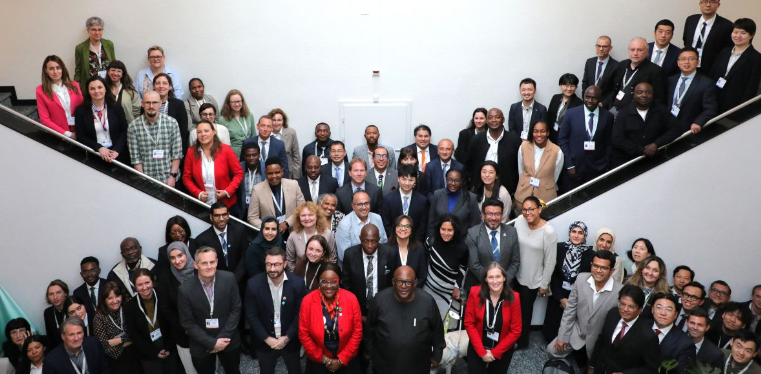
The global wetland community convened on the picturesque shores of Lake Geneva in May 2026 for a pivotal meeting, the 67th session of the Convention on Wetlands Standing Committee (SC67). This gathering marked the first significant assembly of its kind since the high-profile Convention on Wetlands COP15 held in Victoria Falls, Zimbabwe, in July of the previous year. Delegates from governments, alongside esteemed experts and observers, including representatives from Wetlands International, converged to assess progress, share vital expertise, and chart a course for the intensified implementation of global wetland goals and targets adopted at COP15. The SC67 meeting was a crucial platform for translating the ambitious resolutions of COP15 into tangible actions on the ground, aiming to reverse the alarming global decline of these vital ecosystems.
Background and Significance of SC67
The Convention on Wetlands, also known as the Ramsar Convention, is an intergovernmental treaty that provides a framework for national action and international cooperation for the conservation and wise use of wetlands and their resources. Adopted in 1971 in Ramsar, Iran, the Convention has grown to include 172 Contracting Parties. The Standing Committee (SC) serves as the executive arm of the Conference of the Parties (COP), the governing body of the Convention, and meets annually between COPs to provide guidance and manage the Convention’s affairs.
COP15, held in Victoria Falls, Zimbabwe, was a landmark event that saw the adoption of the ambitious Victoria Falls Declaration and the Ramsar Strategic Plan 2025-2034. This new strategic plan outlines a comprehensive set of goals and targets aimed at halting and reversing wetland loss and degradation worldwide. SC67 was therefore tasked with the critical responsibility of reviewing the initial progress made by Contracting Parties in implementing these new commitments and identifying any immediate challenges or adjustments needed to ensure their successful realization. The meeting’s location on Lake Geneva, a globally significant wetland ecosystem itself, served as a powerful backdrop for discussions on wetland conservation and sustainable management.
Key Outcomes and Progress at SC67
The delegates at SC67 achieved a significant amount of work over the course of the week, with six key highlights emerging from the deliberations:
1. Partners for Wetlands Priorities: A Unified Voice for Action
The opening plenary saw Wetlands International, on behalf of all six International Organisation Partners (IOPs) of the Convention on Wetlands, deliver a compelling opening statement. This unified voice underscored three paramount priorities for immediate action:
- Addressing Root Causes: A critical focus was placed on tackling the fundamental drivers of wetland loss and degradation, particularly within financial and economic decision-making frameworks. This involves re-evaluating economic incentives and investment patterns that often favor development over wetland preservation.
- Reconfiguring Human-Wetland Relationships: The statement emphasized the need for a paradigm shift in how humanity interacts with wetlands. This includes promoting innovative approaches like the "Rights of Wetlands," which recognizes the inherent value and legal standing of these ecosystems, and fostering a deeper understanding of their interconnectedness with human well-being.
- Investing in Wetlands as Critical Connectors: Wetlands were highlighted as indispensable to the delivery of multiple Multilateral Environmental Agreements (MEAs). By prioritizing wetlands in national and regional implementation strategies, and recognizing their role as "critical watery connectors" flowing through various global environmental agendas, their importance can be amplified. This includes their integral role in achieving targets set by the UN Water Conference and the Rio COPs of 2025.
A dedicated IOP information session later in the week provided an in-depth look at ongoing implementation initiatives. Wetlands International showcased progress in crucial programs such as the Freshwater Challenge, the Mangrove Breakthrough, and the Peatland Breakthrough. These initiatives represent concrete efforts to restore and protect specific wetland types, demonstrating the practical application of the Convention’s goals. The session also served as a valuable forum for Contracting Parties to offer their perspectives on how the IOPs can enhance their effectiveness in achieving shared wetland conservation objectives.
2. Wetland Indicators: Measuring Progress Towards Ambitious Targets
A cornerstone decision of SC67 was the adoption of a comprehensive indicator framework designed to meticulously measure progress towards the targets outlined in the Convention on Wetlands Strategic Plan 2025-2034. This framework is intrinsically linked and explicitly aligned with the Global Biodiversity Framework (GBF) and other overarching global conservation goals, ensuring a coordinated approach to ecosystem protection.
Crucially, amendments were incorporated into the framework to allow for greater flexibility in distinguishing between lost and degraded wetlands. This nuanced approach is vital for accurate monitoring and targeted interventions. Furthermore, the framework was refined to better align with targets aimed at mobilizing finance and reducing harmful incentives, as stipulated under the GBF. This integration signifies a commitment to a holistic approach to environmental governance, where wetland conservation is seen as an integral part of broader biodiversity and sustainable development efforts.
In tandem with the indicator framework, SC67 also adopted the template for National Reports. These reports, due by December 7, 2027, will form the basis of a global implementation report to be presented at the next COP. A draft guidance document was also presented, which will undergo further refinement to assist Contracting Parties in preparing their reports effectively. This structured reporting mechanism is essential for accountability and for tracking the collective impact of national actions on global wetland health.
3. Waterbird Population Estimates: Strengthening Global Monitoring Efforts
Following the establishment of the Global Waterbird Estimates Partnership (GWEP) at COP15, SC67 approved a significant update on its progress and formalized the creation of a permanent GWEP International Coordination Committee. This development solidifies the institutional foundation for a crucial initiative that monitors the health of waterbird populations, a key indicator of wetland ecosystem vitality.
While acknowledging the urgent need to address funding gaps, the progress made by the GWEP positions it on a more stable footing. The committee will provide long-term coordination, scientific and technical guidance, and resource mobilization efforts necessary to produce updated Waterbird Population Estimates in 2027 and beyond. This data is indispensable for effective waterbird and wetland conservation, informing the designation and management of Wetlands of International Importance under the Ramsar Convention, and supporting broader waterbird conservation strategies across national borders and global flyways. The accuracy and comprehensiveness of these estimates are directly linked to our ability to understand and mitigate threats to these migratory species and the habitats they depend on.
4. Science in the Spotlight: Advancing Wetland Research and Application
Contracting Parties expressed strong enthusiasm for a report detailing the vital work of the Scientific and Technical Review Panel (STRP), the Convention’s advisory body on scientific and technical matters. Plans to enhance the involvement of early-career researchers, promote the dissemination of STRP outputs, and expand collaborative efforts were particularly well-received. This focus on nurturing the next generation of wetland scientists and ensuring broader access to research findings is crucial for fostering innovation and informed decision-making.
The session also considered a prioritized list of STRP tasks, including four that were specifically highlighted in the IOP opening statement:
- GEOwetlands: This initiative leverages earth observation technologies for comprehensive wetland inventory, assessment, monitoring, management, and reporting. The potential for satellite data to provide near real-time information on wetland extent and health is transformative.
- Global Wetland Outlook on Cities: The STRP will contribute to the next edition of this outlook, focusing on the critical role of urban wetlands.
- Analysis of Transformative Change Pathways: Research into pathways for transformative change in wetland management, including the role of Other Effective area-based Conservation Measures (OECMs), is essential for achieving ambitious conservation goals.
- Wetlands and the Water Cycle: A report on the intricate relationship between wetlands and the global water cycle is slated for launch at the UN Water Conference later in the year, underscoring the interconnectedness of water resource management and wetland health.
The STRP’s work directly informs policy and practice, ensuring that conservation efforts are grounded in the best available scientific knowledge.
5. Cities and Wetlands: Integrating Urban Areas into Conservation Efforts
SC67 received an update on the Wetland City Accreditation scheme, a program that recognizes cities for their commitment to wetland conservation and wise use. The accreditation scheme has seen growing interest, with 74 cities from 27 countries now officially recognized. Future roundtables of Wetland City Mayors are scheduled to take place in Valdivia, Chile, in 2027, and Mechelen, Belgium, in 2028. Preparations are already underway for this year’s roundtable in Niigata, Japan, which will focus on rice paddies and the crucial role of urban wetlands for both waterbirds and human populations.

With an increasing proportion of the global population residing in urban areas, the Wetland City Accreditation scheme plays an increasingly vital role in raising public awareness and fostering education on wetland conservation. These urban wetlands contribute significantly to global biodiversity targets, particularly concerning urban green and blue spaces, climate adaptation strategies, and the provision of essential ecosystem services. The scheme’s alignment with the upcoming World Wetland Day 2028 theme, "Wetlands for Sustainable Cities," and the next wetland COP in Panama City, signals a growing recognition of the importance of integrating wetland conservation into urban planning and development. The deadline for new applications for accreditation is December 2026, indicating a sustained momentum in this area.
6. Rights of Wetlands: Embracing New Legal and Ethical Frameworks
The growing global momentum of the Rights of Nature movement, with its recognition at local and national levels and its recent elevation at the UN, has paved the way for discussions on "Rights of Wetlands" approaches. During SC67, the exciting potential of these approaches as an impactful route for wetland conservation and restoration, aligned with the urgent need for transformative change, was a key topic of discussion.
Building on recent IUCN resolutions concerning the rights of rivers and the broader rights of nature, and in conjunction with the ongoing work of the Rights of Wetlands Initiative, there is strong support for a new Draft Resolution on the rights of wetlands. Such a resolution, if brought forward by Contracting Parties to the next wetland COP, could significantly advance the legal and ethical recognition of wetlands as entities with intrinsic value and rights, thereby strengthening their protection and restoration efforts. This represents a paradigm shift, moving beyond viewing wetlands solely as resources for human use to recognizing their inherent right to exist and thrive.
Broader Implications and Future Directions
Beyond these six key highlights, SC67 deliberations delved into a wide array of critical issues. Discussions addressed the risks to wetlands posed by potential dilutions of the Water Framework Directive and the specific threats to High Andean wetlands from increased lithium mining. The indispensable role of Ramsar Regional Initiatives (RRIs) in driving cross-border implementation was also emphasized, with welcome confirmation of new funding for the Southern African RRI and the Danube WILD Island RRI.
Furthermore, the extensive work required in wetland finance was a central theme, including the adoption of a resource mobilization plan. The International Organisation Partners reaffirmed their commitment to contributing significantly to these financial efforts.
With the next wetland COP scheduled for Panama City in just over two years, the focus remains resolutely on action and implementation at all levels – local, landscape, national, and regional. As International Organisation Partners, there is a clear commitment to continued collaboration with governments, the Convention secretariat, and an ever-expanding network of wetland partners from across civil society. The overarching goal is to scale up wetland protection and restoration efforts, recognizing their profound benefits for people, nature, and the climate.
The successful SC67 meeting on Lake Geneva has laid a strong foundation for continued progress. The adopted indicator framework, the strengthened GWEP, and the growing recognition of urban wetlands and the rights of wetlands all point towards a more integrated and ambitious approach to wetland conservation. The coming years will be critical in translating these resolutions into tangible improvements for the world’s most vital ecosystems.
All documents from SC67 are accessible via the Ramsar Convention website, and further insights can be found on the Convention on Wetlands website and through Wetlands International’s publications. The collective efforts discussed and agreed upon at SC67 underscore the global community’s dedication to safeguarding these invaluable natural assets for generations to come.
