
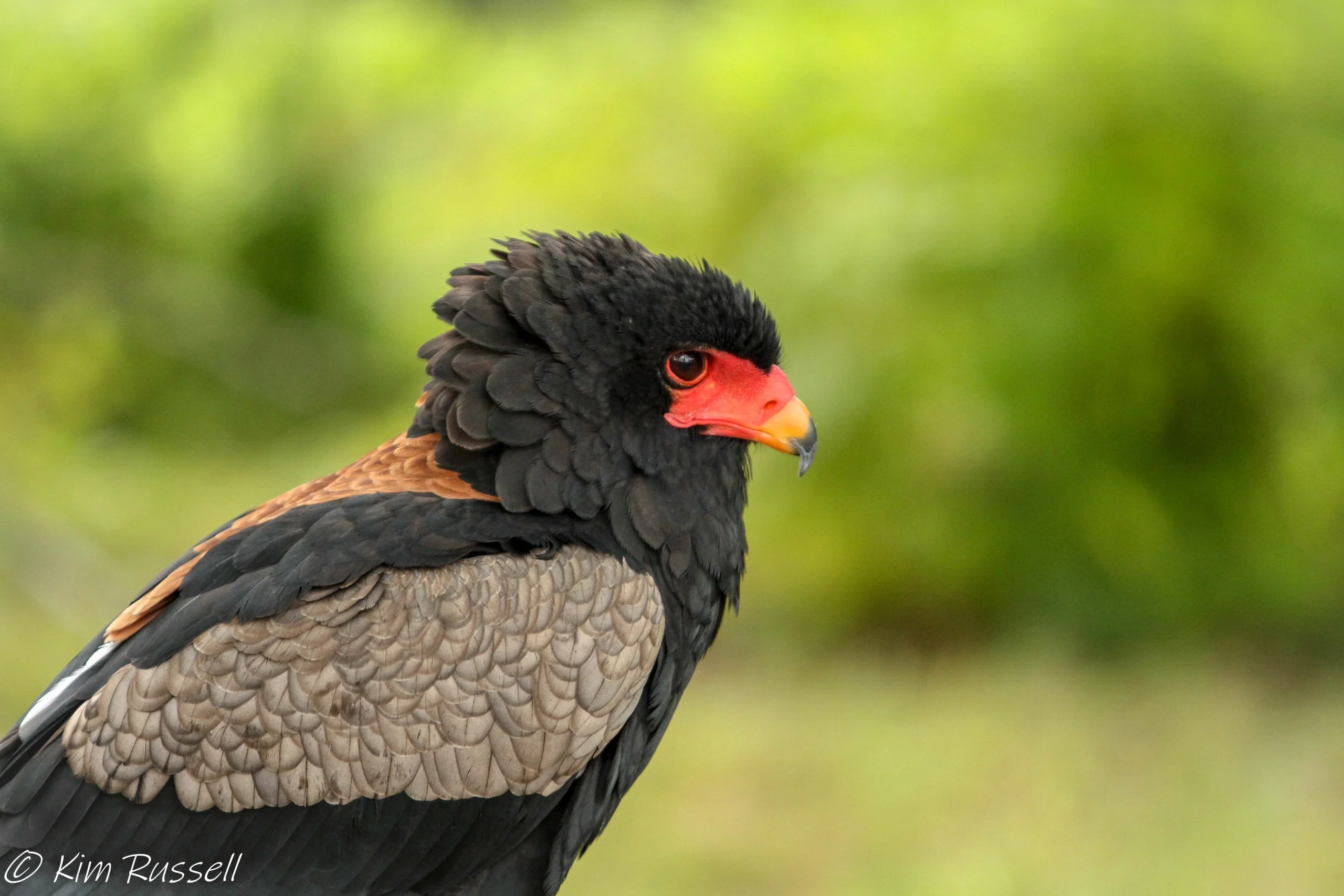
Comanche Nation Establishes Groundbreaking Feather Repository, Advancing Indigenous Rights and Avian Conservation
In a significant development poised to reshape the landscape of Native American cultural preservation and wildlife management, Sia: The Comanche Nation Ethno-Ornithological Initiative, an official program of the Comanche Nation, has officially established the Sia Essential Species Repository. This pioneering initiative, operating under the DBA Sia: The Comanche Nation Eagle & Raptor Program, represents the first tribally administered Native American feather acquisition and dispersal program, dedicated to meeting the spiritual and cultural needs of Native Americans for avian materials in partnership with the U.S. Fish & Wildlife Service. The repository provides a legal and ethical framework for members of federally recognized tribes to acquire and possess non-eagle migratory bird feathers, adhering strictly to conservation protocols.
The genesis of this vital program can be traced back to a proposal first submitted to the U.S. Fish & Wildlife Service in 1973, a testament to the enduring vision and persistent advocacy of Waha Thuweeka, also known as William "Two-Raven" Voelker, the Director and Founder of Sia. Voelker, a proud member of the Ohnononuh band of Numunuh – the Comanche People – has dedicated over four decades to a holistic approach that merges ethnology and ornithology. His work is fundamentally committed to the preservation of the eagle, not only in historical and scientific contexts but also within the spiritual fabric of Indigenous cultures.
Voelker’s distinguished career is marked by unprecedented achievements. He is the first Native American to have ever held U.S. Fish & Wildlife Service permits for the care and breeding of Bald and Golden Eagles in captivity. Furthermore, he holds the unique distinction of being the only individual in America to have successfully propagated both of these iconic species through artificial insemination. The world’s first Bald Eagle produced via artificial insemination is among the more than 400 native eagles bred in captivity under Voelker’s stewardship since 1974, with the vast majority subsequently released into the wild. His expertise extends beyond these national symbols; Voelker’s research and propagation efforts encompass sixty-eight species of eagles and other raptors from five continents, involving extensive field studies and captive behavioral research. His commitment to Indigenous heritage is further underscored by his past service as chairman of the Comanche Nation NAGPRA & Historic Preservation Board of Directors.
A Legacy of Conservation and Cultural Stewardship
The establishment of Sia: The Comanche Nation Ethno-Ornithological Initiative in 1999 marked a pivotal moment, formally integrating Voelker’s lifelong dedication under the political umbrella of the Comanche Nation. This strategic alignment empowered the initiative to address critical authorizations pertaining to the traditional and cultural interactions between Native Peoples and their avian resources. The feather repository is perhaps the most significant of these authorizations, directly addressing a long-standing need within Indigenous communities for culturally significant materials that were often difficult or impossible to obtain legally due to conservation laws designed to protect migratory birds.
Historically, feathers have held profound spiritual, ceremonial, and practical significance for Native American tribes across the continent. They are integral to regalia worn during sacred ceremonies, used in prayer bundles, and incorporated into various traditional crafts and artworks. For generations, obtaining these feathers involved complex cultural practices and a deep understanding of avian populations. However, with the passage of the Migratory Bird Treaty Act of 1918 and subsequent conservation legislation, the collection and possession of feathers from protected species became heavily regulated, posing significant challenges for Indigenous peoples whose cultural practices are inextricably linked to these natural resources.
The Sia Essential Species Repository seeks to bridge this gap. By partnering with the U.S. Fish & Wildlife Service, the repository ensures that the acquisition and dispersal of feathers are conducted in a manner that respects both Indigenous cultural rights and the imperative of wildlife conservation. This approach acknowledges that Indigenous communities, with their deep ancestral knowledge of the natural world, can be integral partners in conservation efforts. The proposal’s journey, beginning in 1973 and culminating in its official establishment, highlights a decades-long negotiation and collaborative process between Indigenous leadership and federal wildlife agencies to find a mutually beneficial solution.
Archival Treasures and Future Research
Beyond its immediate function as a feather repository, Sia: The Comanche Nation Ethno-Ornithological Initiative serves as a custodian of invaluable historical and scientific knowledge. As the historian of bird knowledge for the Numunuh, Sia maintains an extensive archive of material culture that spans over 300 years. This meticulously preserved collection is housed in a state-of-the-art facility designed to ensure its environmental integrity. The archive includes a research library boasting over 28,000 volumes, an historic photographic archive featuring more than 4,600 images of the Numunuh (Comanche) dating back to before their forced displacement and captivity, and an expansive collection of over 500,000 pages of unpublished historical documents. This includes letters, diaries, field notes, and other associated materials that offer unparalleled insights into the historical relationship between the Comanche people and the avian world, as well as broader historical narratives.
This comprehensive archive provides a critical resource for scholars, researchers, tribal members, and the public. It offers a unique lens through which to understand ethno-ornithology – the study of the relationship between people and birds. For the Comanche Nation, it represents a vital tool for cultural revitalization, education, and the perpetuation of traditional knowledge for future generations. The repository of historical documents, in particular, allows for a deeper understanding of ancestral practices, spiritual beliefs, and ecological observations that have been passed down through oral traditions and now preserved in tangible form.
Implications for Indigenous Rights and Conservation
The establishment of the Sia Essential Species Repository carries profound implications. For Indigenous communities, it signifies a crucial step towards reclaiming agency and ensuring the continuity of cultural practices that are vital to their identity and spiritual well-being. It demonstrates a commitment to upholding the rights of Native Americans to access and utilize resources that are central to their traditions, while simultaneously respecting the legal framework for wildlife protection. This model, if replicated and expanded, could serve as a blueprint for other federally recognized tribes seeking to address similar needs related to culturally significant materials.
From a conservation perspective, the partnership between Sia and the U.S. Fish & Wildlife Service highlights the potential for collaborative conservation efforts that leverage Indigenous knowledge and traditional ecological practices. By involving Native American communities directly in the management and dispersal of avian resources, conservation strategies can become more nuanced, culturally sensitive, and ultimately more effective. The program’s emphasis on sound conservation protocol ensures that the needs of the birds themselves remain paramount.
The repository’s focus on non-eagle migratory birds is particularly important. While eagles hold immense symbolic importance and are subject to specific protections under laws like the Bald and Golden Eagle Protection Act, other migratory birds also play significant roles in Indigenous cultures and ecosystems. The legal framework established by Sia allows for the ethical acquisition of feathers from species like hawks, owls, and various songbirds, which are crucial for ceremonial regalia, artistic expression, and the transmission of cultural knowledge.
A Model for Future Collaboration
The work of Waha Thuweeka and Sia: The Comanche Nation Ethno-Ornithological Initiative represents a significant advancement in the ongoing dialogue between Indigenous peoples and governmental agencies regarding cultural heritage, natural resource management, and tribal sovereignty. The longevity of the initiative’s proposal, from its initial submission in 1973 to its recent establishment, underscores the complexities involved in navigating these intersecting legal and cultural landscapes.
The success of the Sia Essential Species Repository is likely to inspire similar initiatives across the country. It offers a compelling case study for how federal agencies and tribal nations can forge effective partnerships that benefit both cultural preservation and ecological stewardship. The comprehensive archival collections maintained by Sia further underscore the interconnectedness of cultural history, scientific understanding, and the natural world, providing a rich foundation for continued research and education.
As the Sia Essential Species Repository embarks on its mission, it stands as a beacon of progress, embodying a commitment to honoring ancestral traditions while embracing contemporary conservation imperatives. Its establishment is not merely a bureaucratic achievement; it is a testament to the enduring resilience of Indigenous cultures and the growing recognition of the vital role Native Americans play in safeguarding the natural heritage of North America. The program’s website, www.comancheeagle.org, serves as a gateway to understanding the depth and breadth of this critical work, offering further insights into the ethno-ornithological endeavors of Sia and the Comanche Nation.
