
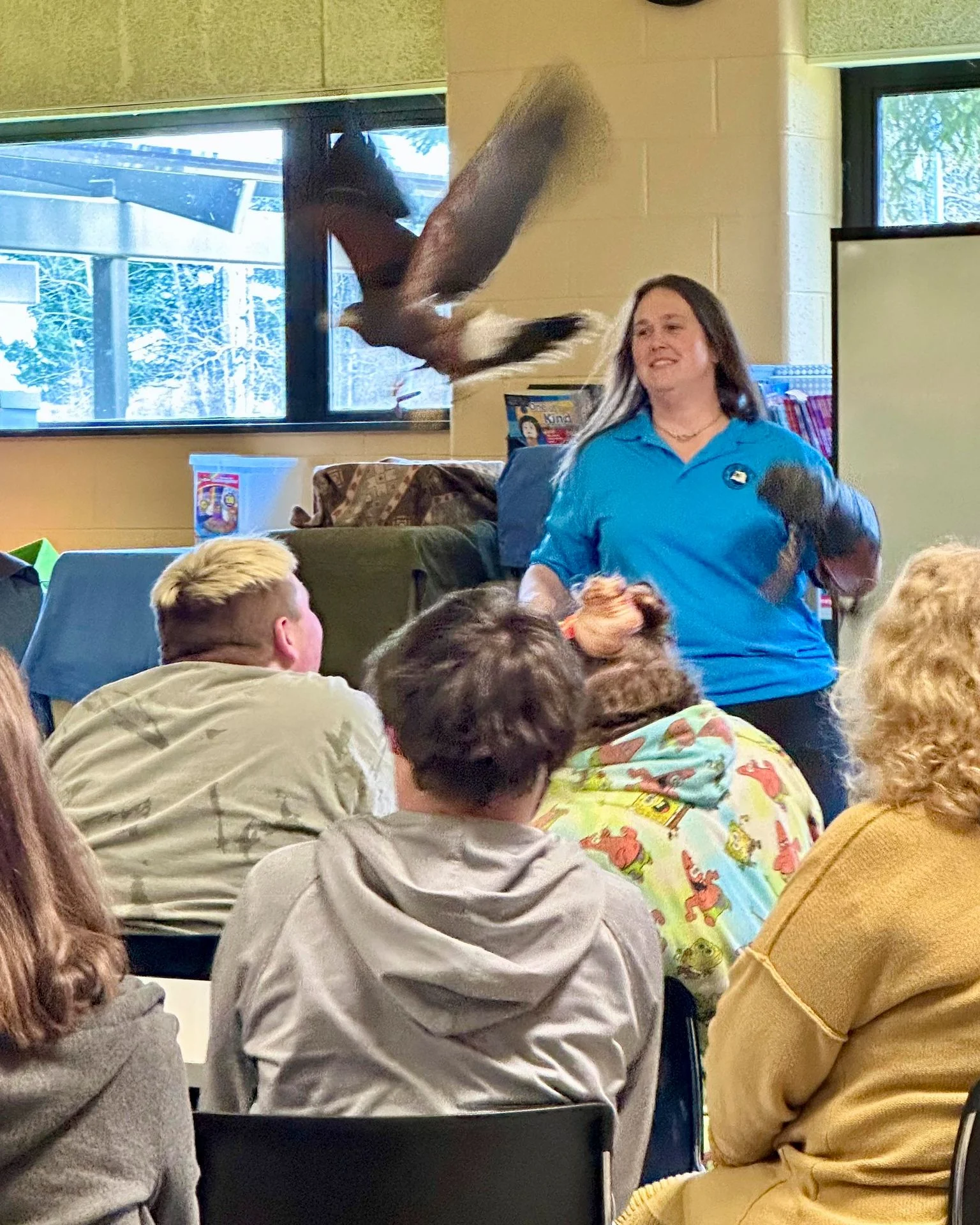
Students at the Hewes Educational Center were recently treated to an unforgettable educational experience as wildlife naturalists from the Hawk Creek Wildlife Center Inc. visited their campus. The program, designed to bring the natural world to life for students of all ages, offered a hands-on and immersive encounter with a diverse array of wildlife. This initiative underscores Hawk Creek Wildlife Center’s ongoing commitment to fostering compassion, saving species, and restoring ecological balance through accessible and impactful education.
The visit, which took place on a recent date that has not been specified in the provided source material, saw two dedicated wildlife naturalists from Hawk Creek present a fascinating lineup of animals to the attentive students. The presentation included an impressive selection of raptors, mammals, and snakes, each chosen to illustrate specific ecological roles and fascinating adaptations. Beyond simply showcasing the animals, the naturalists delved into the intricacies of each species’ natural habitat, their unique behaviors, and the vital importance of their conservation. This pedagogical approach aims to cultivate a deeper understanding and appreciation for the complexities of the natural world, moving beyond superficial observation to foster genuine curiosity and respect.
A particularly memorable moment for the students, as highlighted by the source, was the awe-inspiring sight of a raptor soaring directly overhead. This visceral experience of witnessing a powerful bird of prey in flight undoubtedly left a lasting impression, transforming abstract ecological concepts into a tangible, thrilling reality. Such direct interactions are crucial in building a connection between young people and the wildlife they share their planet with, potentially igniting a lifelong passion for conservation.
The Significance of Wildlife Education
Educational programs like those offered by Hawk Creek Wildlife Center play a critical role in modern conservation efforts. In an era where urbanization and technological advancements often create a disconnect between humans and nature, these initiatives serve as vital bridges. By bringing live animals into classroom settings, or to educational institutions like Hewes Educational Center, educators can bypass the limitations of textbooks and digital media, offering a multi-sensory learning experience.
According to the National Wildlife Federation, studies have shown that children who spend more time in nature are more likely to develop a sense of environmental stewardship. Furthermore, programs that focus on charismatic wildlife, such as raptors and mammals, often serve as effective gateways to broader ecological understanding. Raptors, for example, are apex predators and indicators of ecosystem health. Their presence or absence can signal significant changes in the environment, making them powerful educational tools for discussing food webs, habitat preservation, and the impact of human activities.

The introduction of reptiles, such as snakes, can also be instrumental in dispelling common myths and fears. Naturalists often emphasize the ecological benefits of snakes, such as pest control, thereby fostering a more balanced and informed perspective on these often-misunderstood creatures. Mammals, with their relatable behaviors and diverse adaptations, further enrich the learning experience, showcasing the incredible spectrum of life on Earth.
Hawk Creek Wildlife Center: A Legacy of Conservation
Hawk Creek Wildlife Center, based in Colorado, has established itself as a prominent organization dedicated to wildlife rehabilitation, education, and conservation. Founded with the mission to foster compassion, save species, and restore balance, the center actively engages with communities through a variety of outreach programs. Their educational initiatives are designed to be accessible and engaging, catering to a wide range of audiences from young children to adults.
The center’s work extends beyond educational presentations. They are actively involved in the rehabilitation of injured and orphaned wildlife, with the ultimate goal of returning these animals to their natural habitats whenever possible. This dual focus on direct care and public education creates a holistic approach to conservation, recognizing that both hands-on intervention and informed public support are essential for long-term success.
The visit to Hewes Educational Center is a testament to this commitment. By partnering with schools and other educational institutions, Hawk Creek ensures that its message of conservation reaches the next generation, equipping them with the knowledge and empathy needed to become responsible stewards of the environment. The use of trained wildlife naturalists, who possess both expertise in animal behavior and skill in engaging young audiences, is a key factor in the success of these programs.
The Impact of Experiential Learning
The experiential nature of the Hawk Creek program at Hewes Educational Center offers several pedagogical advantages. Unlike passive learning, where information is primarily absorbed through reading or listening, experiential learning involves active participation and direct engagement. This can lead to enhanced retention of information, a deeper emotional connection to the subject matter, and a more profound understanding of complex concepts.
The sight of a raptor flying overhead, for instance, is an experience that transcends mere factual knowledge. It evokes wonder, stimulates curiosity, and creates a memorable association with the animal and its environment. This emotional engagement is a powerful driver for learning and can inspire students to seek out further information and take action.

Furthermore, these programs often address common misconceptions about wildlife. By presenting animals in a controlled and educational setting, naturalists can demystify creatures that may be feared or misunderstood, such as snakes. This can lead to a shift in attitudes, encouraging respect and a willingness to coexist with wildlife. The emphasis on natural habitats and behaviors also helps students understand the interconnectedness of ecosystems and the importance of preserving biodiversity.
Broader Implications for Environmental Stewardship
The educational initiatives undertaken by organizations like Hawk Creek Wildlife Center have far-reaching implications for the future of environmental stewardship. By investing in the education of young people, these centers are cultivating a generation that is more likely to be informed, engaged, and proactive in conservation efforts.
Supporting Data and Trends:
- Declining Biodiversity: Global biodiversity is facing unprecedented threats. The Intergovernmental Science-Policy Platform on Biodiversity and Ecosystem Services (IPBES) reported in 2019 that around 1 million animal and plant species are now threatened with extinction, many within decades. Educational programs can foster awareness of these issues.
- Youth Engagement in Environmentalism: There is a growing trend of youth activism and engagement in environmental causes worldwide. Organizations like Fridays for Future, inspired by Greta Thunberg, demonstrate the power of young people to drive change. Wildlife education can channel this passion into informed action.
- Impact of Nature Deficit Disorder: Author Richard Louv coined the term "nature deficit disorder" to describe the potential negative consequences of reduced exposure to nature in children. Educational programs that bring nature to children can help mitigate these effects, promoting physical and mental well-being.
The programs offered by Hawk Creek are not merely about imparting facts; they are about nurturing empathy, fostering a sense of responsibility, and inspiring a lifelong commitment to protecting the natural world. When students learn about the challenges faced by various species and the importance of their habitats, they are more likely to become advocates for conservation in their own communities and beyond.
Conclusion
The recent visit of Hawk Creek Wildlife Center to Hewes Educational Center exemplifies the vital role that wildlife education plays in shaping future environmental leaders. By providing engaging, hands-on experiences with a diverse range of animals, these programs ignite curiosity, dispel myths, and cultivate a deep appreciation for the natural world. As the challenges facing our planet’s biodiversity continue to grow, the importance of such initiatives in fostering compassion, saving species, and restoring balance cannot be overstated. The direct interaction with wildlife, particularly the memorable flight of a raptor, serves as a powerful catalyst, transforming young learners into informed and passionate advocates for conservation. Hawk Creek Wildlife Center’s commitment to this mission ensures that the seeds of environmental stewardship are sown in fertile ground, promising a more sustainable future for all.
