
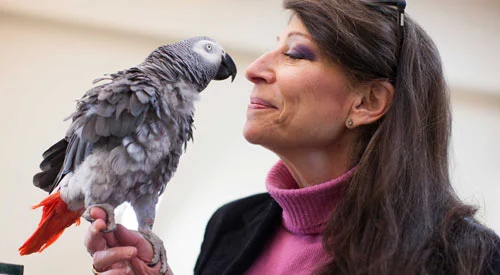
The life of a scientist, often portrayed as a solitary pursuit within laboratories, frequently involves extensive global travel to disseminate research findings and foster international collaboration. Dr. Irene Pepperberg, a renowned scientist known for her groundbreaking work with African grey parrots, recently found herself in an unexpected and precarious situation, stranded in Dubai as regional hostilities escalated. What began as a scientific endeavor to study falcons in the United Arab Emirates (UAE) devolved into a stark illustration of the unpredictable nature of international travel when confronted with geopolitical crises. This article delves into Dr. Pepperberg’s experience, providing context, a chronological account, supporting data, and an analysis of the broader implications for scientific travel and international relations.
A Routine Scientific Expedition Takes an Unforeseen Turn
Dr. Pepperberg’s journey to Dubai, commencing on February 21st, was intended to be a continuation of previous research focused on falcons. This expedition aimed to gather crucial data and build upon established collaborative efforts. "We got some terrific data from some of the birds and were very excited!" Dr. Pepperberg recounts, highlighting the promising nature of the initial stages of the study. Tentative plans were already in motion for a return visit the following year, underscoring the forward-looking and productive trajectory of her scientific mission. However, this promising outlook was abruptly shattered on February 28th, when escalating regional tensions led to widespread flight cancellations and an environment of palpable uncertainty.
The subsequent days proved to be a stark departure from the anticipated academic pursuits. Dr. Pepperberg, while expressing that her safety is paramount, described the harrowing experience of missile interceptions that shook the residence of a colleague. "The blowback from several missile interceptions rocked his house and rattled the windows!" she noted, painting a vivid picture of the immediate impact of the conflict. This visceral experience underscored the proximity of danger and the immediate need for a secure location.
Timeline of Uncertainty: From Scientific Endeavor to Stranded Traveler
The unfolding events can be chronicled as follows:
- February 21st: Dr. Irene Pepperberg arrives in Dubai to commence her research on falcons. Initial progress is reportedly positive and promising for future collaborations.
- February 28th: Dr. Pepperberg is escorted to the airport by a colleague, with the expectation of returning home. However, escalating regional hostilities begin to severely impact air travel.
- Late February/Early March: Reports emerge of missile interceptions and drone strikes in the vicinity of Dubai. Dr. Pepperberg experiences the direct impact of these events, including the physical shaking of a building due to interceptions.
- Early March: Facing widespread flight cancellations, Dr. Pepperberg seeks a more secure location and moves to a hotel near the airport, anticipating a swift departure once flights resume. Initial attempts to secure alternative travel arrangements are met with significant challenges.
- March 5th: While writing, Dr. Pepperberg notes that the earliest possible departure date is now projected to be March 8th, with flights being consistently cancelled. She continues to monitor news and attempt to navigate the complex rebooking process.
The Stark Reality of Stranded Travel in a Conflict Zone
The initial days of being stranded were characterized by a pervasive sense of unease and practical challenges. Dr. Pepperberg, while safe, found herself in a precarious position, far from her intended destination and grappling with the logistical nightmare of disrupted global travel. The news of missile interceptions and drone strikes, even if targeting specific military assets, created an atmosphere of anxiety. A photograph provided by Dr. Pepperberg, taken from her hotel window overlooking the airport, shows a gray plume of smoke, identified as originating from a drone hit. While the damage was reportedly minor and limited to a small section of a terminal, the visual served as a stark reminder of the prevailing security situation.

The perceived availability of support from the UAE government for stranded individuals proved to be more complicated than initially understood. A colleague discovered information suggesting that the UAE would cover hotel and food expenses for those affected. However, this offer, Dr. Pepperberg learned, seemed to be primarily applicable to passengers flying with Emirates, an airline she was not booked with. This disparity highlighted the nuanced and often sector-specific nature of such support measures during crises.
Navigating Bureaucratic Hurdles and Logistical Nightmares
The process of attempting to secure passage home became an arduous task, marked by frustrating bureaucratic hurdles and the escalating costs of communication. Dr. Pepperberg’s efforts to contact the State Department yielded little immediate assistance, with extended hold times and a lack of concrete action. "I was on hold for 20 mins; between calls like that and those to American Airlines for almost daily rebookings as flight after flight gets cancelled, I’ve been told my cell phone bill is now over $500," she stated, underscoring the financial and temporal drain of the situation. Despite these challenges, she diligently completed all necessary forms, a proactive step in the hope of future assistance.
The Dubai International Airport, a major global hub, remained operational but with severely limited flight options. Primarily, only Emirates and FlyDubai were operating flights. Dr. Pepperberg’s booking was with Qatar Airlines, a carrier connected to British Airways and American Airlines. However, these airlines had suspended all flights originating from Dubai. The situation was further compounded by the closure of airspace over Doha, Qatar, impacting Qatar Airlines’ ability to operate. The evacuation of residents near the U.S. Embassy in Doha, a development observed by Dr. Pepperberg, cast further doubt on the timeline for the reopening of airspace.
Broader Implications for Scientific Collaboration and Travel
Dr. Pepperberg’s predicament serves as a potent case study for the vulnerabilities inherent in international scientific endeavors. The incident underscores the critical need for robust contingency planning and support mechanisms for researchers traveling to regions susceptible to geopolitical instability. The disruption not only impacts individual scientists but can also delay or derail vital research projects, hindering the advancement of knowledge.
The reliance on specific airlines and the complexities of international aviation regulations, particularly during crises, create significant challenges for travelers. Dr. Pepperberg’s mention of having the "highest rank on American Airlines" providing some priority on Qatar Airways, yet being stymied by airspace closures, illustrates the interconnected yet fragile nature of global travel networks. The situation mirrors that of countless other travelers caught in similar circumstances, highlighting the broader systemic issues that emerge during times of conflict.
The increasing frequency of geopolitical events and their direct impact on global connectivity raises pertinent questions for institutions and governments. What measures can be put in place to safeguard researchers and ensure the continuity of scientific dialogue? How can diplomatic channels be more effectively leveraged to facilitate the safe passage of individuals engaged in critical academic and research pursuits? The financial burden placed on individuals like Dr. Pepperberg, from communication costs to potential additional accommodation and rebooking fees, also points to a need for clearer policies regarding financial support during unforeseen travel disruptions caused by external events.
Analysis: The Interplay of Science, Geopolitics, and Global Mobility
Dr. Pepperberg’s experience in Dubai, while deeply personal, reflects a broader trend where scientific pursuits are increasingly susceptible to the vagaries of international politics. The desire to gather data on falcons, a seemingly innocuous scientific objective, became entangled in a complex web of regional tensions, air traffic control restrictions, and diplomatic challenges.
The narrative highlights the limitations of current support systems for individuals caught in such situations. While governments offer consular services, the effectiveness and speed of these services can be significantly strained during widespread crises. The reliance on information gleaned from the internet and the subsequent discovery of nuanced eligibility criteria for support underscore the need for more direct and transparent communication from official channels during emergencies.
Furthermore, the incident prompts a reevaluation of the risk assessment protocols for international scientific travel. Institutions and funding bodies may need to consider the incorporation of geopolitical risk factors into their planning and provide more comprehensive travel insurance or emergency funds. The ability to adapt and maintain research momentum in the face of unexpected disruptions is becoming an increasingly critical skill for the modern scientist.
The phrase Dr. Pepperberg uses, feeling "a bit like Dorothy in The Wizard of Oz… ‘There’s no place like home,’" encapsulates the profound human desire for security and familiarity that is tested when one is unexpectedly isolated in a foreign land amidst uncertainty. Her journey from a promising scientific expedition to a stark encounter with the realities of geopolitical instability serves as a compelling reminder of the interconnectedness of our world and the challenges that arise when global peace is threatened. The lessons learned from her experience have implications far beyond the realm of avian research, touching upon the very fabric of international cooperation and the resilience of global mobility in an increasingly complex geopolitical landscape.
