
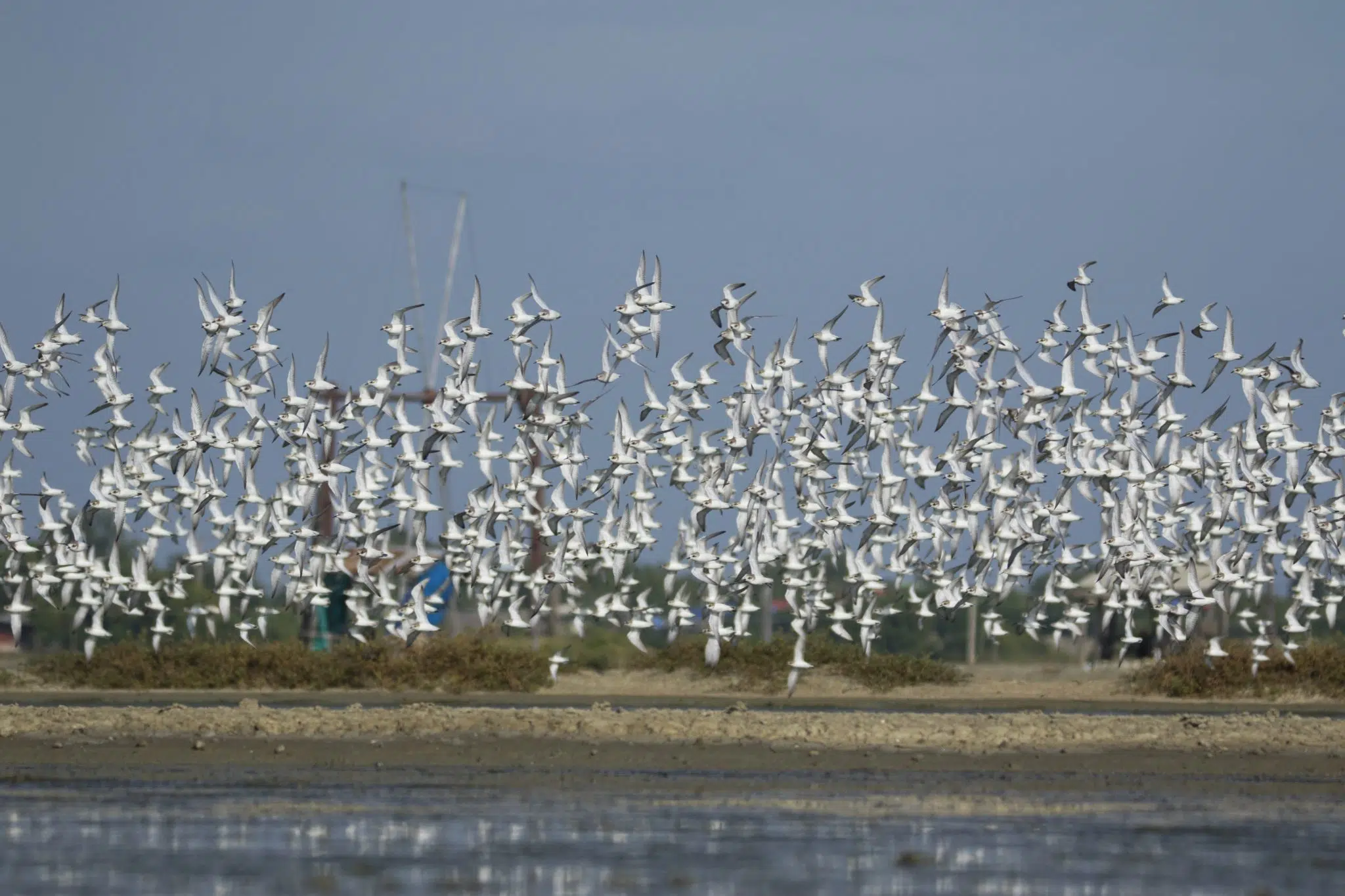
Against the clear blue backdrop of the Gulf of Thailand, a vibrant spectacle unfolds as hundreds of shorebirds take flight, their small white and grey wings creating a pixelated wall that skims the surface of the water. These avian travelers, drawn by the plentiful organisms thriving on the coastal mudflats, congregate here for a crucial purpose: sustenance. Yet, this essential ecosystem, a lifeline for countless species and a burgeoning local economy, now faces an existential threat from a proposed oil refinery and power plant mere kilometers away. The Bird Conservation Society of Thailand (BCST) and local communities are sounding the alarm, launching a fervent campaign to protect this invaluable natural heritage.
The Jewel of the Gulf: Pak Thale’s Ecological Significance
Pak Thale Nature Reserve, situated in Southern Thailand, represents a critical nexus in the global phenomenon of avian migration. Every winter, these shorebirds undertake an epic journey, descending upon its wetlands from their summer breeding grounds as far north as the Arctic Circle. This makes Pak Thale an indispensable stopover and wintering site on the East Asian-Australasian Flyway (EAAF), one of the world’s four major migratory routes for birds. The EAAF spans 22 countries, connecting breeding grounds in the Arctic, Siberia, and Alaska with non-breeding areas in Southeast Asia and Australasia. It supports over 50 million migratory waterbirds from 250 different populations, including many globally threatened species.
The importance of Pak Thale to this vast network cannot be overstated. It offers a unique combination of rich mudflats, shallow waters, and mangrove fringes, providing ideal foraging and roosting habitats. The abundant invertebrate life in its intertidal zones offers the high-energy fuel migratory birds desperately need to survive their arduous journeys, which can span tens of thousands of kilometers. Without such critical refueling stations, the survival rates of entire populations plummet. The EAAF itself is considered one of the most threatened flyways globally, with an estimated 60% of its critical wetlands having been lost or degraded over the last 50 years due to rapid coastal development, agricultural expansion, and pollution.
A Sanctuary Forged: BCST’s Conservation Legacy
Recognizing the unparalleled ecological value of Pak Thale, the Bird Conservation Society of Thailand (BCST), BirdLife International’s Thai Partner, embarked on a proactive conservation initiative. In 2019, BCST took a significant step by purchasing 8 hectares of land along the coast, strategically establishing it as a wildlife sanctuary. This forward-thinking acquisition aimed to safeguard a core area of the mudflats, ensuring a permanent haven for the hundreds of thousands of birds that rely on it annually.
Since its establishment, the Pak Thale Nature Reserve has become a beacon for avian biodiversity, hosting some of Asia’s rarest and most endangered bird species. Its relatively small size, paradoxically, enhances its appeal for birdwatchers, offering unparalleled opportunities for close-up observations. Enthusiasts can readily spot critically endangered species such as the Spoon-billed Sandpiper (Calidris pygmaea), a species with fewer than 500 mature individuals left in the wild, making every remaining stopover site crucial for its survival. Other endangered species frequently sighted include the Far Eastern Curlew (Numenius madagascariensis), the Great Knot (Calidris tenuirostris), and the Spotted Greenshank (Tringa guttifer). Indeed, Pak Thale is possibly the only location in Southeast Asia where birdwatchers can easily observe all these highly sought-after species in a single day, drawing international visitors and conservationists alike.
Beyond land acquisition, BCST’s commitment to Pak Thale extends to fostering sustainable community development. The organization has successfully integrated ecotourism as a valuable income stream for local residents. This includes training community members to become expert guides for the reserve, providing them with new skills and economic opportunities directly linked to the health of the ecosystem. Furthermore, BCST engaged with local salt farmers, helping them develop profitable and sustainable avenues to sell "biodiversity-friendly salt." This innovative approach ensures that traditional livelihoods can continue in harmony with nature, promoting practices that minimize environmental impact and provide economic incentives for conservation. These initiatives underscore a model where human well-being and ecological preservation are not mutually exclusive but mutually reinforcing.

The Looming Shadow: Details of the Proposed Development
The careful balance achieved at Pak Thale now hangs precariously in the balance with the recent revelation of a proposed oil refinery and power plant development. The exact timeline of the proposal’s emergence is not publicly detailed, but BCST indicated that the news "came along" recently, triggering immediate concern. While specific corporate entities or government bodies driving the project have not been widely disclosed in the initial reports, such large-scale industrial developments typically involve significant investment from both private sector companies and government support, often justified by arguments of national energy security, economic growth, and job creation.
The proposed facilities are slated for construction mere kilometers from the Pak Thale Nature Reserve. An oil refinery is a complex industrial plant that processes crude oil into more useful petroleum products such as gasoline, diesel fuel, kerosene, and lubricants. A power plant, particularly one co-located with a refinery, would likely be a thermal power plant, potentially burning fossil fuels (e.g., natural gas or the refinery’s by-products) to generate electricity. These facilities are known for their substantial environmental footprints, both during construction and throughout their operational lifespan. The proximity of such heavy industry to a sensitive ecological zone like Pak Thale raises profound alarms among conservationists and local communities.
Environmental Catastrophe Foreseen
The potential environmental ramifications of an oil refinery and power plant operating so close to Pak Thale are multi-faceted and catastrophic. The primary concern is pollution:
- Air Pollution: Refineries and power plants emit a wide range of atmospheric pollutants, including sulfur dioxide (SO2), nitrogen oxides (NOx), particulate matter (PM2.5), volatile organic compounds (VOCs), and heavy metals. These can travel considerable distances, degrading air quality, causing acid rain, and contributing to smog. For birds, chronic exposure to such pollutants can impair respiratory systems, reduce reproductive success, and weaken immune responses. The constant presence of industrial fumes could also act as a deterrent, driving away the approximately 270 bird species that call Pak Thale home.
- Water Pollution: The discharge of industrial wastewater, even after treatment, often contains trace amounts of hydrocarbons, heavy metals, and other toxic chemicals. Accidental spills, a perennial risk with oil refineries, could release vast quantities of crude oil or refined products directly into the Gulf of Thailand, with devastating consequences for marine life, the intertidal mudflats, and the birds that feed there. Oil coats feathers, destroying their insulating and waterproofing properties, leading to hypothermia and starvation. Ingestion of oil during preening is also highly toxic. Even subtle changes in water chemistry can impact the delicate balance of the food web, reducing the availability of the organisms that shorebirds depend upon.
- Noise and Light Pollution: The continuous operation of an industrial complex generates significant noise and artificial light. Migratory birds, particularly those active at night, rely on natural light cues for navigation. Excessive artificial light can disorient them, leading to collisions or disrupting their natural behaviors. Persistent noise can cause chronic stress, interfere with communication, and force birds to expend more energy to avoid perceived threats, impacting their overall health and fitness.
- Habitat Degradation and Fragmentation: The construction phase itself involves significant land disturbance, potentially impacting adjacent areas. The ongoing presence of the facilities creates a physical barrier, fragmenting habitats and disrupting ecological corridors. Even if the reserve itself is not directly built upon, the industrial presence fundamentally alters the landscape and the ecological services it provides.
- Collision Risks: Power plants, especially with their associated transmission lines, introduce another grave hazard. Low-flying birds, particularly during migration, are highly susceptible to colliding with live electrical wires and towers. This is a well-documented cause of mortality for numerous bird species worldwide, and the addition of such infrastructure in a known migratory flyway would inevitably lead to increased bird fatalities.
For highly endangered species like the Spoon-billed Sandpiper, which has fewer than 500 adults left in the wild, the loss or degradation of a critical stopover site like Pak Thale would represent a significant, potentially irreversible, dent in their already precarious global population. Their entire existence hinges on the availability of a network of healthy wetlands along their arduous migratory path.
Socio-Economic Repercussions for Local Communities
The threat posed by the industrial development extends beyond ecological devastation to directly impact the socio-economic fabric of the local communities around Pak Thale. The carefully cultivated ecotourism sector, which BCST has championed, stands to be completely dismantled.
- Loss of Ecotourism Revenue: With air and water pollution, noise, and the visual intrusion of heavy industry, the pristine natural environment that attracts birdwatchers will be compromised. Birds, the primary draw, will either decline in number or be driven away, making the reserve a far less attractive destination. This will lead to a drastic reduction in tourist visits, directly impacting the income of local guides, guesthouse owners, restaurants, and other businesses that have come to rely on the ecotourism economy. The investment in training local guides would be rendered moot.
- Impact on Biodiversity-Friendly Salt Farmers: BCST’s innovative program supporting local salt farmers to produce and market "biodiversity-friendly salt" is another casualty. The market for such a product is intrinsically linked to the healthy image of the natural environment and the presence of abundant wildlife. Pollution from the refinery could contaminate the salt pans, making the product unsafe or undesirable. Moreover, the very premise of "biodiversity-friendly" would be undermined if the adjacent ecosystem is degraded by industrial activity. This would jeopardize a sustainable alternative livelihood for farmers, potentially forcing them back to less environmentally sound practices or even out of their traditional occupation.
- Health and Quality of Life: Beyond economic impacts, the local population would face direct health risks from industrial pollution. Respiratory illnesses, skin conditions, and long-term health complications associated with exposure to airborne particulates and waterborne toxins are common concerns for communities living near oil refineries and power plants. The general quality of life would also decline due to constant noise, odors, and the loss of a clean, natural environment that provides both sustenance and cultural value.
The East Asian-Australasian Flyway: A Fragile Network Under Threat
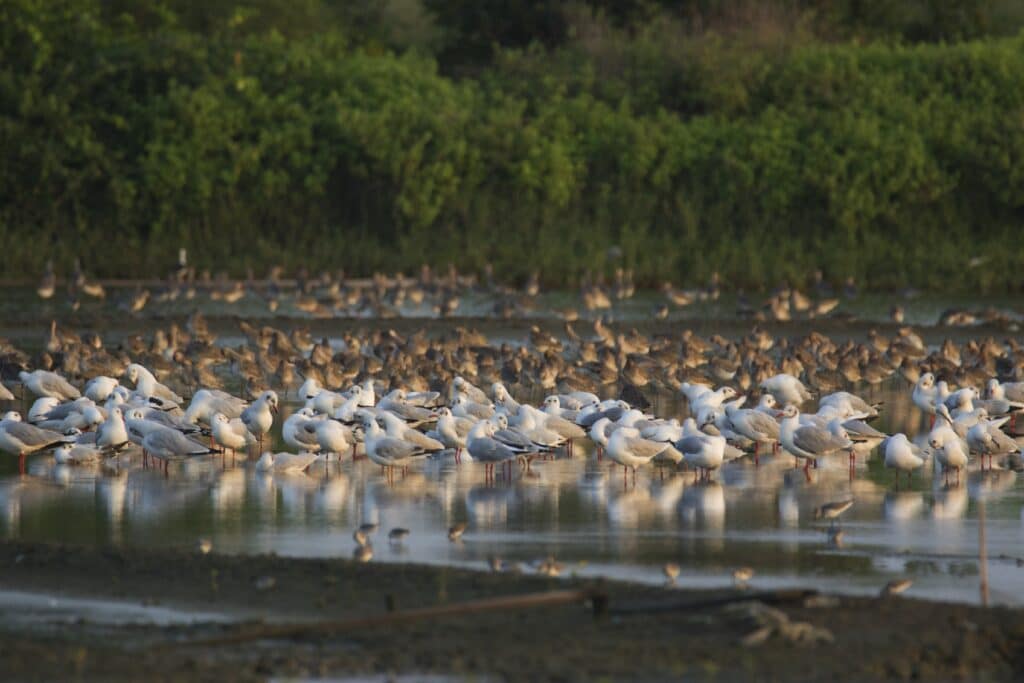
The predicament at Pak Thale is not an isolated incident but a microcosm of a larger, systemic threat facing the entire East Asian-Australasian Flyway. Migratory birds depend on a chain of suitable habitats, akin to stepping stones, stretching across continents. When one link in this chain is broken, the entire system is weakened. As the article highlights, "it’s not as simple as them finding another site to rest." Moving to an alternative site requires additional energy, which means more food and rest, resources that are increasingly scarce.
Across the EAAF, coastal wetlands, the primary habitats for shorebirds, are being lost at an alarming rate to rapid urbanization, industrial expansion, aquaculture, and agricultural conversion. Countries along the flyway, including China, South Korea, Vietnam, and Indonesia, have seen significant wetland destruction. For instance, studies indicate that South Korea has lost over 60% of its intertidal mudflats in the past few decades, primarily to reclamation projects. Each lost wetland makes the remaining sites, like Pak Thale, even more critical. The cumulative effect of these losses is pushing many migratory species, particularly shorebirds, towards extinction. The situation at Pak Thale thus serves as a stark reminder of the urgent need for coordinated, international conservation efforts to protect these vital ecological corridors.
Call to Action and Stakeholder Responses
In response to the proposed development, BCST, leveraging its deep community ties and conservation expertise, has initiated a robust campaign to oppose the project. Niyom Thongmeun, Pak Thale Manager for BCST, has become a vocal advocate, leading local efforts to raise awareness. A poignant image shows Niyom with a sign reading "This affects ecotourism and the bird habitat," encapsulating the dual threat facing the region. His powerful statement, "We cannot guarantee when the final migration of migratory birds will occur, because both humans and birds are facing the same fate. Let’s work together to stop the fossil fuel industry," underscores the interconnectedness of human and environmental destinies and frames the issue within the broader context of climate change and fossil fuel reliance.
BCST has launched an online petition, urging individuals globally to lend their voice to the cause. This digital call to action aims to generate widespread public and political pressure, both domestically and internationally. While direct official statements from the proposed developers or government bodies regarding this specific opposition have not been detailed, such large-scale projects typically involve environmental impact assessments (EIAs) and public consultation processes. Conservation groups would be expected to formally submit their concerns through these channels. It is highly probable that industry proponents would emphasize the economic benefits, energy independence, and job creation associated with the project, potentially downplaying or mitigating environmental concerns through promised mitigation measures. However, given the critical ecological status of Pak Thale, such measures would likely be deemed insufficient by environmental experts. International conservation organizations, including BirdLife International, are expected to rally in support of BCST, emphasizing the global significance of the EAAF and the reputational risks for Thailand if such a vital site is compromised.
The Broader Implications: A Test Case for Sustainable Development
The struggle to protect Pak Thale Nature Reserve represents more than just a local environmental battle; it is a critical test case for sustainable development in a rapidly industrializing region. It highlights the inherent tension between economic aspirations, particularly those tied to fossil fuel industries, and the imperative of biodiversity conservation and climate action. The decision made regarding Pak Thale will send a powerful message about Thailand’s commitment to its international environmental obligations, including the Convention on Biological Diversity and the Ramsar Convention on Wetlands of International Importance, under which many EAAF sites are designated.
The opportunity for Thailand lies in embracing a future where economic prosperity is not at the expense of its natural capital. Investing in renewable energy, promoting green industries, and expanding ecotourism can offer sustainable pathways for development that align with global environmental goals. The "biodiversity-friendly salt" initiative at Pak Thale is a testament to the potential for such innovative, community-led solutions. Ensuring Pak Thale remains a haven for migratory birds is not merely an act of ecological preservation; it is an investment in the long-term health, economic resilience, and cultural richness of the region. The collective voice of concerned citizens, conservationists, and international bodies is now critical to ensuring that the skies above the Gulf of Thailand continue to be filled with the miraculous journey of migratory birds, rather than the plumes of industrial development. The petition stands as a testament to this shared hope, urging concerted action to protect Pak Thale for generations to come.
