
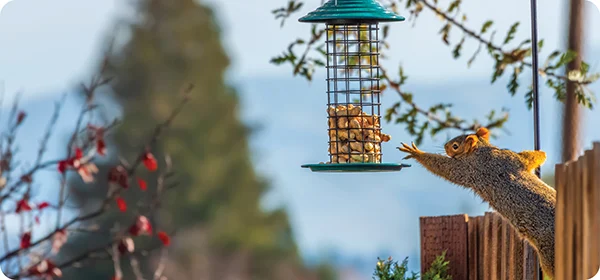
The hobby of backyard bird feeding has experienced a remarkable surge in popularity over the past several decades, evolving from a casual pastime into a multi-million-dollar industry that connects millions of households with local wildlife. According to recent wildlife conservation and pet industry data, more than 50 million North American households routinely provide food for wild birds. However, this well-intentioned practice frequently intersects with the adaptive behaviors of local fauna. For homeowners, the peaceful morning routine of watching cardinals, goldfinches, and chickadees can quickly transform into a frustrating exercise in wildlife management as resilient rodents and aggressive avian species commandeer feeding stations.
Understanding the ecological pressures that drive wildlife to backyard feeders is the first step toward establishing a harmonious coexistence. For squirrels, raccoons, and certain flocking bird species, the search for high-calorie sustenance is a relentless, full-time endeavor essential for survival. When these animals encounter an unprotected backyard feeder, they effectively discover an unlimited food source. Over time, as food consumption rates soar and expensive seed blends disappear overnight, patience wears thin, prompting property owners to seek effective, humane methods to regain control of their outdoor spaces.
The Evolutionary Adaptation of the Urban Squirrel
To successfully outsmart a squirrel, homeowners must first respect the adversary. Members of the rodent family, particularly the eastern gray squirrel, possess extraordinary physiological and cognitive traits. Their physical agility allows them to leap distances exceeding ten feet horizontally and scale vertical surfaces with ease. Furthermore, behavioral studies in urban ecology demonstrate that squirrels possess advanced problem-solving capabilities, allowing them to systematically test feeder designs until they find a structural weakness.
When squirrels dominate a feeding station, the financial and logistical impacts are swift. A single squirrel can consume or waste pounds of seed in a matter of days, frequently damaging delicate plastic or wooden feeder components in the process. To mitigate this, wildlife management experts recommend a two-pronged approach utilizing physics and specialized hardware: strategic placement and physical barriers.
Pole-mounted feeding systems offer the highest rate of success when paired with the correct equipment. Stovepipe baffles—smooth, cylindrical metal barriers—are widely regarded as the gold standard for pole protection. When installed correctly, these devices prevent squirrels from gaining any purchase with their claws. Industry best practices dictate that a stovepipe baffle must be positioned at least five feet above the ground. Additionally, the entire pole system must be situated a minimum of ten feet away from any potential launching pads, including overhanging tree branches, neighboring fences, roofs, or garden structures. This ten-foot perimeter neutralizes the squirrel’s jumping range, transforming the station into a secure, bird-exclusive zone.
For properties where hanging feeders from mature trees is the only viable option, the strategy shifts from blocking climbs to blocking descents. Standard tube or hopper feeders can be retrofitted with a domed squirrel baffle suspended directly above the feeder. This physical umbrella blocks the animal’s ability to climb down the hanging wire or chain. Alternatively, homeowners can install exclusion cages. These wire enclosures surround the primary feeder, featuring grid dimensions specifically calculated to let smaller songbirds slip through effortlessly while keeping larger rodents and bulky nuisance birds entirely on the outside.
Redefining the Nuisance Bird Dilemma
While mammals often receive the lion’s share of the blame, avian competitors present a distinct set of challenges. In the context of backyard ornithology, a "nuisance bird" is not a legally defined classification, but rather an ecological descriptor. It refers to any species that congregates at a feeder in such overwhelming numbers or aggressive quantities that it physically displaces desirable songbirds while rapidly depleting valuable food supplies.

Common culprits often include European starlings, common grackles, and house sparrows. These species are highly gregarious, often arriving in large flocks that intimidate solitary or smaller birds. Addressing this imbalance requires moving away from broad-spectrum feeding mixes and adopting a targeted dietary approach.
Many commercial bird seed blends contain high proportions of cracked corn, milo, and white proso millet. While cost-effective, these ingredients act as a beacon for blackbirds, starlings, and doves. Ornithological experts advise eliminating these bulk ingredients in favor of specialized seeds that appeal strictly to targeted populations. Safflower seed, for example, is famously disliked by starlings, blackbirds, and squirrels due to its bitter hull, yet it is readily consumed by favored backyard visitors such as cardinals, titmice, and grosbeaks. Similarly, offering pure, high-grade suet cakes rather than complex blends with added grains can deter starlings while providing essential protein and fat for woodpeckers, nuthatches, and wrens.
Feeder engineering has also evolved to counter the physical advantage of larger birds. Weight-sensitive feeding stations represent a major technological advancement in backyard wildlife management. These mechanical devices can be calibrated so that the perches collapse or shield the feeding ports the moment a heavier bird—such as a grackle or pigeon—lands on them. Once the heavier animal departs, the spring-loaded mechanism resets, allowing lighter songbirds to feed uninterrupted. Furthermore, modern cage-style feeders and designs featuring severely shortened perches naturally favor smaller, more agile species, rendering the feeding stations mechanically unusable for bulkier avian competitors.
Industry Perspectives and Expert Guidance
As the backyard bird feeding hobby continues to grow, specialized retailers and wildlife organizations emphasize that effective critter management does not require harsh chemicals or harmful deterrents. Rather, success lies in understanding animal behavior and employing passive, preventative engineering.
Specialists within the wild bird feeding industry consistently advocate for education over frustration. Organizations such as Wild Birds Unlimited, the largest franchise network of backyard nature specialty stores in North America, stress that managing backyard wildlife is an ongoing dynamic process rather than a one-time fix. According to industry educators, observation is key: homeowners should regularly audit their yard’s layout, observe the specific species visiting their property, and adapt their feeding strategies seasonally.
Resource networks have expanded to support hobbyists facing persistent wildlife challenges. Educational initiatives, including dedicated podcasts and specialized consultation services offered by certified bird feeding specialists, provide actionable insights into local wildlife patterns. These professionals analyze regional migration data, local predator-prey dynamics, and seasonal food availability to help homeowners tailor their approach to their specific geographic region.
Broader Implications for Urban Ecosystems
The implementation of targeted critter solutions carries implications that extend far beyond the boundaries of an individual backyard. When homeowners successfully deter squirrels and nuisance birds through humane, structural means, they contribute to the broader ecological health of suburban and urban wildlife populations.
Indiscriminate feeding methods that attract unnaturally high concentrations of single rodent or avian species can inadvertently alter local ecosystems, leading to localized overpopulation, increased competition for natural resources, and a higher transmission rate of avian diseases. Conversely, managed feeding stations that favor a diverse array of native songbirds support regional biodiversity. By carefully selecting seed types and utilizing baffles and exclusion cages, property owners create safe havens that sustain declining migratory and resident bird populations without artificially inflating pest populations.

Ultimately, managing the inevitable influx of backyard wildlife requires a balance of patience, observation, and structural preparedness. By viewing feeder management through the lens of animal behavior rather than human frustration, enthusiasts can transform their yards into balanced ecosystems where both wildlife and preferred songbirds can thrive harmoniously.
