
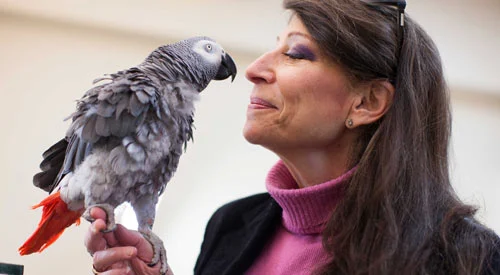
The journey of renowned avian cognition researcher Dr. Irene Pepperberg from Dubai back to her home in Boston was a harrowing ordeal, marked by escalating geopolitical tensions, bureaucratic hurdles, and the sheer uncertainty of navigating international travel during a crisis. What began as a professional visit for her groundbreaking work with African grey parrots, most notably Griffin, devolved into a prolonged period of being stranded as the region became engulfed in conflict. Dr. Pepperberg’s eventual safe return on March 9th, after weeks of uncertainty, underscores the immense challenges faced by civilians caught in the crossfire of international events and highlights the crucial role of private philanthropy in facilitating passage when official channels falter.
The situation in Dubai escalated rapidly, leading to widespread flight cancellations and a near-complete grounding of air travel. Dr. Pepperberg, like many other international travelers, found herself in a precarious position, dependent on the fluctuating schedules of airlines and the often-opaque responses of government agencies. Her initial attempts to secure passage home were met with a frustrating cycle of rescheduling and cancellations. Daily calls to the State Department, while met with courtesy, proved largely unhelpful in securing a concrete departure plan. The offer of a flight to Dulles, initially a glimmer of hope, dissolved into administrative confusion, with no follow-up email detailing terminal or departure time. This experience revealed a critical disconnect between different departments within the State Department, leaving individuals like Dr. Pepperberg in limbo.
Further complicating matters was the limited scope of assistance offered to stranded individuals. It emerged that the United Arab Emirates’ offer to cover hotel and food expenses for those impacted was restricted to passengers flying on Emirates Airlines. Dr. Pepperberg, having booked her travel through Qatar Airways, found herself excluded from this provision, necessitating personal expenditure for her extended stay. While some Emirates flights eventually resumed, they were primarily chartered and inaccessible to the general public. Qatar Airways remained entirely grounded from Dubai to Doha, severing her intended connection to the United States.
Timeline of Displacement and Uncertainty
- Initial Travel and Escalation of Conflict: Dr. Pepperberg was in Dubai for research purposes when regional geopolitical events intensified, leading to a significant disruption of air travel.
- Daily Flight Cancellations: For an extended period, her scheduled flights were repeatedly postponed and ultimately canceled, leaving her without a clear path home.
- Unresponsive Bureaucracy: Despite regular contact with the State Department, concrete assistance in securing passage was not forthcoming. A promising offer of a flight to Dulles was not followed up with necessary details.
- Extended Hotel Stay and Personal Expenses: The UAE’s offer of assistance was limited to specific airlines, forcing Dr. Pepperberg to bear the costs of her prolonged accommodation and meals.
- Communication with Lab and Griffin: To alleviate Griffin’s potential distress and maintain a connection, Dr. Pepperberg conducted video calls with her lab, reassuring her African grey parrot that she had not abandoned him.
- Continued Research Amidst Crisis: Despite the challenging circumstances, Dr. Pepperberg attempted to maintain some level of professional engagement, reviewing papers, transcribing data, and reading journal articles.
- News Consumption and Monitoring: She relied on the BBC for reliable news updates and continuously monitored airline schedules for any signs of resuming operations. Her communication costs escalated significantly, reportedly exceeding $1,200 due to the prolonged stay and constant contact.
The situation became increasingly dire as the conflict showed no signs of abating. The nightly alerts to "shelter in place" proved disorienting and impractical, as no designated shelters were available. Friends in the U.S. also found their efforts to assist stymied by the same bureaucratic inefficiencies encountered by Dr. Pepperberg.
The Crucial Intervention of Philanthropy
A turning point in Dr. Pepperberg’s predicament arrived through an unexpected source: a donor to The Alex Foundation, an organization dedicated to avian research and conservation, reached out for tax-related paperwork. Upon learning of her situation, the donor offered an extraordinary commitment: "Do whatever you have to do to get out and we’ll cover the expense!" This pledge of unconditional financial support proved instrumental.
At the time, options for private citizens to leave the region were severely limited. While some companies were facilitating overland journeys to Oman, a 10.5-hour drive, these were primarily accessible to British citizens who could then take advantage of UK-chartered flights. As a U.S. citizen, this route offered no advantage. The U.S. government’s response, focused on evacuating embassy staff and their families, left private citizens to navigate the crisis independently.
A Glimmer of Hope: Resumption of Commercial Flights

The breakthrough came via an airline alert: Emirates was slated to resume direct commercial flights to select U.S. cities. Dr. Pepperberg immediately accessed their website and discovered a single business-class seat available on a flight to New York City on Sunday, March 9th. Despite the significant cost, the donor’s generous offer empowered her to make the booking. This development provided a tangible light at the end of the tunnel, a stark contrast to the deteriorating news from the war zone. The profound impact of this donor’s intervention cannot be overstated, as Dr. Pepperberg acknowledges that without their support, she might still be stranded in Dubai.
The Final Push: Navigating Airport Chaos and Securing Passage
The days leading up to her departure were not without their anxieties. A significant explosion near the airport on Friday morning, just hours before her scheduled departure, caused a temporary closure, further heightening concerns. Fortunately, the airport reopened after a few hours.
The logistics of the departure itself presented further challenges. While Emirates typically allowed check-in 48 hours prior to a flight, Dr. Pepperberg was only permitted a partial check-in 12 hours before departure. The uncertainty surrounding the exact time to arrive at the airport and the process of obtaining her boarding pass added to the stress. Opting for an early arrival, she spent considerable time navigating the airport, eventually finding a remarkably helpful staff member who, upon understanding her situation and considering her age, arranged for personal assistance and even a wheelchair – a welcome concession given her heightened stress levels.
After several hours in a comfortable business-class lounge, she boarded the flight. The availability of Wi-Fi on board allowed her to send immediate updates to those aware of her plight, signaling her departure from the volatile region.
Return to Familiar Ground and Lingering Impact
The arrival on U.S. soil was met with immense relief. Although she still had to navigate customs, an additional TSA security check (which, by sheer luck, involved manageable lines despite a government shutdown), a lengthy layover in New York, and the final leg to Boston, these were minor inconveniences compared to the ordeal of being in a war zone.
The month following her return has been dedicated to rescheduling appointments and addressing the myriad of disruptions caused by her prolonged absence. Dr. Pepperberg admits to experiencing lingering symptoms of post-traumatic stress, a testament to the psychological toll of her experience. Her brief immersion into the realities of living in a war zone has instilled a profound empathy for those who endure such conditions for extended periods. As of her writing, the geopolitical situation in the region remained unstable.
She maintains contact with her colleagues in Dubai, who are safe but continue to experience significant stress. Efforts are underway to explore possibilities for completing their research studies without the necessity of Dr. Pepperberg’s return the following year, a testament to the long-term implications of such crises on scientific endeavors.
Dr. Pepperberg intends to resume her regular blogging about her lab and scientific work the following month. However, she felt it imperative to share her personal account, both to inform her readership of her safe return and to express her profound gratitude to the donors whose extraordinary generosity made her escape from Dubai possible. Her story serves as a poignant reminder of the vulnerabilities of individuals caught in international crises and the critical importance of both compassionate private action and effective governmental support during such times.
