

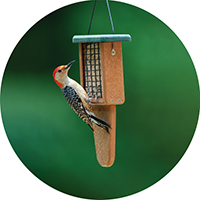
Woodpeckers, often recognized as reliable visitors to backyard feeders, are indeed remarkable creatures, bringing an engaging spectacle of activity and vibrancy to our outdoor spaces. Their presence offers a consistent source of natural entertainment. However, their resilience and specialized adaptations elevate them beyond mere visitors to truly wondrous subjects of natural engineering, enabling them to endure a lifestyle that, for most avian species, would be akin to perpetual, punishing labor. This article delves into the extraordinary physiological and behavioral adaptations that allow woodpeckers to thrive in environments that would be debilitating to many other birds.
The Pounding Physiology of Survival
The defining characteristic of a woodpecker’s existence is its relentless pecking. When excavating a cavity, a woodpecker’s head can impact a tree’s surface at speeds reaching up to 13 miles per hour. The resulting force, approximately 10 Gs, is substantial enough to induce severe brain damage in most other birds. For humans, experiencing such an impact at this speed would be akin to running headfirst into a solid wall, with a significantly higher likelihood of concussion compared to a woodpecker’s brain. This astonishing ability to withstand such repeated, high-velocity impacts is not accidental but the result of a suite of specialized anatomical features.
Anatomical Adaptations: A Masterclass in Natural Engineering
Scientists have extensively studied the woodpecker’s skull structure, which is unique among birds and plays a crucial role in their ability to absorb and dissipate the forces generated by pecking. The skull is composed of lightweight, spongy bone, yet it possesses remarkable strength due to an intricate network of reinforcing bony support struts. This internal architecture acts as a shock-absorbing system, effectively cushioning the brain.
Crucially, a woodpecker’s skull is proportionally small relative to the size of its brain. This anatomical arrangement minimizes the space within the skull, thereby reducing the potential for the brain to move and suffer damage during severe impacts. Imagine a hard-boiled egg inside a slightly too-large shell; any jostling can cause the egg to hit the shell. In a woodpecker, the skull is more like a tightly fitted helmet, preventing such dangerous movement. This sophisticated design ensures the brain remains protected, allowing the bird to continue its essential excavation and foraging activities without sustaining injury.
The Unwavering Chisel: A Bill That Never Wears Down
Beyond cranial protection, the woodpecker’s bill presents another marvel of adaptation. The constant, forceful impact with wood could be expected to rapidly wear down a bird’s beak to a useless nub. However, this is not the case for woodpeckers. While wear does occur, specialized cells at the tip of the bill continuously regenerate and replace lost material. This constant renewal process maintains the bill’s chisel-like point, keeping it sharp and strong. Furthermore, the act of pecking itself contributes to the bill’s self-sharpening mechanism, ensuring its efficacy as a tool for excavating wood, searching for insects, and creating nesting cavities. This dynamic equilibrium between wear and regeneration is vital for their survival and ability to exploit their primary food sources.
The Avian Equivalent of Safety Gear
The abrasive nature of wood excavation also necessitates protection against airborne debris. Woodpeckers have evolved their own sophisticated defense mechanisms, akin to wearing safety goggles and a dust mask. Tufts of stiff feathers grow over their nostrils, acting as a natural "dust mask" that prevents small wood particles from entering their respiratory system. Additionally, they possess a transparent nictitating membrane, often referred to as a "third eyelid." This specialized eyelid sweeps across the eye, clearing away debris and protecting the cornea during the intense activity of drilling into wood, thus preventing ocular damage. These adaptations highlight the comprehensive nature of their evolutionary preparedness for their unique ecological niche.

Woodpeckers as Backyard Attractions
The resilience and remarkable adaptations of woodpeckers make them particularly appealing to backyard bird enthusiasts. Their constant activity and the sheer power they exhibit are captivating to observe. Fortunately, attracting these fascinating birds to one’s garden is achievable with the right food offerings.
Wild Birds Unlimited (WBU) offers a range of specialized foods designed to appeal to woodpeckers. These include:
- WBU Suet: A high-energy food source, suet is particularly attractive to woodpeckers, providing them with essential fats and nutrients.
- No-Melt Dough: This type of suet blend is formulated to remain stable in warmer temperatures, ensuring a consistent food source throughout the year.
- Bark Butter Products: Developed by WBU founder John Porter, Bark Butter is a high-energy food that mimics the natural foods woodpeckers forage for on tree bark, such as insects and sap. It is highly palatable and effective in attracting a variety of woodpecker species.
- Shelled Peanuts: Peanuts are a rich source of protein and fat, making them a favorite among many woodpecker species, including Downy, Hairy, and Red-bellied woodpeckers.
- TreeNutty® Plus Blend: This seed blend typically contains a mix of nuts and seeds that are favored by woodpeckers and other tree-dwelling birds.
- Woodpecker Cylinder: This specially formulated seed cylinder is designed to be hung from a feeder and provides a continuous food source that woodpeckers can cling to and peck at.
By offering these specialized foods, backyard observers can facilitate close-up views of these extraordinary birds, fostering a deeper appreciation for their unique biology and behavior.

The Broader Ecological Context and Implications
The adaptations of woodpeckers are not merely curiosities; they are integral to their ecological role. By excavating cavities in dead or decaying trees, woodpeckers create essential habitat for numerous other species, including cavity-nesting birds, small mammals, and insects. These abandoned nest holes serve as crucial refuges for a wide array of wildlife, particularly in forest ecosystems where natural cavities might be scarce. Thus, the woodpecker’s "tough" lifestyle has a cascading positive effect on biodiversity.
The study of woodpecker adaptations also holds potential implications for fields beyond ornithology. For instance, their shock-absorbing skull structures and efficient impact dissipation mechanisms could inform the design of protective gear for humans, such as helmets or sports equipment. Understanding how their bills regenerate and self-sharpen might offer insights into biomimicry for developing more durable and self-maintaining tools and materials.
A Chronology of Observation and Understanding
The fascination with woodpeckers and their unique abilities is not new. For centuries, indigenous cultures and early naturalists have observed their remarkable behaviors. However, systematic scientific inquiry into their physiology began in earnest in the 20th century, accelerating with advancements in biomechanics and imaging technologies.

- Early Observations: Indigenous peoples worldwide have long recognized the woodpecker’s ability to peck wood, often incorporating their drumming and nest-building into folklore and cultural practices.
- 19th and Early 20th Century Naturalists: Explorers and ornithologists documented the diverse species of woodpeckers and their feeding habits, noting their strong beaks and tenacious nature.
- Mid-20th Century Biomechanical Studies: Researchers began to quantify the forces involved in woodpecker pecking and explore the physical attributes of their skulls and bills. Early studies focused on the skull’s bone density and structure.
- Late 20th Century to Present: With advanced imaging techniques (like CT scans and high-speed videography), scientists have been able to detail the intricate mechanisms of shock absorption, the micro-structure of the bill, and the function of the nictitating membrane. This era has seen a more holistic understanding of their adaptations as an integrated system.
- Ongoing Research: Current research continues to explore the genetic basis of these adaptations, the evolutionary pressures that shaped them, and their role in ecosystem dynamics. The WBU’s podcast, "Nature Centered," with its dedicated episode on woodpeckers, exemplifies the continued public interest and the ongoing effort to educate about these fascinating birds.
Expert Perspectives and Related Parties
The understanding of woodpecker adaptations has been shaped by numerous researchers and institutions. Ornithologists, biomechanical engineers, and wildlife biologists have all contributed to our current knowledge. Organizations like the Cornell Lab of Ornithology have been at the forefront of bird research, providing extensive data and resources on woodpecker species and their behaviors. Wildlife rehabilitation centers also encounter woodpeckers, often dealing with injuries that highlight the physical stresses these birds endure, reinforcing the importance of their specialized adaptations.
While direct "reactions" from woodpeckers to scientific study are, of course, impossible, the consistent observation of their behaviors in the wild and in captivity underscores the validity of these scientific findings. The fact that they continue to thrive in diverse habitats globally is a testament to the efficacy of their evolutionary solutions.
The Enduring Wonder of the Woodpecker
In conclusion, woodpeckers are far more than just noisy birds that drum on trees. They are living embodiments of evolutionary ingenuity, possessing a remarkable array of adaptations that allow them to thrive in a demanding environment. From their shock-absorbing skulls and self-sharpening bills to their built-in eye and nose protection, every aspect of their physiology is finely tuned for their unique lifestyle. Their continued presence in our backyards and forests serves as a constant reminder of the incredible diversity and resilience of the natural world, and with the right support, we can all play a part in ensuring their vibrant existence continues. The WBU’s commitment to providing appropriate food sources facilitates this appreciation, allowing more people to witness firsthand the "wonderful and really tough" nature of these extraordinary birds.
