
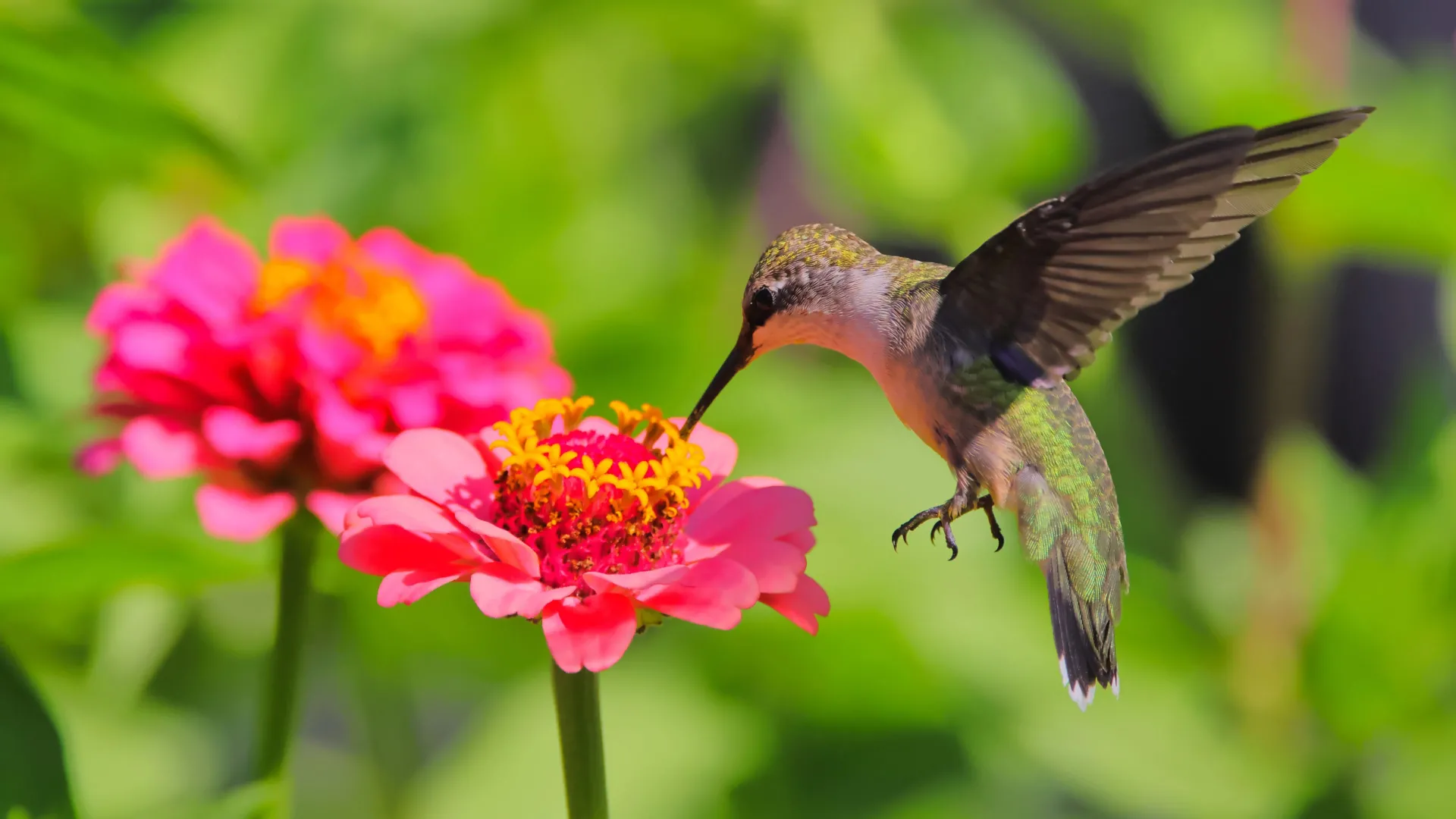
As bees and hummingbirds diligently flit from one flower to another, performing their vital role in plant reproduction while sustaining themselves on sugary nectar, they are also inadvertently partaking in a surprising dietary component: small, yet consistent, amounts of alcohol. This intriguing discovery, published by a team of biologists at the University of California, Berkeley, marks the first extensive survey of alcohol in floral nectar, uncovering ethanol in the majority of plant species examined and prompting new questions about the ecological and evolutionary implications of this widespread phenomenon.
The groundbreaking research, detailed on March 25 in Royal Society Open Science, reveals that ethanol is a far more common constituent of nectar than previously understood. Biologists detected the compound in at least one sample from 26 of the 29 plant species they investigated. While most nectar samples contained only trace amounts of ethanol, likely a byproduct of natural yeast fermentation of the abundant sugars, one particular sample registered a concentration of 0.056% ethanol by weight, equivalent to approximately 1/10 proof. This finding challenges conventional wisdom about the pristine nature of nectar and opens new avenues for understanding pollinator physiology and behavior.
The Ubiquitous Presence of Ethanol in Floral Nectar
The mechanism behind ethanol’s presence in nectar is a natural process common in environments rich in simple sugars: fermentation. Microscopic yeast, often carried by pollinators themselves or airborne, readily colonize sugary solutions like nectar. Under anaerobic or semi-anaerobic conditions, these yeasts convert glucose and fructose — the primary sugars in nectar — into ethanol and carbon dioxide. While the quantities detected were generally low, the sheer prevalence across diverse plant species suggests that nectar fermentation is not an isolated event but rather a regular ecological occurrence. The study did not specifically identify the yeast species responsible, but a variety of saccharomyces and non-saccharomyces yeasts are known to thrive in floral environments.
The team’s comprehensive survey involved collecting nectar samples from a wide array of flowering plants, representing different families and ecological niches. The consistency of ethanol detection across such a broad spectrum of species—from common garden varieties to wild flora—underscores the pervasive nature of this alcoholic intake for nectar-feeding animals. This suggests that the interaction between yeast, nectar sugars, and pollinators is a fundamental, albeit previously overlooked, aspect of floral ecology. The low concentrations indicate a dynamic balance, where sugars are fermented, but perhaps not to levels that would deter pollinators, hinting at a delicate co-evolutionary dance.
Quantifying the Daily Alcoholic Intake of Pollinators
While the detected ethanol levels might appear negligible at first glance, their significance becomes apparent when considering the prodigious feeding habits of many nectar-dependent species. Hummingbirds, for instance, are metabolic marvels that consume an extraordinary volume of nectar daily, often drinking between 50% and 150% of their own body weight. This high caloric demand, met primarily through nectar, translates into a substantial daily intake of even trace compounds.
Based on these feeding patterns, the UC Berkeley researchers meticulously estimated the daily ethanol consumption for an Anna’s hummingbird (Calypte anna), a species commonly observed along the Pacific coast of North America. Their calculations suggest that an Anna’s hummingbird ingests approximately 0.2 grams of ethanol per kilogram of body weight each day. To put this into a relatable human context, this daily intake is comparable to a human consuming roughly one standard alcoholic drink. This comparison highlights that while the absolute amounts are small, relative to body weight and metabolic rate, the exposure is significant and chronic.
Despite this regular and relatively substantial intake, the study found no clear signs of acute intoxication in bees or birds. This is largely attributed to their feeding strategy: pollinators consume nectar gradually throughout the day, spreading their alcohol intake over many hours. Their incredibly high metabolic rates also play a crucial role, allowing them to process and eliminate substances like ethanol much faster than larger, slower-metabolizing animals.
Beyond Intoxication: Exploring Subtle Behavioral and Physiological Effects
The absence of overt signs of drunkenness does not, however, preclude other, more subtle effects of alcohol consumption on pollinators. Nectar is a complex biochemical cocktail, containing not only sugars and trace ethanol but also other bioactive compounds such as nicotine and caffeine, which are known to exert significant influence on animal behavior, sometimes even acting as mild psychoactive substances that can alter foraging patterns or memory. It is plausible that ethanol, even in small concentrations, could similarly induce subtle changes in pollinator behavior, physiology, or even decision-making processes.
Aleksey Maro, a doctoral student who contributed to the nectar analysis alongside postdoctoral fellow Ammon Corl, elaborated on this complexity. "Hummingbirds are like little furnaces. They burn through everything really quick, so you don’t expect anything to accumulate in their bloodstream," Maro explained. "But we don’t know what kind of signaling or appetitive properties the alcohol has. There are other things that the ethanol could be doing aside from creating a buzz, like with humans." This perspective suggests that alcohol might act as a signaling molecule, influencing neural pathways related to reward, memory, or even physiological regulation, without necessarily causing overt behavioral impairment.
Robert Dudley, a professor of integrative biology at UC Berkeley and a senior author on the paper, further speculated on potential benefits. "There may be other kinds of effects specific to the foraging biology of the species in question that could be beneficial," Dudley added. He continued, "They’re burning it so fast, I’m guessing that they probably aren’t suffering inebriating effects. But it may also have other consequences for their behavior." These "other consequences" could range from enhancing foraging efficiency, altering preferences for certain flower types, or even influencing social interactions or reproductive behaviors. The rapid metabolism might mean alcohol acts more as a transient chemical signal or a minor metabolic input rather than a sustained intoxicant.
A Chronology of Discovery: Building on Prior Research
The current study is not an isolated finding but rather the latest chapter in a broader research program at UC Berkeley, which has been systematically investigating animal alcohol consumption for several years. The team, including professors Rauri Bowie and Jimmy McGuire, both integrative biologists and curators at the campus’s Museum of Vertebrate Zoology, has been building a comprehensive understanding of how animals interact with dietary alcohol.
Earlier experiments, conducted at a feeder conveniently located outside Professor Dudley’s office, provided crucial insights into hummingbird preferences and tolerances. These studies demonstrated that Anna’s hummingbirds were largely indifferent to low concentrations of alcohol (below 1% by volume) mixed into sugar water. However, a clear aversion emerged when concentrations reached 2%, at which point the birds visited the feeder about half as often. "Somehow they are metering their intake, so maybe zero to 1% is a more likely concentration that they would find in the wild than anything higher," Dudley noted, suggesting an evolved capacity for discernment and moderation. This behavioral response indicates a threshold for acceptable alcohol levels, preventing excessive consumption.
Further foundational work was contributed by former graduate student Cynthia Wang-Claypool, whose research provided physiological evidence of alcohol processing in birds. Her study detected ethyl glucuronide, a specific byproduct of ethanol metabolism, in the feathers of several bird species, including Anna’s hummingbirds. The presence of this metabolite unequivocally confirms that these birds not only ingest alcohol but also process it metabolically in a manner analogous to mammals, including humans. This finding established a crucial physiological link, demonstrating that the alcohol is indeed absorbed and broken down by the avian system.
These prior investigations set the stage for the current widespread survey. As Ammon Corl summarized, the pieces of the puzzle are now fitting together: "The laboratory experiment was showing that yes, they will drink ethanol in their nectar, though they have some aversion to it if it gets too high. The feathers are saying that, yes, they will metabolize it. And then this study is saying that ethanol is actually pretty widespread in the nectar they consume." This chronological progression of research, from behavioral observation to physiological evidence and finally to ecological prevalence, paints a comprehensive picture of alcohol’s role in pollinator diets.
Comparative Alcohol Intake Across Diverse Species
To contextualize the findings for hummingbirds and other nectar-feeders, the research team extended their analysis to compare estimated daily alcohol intake across a range of animal species. Using an enzymatic assay to precisely measure ethanol levels in nectar, they calculated daily alcohol consumption based on species-specific caloric needs and feeding patterns. Due to limitations in detailed feeding data for all species, the primary focus remained on two hummingbird species, including the Anna’s hummingbird, and three species of sunbirds. Sunbirds, found in Africa, play an ecological role similar to hummingbirds in the Americas, feeding on nectar from plants such as honeybush (Melianthus major).
The comparative analysis included a diverse set of animals, offering a broader perspective on dietary alcohol consumption in the animal kingdom. The European honeybee, a ubiquitous pollinator, registered the lowest estimated intake at 0.05 grams per kilogram of body weight daily. In stark contrast, the pen-tailed tree shrew, known for its diet rich in fermented palm nectar, exhibited the highest intake at a staggering 1.4 grams per kilogram per day. Fruit-eating chimpanzees, whose diet often includes fermented fruits, also consume alcohol. For humans, a benchmark of one standard drink per day was set at 0.14 grams per kilogram per day.
Nectar-feeding birds, including hummingbirds and sunbirds, fell within a similar range to humans, consuming approximately 0.19 to 0.27 grams of ethanol per kilogram of body weight daily when feeding on natural, native flowers. Interestingly, the feeder experiments suggested that Anna’s hummingbirds might ingest even more alcohol, around 0.30 grams per kilogram per day, when presented with fermented sugar water in artificial feeders. This discrepancy could indicate that natural nectar, while widespread in ethanol, might have lower average concentrations than some fermented sugar solutions, or that the birds’ natural foraging behaviors in the wild help them regulate intake more effectively.
Evolutionary Adaptations to Dietary Alcohol and Broader Implications
This accumulating body of evidence strongly suggests that dietary alcohol is not a recent or isolated phenomenon but an ancient and pervasive aspect of animal diets, potentially stretching back millions of years. This implies that many animal species, including early human ancestors, may have evolved significant physiological and behavioral tolerances, and in some cases even preferences, for alcohol. The consistent exposure over evolutionary timescales would have driven adaptations in metabolic pathways and neural responses.
The current study is part of a larger, five-year project funded by the National Science Foundation, which aims to collect genetic data from hummingbirds and sunbirds. This ambitious project seeks to understand the intricate mechanisms through which these birds adapt to diverse environmental pressures and food sources, including high-altitude living, sugar-rich diets, and, critically, frequently fermented nectar. By examining their genetic makeup, researchers hope to identify specific genes or gene complexes that confer tolerance or efficiency in metabolizing alcohol, providing a deeper understanding of evolutionary biology.
Professor Dudley underscored the profound implications of these findings for comparative biology. "These studies suggest that there may be a broad range of physiological adaptations across the animal kingdom to the ubiquity of dietary ethanol, and that the responses we see in humans may not be representative of all primates or of all animals generally," he stated. This challenges anthropocentric views of alcohol consumption, highlighting that human reactions might be unique rather than universal. "Maybe there are other physiological detoxification pathways or other kinds of nutritional effects of ethanol for animals that are consuming it every day of their lives," Dudley pondered.
The chronic nature of this exposure – "this is chronic through the course of the day, but that’s a lifetime exposure post-weaning" – is particularly noteworthy. It suggests that alcohol, in these small, regular doses, might not just be tolerated but could potentially serve as a minor energy source, a signaling compound, or even have beneficial antimicrobial properties within the gut microbiome, though these are areas for future investigation. The ubiquity of fermented foods in natural environments, from ripe fruits to tree sap and nectar, means that dietary alcohol has been an enduring feature of many species’ ecological niches. The UC Berkeley research compellingly argues that "the comparative biology of ethanol ingestion deserves further study," promising a rich field of discovery into the intricate relationships between diet, evolution, and animal physiology.
Future Research Directions
The discovery of widespread ethanol in nectar opens a plethora of new research questions. Scientists are now poised to investigate the long-term health effects of chronic, low-dose alcohol intake on pollinators. Does it influence their lifespan, reproductive success, immune function, or susceptibility to predators? Further studies could explore how varying levels of nectar alcohol impact pollinator foraging efficiency, flower visitation rates, and ultimately, plant reproductive success. Understanding the specific yeast species responsible for fermentation and the environmental conditions that promote or inhibit alcohol production in nectar could also provide valuable insights. The interplay between ethanol and other bioactive compounds in nectar, such as caffeine and nicotine, also warrants further investigation, as these substances could have synergistic or antagonistic effects on pollinator behavior. This ongoing research promises to redefine our understanding of the complex chemical ecology governing plant-pollinator interactions and the evolutionary trajectory of dietary alcohol in the animal kingdom.
