

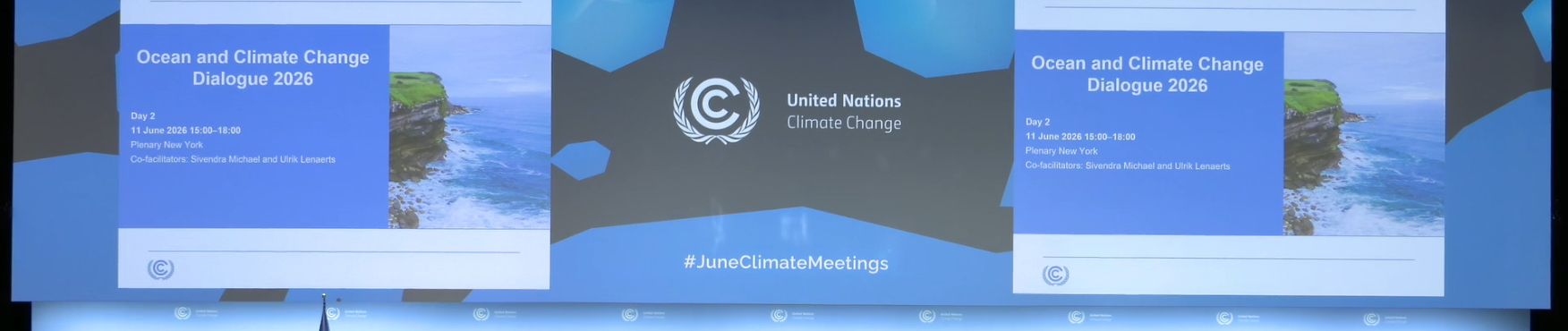
There is a growing recognition that the ocean is an essential component of climate action, as demonstrated during the Ocean and Climate Change Dialogue, held 10–11 June during the sixty-fourth session of the United Nations Framework Convention on Climate Change (UNFCCC) Subsidiary Body for Scientific and Technological Advice (SBSTA 64) in Bonn, Germany. As countries look ahead to the U.N. Climate Change Conference (COP31) in November, discussions increasingly focused on how to accelerate implementation at the scale required.
Across the Dialogue’s three themes – ocean-based measures in nationally determined contributions (NDCs), means of implementation, and ocean-climate-biodiversity synergies – a common message emerged that countries are making significant progress in integrating ocean priorities into climate policy, but substantial barriers remain to translating commitments into action. Mangroves and other coastal wetlands were central to the Dialogue and recognized throughout as proven solutions that simultaneously deliver climate mitigation, adaptation, biodiversity conservation, food security, and community resilience.
Context of the Dialogue
The Ocean and Climate Change Dialogue, an integral part of the UNFCCC process, serves as a crucial platform for countries to discuss the multifaceted relationship between climate change and the ocean. Held annually alongside the UNFCCC’s Subsidiary Body for Scientific and Technological Advice (SBSTA) sessions, these dialogues aim to foster a deeper understanding of the ocean’s role in climate regulation, its vulnerability to climate impacts, and its potential as a source of climate solutions. The 2026 edition, taking place in Bonn, Germany, from June 10-11, was particularly significant as it occurred in the lead-up to COP31, offering an opportunity to shape the agenda and galvanize action for the upcoming global climate summit.

SBSTA 64, the scientific and technological advisory body of the UNFCCC, provides a forum for experts to discuss scientific and technological issues related to climate change. The inclusion of the Ocean and Climate Change Dialogue within its agenda underscores the scientific consensus on the critical importance of marine ecosystems in addressing the climate crisis.
Ocean-Based Measures in NDCs: From Inclusion to Implementation
The first theme of the Dialogue examined how ocean-based climate action is reflected in NDCs, the climate action plans submitted by countries under the Paris Agreement. Participants highlighted substantial progress in recent years, with a notable increase in the share of coastal and island countries including ocean-based measures in their NDCs. This trend reflects a growing recognition of the vital ocean-climate nexus. For mangroves, the momentum is particularly encouraging. Fifteen governments that have endorsed the Mangrove Breakthrough initiative have already included mangrove-specific targets or references in their NDCs. The Mangrove Breakthrough is a global initiative that mobilizes collective action from governments and non-governmental actors to advance mangrove conservation and finance.
However, countries and observers emphasized that while ocean-related commitments are increasingly being integrated, they are often focused more on adaptation rather than mitigation. Furthermore, these commitments are not consistently translated into clear, measurable targets, posing a challenge for effective tracking and implementation. During discussions, participants also stressed that implementation readiness is a prerequisite for investment readiness. To lay the foundation for successful implementation, countries highlighted the need to overcome several barriers. These include improving access to data and establishing robust monitoring systems, enhancing technical guidance and capacity building, fostering strategic partnerships and stakeholder engagement platforms, and strengthening institutional coordination.
Means of Implementation: Closing the Gap Between Ambition and Delivery
The second theme of the Dialogue focused on one of the most pressing challenges: the implementation of climate commitments. Across regions, countries described a persistent mismatch between the scale of their ocean-related commitments and the resources available to deliver them. For many developing countries, Small Island Developing States (SIDS), and developing coastal nations, implementation remains heavily dependent on external support. Consequently, finance emerged as the dominant issue throughout the discussions.
Participants repeatedly highlighted the difficulties in accessing climate finance, developing investable project pipelines, and navigating fragmented funding mechanisms. This financial bottleneck hinders the translation of ambitious climate goals into tangible on-the-ground actions. Countries called for stronger support to develop investment-ready projects, improve access to existing climate and biodiversity funds, and build the technical capacity necessary to prepare, implement, and monitor large-scale initiatives.
For the Mangrove Breakthrough and its co-founder, the Global Mangrove Alliance – a worldwide coalition of non-governmental organizations, governments, scientists, and local communities dedicated to protecting and restoring mangrove ecosystems – this call for support reinforces the importance of several of their key tools, resources, and initiatives. These include the Mangrove Breakthrough’s Financial Roadmap, the Mangrove Catalytic Facility, and the Regional Readiness Reports, alongside country-level investment propositions. These efforts are specifically designed to help bridge the gap between national ambition and practical implementation by supporting governments and partners in developing fundable, high-integrity mangrove programs.
Existing tools and resources, such as the Global Mangrove Watch and the Global Mangrove Alliance’s Best Practice Guidelines for Mangrove Restoration, are also well-positioned to assist countries in identifying priority mangrove areas, tracking progress, and designing mangrove restoration efforts that deliver long-term ecological and social benefits. These platforms provide critical data and guidance for informed decision-making and effective project development.
A particularly promising development discussed during the Dialogue was the upcoming UNFCCC Standing Committee on Finance (SCF) Forum on Oceans and Water Systems. The SCF is responsible for assisting countries in coordinating and mobilizing finance for climate action. In September, the SCF Forum will focus on ocean and water systems, which have historically been underfunded but are vitally important for climate action. Participants expressed hope that the Forum could help to elevate ocean finance within broader climate finance discussions and identify pathways to scale investment in coastal ecosystems and resilience. This focus represents a significant opportunity to address the persistent funding gap.
Ocean-Climate-Biodiversity Synergies: Breaking Down Silos
The Dialogue’s third theme explored the crucial synergies between climate, biodiversity, and ocean agendas. Participants repeatedly stressed that mangroves, seagrasses, and other coastal wetlands are uniquely positioned to deliver multiple benefits simultaneously. These "nature-based solutions" offer a cost-effective and efficient approach to addressing interconnected environmental challenges.
Despite this obvious overlap, many countries continue to struggle with fragmented governance systems, separate reporting requirements, and institutional silos. In numerous countries, multiple agencies remain responsible for different aspects of marine and coastal management, making effective coordination and integrated planning difficult. This fragmentation can lead to duplicated efforts, missed opportunities, and a less impactful response to complex environmental issues.
Throughout the Dialogue, participants emphasized the need for stronger coherence between NDCs, National Adaptation Plans (NAPs), National Biodiversity Strategies and Action Plans (NBSAPs), and implementation plans under other multilateral environmental agreements, such as the Ramsar Convention on Wetlands. This integrated approach is essential for maximizing the benefits of conservation and restoration efforts and ensuring that national policies are mutually reinforcing.
The Kunming-Montreal Global Biodiversity Framework featured prominently in discussions, particularly Target 2 (related to ecosystem restoration and conservation) and Target 3 (related to protected areas and species). Dialogue participants highlighted that mangroves provide a powerful example of what integrated action can look like in practice. By protecting and restoring mangrove ecosystems and other wetlands, countries can simultaneously advance their climate commitments under the UNFCCC, biodiversity goals under the Global Biodiversity Framework, and wetland conservation objectives under the Ramsar Convention. This multi-benefit approach offers a compelling pathway for countries to achieve multiple international obligations through a single set of interventions.
Monitoring and reporting emerged as a practical entry point for enhancing coherence. Several discussions focused on opportunities to harmonize indicators, improve data sharing, and reuse information across conventions. Participants noted that many countries face severe capacity constraints and would greatly benefit from more integrated approaches that reduce reporting burdens. Streamlining reporting processes can free up valuable resources and reduce the administrative load on national governments.
Participants also highlighted the important role that civil society, scientific institutions, and non-state actors can play in facilitating collaboration across National Focal Points of the different conventions, ministries, and sectors. Platforms such as the Global Mangrove Watch, alongside national mangrove or blue carbon strategies and cross-ministerial coordination mechanisms, were cited as examples of practical ways that can support integrated implementation. The active engagement of these diverse stakeholders is crucial for building momentum and ensuring that ocean-climate action is inclusive and effective.
Looking Toward COP31
As the Dialogue concluded, participants expressed optimism about the growing prominence of ocean issues within the UNFCCC process. The incoming COP31 leadership has signalled strong interest in elevating ocean-climate action and ensuring that the outcomes of the Ocean Dialogue inform preparations for both the pre-COP and COP31 itself. This commitment from the host nation is a positive indicator for the future of ocean advocacy within the climate negotiations.
Looking ahead, participants called for the Dialogue process to become more closely aligned with the Paris Agreement ambition cycle. Future dialogues could progressively support countries through the different stages of climate action – from integrating ocean priorities into NDCs to implementation, transparency, reporting, and informing future UNFCCC Global Stocktakes. The Global Stocktake, which assesses the world’s collective progress towards achieving global climate goals every five years, provides a critical opportunity to integrate ocean-related outcomes and ensure accountability.
The discussions in Bonn made clear that many of the tools, knowledge, and partnerships already exist to advance ocean-climate action. The task ahead is to mobilize them at the scale and speed required to secure resilient ecosystems for the people and biodiversity that depend on them. The Mangrove Breakthrough NDC Task Force – a global coalition of experts that helps countries design and implement their mangrove NDCs – stands ready to support Mangrove Breakthrough-endorsing governments in advancing implementation and investment planning for their mangrove NDCs. This proactive stance by key organizations demonstrates a commitment to translating dialogue into tangible results.
The urgency of addressing climate change and its impacts on the ocean cannot be overstated. The growing recognition of the ocean’s vital role in climate action, coupled with the identification of persistent barriers and promising solutions, sets a critical agenda for COP31 and beyond. Effective implementation will require sustained political will, increased financial flows, enhanced international cooperation, and a commitment to breaking down institutional silos to harness the full potential of ocean-based solutions.
Susanna Tol is a senior communications and advocacy officer on the Coasts and Deltas team at Wetlands International. Anelise Zimmer is a policy officer on The Pew Charitable Trusts’ advancing coastal wetlands conservation project.
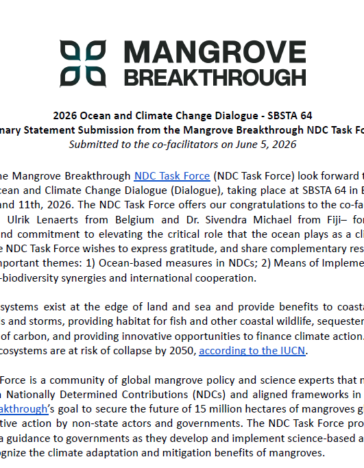
Wetlands International is part of the Mangrove Breakthrough NDC Taskforce and submitted a written intervention as input for the Ocean Climate Dialogues.
Downloads
(Note: No specific downloads were provided in the original content, so this section remains as a placeholder as per the original structure.)
Related Inputs in Previous Ocean-Climate Dialogues and UNFCCC SBSTA Conferences
(Note: No specific related inputs were provided in the original content, so this section remains as a placeholder as per the original structure.)
