
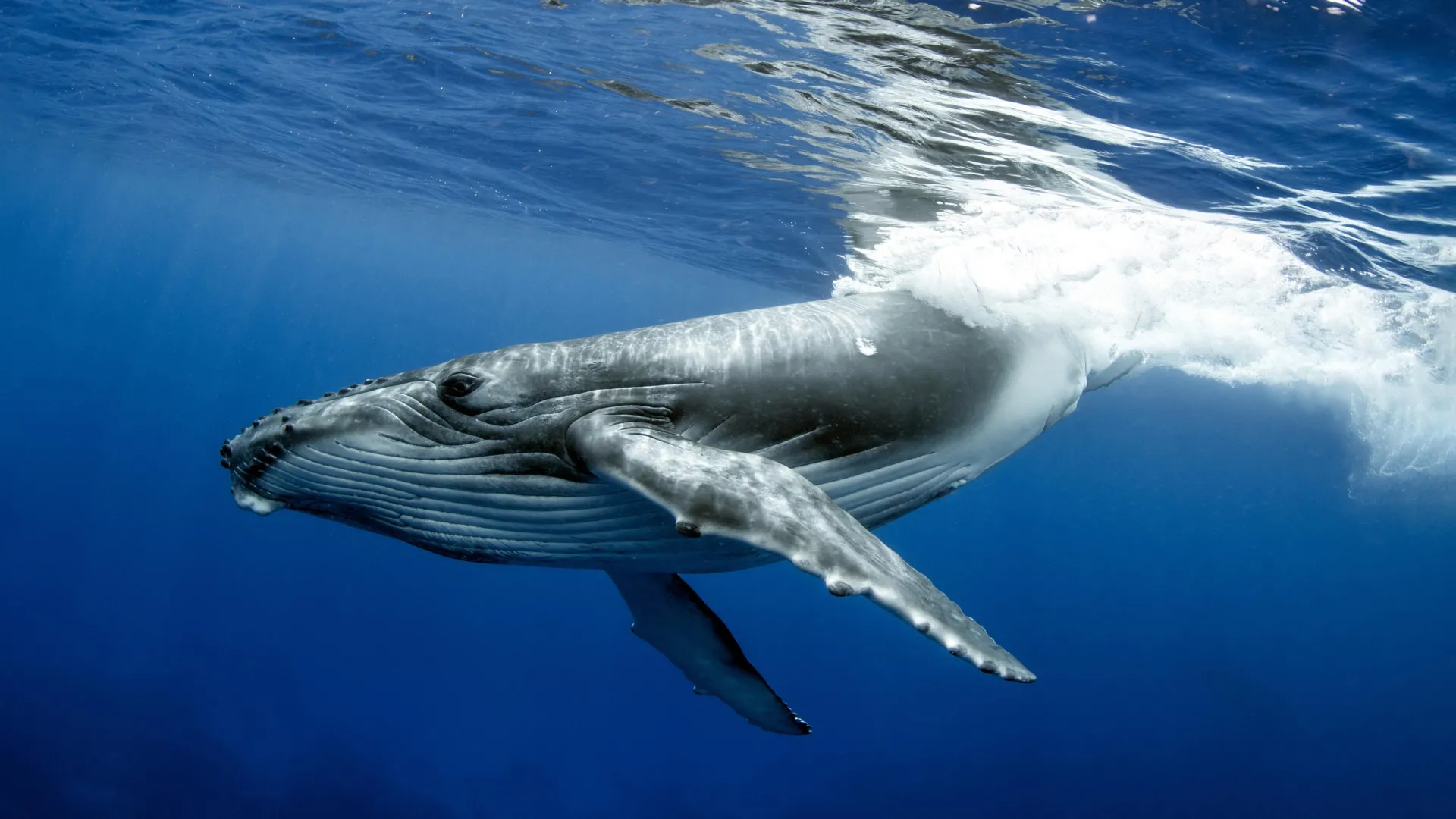
Scientists have recently documented an extraordinary feat of whale migration for the first time, confirming that humpback whales traveled between breeding grounds in eastern Australia and Brazil across more than 14,000 kilometers of open ocean. This groundbreaking discovery marks the greatest confirmed distance ever recorded between sightings of individual humpback whales anywhere in the world, reshaping our understanding of oceanic connectivity and the remarkable resilience of marine megafauna. The findings, published in Royal Society Open Science, underscore the invaluable role of long-term research programs, international collaboration, and the burgeoning field of citizen science in unraveling the mysteries of the deep.
The Unveiling of an Extraordinary Feat: Two Landmark Journeys
The monumental achievement in marine biology was made possible through meticulous photo-identification, a technique that allows researchers to recognize individual whales by the unique markings on their tail flukes. These natural ‘fingerprints’ enable scientists to track movements and patterns over decades, providing an unprecedented window into the lives of these magnificent creatures.
One of the two identified whales embarked on a truly epic odyssey. It was first documented in 2007 in Hervey Bay, Queensland, a renowned humpback whale sanctuary and a crucial breeding ground off Australia’s eastern coast. The same whale was resighted in the very same area in 2013, confirming its regular return to these familiar waters. However, the scientific community was stunned when this exact individual reappeared nearly six years later, in 2019, near São Paulo, Brazil. The minimum straight-line distance between these two geographically distinct breeding grounds is approximately 14,200 kilometers – a staggering distance roughly equivalent to traveling from Sydney to London. Researchers emphasized that this figure represents only the shortest possible route, meaning the whale likely traversed an even greater distance through the vast, unpredictable expanse of the Atlantic and Southern Oceans, as its exact migration path remains uncharted.
An even more remarkable journey was attributed to a second humpback whale, pushing the boundaries of known migratory capabilities. This individual was initially photographed in 2003 at Brazil’s Abrolhos Bank, a critical humpback whale nursery off the coast of Bahia, celebrated for its rich biodiversity and as the primary breeding haven for South Atlantic humpbacks. At the time of its first sighting, the whale was observed amidst a lively group of nine adult whales, indicative of active social dynamics within the breeding population. In a truly astonishing turn of events, this identical whale was spotted alone in Hervey Bay, Australia, in September 2023, a full two decades after its initial Brazilian encounter. The documented distance between these two sightings — an astounding 15,100 kilometers — officially establishes a new global record for the longest known movement of an individual humpback whale. This singular event not only rewrites record books but also challenges long-held assumptions about the fidelity of humpback whales to specific breeding grounds.
The Pillars of Discovery: Long-Term Research and Global Collaboration
These unprecedented discoveries are not the result of a single expedition but rather the culmination of decades of sustained, diligent scientific endeavor and a testament to the power of international cooperation. As Stephanie Stack, a Griffith University PhD Candidate and co-author of the study, aptly put it, "Discoveries like this are only possible because of investment into long-term multi-decadal research programs and international collaboration. These whales were photographed decades apart, by different people, in opposite parts of the world, separated by two different oceans, and yet we can connect their journey."
The Power of Photo-Identification and Technological Advancement:
The core methodology behind this research hinges on the unique pigmentation patterns, scars, and serrations on the underside of a humpback whale’s tail fluke. Each fluke is as distinct as a human fingerprint, allowing scientists to identify and track individual whales over their lifetime, even across vast oceanic distances. This non-invasive technique has revolutionized whale research, providing critical insights into population dynamics, migration routes, and social structures without the need for intrusive tagging.
For this study, researchers meticulously analyzed an immense database comprising 19,283 high-quality fluke photographs collected over an extensive period, from 1984 through to 2023. This comprehensive dataset spanned two continents, encompassing images from both eastern Australia and Latin America, highlighting the global scale of the collaborative effort.
The Rise of Citizen Science and Advanced Analytics:
Crucially, the success of this project was significantly bolstered by the contributions of citizen scientists working in tandem with professional researchers. Images were sourced not only from dedicated scientific expeditions but also from the global whale tracking platform Happywhale, an initiative that allows members of the public to upload their whale photographs, contributing directly to scientific research. This collaborative model demonstrates how public engagement can dramatically expand the scope and scale of ecological studies.
To manage and analyze such a colossal volume of photographic data, scientists employed sophisticated automated image recognition software. This cutting-edge technology efficiently sifted through tens of thousands of images, identifying potential matches based on the intricate fluke patterns. Following this initial automated screening, every possible match was then manually verified by expert researchers, ensuring the accuracy and integrity of the findings. Dr. Cristina Castro from Pacific Whale Foundation, the lead researcher on the study, emphasized the profound impact of this approach: "This kind of research highlights the value of citizen science. Every photo contributes to our understanding of whale biology and, in this case, helped uncover one of the most extreme movements ever recorded."
Understanding Humpback Migrations: A Broader Context
Humpback whales ( Megaptera novaeangliae ) are renowned for undertaking some of the longest migrations of any mammal on Earth. Typically, these majestic cetaceans follow a predictable annual cycle, moving between nutrient-rich, colder polar waters where they feed extensively during summer months, and warmer, tropical or subtropical breeding grounds where they mate and calve during winter. For the eastern Australian population, their feeding grounds are primarily in the Southern Ocean around Antarctica, and their breeding takes place along the Queensland coast. Similarly, the Western South Atlantic population feeds in Antarctic waters and breeds off the coast of Brazil.
Hervey Bay and Abrolhos Bank: Vital Sanctuaries:
Hervey Bay, Queensland, is celebrated globally as a premier whale-watching destination and a critical rest stop for humpback mothers and calves before their long journey south. Its sheltered, calm waters provide an ideal environment for calving and nursing. The Abrolhos Bank in Brazil, a vast underwater reef system, serves an equally vital role for the Western South Atlantic humpback population, being recognized as one of the most important humpback breeding and calving grounds in the entire South Atlantic. The presence of whales from these two distinct populations in each other’s breeding grounds underscores the truly extraordinary nature of the documented crossings.
Humpback Whales: A Conservation Success Story (with caveats):
The story of humpback whales is also a powerful testament to the effectiveness of conservation efforts. Hunted almost to extinction during the commercial whaling era of the 19th and 20th centuries, global populations plummeted to dangerously low levels. Following the international moratorium on whaling, many humpback populations have shown remarkable recovery, with some, like the eastern Australian population, now numbering over 40,000 individuals and considered to be thriving. However, despite this success, humpbacks still face contemporary threats, including entanglement in fishing gear, ship strikes, ocean noise pollution, and the overarching impacts of climate change on their food sources and habitats.
The Rarity and Profound Implications of Trans-Oceanic Crossings
Despite the breathtaking distances covered by these two individual whales, researchers were quick to emphasize the extreme rarity of such trans-oceanic migrations between these specific breeding grounds. Across the more than four decades of data encompassing nearly 20,000 individually identified humpback whales, only these two instances of inter-oceanic travel were documented. This represents an infinitesimally small fraction—just 0.01 percent—of the whales included in the comprehensive records. This low frequency highlights that while possible, such journeys are highly unusual and not a typical migratory behavior for the vast majority of humpbacks.
Maintaining Genetic Diversity: A Lifeline for Populations:
However, the scarcity of these events does not diminish their profound ecological significance. Scientists argue that even these infrequent movements play a crucial role in the long-term health and resilience of whale populations. As Ms. Stack explained, "Despite their rarity, these exchanges matter for the long-term health of whale populations. Occasional individuals moving between distant breeding grounds can help maintain genetic diversity across populations and may even carry new song styles from one region to another."
The concept of genetic diversity is fundamental to species survival. It ensures that a population has a broad range of genetic traits, making it more adaptable to environmental changes, disease, and other pressures. When individuals from one population interbreed with another, they introduce new genetic material, preventing inbreeding and bolstering the overall genetic robustness of both groups. This "genetic rescue" can be particularly important for populations that might otherwise become isolated.
Cultural Exchange and the Spread of Whale Song:
Beyond genetics, these rare crossings could also facilitate the cultural transmission of humpback whale songs. Humpback whales are renowned for their complex and evolving songs, which are believed to play a role in mating and social communication. These songs are not static; they change and spread culturally across ocean basins, much like musical trends in human societies. A whale traveling from one breeding ground to another could potentially introduce new song elements or even entirely new song styles to a previously isolated population, enriching their cultural repertoire and providing insights into the dynamics of their acoustic communication.
The Southern Ocean Exchange Hypothesis: A Unified Antarctic Realm:
The findings also lend strong support to what researchers refer to as the "Southern Ocean Exchange" hypothesis. This compelling idea posits that humpback whales from various breeding populations, typically considered distinct, may occasionally converge and intermingle in shared Antarctic feeding areas. The vast, food-rich waters of the Southern Ocean serve as a crucial summer foraging ground for multiple humpback populations from different ocean basins. According to the hypothesis, after feeding, some whales might inadvertently or intentionally return along a different migration route than their original one, eventually settling and breeding in a completely new region. This mechanism provides a plausible explanation for how individuals could bridge such immense geographic and oceanic divides, linking populations that are otherwise thousands of kilometers apart.
Climate Change: A Potential Catalyst for Future Shifts
Intriguingly, researchers believe that climate change could potentially make these rare trans-oceanic crossings more common in the future. The delicate balance of marine ecosystems is being increasingly disrupted by a warming planet, leading to significant shifts in environmental conditions.
Impacts on Antarctic Sea Ice and Krill Distribution:
Specifically, changes in Antarctic sea ice dynamics and alterations in the distribution and abundance of Antarctic krill—the primary food source for humpback whales—are thought to be key drivers. As sea ice patterns change and krill populations shift in response to warming waters and ocean acidification, whales may be forced to adapt their foraging strategies and, consequently, their migration routes. A scarcity of food in traditional feeding grounds might compel individuals to venture further afield, potentially leading them to new feeding areas and, subsequently, to new breeding grounds.
Broader Ecological Implications:
If these rare crossings become more frequent, it could have significant implications for the genetic structure and population dynamics of humpback whales globally. While potentially beneficial for genetic diversity, it could also introduce new complexities for conservation management, which often relies on the assumption of distinct and stable populations. Continued monitoring of whale movements and population genetics will be essential to understand and mitigate the broader ecological impacts of climate change on these magnificent ocean wanderers.
Looking Ahead: The Future of Whale Research and Conservation
This unprecedented documentation of inter-oceanic humpback whale migration is a powerful reminder of the vast, interconnected nature of our planet’s oceans and the incredible adaptability of its inhabitants. It underscores the critical need for continued, long-term research and sustained international collaboration to decipher the intricate lives of marine species. Projects that integrate cutting-edge technology with citizen science contributions are proving invaluable in expanding our understanding of global biodiversity and informing effective conservation strategies in an era of rapid environmental change. The journey of these two whales across continents serves not just as a record-breaking statistic, but as a beacon, guiding scientists towards a deeper comprehension of ocean connectivity and the enduring mysteries that still lie beneath the waves.
