
Wildlife photography has long been dominated by an adherence to technical perfection, where razor-sharp focus, clinical lighting, and textbook compositions form the baseline of industry standards. However, a significant shift in contemporary nature documentation is currently underway, championed by leading practitioners who prioritize emotional resonance and ecological truth over sterile documentation. At the forefront of this movement is acclaimed wildlife photographer Rachel Bigsby, whose specialized focus on seabirds offers a compelling look into the intersection of art, animal behavior, and conservation storytelling.
Bigsby’s approach challenges the conventional framework of wildlife documentation. Rather than treating subjects as isolated objects of aesthetic capture, her methodology posits that effective nature photography must convey the lived reality and environmental context of the species. This approach has gained traction within global conservation and photography communities, prompting a broader industry discussion about the ethical and artistic responsibilities of capturing the natural world.
Origins in the Field: A Lifelong Dedication to Ecology

The foundation of Bigsby’s photographic philosophy traces back to her formative years, deeply influenced by her late grandfather—a naturalist and fisherman who instilled an emphasis on keen observation and ecological reverence. This early engagement with the outdoors expanded when she joined the Scout Association at age six, fostering an endurance for rugged environments and a foundational understanding of natural habitats.
Her entry into photography began experimentally during adolescence, utilizing basic equipment to capture micro-details such as morning dew and plant silhouettes. The defining catalyst for her career, however, occurred upon observing a Northern Fulmar gliding along coastal cliffs. Recognizing the species’ evolutionary linkage to albatrosses galvanized a permanent focus on pelagic birds.
Transitioning from amateur observation to professional fieldwork required intensive physical labor and commitment. Bigsby spent formative years volunteering on remote, weather-battered islands, trading physical labor—such as infrastructure maintenance and land management—for field access. This immersion provided her with a rigorous understanding of avian biology, local ecology, and harsh coastal microclimates, establishing a credibility that distinguishes her portfolio from casual wildlife tourism.
Deconstructing Technical Perfection: The Evolution of High-Key and Slow-Shutter Techniques

Mainstream wildlife photography frequently emphasizes speed and sharpness, utilizing high shutter speeds to freeze motion and telephoto lenses to isolate subjects against blurred backgrounds. Bigsby’s portfolio deliberately deviates from this formula.
A pivotal turning point in her artistic development occurred during an assignment on a remote island subjected to relentless rain, fog, and mist. Initially viewing these meteorological conditions as detrimental to her objectives, Bigsby adapted by aligning her craft with the existing environment. Instead of waiting for optimal lighting, she utilized the heavy mist as a natural canvas, inadvertently pioneering applications of high-key imagery that have since become a signature of her work.
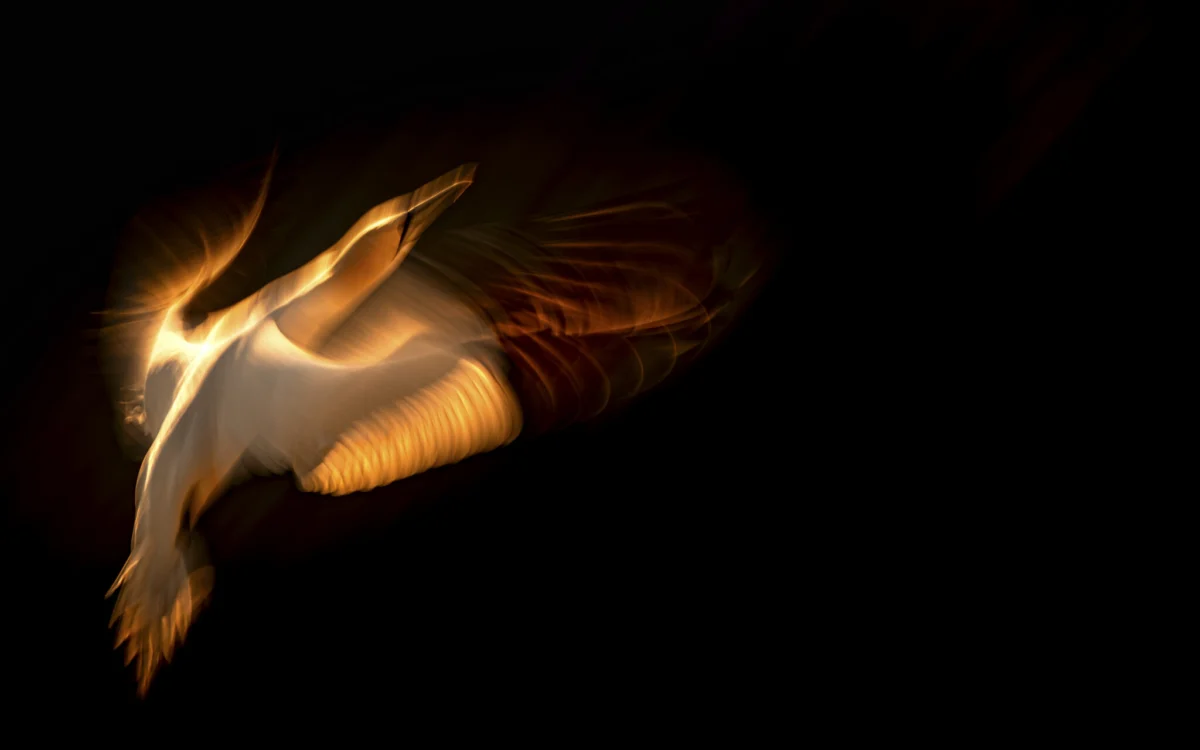
Furthermore, Bigsby frequently employs slow shutter speeds to convey motion rather than static anatomy. By allowing deliberate blur during a bird’s flight or incorporating cluttered, natural backdrops, her images evoke the chaotic, dynamic reality of coastal ecosystems. This technique rejects the sanitized aesthetic of commercial wildlife imagery in favor of atmospheric authenticity.
Thematic Framework: Light, Shape, Texture, and Environment

Bigsby’s methodology rests on several core artistic and technical pillars that elevate nature photography from simple recording to visual journalism and art:
Light as Narrative Spine: Rather than treating light as a mere technical requirement, Bigsby utilizes illumination to establish mood and dramatic tension. By capturing subjects at the threshold of shadow and dawn, light highlights the stark contours of coastal topography and avian resilience.
The Role of Environment: Environmental context is treated as a primary character rather than a background element. Placing seabirds within the context of turbulent seas, guano-covered rocks, or severe weather underscores the ecological challenges these species navigate daily.
Texture and Monochrome Application: Close-up studies of avian plumage, such as the intricate barbs of a European Shag’s feathers, provide tactile engagement for the viewer. Similarly, strategic use of black-and-white conversion strips away chromatic distractions to emphasize shape, line, and contrast.

Conservation Implications and Industry Analysis
The evolution of wildlife photography toward a more impressionistic and ecologically grounded style carries significant implications for modern conservation communication. Environmental analysts note that traditional, highly idealized wildlife imagery can inadvertently foster a disconnect between the public and the actual, often harsh conditions facing vulnerable ecosystems.
Pelagic seabirds, in particular, serve as critical bioindicators for marine health, reflecting the impacts of climate change, overfishing, and habitat degradation. By presenting these species within their authentic, often turbulent environments, photographers like Bigsby contribute to a more nuanced public understanding of marine ecology. Images that capture resilience, struggle, and environmental complexity tend to elicit stronger empathetic responses from audiences, which can subsequently influence public support for marine protected areas and conservation policy initiatives.
Moreover, Bigsby’s emphasis on ethical fieldcraft—gaining deep familiarity with animal behavior to minimize disturbance—addresses growing concerns within the photography industry regarding the welfare of wildlife during production. Ethical guidelines increasingly stress that patience, prolonged observation, and habitat respect must supersede the pursuit of a singular photograph.

Conclusion: An Invitation to Mindful Observation
Rachel Bigsby’s body of work serves as both a portfolio of exceptional coastal artistry and a methodological template for the future of nature photography. By dismantling rigid technical rules in favor of patience, emotional honesty, and environmental integration, her imagery bridges the gap between scientific observation and human empathy.
As anthropogenic pressures on marine and avian populations intensify, the role of visual storytelling in conservation remains critical. Through an insistence on depicting the wild accurately, rather than ideally, Bigsby’s contributions reinforce the vital connection between mindful observation and the global imperative to preserve natural habitats.
