
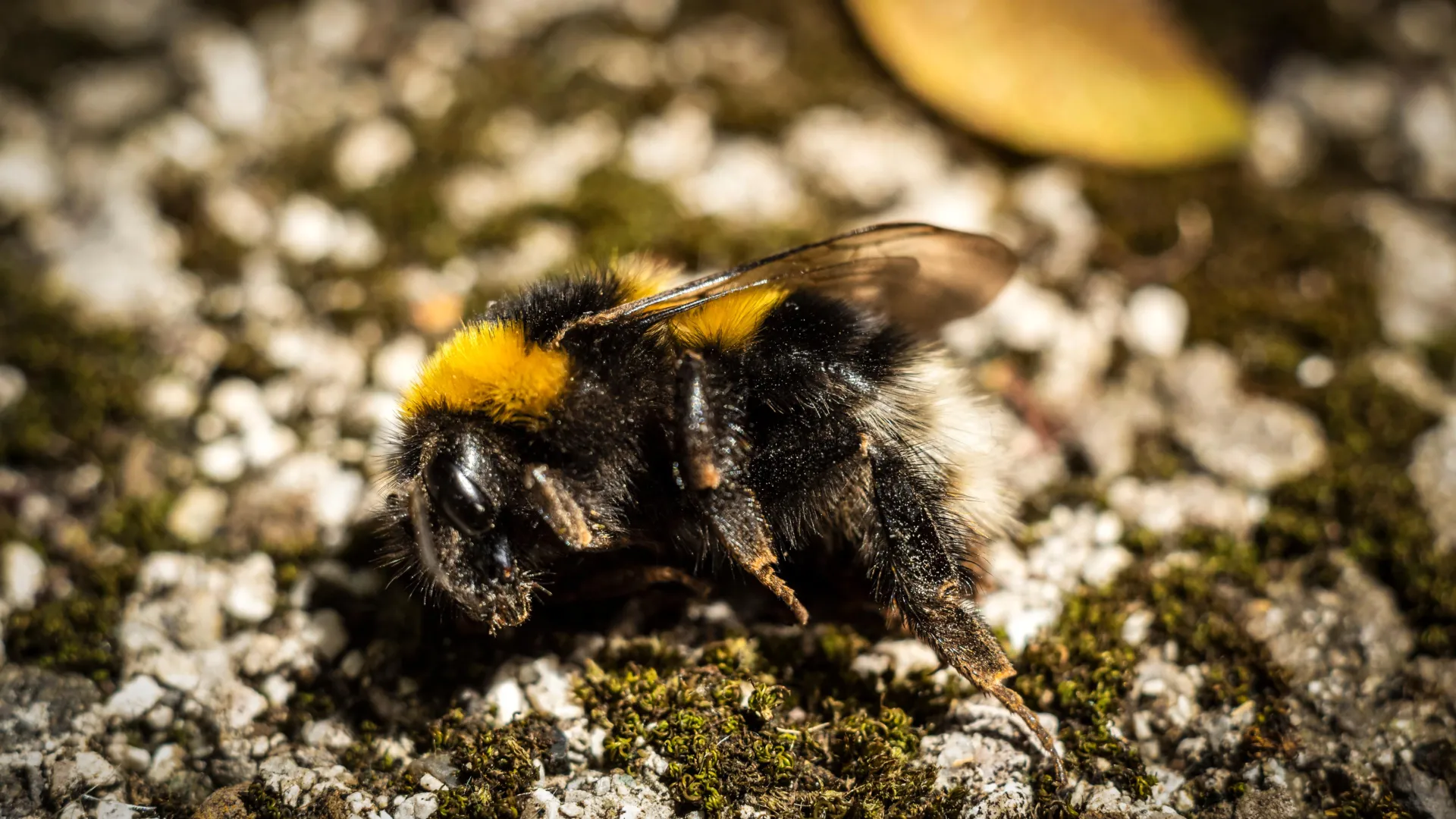
Walking along urban pavements and suburban sidewalks during the height of summer, observant pedestrians increasingly encounter a troubling sight: the motionless bodies of dead bumblebees scattered across the concrete. While this phenomenon might easily be dismissed as a natural end to a tiny creature’s life cycle, entomologists and environmental scientists warn that these fallen insects are symptomatic of a much broader, deeply concerning ecological crisis. The mass mortality of bumblebees is driven by a complex convergence of natural colony dynamics, unprecedented extreme weather events, widespread chemical pesticide pollution, accelerating habitat destruction, and the destabilizing forces of global climate change. Understanding why these vital pollinators are perishing in such large numbers requires a close examination of the multifaceted pressures pushing the planet’s most critical insect groups toward the precipice.
Colony Dynamics and the Natural Life Cycle
To fully comprehend the scale of summer bee mortality, one must first understand the social architecture of bumblebee colonies. Unlike honeybees, which maintain permanent colonies capable of surviving multiple years, bumblebees are largely annual social insects. A single queen emerges from hibernation in the spring, establishes a nest, and reaps the first generation of worker bees. These female workers dedicate their brief, intensely active lives—typically lasting a mere four to six weeks—to foraging for pollen and nectar, expanding the nest, and caring for the developing brood.
Because workers exhaust themselves so rapidly, older bees constantly die off throughout the spring and summer months. To maintain colony hygiene and prevent the spread of disease within the confined space of the nest, healthy young workers perform a grim housekeeping duty. They meticulously retrieve the bodies of deceased nestmates, carrying them far outside the hive and dropping them onto surrounding terrain, which frequently includes nearby pathways, driveways, and pavements. Consequently, a portion of the dead bees discovered by the public simply represents the natural turnover of a healthy, functioning colony operating at peak seasonal capacity. However, wildlife conservationists emphasize that the sheer volume of carcasses observed in recent years vastly exceeds normal baseline mortality rates, pointing to severe environmental stressors acting upon the insect populations.
The Escalating Threat of Extreme Heat and Thermal Stress
Beyond natural colony maintenance, meteorological factors play a devastating role in accelerating bee deaths, particularly during increasingly intense summer heatwaves. Record-shattering temperatures across Europe and the Northern Hemisphere have introduced unprecedented thermal stress to wild insect populations. Prolonged exposure to extreme heat alters physiological development, threatens long-term population stability, and fundamentally undermines the health of bee colonies.
Meteorological records underscore the alarming frequency of these extreme weather events. England recently documented its warmest June on record, accompanied by soaring temperatures across the wider United Kingdom, a trend mirrored globally as climate change intensifies. For ectothermic creatures like bumblebees, ambient temperatures dictate internal physiological states. While bees possess remarkable thermoregulatory mechanisms—such as generating heat by vibrating their flight muscles or shifting metabolic heat through their bodies during flight—these adaptations have biological limits.
When heatwaves strike, bees suffer severe disruptions to their flight capacity, foraging efficiency, and reproductive success. Social insects heavily rely on active cooling behaviors, such as fanning their wings vigorously to circulate air and reduce internal hive temperatures. Yet, when external temperatures remain dangerously high for extended periods, these behavioral cooling mechanisms fail to buffer the developing brood from lethal overheating. Furthermore, extreme heat forces bees to increase foraging activity and travel greater distances in search of dwindling water and floral resources, burning precious energy reserves and shortening already fleeting lifespans.
Chemical Contamination: Pesticides, Herbicides, and Starvation
Compounding the pressures of extreme weather is the pervasive human use of chemical pesticides and herbicides in agricultural landscapes and urban domestic gardens. Chemical contamination impacts bee populations through both direct toxicity and indirect habitat degradation.
Historically, agricultural and horticultural pesticides have been identified as primary drivers of global insect declines. Insecticides—including organophosphates, synthetic pyrethroids, and phenylpyrazoles—are engineered to eliminate destructive agricultural pests. However, these chemicals exhibit broad-spectrum toxicity, frequently causing paralysis, neurological damage, navigational disorientation, and eventual death in beneficial pollinators like bumblebees. Although regulatory bodies such as the European Union and the UK government have implemented stringent bans on the most hazardous neonicotinoid compounds, chemical pest control agents remain routinely applied across vast swaths of managed land, triggering severe knock-on effects for local wildlife and wild bee communities.
In tandem with insecticides, herbicides wield an equally devastating blow by stripping landscapes of essential floral resources. Weeds such as dandelions, frequently eradicated by homeowners and land managers using chemical weed killers, actually serve as crucial, life-saving early nectar sources for emerging pollinators. When herbicides eliminate these foundational wild plants, bees are left facing severe nutritional deficits, ultimately resulting in widespread starvation. Ecologists continually urge the public to abandon aggressive weeding practices and learn to embrace wild flora, noting that untreated lawns and neglected weed patches provide vital sustenance for struggling insect populations.
Habitat Loss and Phenological Mismatches
Habitat fragmentation and destruction represent another foundational pillar of the modern pollinator crisis. Rapid urbanization, the expansion of intensive industrial agriculture, and the construction of extensive transport infrastructure continually shrink the natural foraging grounds and nesting sites available to wild bees. Without diverse, undisturbed habitats featuring continuous floral blooms throughout the active season, bee populations struggle to sustain themselves through generational cycles.
Compounding physical habitat loss is the insidious threat of phenological mismatch—an ecological phenomenon driven directly by anthropogenic climate change. Phenological mismatch occurs when two interdependent organisms, such as a specialized wild bee species and the specific flowering plant it relies upon for nectar, fall out of sync due to shifting seasonal temperatures.
As winters grow milder and spring arrives prematurely, plants may flower much earlier in the year than they historically did. If these botanical emergence dates no longer align with the biological emergence cycles of hibernating queen bees or newly hatched workers, the consequences are catastrophic. Bees emerging from hibernation may find themselves surrounded by barren landscapes devoid of blooming vegetation, leading to starvation before colonies can even be established. Conversely, flowers may wither and seed before newly emerged foraging generations can utilize them. This growing temporal dissonance destabilizes complex ecological networks that have evolved over millennia.
The Broader Ecological Implications and Global Food Security
While insects constitute the most diverse and abundant group of multicellular animals on Earth, entomological research reveals a profound paradox: despite their ecological dominance, insects are currently among the most heavily threatened life forms globally. Data compiled by the International Union for Conservation of Nature (IUCN) highlights an alarming trajectory. In Europe alone, the number of wild bee species assessed as facing a high risk of extinction has more than doubled, rising from 77 species in previous assessments to at least 172 species today—representing roughly ten percent of all regionally evaluated wild bee species.
The loss of these organisms carries profound implications for the stability of global ecosystems. Within ecological science, insects provide indispensable "ecosystem services," functioning as decomposers, natural pest controllers, nutrient cyclers, and foundational prey items for higher trophic levels such as birds, amphibians, and small mammals. However, one specific service provided overwhelmingly by bees stands out for its direct relevance to human survival: crop pollination.
Bees represent one of the most taxonomically diverse insect groups, encompassing over 20,000 known species globally. Together, they facilitate the successful pollination of approximately 75 percent of all leading global food crops and nearly 90 percent of all wild flowering plants. Staple fruits, vegetables, nuts, and oilseeds rely entirely or partially on insect visitation to achieve fertilization and set commercial yields. Agricultural economists and environmental scientists warn that if global pollinator populations continue to collapse under the combined pressures of climate change, chemical pollution, and habitat degradation, humanity faces the genuine prospect of a severe global food security crisis, characterized by diminished crop yields, rising nutritional deficiencies, and escalating agricultural instability.
Actionable Mitigation and Public Intervention
Mitigating the unfolding pollinator crisis requires coordinated, multi-layered interventions spanning international policy reform, industrial agricultural transformation, and individual consumer choices. Experts emphasize that meaningful change begins with informed consumer behavior. Citizens can support sustainable food systems by purchasing locally grown, nature-friendly produce and favoring farming practices that prioritize biodiversity conservation over chemical dependency. Homeowners can likewise contribute by replacing manicured, chemical-treated lawns with diverse arrays of native flowering plants and designating unmown garden zones to serve as protected micro-habitats.
On an immediate, individual level, concerned members of the public can take direct action to aid distressed bumblebees encountered on urban pavements during intense summer heatwaves. Entomologists and conservation charities advise that a struggling bee can often be safely revived through the administration of a simple sugar-water solution, prepared at a strict ratio of two parts white sugar to one part warm water. Placing a few drops of this restorative solution near the exhausted insect—or carefully relocating it to a nearby flower or shaded patch, provided the handler has no insect venom allergies—can provide the vital metabolic boost required to survive an environmental crisis unfolding right at our feet.
