
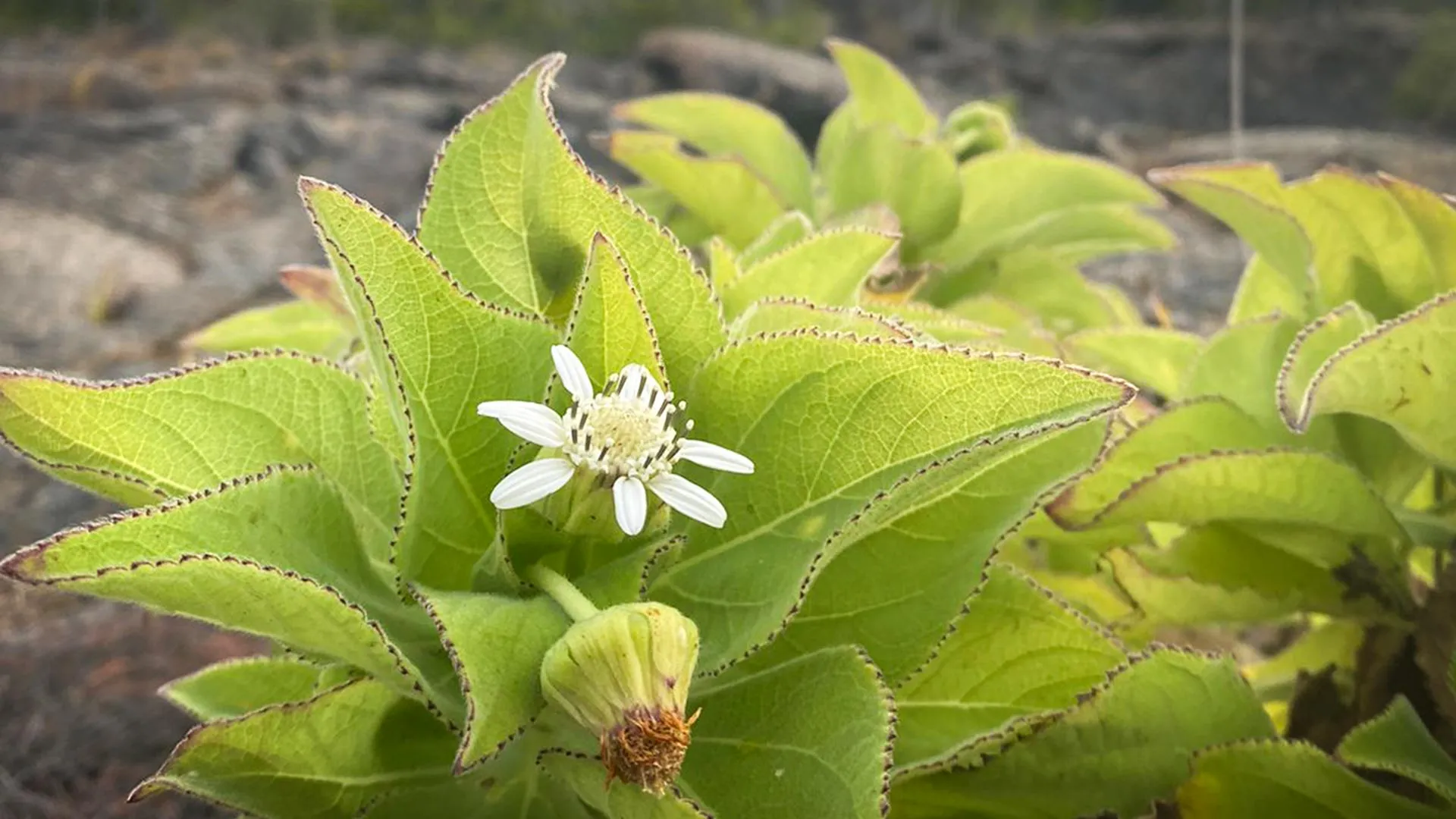
The Galápagos Islands have long maintained a legendary status in the scientific community, largely due to their foundational role in the development of modern evolutionary biology. Nearly two centuries after Charles Darwin first set foot on the volcanic archipelago in 1835 aboard the HMS Beagle, the remote Pacific chain continues to upend conventional scientific wisdom. While Darwin’s collection of birds famously inspired his groundbreaking theory of evolution by natural selection—demonstrating how physical traits gradually adapt to environmental demands—a parallel evolutionary marvel has been unfolding quietly in the island’s flora. Recent genetic research into Scalesia, a genus of endemic plants commonly known as the Galápagos giant daisies, has revealed that nature possesses an astonishing degree of genetic flexibility, using entirely different molecular pathways to achieve the exact same physical adaptations.
Published in the prestigious journal Nature Communications, the international study offers a profound look at adaptive radiation—the rapid diversification of a single ancestral species into a multitude of new forms to fill diverse ecological niches. By sequencing the complete genomes of every known Scalesia species, an expansive team of researchers has uncovered how these plants adapted to environments ranging from humid highland forests to scorching, arid lowlands. Their findings not only bridge a historical gap in Darwin’s own botanical legacy but also challenge long-held assumptions regarding how complex physical traits, such as leaf shape, are encoded and inherited across distinct evolutionary lineages.
A Botanical Chronology: From Darwin’s Press to Modern Genomics
To understand the magnitude of the recent genetic findings, scientists must look back to the foundational expeditions that mapped the biological significance of the islands. When Darwin returned to England in 1836, his cargo holds were not merely filled with the iconic finches and mockingbirds that would populate his revolutionary 1859 treatise, On the Origin of Species. He also meticulously pressed and cataloged a vast array of botanical specimens. Among these were seventy-eight plant specimens that would later be identified as entirely new to science, a haul that included four distinct species of Scalesia.
For generations, evolutionary biologists recognized the striking physical diversity of the Scalesia genus—which spans from diminutive low-lying shrubs to towering arboreal specimens reaching heights of up to twenty meters. Because of this structural variety, the genus earned the moniker of the "Galápagos giant daisies," serving as a botanical equivalent to Darwin’s finches. Yet, for all their visible diversity, the underlying genetic mechanisms that allowed these plants to colonize the archipelago and rapidly diverge into new species remained opaque.
The recent study represents a technological leap forward, bridging 19th-century natural history with 21st-century genomics. Led by an international consortium spanning institutions such as the Norwegian University of Science and Technology (NTNU) University Museum, the Royal Botanic Gardens, Kew, the University of California, Davis, the University of Copenhagen, the Charles Darwin Foundation, the University of Georgia, and the University of British Columbia, the research project provides the first comprehensive genomic roadmap of the entire Scalesia lineage.
Decoding the Architecture of Parallel Evolution
At the heart of the research team’s investigation was a specific morphological mystery: the evolution of deeply lobed leaves. Across the volcanic landscape of the Galápagos, diverse Scalesia species inhabiting hot, arid lowlands have independently developed intricate, serrated, and lobed leaves. Scientists have long hypothesized that this specific geometry serves a vital thermodynamic and physiological purpose, helping plants maximize heat dissipation and minimize moisture loss in punishing climatic conditions.
However, when the research team analyzed the complete genomes of the entire genus, they uncovered a startling evolutionary plot twist. While the physical end-result—the deeply lobed leaf—appeared repeatedly across entirely separate branches of the Scalesia family tree, the genetic wiring responsible for these traits was not uniform.
"This provides a clear example of parallel evolution: nature arriving at the same solution multiple times, but through different genetic pathways," noted Vanessa Bieker, a researcher at the Royal Botanic Gardens, Kew, and the primary author of the study.
Rather than relying on a single, highly conserved "master gene" to dictate leaf morphology, the evolutionary process appears to tap into a sprawling, interconnected network of genes. As the plants adapted to their localized microclimates, evolution acted as a master tuner, tweaking different components and regulatory switches within this larger genetic web. Consequently, separate evolutionary lineages arrived at the identical adaptive phenotype—lobed leaves—by manipulating entirely distinct molecular levers.
This revelation upends traditional models of genetic determinism in complex traits. It demonstrates that nature’s architectural toolbox is far more versatile than previously theorized, capable of engineering identical biological solutions through completely disparate genetic blueprints.
Cryptic Speciation and the Unfinished Story of the Galápagos
Beyond resolving long-standing questions regarding leaf morphology, the genomic analysis of Scalesia yielded another critical discovery: the evolutionary story of the Galápagos is far from complete, and speciation is actively occurring in real-time.
By evaluating the genetic divergence between various isolated populations of Scalesia, the research team found deep genetic fractures within what are currently classified as single species. Populations separated by geographic barriers—such as expanses of barren lava fields or deep topographic valleys—have spent long periods evolving in complete isolation. As a result, many of these isolated populations exhibit genetic divergence levels that rival or exceed those found between officially recognized, distinct species.
"Populations within the same species show large genetic differences and have been isolated from one another for long periods," explained Professor Michael D. Martin of the NTNU University Museum, a senior contributor to the study. "This means new species may be in the process of forming. Many Scalesia populations may represent distinct evolutionary lineages that have not yet been formally described."
This ongoing evolutionary diversification underscores the dynamic, fluid nature of island ecosystems. It suggests that the Galápagos are not merely a museum of ancient evolutionary history preserved in amber, but a living laboratory where the engines of speciation continue to fire at a rapid pace.
Implications for Conservation and Ecosystem Management
The identification of cryptic, undescribed lineages within the Scalesia genus carries immediate, high-stakes consequences for conservation biology. For decades, conservation strategies in the Galápagos National Park have largely focused on protecting officially cataloged species and macro-ecosystems. However, the genetic evidence brought to light by the international research team suggests that this traditional taxonomy may be dangerously incomplete.
If isolated populations within the same recognized species are actually distinct evolutionary trajectories quietly splitting into new species, treating them as uniform management units could lead to the silent extinction of unique genetic diversity. The study’s authors argue that conservation frameworks must evolve to match the molecular reality on the ground. Each isolated population of Scalesia—particularly those facing severe anthropogenic pressures, invasive species, and climate change—ought to be evaluated and managed as an independent conservation unit.
This paradigm shift is especially critical given the vulnerability of Scalesia forests. Historically, these plants have suffered severe declines due to the introduction of invasive herbivores, agricultural clearing, and habitat fragmentation. Ensuring the survival of these foundational botanical communities requires a granular approach that protects not just the species as a whole, but the distinct regional lineages driving the genus’s ongoing adaptation.
Broader Impacts on Evolutionary Biology
The implications of the Scalesia genomic study extend far beyond the shores of the Galápagos Islands. By providing an unusually detailed, high-resolution view of adaptive radiation, the research offers a universal model for how complex life navigates environmental stress.
For evolutionary biologists, the confirmation that parallel evolution can be achieved via divergent genetic pathways provides a vital missing piece in the study of genotype-phenotype relationships. It highlights the inherent flexibility and redundancy built into complex biological systems, proving that natural selection is not constrained to a single molecular pathway when solving the challenges of survival.
More than 150 years after Charles Darwin first observed the bewildering variety of life on the volcanic islands, the Galápagos continue to challenge, surprise, and expand human understanding of the natural world. As modern genomics unlocks the microscopic secrets hidden within the island’s flora and fauna, the archipelago reaffirms its status as the ultimate crucible of evolutionary science—proving that nature’s capacity for innovation is boundless, enduring, and still writing its own future.
