

The world’s mangroves, long a subject of grave environmental concern, have surprised conservationists with a net global gain of 47,707 hectares over the past 40 years, according to the newly updated Global Mangrove Watch (GMW) platform. This significant positive development, officially unveiled on World Mangrove Day, July 26th, 2026, challenges previous assumptions about widespread mangrove deforestation. The GMW 4.1, a sophisticated mapping tool leveraging enhanced satellite imagery and advanced machine learning, provides unprecedented accuracy in tracking mangrove extent and change. While this global uptick is a cause for celebration, the data also highlights significant losses in several key mangrove nations and raises pertinent questions about the underlying drivers of both the gains and the persistent declines.
The GMW 4.1’s detailed analysis reveals that mangrove cover has defied expectations on a global scale. This aligns with recent scientific consensus indicating a slowdown in deforestation and degradation rates, coupled with the growing success of natural regrowth and dedicated restoration initiatives. The platform’s updated maps, boasting a 93% accuracy rate, offer a starkly improved understanding of these vital coastal ecosystems.
Nations Showing Remarkable Growth Amidst Global Gains
Several countries have registered impressive expansions in their mangrove areas over the last four decades, demonstrating the effectiveness of focused conservation and restoration efforts. India leads this group with a substantial gain of 1,180 square kilometers (km²). Following closely are the Philippines with 473 km², Pakistan with 439 km², Senegal with 349 km², and Australia with a significant addition of 1,396 km². These figures underscore the potential for positive change when conservation strategies are effectively implemented and supported.
The expansion in India, for instance, can be attributed to a concerted national effort, including ambitious afforestation drives and community-led conservation projects, particularly in states like West Bengal and Gujarat. Similarly, the Philippines has seen renewed focus on mangrove rehabilitation as a critical line of defense against increasingly severe typhoons, a trend amplified by community involvement and governmental support. Pakistan’s gains are often linked to extensive coastal afforestation programs aimed at combating desertification and protecting vulnerable coastlines. Senegal’s success story is a testament to the effectiveness of community-managed coastal resource management and mangrove restoration initiatives, often supported by international NGOs. Australia’s growth, while substantial, may also be influenced by natural regeneration processes in some areas, alongside active management.
Persistent Declines in Critical Mangrove Hotspots
Despite the positive global trend, the GMW 4.1 data paints a concerning picture for some of the world’s most biodiverse and ecologically significant mangrove regions. Indonesia, home to the largest mangrove area globally, has experienced a significant loss of 2,043 km² since 1985. Myanmar has also seen a substantial decline of 1,457 km², followed by Malaysia with 389 km² and Nigeria with 312 km². These declines are attributed to a complex interplay of human activities and climatic factors, including agricultural expansion, aquaculture development, urbanisation, logging, and the impacts of climate change such as sea-level rise and increased storm intensity.

The situation in Indonesia, while showing a recent stabilization since 2015, represents a profound challenge. Historically, vast tracts of Indonesian mangroves have been converted for palm oil plantations, aquaculture ponds, and coastal development. Myanmar’s losses are often linked to the expansion of rice paddies and timber extraction. Malaysia faces similar pressures from agricultural conversion and industrial development. In Nigeria, the degradation of mangrove ecosystems is often associated with oil exploration activities, pollution, and unsustainable resource extraction.
The Power of Global Mangrove Watch: A New Era of Monitoring
The Global Mangrove Watch platform, a collaborative effort involving leading scientific and environmental organizations, has been instrumental in providing the data that underpins these findings. The latest iteration, GMW 4.1, represents a significant leap forward in monitoring capabilities.
"The unprecedented accuracy of the upgraded Global Mangrove Watch is transforming our understanding of mangroves at global and local levels—and revolutionizing our ability to protect and restore them," stated Lammert Hilarides, GMW Programme Lead at Wetlands International. "With its unmatched data and unique alert system, this world-leading tool is now even more powerful, enabling relevant authorities, communities and conservationists to plan mangrove activities more effectively and to react to illegal clearing as it happens—even in remote areas beyond the reach of routine surveillance."
The GMW 4.1’s enhanced mapping capabilities include:
- Higher Resolution: Baseline maps are now available until 2025 at a 10-meter resolution, offering six times the spatial detail of previous versions, allowing for the identification of finer mangrove features.
- Expanded Timeframe: Maps tracking mangrove loss and recovery extend from 1985 to 2025 at a 30-meter resolution, a substantial expansion from the previous 1996-2020 timeframe.
- New Discoveries: The platform has identified previously unmapped mangrove areas, leading to the inclusion of two new countries and four new territories, bringing the total number of mangrove-supporting nations and territories to 128.
- Real-time Alerts: The system provides monthly updated mangrove loss alerts, enabling rapid response to illegal clearing and degradation.
Drivers of Mangrove Growth: A Complex Narrative
The data suggests that the observed global net gain in mangrove cover is a complex phenomenon driven by multiple factors. Alongside the success of deliberate restoration efforts, natural regrowth is playing a significant role. This natural regeneration is often facilitated by a greater understanding of ecological principles in restoration, moving away from ineffective mass-planting projects towards approaches that restore natural connectivity and hydrological processes.
However, a more concerning factor contributing to some of the observed gains, particularly in areas around rivers and deltas, may be linked to upstream deforestation and destructive human activities such as mining. These activities can alter water and sediment flows, inadvertently creating conditions conducive to mangrove growth in new areas, even as forest cover diminishes elsewhere. This presents a paradoxical situation where the degradation of terrestrial forests may be contributing to the apparent expansion of coastal mangrove ecosystems.

The Critical Importance of Mangroves: More Than Just Trees
The 147,283 km² of remaining mangrove forests worldwide are indispensable for a multitude of reasons. They are vital for the security of coastal populations, acting as natural buffers against storm surges, tsunamis, and the encroaching sea. Their role in food security is immense, providing critical nursery grounds for fish and shellfish that support local livelihoods and global fisheries.
Furthermore, mangroves are exceptionally effective carbon sinks, sequestering carbon at rates up to four times higher per hectare than many terrestrial forests. This makes them invaluable allies in the fight against climate change. Their intricate root systems and dense canopy also support an extraordinary level of biodiversity, providing habitat for a vast array of plant and animal species, many of which are unique to these coastal environments.
Implications for Conservation and Policy
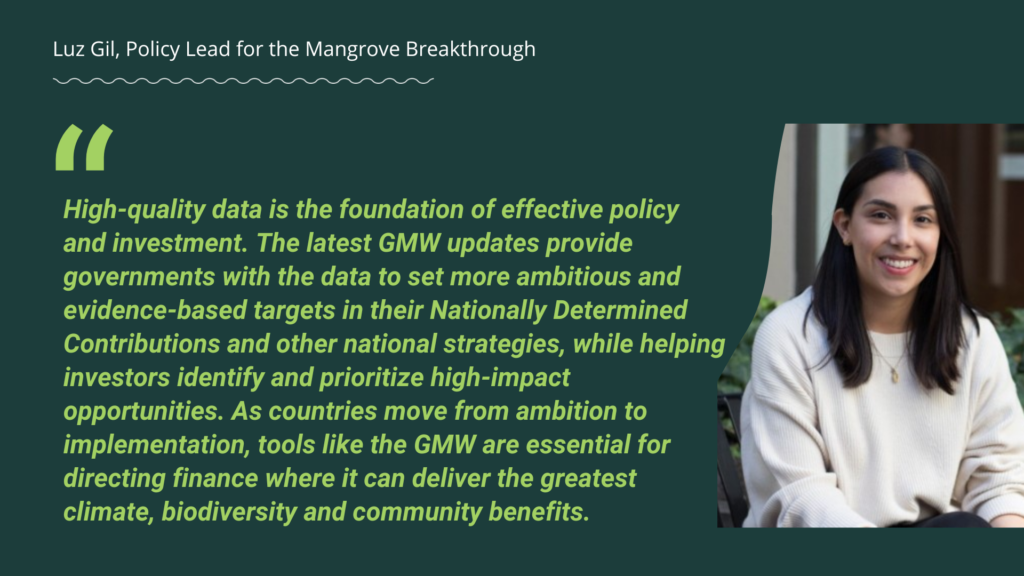
The detailed insights provided by GMW 4.1 are poised to revolutionize mangrove conservation and management strategies. The platform’s high-resolution mapping and alert system empower local practitioners, policymakers, and conservationists with the actionable intelligence needed to:
- Identify Restoration Opportunities: Pinpoint areas where restoration interventions would be most effective.
- Prioritize Conservation Efforts: Focus resources on protecting existing, high-value mangrove ecosystems.
- Monitor Progress with Precision: Track the success of conservation and restoration projects with unprecedented accuracy.
- Respond to Threats Promptly: Detect and address illegal clearing and degradation events in near real-time.
The ability for users to subscribe to deforestation alerts for their specific areas of interest further enhances the tool’s utility, fostering a sense of ownership and enabling targeted interventions.
A Call to Action and Future Prospects
The release of the GMW 4.1 data serves as both a celebration of progress and a stark reminder of the ongoing challenges facing mangrove ecosystems. While the global net gain is encouraging, the continued losses in critically important regions demand intensified efforts.
The Global Mangrove Alliance, a key beneficiary of the GMW data, continues to advocate for the protection and restoration of these vital habitats. The alliance emphasizes the importance of community-based approaches, recognizing that local stewardship is fundamental to long-term success.
A global webinar scheduled for July 27th aims to delve deeper into the findings and discuss future strategies. The platform itself, www.globalmangrovewatch.org, remains a free and accessible resource for researchers, conservationists, and the public alike.
The collaborative nature of the Global Mangrove Watch, involving institutions such as Wetlands International, The Nature Conservancy, Aberystwyth University, and the Japan Aerospace Exploration Agency, with support from foundations like the Oak Foundation and COmON Foundation, highlights the power of international cooperation in addressing global environmental challenges.
As the world navigates the complexities of climate change and biodiversity loss, the enhanced understanding of mangrove dynamics offered by the Global Mangrove Watch provides a critical foundation for informed action, ensuring that these invaluable coastal ecosystems continue to thrive for generations to come. The next steps will involve sustained investment in monitoring, robust policy frameworks, and continued community engagement to safeguard and expand these vital natural assets. The story of mangroves is far from over, and the GMW is providing the clearest chapter yet.
