
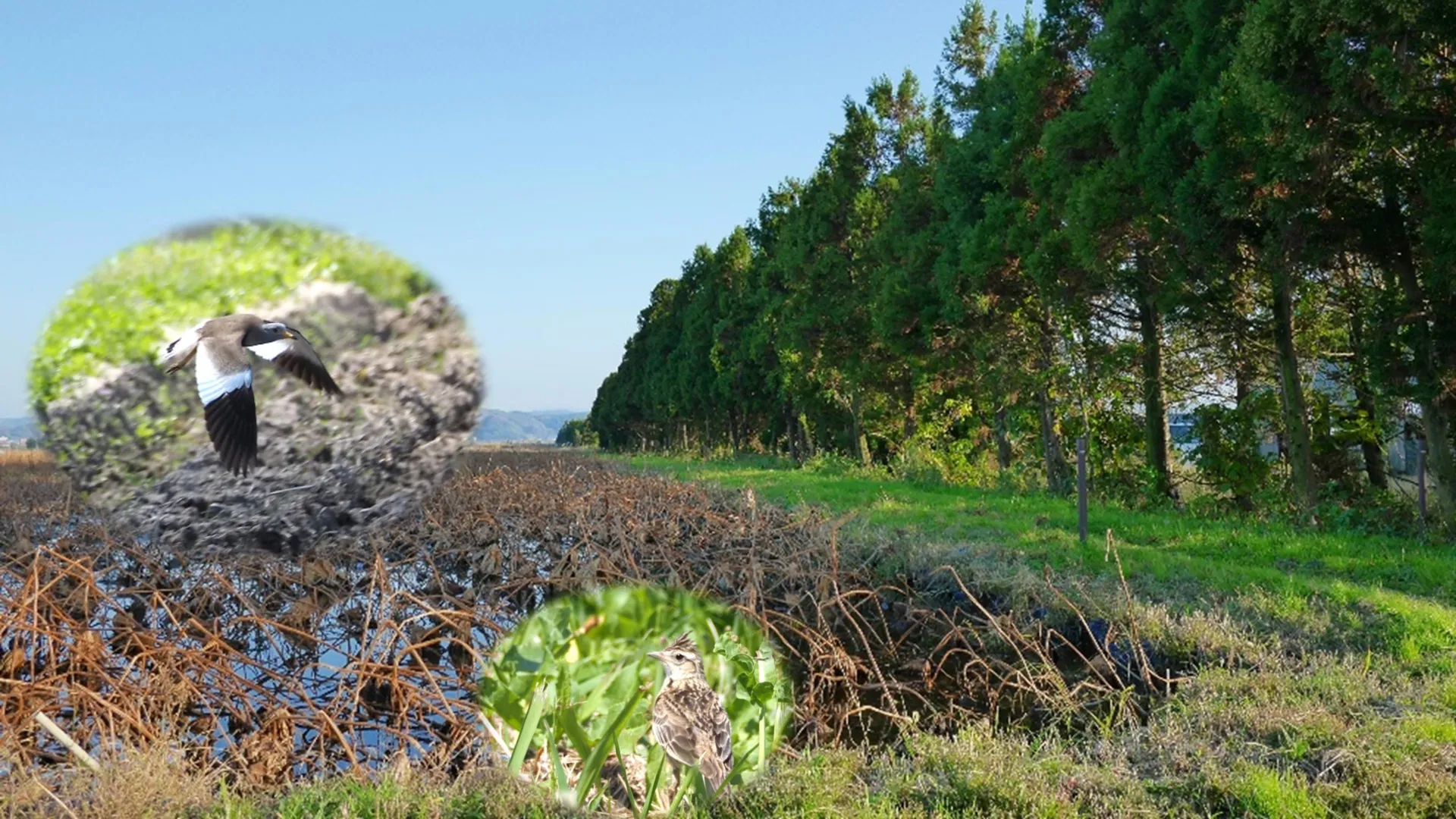
The global push for agricultural sustainability has long championed a simple, green axiom: plant more trees. Across North America, Europe, and parts of Asia, conservation programs heavily subsidize the cultivation of shelterbelts—linear rows of trees and hedgerows designed to safeguard crops against severe windstorms, prevent soil erosion, and enhance local biodiversity. For decades, these woody barriers have been universally praised as ecological havens, offering nesting grounds and corridors for diverse wildlife. However, ground-breaking research published in the Journal of Environmental Management challenges this conventional wisdom, revealing that the widespread implementation of shelterbelts creates distinct ecological trade-offs, particularly in fragile agricultural wetland landscapes.
A collaborative team of researchers specializing in environmental science and ecology has discovered that while windbreaks successfully cater to shrub-loving and edge-dwelling species, they inflict a severe toll on bird populations dependent on wide, unobstructed vistas. In agricultural wetlands—such as the intensively managed rice paddies of central Japan—the introduction of trees acts as a functional barrier, precipitating a steep decline in the abundance and diversity of native grassland and wetland birds. This revelation forces a critical re-evaluation of how environmental policies approach habitat management in human-modified landscapes, suggesting that a one-size-fits-all approach to tree planting may inadvertently jeopardize vulnerable fauna.
Unpacking the Ecological Conflict in Agricultural Wetlands
Agricultural wetlands occupy a unique and precarious niche in modern ecosystems. On one hand, they are intensely managed economic engines dedicated to food production. On the other hand, because natural wetlands have suffered catastrophic global declines over the past century, these artificial and semi-natural aquatic farming systems frequently function as vital surrogate habitats. Migratory birds traveling along major international flyways rely heavily on these flooded plains, mudflats, and cultivated paddies for foraging and resting during their exhaustive seasonal journeys.
Historically, most empirical research evaluating the ecological efficacy of shelterbelts has focused on terrestrial agricultural systems in Western countries, predominantly dry crop fields and open pastures in North America and Europe. Far less attention has been paid to wet-farming systems like Asian rice paddies, which host distinct ecological communities adapted to vast, open horizons.
"The central question of our study is, ‘Do shelterbelts and other woody linear features benefit all farmland birds equally in agricultural wetland landscapes, or do they create trade-offs by disadvantaging species that depend on open habitats?’" explained Dr. Masumi Hisano, assistant professor at Hiroshima University’s Graduate School of Advanced Science and Engineering and the corresponding author of the study.
This tension is not merely academic. As governments and environmental NGOs pour resources into green infrastructure initiatives, the lack of localized, context-specific data risks producing well-intentioned policies that yield counterproductive conservation outcomes. If the physical structure of a landscape is fundamentally altered to favor woodland species, open-habitat specialists find themselves squeezed out of their ancestral strongholds.
Chronology of the Field Study: Investigating Lake Kahokugata
To test these hypotheses, the research team established a rigorous field study around Lake Kahokugata, situated in central Japan. This geographical location serves as an ideal laboratory for investigating the interplay between intensive agriculture and avian ecology. The surrounding basin is characterized by a mosaic of expansive rice paddies, specialized lotus fields, conventional croplands, and pastoral tracts.
Furthermore, the region is subjected to severe seasonal meteorological pressures. Strong winter winds and aggressive coastal storms sweep across the flat terrain, prompting local farmers and land managers to establish dense, linear networks of shelterbelts to protect delicate agricultural yields from physical damage.
Crucially, Lake Kahokugata is also a designated node of immense ecological significance, operating as a vital stopover site along the East Asian-Australasian Flyway. The flyway supports millions of migratory birds annually. The lake’s catchment area accommodates both wintering species that seek refuge from harsher northern climates and summer breeding populations. Historical records indicate that nearly 300 distinct bird species have been documented within this specific region, underscoring its role as a biodiversity hotspot that demands meticulous environmental stewardship.
The empirical investigation was structured across two distinct field campaigns to capture seasonal variations in avian behavior and community composition. The researchers executed standardized bird surveys during February and March of 2021, capturing the peak of the wintering migratory period. They returned for a second phase of data collection in June 2023, capturing the crucial summer breeding season.
Utilizing a scientifically validated point-count methodology, the team measured absolute bird abundance, species richness, and diversity across various spatial configurations, comparing sites directly adjacent to shelterbelts with open reference sites located approximately one kilometer away.
Empirical Findings: Winners, Losers, and Ecological Walls
The analytical results of the surveys exposed a stark, undeniable ecological divide. The data confirmed that shelterbelts successfully perform their intended secondary function of bolstering biodiversity—provided the species in question are naturally inclined toward shrublands, forest edges, or arboreal environments. Species that utilize dense cover, perching sites, and woodland margins flourished in proximity to the windbreaks.
Conversely, the presence of these linear woody features triggered a dramatic contraction in the populations of open-habitat specialists. Most alarmingly, the study revealed that the overall abundance of grassland birds was depressed by more than 70 percent at monitoring sites situated immediately next to shelterbelts, when contrasted with open control sites just a short distance away. Wetland bird diversity suffered a parallel decline, as species requiring unbroken lines of sight and wide, expansive foraging grounds avoided the structural enclosure imposed by the trees.
To conceptualize this phenomenon, Dr. Hisano and her colleagues introduced a vivid metaphor. "A useful way to think about this is that shelterbelts act like ecological walls," she noted.
Beyond physically fragmenting the landscape, these tree lines alter local ecological dynamics in multiple ways. For open-field nesting birds, the vertical structure of a shelterbelt provides ideal perches and ambush corridors for avian and mammalian predators, such as crows, raptors, and small carnivores. Consequently, birds nesting near windbreaks often experience heightened predation pressure. Additionally, many open-landscape species exhibit behavioral avoidance of vertical clutter, perceiving tall trees as inherent risks that restrict their field of vision against potential threats.
"Our study provides clear, quantitative evidence that small-scale landscape features can have large ecological consequences, directly relevant to land-use planning and environmental management," Hisano emphasized, highlighting the disproportionate physical footprint these narrow tree lines exert on regional ecosystems.
Contextualizing the Broader Implications for Agri-Environmental Policy
The implications of the Hiroshima University-led study extend far beyond the rice paddies of central Japan. As global frameworks for sustainable agriculture increasingly emphasize carbon sequestration, regenerative farming, and biodiversity enhancement, tree-planting campaigns have attained near-dogmatic status among policymakers. Programs in the European Union, the United States, and across Asia frequently incentivize the indiscriminate planting of hedgerows, riparian buffers, and windbreaks.
However, the new findings demand a sophisticated recalibration of these initiatives. The research team stresses that trees should not be reflexively categorized as categorically beneficial or harmful; rather, their ecological value is entirely contingent upon spatial context, structural design, and the pre-existing baseline ecology of the landscape.
"Biodiversity-friendly farmland management must balance structural complexity with the ecological needs of open-habitat species, especially in landscapes where wetlands have already been heavily modified by humans," Hisano stated.
In regions where natural wetlands have been systematically drained, paved, or converted into agricultural tracts, the remaining open agricultural matrix represents the last remaining functional habitat for a suite of specialized wading birds, shorebirds, and grassland passerines. Imposing woodland architecture onto these specific environments risks trading one form of biodiversity for another, ultimately causing a net loss of regional ecological uniqueness.
Future Research Directions and Landscape-Level Planning
Recognizing the complexity of human-altered ecosystems, the research collective is calling for an expansion of empirical studies to refine conservation planning. Future scientific inquiries must dissect the granular physical characteristics of shelterbelts—analyzing how variations in width, height, canopy density, spatial configuration, and specific tree species composition differentially impact wildlife across varying climatic zones and seasonal cycles.
Furthermore, researchers aim to quantify complex indirect ecological cascades, such as how linear woody features modify microclimates, influence regional pest-predator dynamics, and alter functional habitat connectivity across fragmented agricultural mosaics.
Ultimately, the overarching objective of this research is to furnish policymakers and agricultural planners with robust, evidence-based tools to craft nuanced agri-environmental policies. Rather than endorsing a blunt, universal mandate to plant trees everywhere, the scientific community advocates for integrated landscape planning. By strategically zoning and balancing open aquatic expanses with targeted woody features, land managers can sustain diverse avian communities, preserve essential ecosystem services, and ensure that agricultural wetlands remain both economically productive for human societies and safely habitable for wildlife in an era of rapid environmental change.
The collaborative research initiative was conducted by an interdisciplinary team comprising scientists from Hiroshima University, The University of Tokyo, Kyoto University, the Fukui City Museum of Natural History, the University of British Columbia, Simon Fraser University, Nihonkai Eco Engineering Technologies, Zhenjiang A&F University, and Nakano City Hall. Financial and logistical backing for the study was provided by the Kahokugata Lake Institute and the Japan Society for the Promotion of Science KAKENHI grants.
