
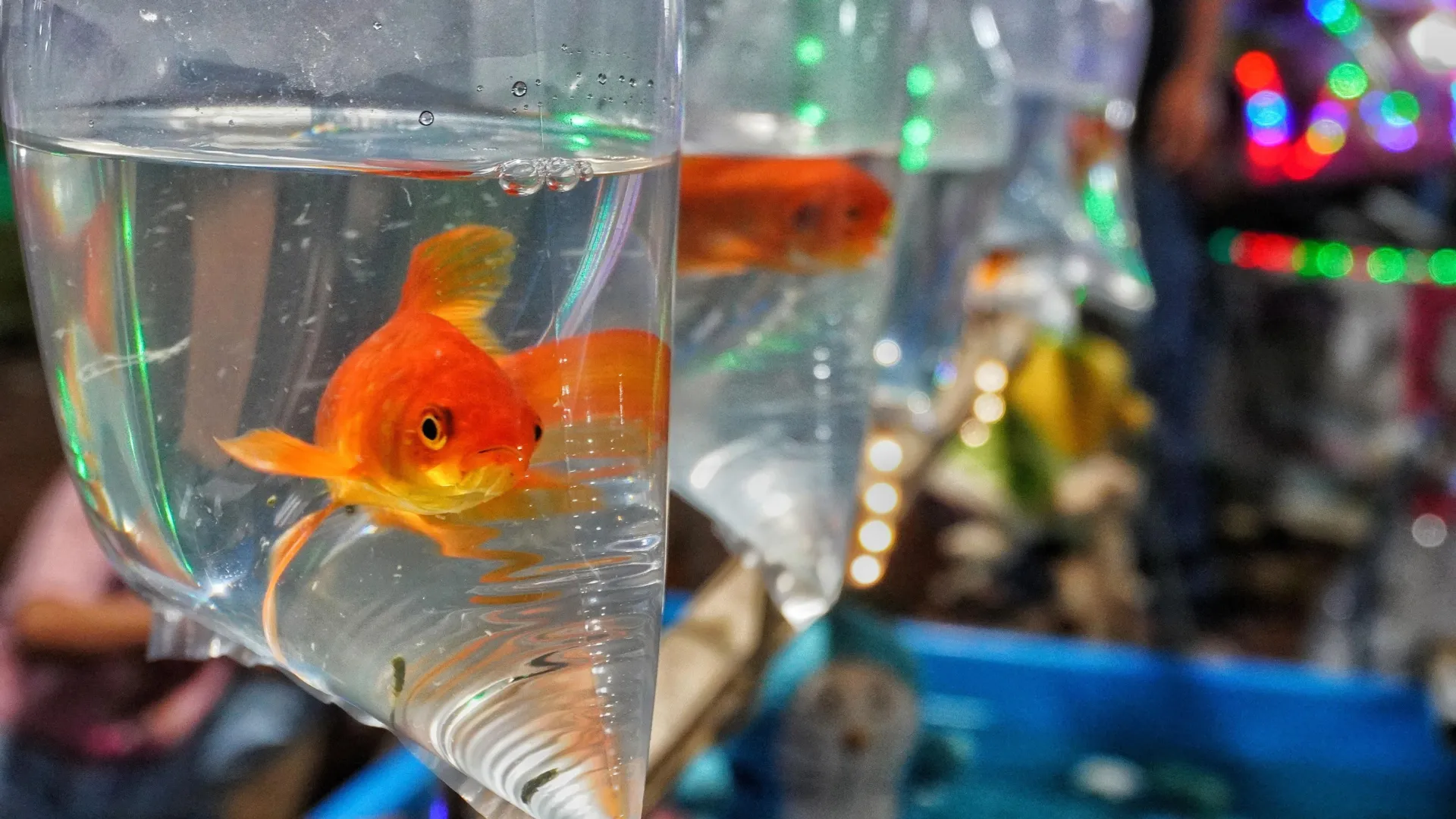
The innocent act of releasing a household pet into the wild carries devastating ecological consequences that can fundamentally alter freshwater habitats, according to groundbreaking peer-reviewed research conducted by scientists at The University of Toledo and the University of Missouri. Published in the esteemed Journal of Animal Ecology, the study provides some of the most rigorous and definitive experimental evidence to date proving that common goldfish (Carassius auratus), when introduced into natural waterways, act as aggressive invasive species capable of triggering rapid and catastrophic regime shifts in lake environments.
The findings serve as an urgent, evidence-based warning to pet owners, natural resource managers, local policymakers, and conservationists worldwide. While millions of households view goldfish as harmless, low-maintenance decorative pets confined to glass bowls or backyard decorative ponds, the research underscores a stark biological reality: outside the controlled boundaries of an aquarium, these resilient fish quickly transform into formidable ecological threats. As global trade continues to move aquatic species across continents at unprecedented rates, scientists are renewing calls for stricter regulations, enhanced public education, and proactive management strategies to curb the rising tide of aquarium dumping.
Experimental Design and Methodology: Simulating Real-World Lakes
To capture the true extent of the damage inflicted by invasive goldfish, the research team—led by Dr. William Hintz, an associate professor in UToledo’s Department of Environmental Sciences and Lake Erie Center—employed large-scale outdoor freshwater mesocosms. These experimental systems were meticulously engineered to mimic the complex physical, chemical, and biological conditions of real-world lakes. By utilizing these massive outdoor tanks, researchers could manipulate variables in a controlled setting while observing natural ecological interactions that smaller indoor aquariums simply cannot replicate.
The study, formally titled "Invasive goldfish trigger a regime shift in experimental lake ecosystems of varying trophic state," examined how goldfish impact two distinct freshwater conditions commonly found across North America and the globe: nutrient-poor (oligotrophic) waters and nutrient-rich (eutrophic) waters. Furthermore, the scientists utilized both additive and substitutive experimental designs. This methodological rigor allowed the team to successfully separate the specific, isolated impacts of goldfish from the generalized effects associated with simply having an increased total abundance of fish within an ecosystem.
The analytical results were unambiguous. While minor fluctuations in aquatic vegetation could occasionally be correlated with overall fish density, the severe, systemic ecological degradation observed across the mesocosms was directly and unequivocally linked to the presence of Carassius auratus. In both nutrient-poor and nutrient-rich environments, the introduction of goldfish set off a destructive cascade of biological and chemical alterations.
The Mechanics of Invasion: Why Goldfish Thrive and Destroy
Understanding why goldfish are so destructive requires examining their unique biological traits and evolutionary history. Domesticated from wild carp species in ancient China more than a thousand years ago, goldfish share much of the physiological toughness and adaptability of their wild ancestors. When introduced into natural ponds, rivers, and lakes—whether intentionally released by owners or accidentally escaping during heavy rainfall and flooding events—these fish display an astonishing capacity for survival and growth.
"If goldfish are released into the wild, they rapidly grow into very large fish that stir up lake sediments, consume large numbers of prey and compete with native fish," explained Dr. Rick Relyea, professor in the University of Missouri College of Agriculture, Food and Natural Resources and director of Mizzou’s Johnny Morris Institute of Fisheries, Wetlands and Aquatic Systems, who served as a co-author on the study.
Once established in a new waterway, goldfish display several behaviors that actively dismantle native aquatic communities:
- Sediment Bioturbation: By constantly foraging along the bottom of lakes and ponds, goldfish stir up fine sediment. This process, known as bioturbation, increases water turbidity, blocks sunlight necessary for rooted aquatic plants, and releases locked-up nutrients like phosphorus back into the water column.
- Nutrient Resuspension and Algae Blooms: The release of nutrients from disturbed sediments frequently triggers explosive growths of filamentous algae and phytoplankton, choking out native flora and plunging water bodies into a degraded state.
- Predation and Competition: Goldfish consume vast quantities of zooplankton, macroinvertebrates, and fish eggs. By stripping the ecosystem of its natural grazers, they eliminate the checks and balances that keep algae and poor water quality in check.
- Unchecked Growth: Unlike their stunted counterparts in small tanks, wild goldfish can grow to surprising sizes—often reaching several pounds and measuring over a foot in length—allowing them to dominate local food webs.
Documenting the Ecological Regime Shift
One of the most alarming revelations of the UToledo and University of Missouri study is the documentation of a "regime shift" driven by goldfish. In ecology, a regime shift occurs when an ecosystem crosses a critical threshold, moving rapidly away from its original stable state and reorganizing into a fundamentally different, highly degraded condition.
In oligotrophic and eutrophic lakes alike, the introduction of goldfish pushed aquatic environments past their tipping points. Clear-water states characterized by abundant native vegetation and balanced invertebrate populations quickly transitioned into turbid, algae-dominated states.
The implications of such a shift are profound. Once an aquatic ecosystem undergoes a regime shift, restoring it to its original, healthy condition is notoriously difficult, time-consuming, and exceptionally expensive for local municipalities and environmental agencies. Mitigation often requires costly chemical treatments, mechanical dredging, or the complete eradication of fish populations using piscicides—methods that are controversial and can inadvertently harm non-target native species.
Chronology and Growing Concern in North American Waterways
The publication of this study arrives amid a decades-long escalation of invasive species management challenges across North America. For years, wildlife agencies in the United States and Canada have reported capturing colossal goldfish in urban stormwater ponds, public parks, rivers, and the Laurentian Great Lakes.
Over the past fifteen years, municipal officials in cities such as Boulder, Colorado; London, Ontario; and various locations throughout Minnesota and Alberta have sounded the alarm after discovering dense schools of oversized goldfish crowding out native fish populations. In many cases, these populations originated from just a few illegally dumped pets. Because goldfish are prolific breeders capable of tolerating low oxygen levels and extreme water temperatures ranging from near-freezing to the high 80s Fahrenheit, populations can explode in a matter of a few seasons.
State and provincial wildlife departments have repeatedly launched public awareness campaigns featuring striking photographs of dinner-plate-sized goldfish pulled from local lakes. Despite these warnings, the pet trade continues to supply millions of fish annually, and a persistent lack of public education means that well-meaning owners continue to view dumping pets into local ponds as a humane alternative to euthanasia.
Official Responses and Expert Recommendations
In light of their experimental findings, the study’s authors—Dr. William Hintz, Hannah Barrett, and Dr. Rick Relyea—are urging a paradigm shift in how environmental agencies and the public approach ornamental species. The researchers argue that goldfish must be formally recognized and prioritized as high-impact invasive species rather than dismissed as benign novelty pets.
"It is critically important to inform the public that their pets can become pests that will harm freshwater ecosystems," Dr. Hintz emphasized. "The evidence is now clear — releasing a goldfish into the wild might be seen as an act of kindness, but it can turn into a major ecological threat."
To combat this ongoing environmental challenge, the researchers and conservation authorities recommend a multi-pronged approach focused on prevention, early detection, and rapid response:
- Strengthened Public Education: Educational initiatives must target pet store consumers at the point of sale, clearly outlining the lifespan, ultimate size, and environmental dangers associated with releasing aquarium fish.
- Responsible Surrender Programs: Pet retail stores, public aquariums, and local rescue organizations should establish formal "surrender" networks where owners can safely return unwanted fish without social stigma or financial penalty.
- Regulatory Measures: Policymakers should consider tightening regulations on the import and sale of high-risk invasive ornamental species, alongside implementing stricter penalties for illegal wildlife dumping.
- Early Detection and Rapid Eradication: Natural resource agencies must invest in regular monitoring of urban waterways and stormwater management ponds to catch and eradicate invasive goldfish populations before they establish permanent, self-sustaining breeding stocks.
Broader Implications for Global Biodiversity
The study by UToledo and the University of Missouri underscores a broader, systemic vulnerability in modern conservation biology: the homogenization of global ecosystems through the pet trade. As globalization accelerates, the movement of flora and fauna across international borders has become one of the leading drivers of biodiversity loss and habitat degradation worldwide.
While much of the public discourse surrounding invasive species focuses on high-profile invaders like zebra mussels, Asian carp, or the emerald ash borer, insidious "low-profile" invaders such as the common goldfish often escape immediate regulatory scrutiny. Yet, as this latest research proves, their collective impact on local freshwater habitats can be every bit as devastating.
As freshwater ecosystems face compounding pressures from climate change, industrial pollution, agricultural runoff, and habitat fragmentation, the introduction of aggressive non-native species like Carassius auratus strips lakes and rivers of their remaining resilience. Safeguarding these vital aquatic resources will require a concerted effort from scientists, lawmakers, pet industry stakeholders, and everyday citizens who must recognize that protecting nature sometimes begins right at home, on the edge of a glass aquarium.
