
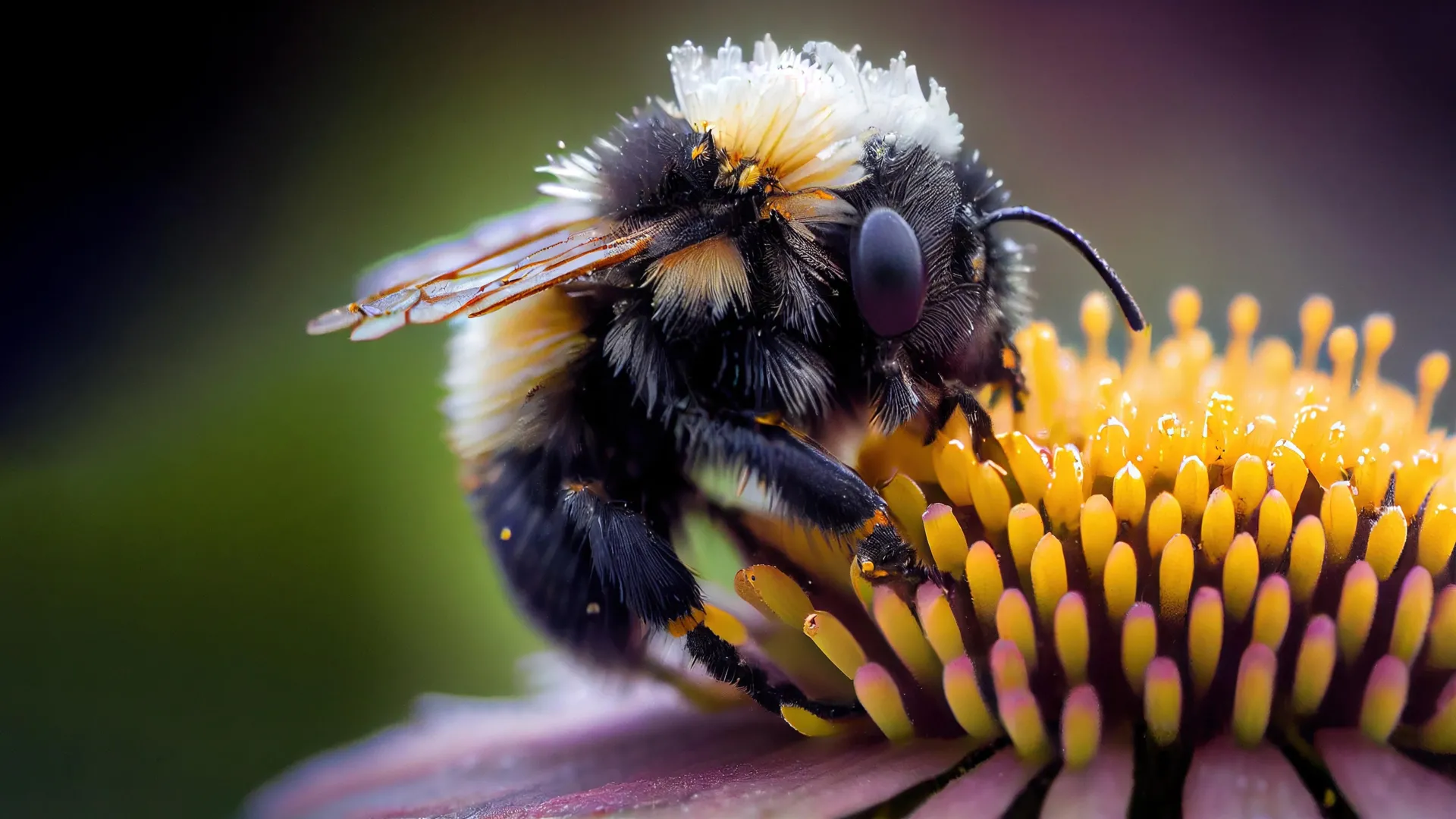
New scientific research published by the University of Cambridge has uncovered a critical, previously under-evaluated environmental threat to wild pollinators: bumblebees accumulate significantly higher concentrations of toxic heavy metals than honeybees, even when both species forage within the exact same geographical landscapes. The findings, published in the peer-reviewed journal Ecological Entomology, indicate that bumblebees can ingest and carry up to seven times more heavy metals in their pollen loads and retain roughly three times higher concentrations within their bodies compared to their honeybee counterparts.
This stark disparity reveals that common environmental pollutants are impacting wild insect populations unevenly. While honeybees have traditionally served as the global standard—or bioindicators—for measuring environmental contamination in industrial and urban settings, this new study demonstrates that monitoring only honeybees may severely underestimate the toxic burden carried by wild pollinators. Given the vital ecosystem services provided by bees, including the pollination of wild flora and commercial agricultural crops, these findings introduce urgent questions regarding how hidden baseline pollution affects insect health, longevity, and reproductive output on a global scale.
The Accumulation Crisis: Background and Context
Heavy metal pollution is historically associated with distinct industrial hot spots, active mining districts, and densely populated urban centers where manufacturing, vehicular emissions, and historical waste disposal have left lasting environmental footprints. However, modern environmental science increasingly recognizes that these persistent contaminants do not remain confined to urban or industrial zones. Through atmospheric deposition, the agricultural application of sewage sludge, phosphate-based fertilizers, livestock manure, and runoff, toxic elements such as arsenic, cadmium, chromium, cobalt, lead, and tin are continually dispersed into rural and semi-rural ecosystems.
Once introduced into the soil and atmosphere, these heavy metals persist indefinitely, cycling through the local food web. Plants absorb them through their root systems from contaminated soils, while atmospheric dust settles directly onto plant surfaces, leaves, and floral structures. For foraging insects, exposure is nearly constant and multifaceted. Bees inadvertently ingest or collect these elements as they harvest nectar and gather pollen for their colonies.
While lethal toxicity events—where heavy metal concentrations are high enough to cause immediate mortality—are relatively rare outside of severe industrial accidents, chronic exposure to sub-lethal levels presents a far more insidious danger. Decades of ecotoxicological research have established that even trace amounts of heavy metals can impair neurological functions in insects. Specifically, these contaminants interfere with learning and memory pathways, compromising a bee’s spatial orientation and making it exceptionally difficult to navigate complex landscapes or relocate previously identified food sources. Furthermore, heavy metal exposure has been repeatedly linked to reduced reproductive success, lower overall brood viability, and stunted colony development.
Methodology and Chronological Investigation
To understand how different species process these environmental toxins, an interdisciplinary team of researchers from the Department of Zoology at the University of Cambridge designed a rigorous field study. The investigation specifically sought to compare the accumulation rates of multiple heavy metals between honeybees (Apis mellifera) and common bumblebee species foraging in identical environments.
The study was conducted in Cambridgeshire, England, a region representative of typical lowland agricultural and rural landscapes where baseline soil contamination is generally considered low to moderate, far removed from heavy manufacturing or active mining operations. The researchers established side-by-side monitoring stations where managed honeybee hives and wild bumblebee colonies shared identical foraging grounds.
Using specialized pollen traps fitted to the colonies, the research team systematically collected pollen samples brought back by both bee species. Simultaneously, they captured adult worker bees to measure internal tissue contamination. Back in the laboratory, the samples underwent rigorous chemical analysis to quantify the precise concentrations of six key heavy metals: arsenic, cadmium, chromium, cobalt, lead, and tin.
The chronological progression of the study highlighted a stark contrast in how these two prominent pollinator groups interact with their environment. Although honeybees and bumblebees flew through the exact same fields, hedgerows, and meadows, the chemical assays revealed profound discrepancies in toxin accumulation.
Empirical Findings and Supporting Data
The empirical data gathered by the Cambridge team surpassed initial hypotheses regarding species-specific vulnerability. When analyzing the gathered pollen, researchers discovered that the pollen loads harvested by bumblebees contained between two and seven times higher concentrations of heavy metals across the vast majority of analyzed elements compared to the pollen collected by honeybees in the same weeks.
Beyond external food sources, the physical bodies of the bumblebees themselves bore a heavier chemical burden. Adult bumblebees accumulated roughly three times higher internal concentrations of toxic heavy metals than adult honeybees operating in the identical geographical zone.
Dr. Sarah Scott, the lead author of the study who conducted the research while at the University of Cambridge and is now based at Newcastle University, detailed the implications of these measurements. "Most metal levels we found were not high enough to kill bees outright," Dr. Scott explained, "but even low levels can still harm bee health and colony success in subtle but important ways, such as affecting their ability to forage, navigate, and successfully reproduce."
Why Bumblebees Face Heightened Exposure
The dramatic differences in metal accumulation between honeybees and bumblebees cannot be explained by environmental exposure alone, since both species inhabited the same test locations. Instead, the research team concluded that the disparity stems from a complex interaction between distinct biological traits, nesting strategies, and foraging behaviors.
Nesting Ecology and Colony Size
The fundamental architecture and scale of their colonies create vastly different vulnerabilities. Honeybees are social insects that typically establish large, perennial colonies numbering between 30,000 and 60,000 individuals, usually selecting elevated nesting sites such as hollow tree cavities or managed, elevated wooden hives. In contrast, bumblebees establish annual, subterranean colonies. They build their nests underground in the soil, within abandoned rodent burrows, or deep beneath thick leaf litter. Furthermore, bumblebee colonies are significantly smaller, typically housing between 50 and 500 individuals at their peak. Because their nests are in direct and continuous contact with the soil, bumblebees are perpetually immersed in a substrate that often concentrates heavy metals deposited from the atmosphere.
Foraging Range and Dietary Diversity
Behavioral patterns during the daily search for sustenance further amplify the risk for bumblebees. Honeybees are known for their expansive foraging ranges, frequently traveling distances of up to 10 kilometers from their home hive. Because they deploy a massive workforce of foragers across a vast geographic area, honeybees can distribute their foraging efforts across diverse patches of flora, effectively diluting their exposure to localized contaminants.
Conversely, bumblebees have a much more restricted foraging radius, typically remaining within 1.5 kilometers of their underground nests. This limited range grants them fewer opportunities to bypass localized pockets of heavy metal pollution. Additionally, honeybees visit a remarkably wide variety of plant species, whereas bumblebees often display narrower floral preferences governed by tongue length, body size, and specific nutritional requirements. If the local plant species favored by bumblebees happen to be hyper-accumulators of heavy metals—plants that naturally absorb higher concentrations of soil contaminants—the bumblebees’ dietary exposure increases exponentially.
Physical Morphology and Particulate Trapping
A final, highly visible factor contributing to the discrepancy is the physical anatomy of the insects. Bumblebees possess exceptionally dense, hairy bodies compared to the relatively sleek exoskeleton of honeybees. This dense pelage acts as a physical net, making it significantly easier for ambient dust, industrial fallout, and airborne particulate matter laden with heavy metals to adhere to their bodies. Consequently, as bumblebees move through the landscape, they inadvertently transport these airborne toxins back to their nests alongside their pollen loads.
Official Responses and Expert Perspectives
The publication of the study in Ecological Entomology—the official journal of the Royal Entomological Society—has drawn attention from agricultural scientists, conservationists, and environmental policymakers throughout the United Kingdom and beyond. Funded primarily by the Royal Society, the research underscores the necessity of rethinking how environmental health is monitored across non-urban landscapes.
Professor Lynn Dicks of the Department of Zoology at the University of Cambridge, the senior author of the study and a Fellow at Selwyn College, emphasized the unexpected vulnerability of rural ecosystems. "Even in areas that we usually consider safe or lower risk for heavy metals—typically rural areas, far away from industrial or mining centers—bees can pick up toxic metals," Professor Dicks noted. She highlighted the precarious nature of wild colonies, adding, "Bumblebee colonies tend to have fewer workers available to perform critical daily tasks, so the loss or incapacitation of individual workers can have a disproportionately large impact on overall colony function and survival."
Despite the concerning nature of the data, the research team was careful to contextualize their findings to prevent unintended negative consequences for conservation efforts. A primary concern among the scientists was that public awareness of heavy metal contamination in rural flora might discourage citizens from planting urban and rural gardens, which are desperately needed to sustain declining pollinator populations.
Addressing this concern, Dr. Scott urged the public to maintain active conservation gardening practices. "Bees play a critical role in both biodiversity and agricultural food security, so we’d still encourage people to plant flowers to help them, even if you live in an area more likely to be contaminated," Dr. Scott advised. "At the end of the day, bees still need food to survive. Even if that food carries trace amounts of heavy metals, having some nourishment is fundamentally better than having no food at all."
Broader Implications for Conservation and Policy
The revelation that bumblebees accumulate drastically higher levels of heavy metals than honeybees carries profound implications for environmental policy, ecological risk assessment, and global conservation strategies.
For decades, environmental regulators have relied on honeybees as standard biological monitors to assess the ecological health of a given region. Honeybee hive products—including honey, wax, and collected pollen—are routinely tested to gauge environmental pollution levels. However, the Cambridge study proves that honeybees provide an incomplete and potentially misleading picture of environmental contamination. Because honeybees fly farther, dilute their food sources across diverse plant species, and nest above ground, they systematically underreport the toxic baseline experienced by ground-nesting, wild pollinators.
This blind spot in environmental monitoring means that wild insect populations, which include numerous species of bumblebees, solitary bees, and other native pollinators essential for natural ecosystems and crop yields, may be facing chronic toxicological stress that goes entirely unnoticed by standard regulatory frameworks.
As global biodiversity faces unprecedented pressures from habitat loss, climate change, and intensive pesticide use, the presence of invisible, pervasive heavy metal contamination adds a critical new dimension to the decline of wild pollinators. Experts suggest that future environmental impact assessments must incorporate wild, ground-nesting insect species alongside managed honeybees to accurately capture the true physiological toll of industrial and agricultural byproducts on the natural world.
Ultimately, the University of Cambridge study serves as both a warning regarding the widespread dispersion of heavy metal pollutants into seemingly pristine rural landscapes and a call to action for more comprehensive, multi-species environmental monitoring. Protecting the world’s vital pollinators will require not only the continued cultivation of floral resources but also a rigorous, systemic effort to address and mitigate the hidden chemical burdens permeating the soil and air of modern ecosystems.
