
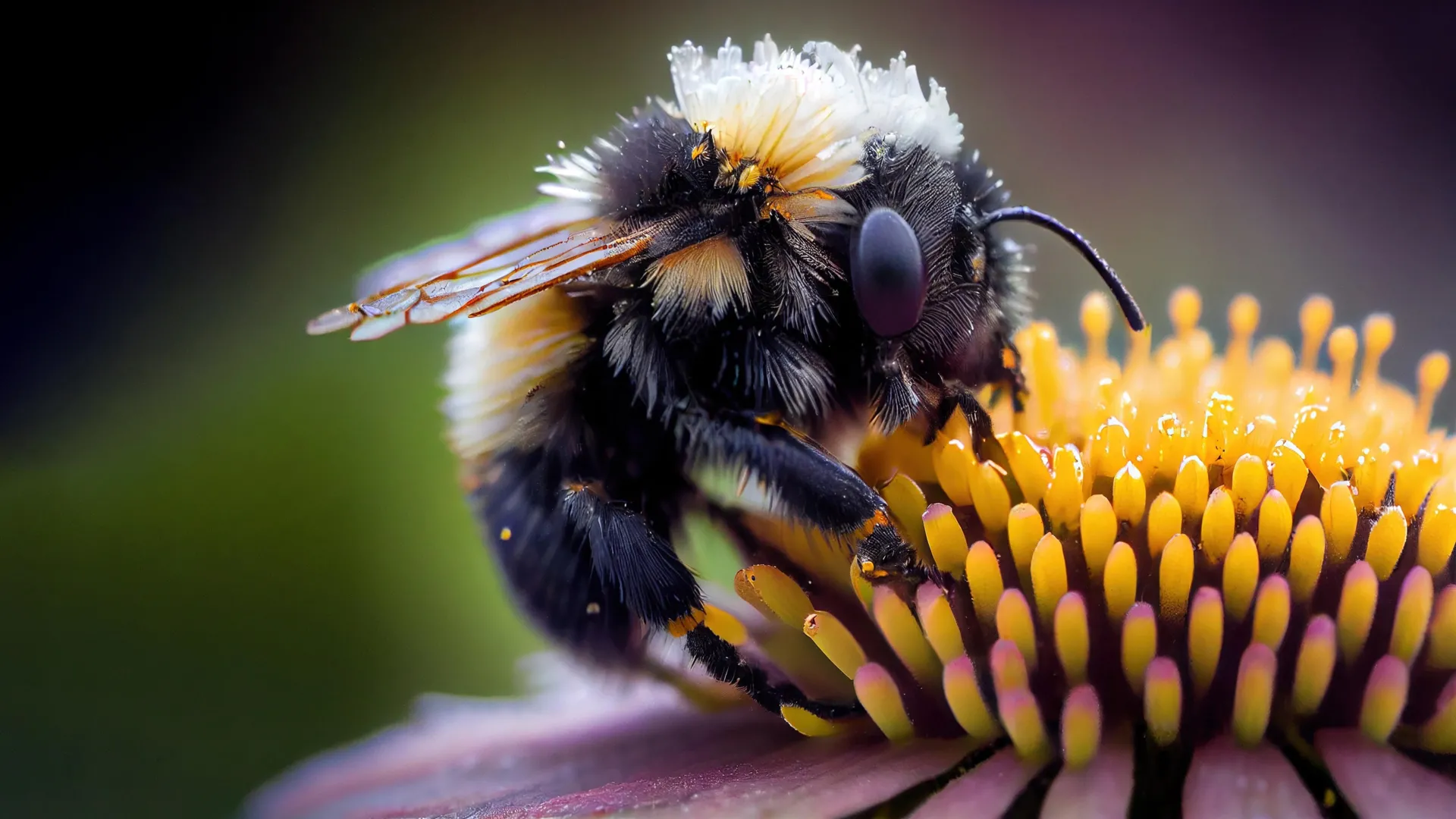
Recent scientific findings from the University of Cambridge have cast a new and concerning light on the invisible threats facing wild pollinators. According to a study published in the peer-reviewed journal Ecological Entomology, bumblebees can accumulate up to seven times more toxic heavy metals in their pollen loads than honeybees, even when both species forage side by side in the exact same environment. This stark discrepancy highlights a previously underappreciated vulnerability in wild bee populations, raising urgent questions about how hidden industrial and agricultural pollution impacts the survival, cognitive function, and reproductive success of vital ecosystem engineers.
The research, funded by the Royal Society and conducted primarily in Cambridgeshire, England, challenges long-held assumptions regarding how environmental contamination affects different insect species. While honeybees have traditionally served as the gold standard and primary biological indicators for monitoring heavy metal pollution in urban and industrial zones, this new study demonstrates that they may grossly underrepresent the actual toxic burden borne by their wild, ground-nesting cousins.
The Ubiquitous Threat of Heavy Metal Pollution
Heavy metal contamination is rarely confined to the immediate vicinity of heavy industry, smelting facilities, or active mining operations. While localized pollution is an acute problem around factories and urban centers, toxic elements such as arsenic, cadmium, chromium, cobalt, lead, and tin routinely infiltrate rural and semi-rural landscapes. These persistent pollutants travel vast distances through atmospheric deposition, settling over fields and forests. Furthermore, human activities introduce these contaminants directly into agricultural soils via sewage sludge application, phosphate-based fertilizers, soil amendments, and various crop-protection chemicals.
As bees navigate their landscapes in search of nourishment, they inevitably interact with these contaminated substrates. They collect nectar and pollen from plants that have drawn heavy metals up through their root systems, while simultaneously brushing against polluted soil particles and atmospheric dust that coat foliage and floral structures.
The physiological consequences of ingesting or absorbing these elements are profound. Decades of ecotoxicological research have established that even trace amounts of heavy metals can impair insect neurobiology. Specifically, exposure interferes with critical neurotransmitter pathways associated with learning and spatial memory. For a foraging bee, impaired memory translates directly into a reduced ability to navigate complex landscapes, locate high-quality food patches, and successfully return to the colony. Furthermore, previous scientific investigations have linked heavy metal exposure to compromised immune systems, decreased reproductive output, smaller brood sizes, and halted larval development.
A Controlled Comparison in the English Countryside
To better understand how different bee species interact with these invisible contaminants, researchers from the Department of Zoology at the University of Cambridge designed a field study in Cambridgeshire. The region, characterized by a mix of agricultural land and suburban development, is generally classified as having low baseline soil contamination compared to heavy industrial zones.
The research team deployed specialized pollen traps and monitored managed honeybee colonies alongside native bumblebee populations situated side by side in identical environments. By placing the colonies in direct proximity, the scientists ensured that both species were exposed to the exact same external environmental conditions, air quality, soil composition, and floral landscape.
Upon analyzing the collected samples using advanced spectrometry, the researchers quantified the concentrations of arsenic, cadmium, chromium, cobalt, lead, and tin present in both the stored pollen and the bodies of adult bees. Despite sharing the same geographic range and foraging opportunities, the analytical results revealed a dramatic divergence between the two groups.
Pollen gathered by bumblebees contained between two and seven times higher concentrations of heavy metals across nearly every tested element compared to the pollen harvested by honeybees in the same location. Moreover, when examining the insects themselves, the researchers discovered that bumblebees had accumulated roughly three times higher concentrations of heavy metals within their physical bodies.
Dr. Sarah Scott, who spearheaded the research during her tenure at the University of Cambridge before transitioning to Newcastle University, emphasized the subtle yet devastating nature of these findings. Most of the metal concentrations detected in the study were not immediately lethal to the insects. However, Dr. Scott noted that even sublethal doses can profoundly undermine bee health and colony viability over time by eroding their capacity to forage efficiently and reproduce successfully.
Anatomy, Behavior, and Biology: Unpacking the Exposure Gap
The striking disparity in heavy metal accumulation between honeybees and bumblebees cannot be explained by geography alone. Instead, the researchers point to a complex interplay between the fundamental biology, nesting habits, and foraging behaviors of the two species.
First, the architecture and scale of their colonies differ drastically. Honeybees typically establish massive colonies containing anywhere from 30,000 to 60,000 workers, often housing them above ground in hollow trees, wall cavities, or managed wooden hives. In contrast, bumblebees form much smaller, subterranean or ground-level colonies nestled in soil cavities, abandoned rodent burrows, or dense leaf litter, usually supporting a population of just 50 to 500 individuals.
Second, the two species exhibit vastly different foraging ranges and movement patterns. Honeybees are prodigious travelers, routinely venturing up to 10 kilometers away from their hives to exploit rich nectar and pollen sources. Their massive workforce allows them to sample a wide variety of floral species across a broad geographic expanse, effectively diluting any localized contamination and giving them the mobility to bypass heavily polluted pockets of land.
Bumblebees, conversely, are localized homebodies. They typically conduct their foraging flights within a tight radius of approximately 1.5 kilometers from their nests. This restricted range severely limits their ability to avoid localized pollution hotspots, forcing them to repeatedly gather resources from the same potentially contaminated local environment.
Third, floral preferences and dietary diversity play a major role. Honeybees are generalist foragers that cast a wide net across numerous plant families, spreading their risk across a diverse menu. Bumblebees often collect smaller total quantities of pollen and tend to focus their efforts on a narrower selection of plant species, making their overall exposure heavily dependent on the specific heavy metal uptake efficiency of those chosen plants. Certain hyperaccumulating plant species absorb significantly higher levels of metals from the soil, directly transferring those toxins to the specialized bees that favor them.
Finally, physical morphology contributes to external contamination. Bumblebees possess significantly larger, denser, and hairier bodies than honeybees. This plush coat acts as an electrostatic velvet trap, allowing airborne dust, particulate matter, and soil-borne residues laden with heavy metals to easily cling to their exterior surfaces. These surface particulates are subsequently transported back to the nest alongside the gathered pollen, increasing the colony’s overall exposure profile.
Implications for Rural Ecosystems and Biodiversity
The revelation that bumblebees suffer heightened exposure to toxic heavy metals even in ostensibly clean rural environments has significant implications for global conservation efforts.
Professor Lynn Dicks of the University of Cambridge Department of Zoology, who served as the senior author on the study, highlighted the heightened vulnerability of wild social insects. Because bumblebee colonies operate with a fraction of the workforce found in honeybee hives, the premature death or impairment of even a small number of foraging workers can trigger a cascading failure within the colony, jeopardizing the queen and halting brood rearing entirely.
This vulnerability arrives at a time when wild pollinators are already facing unprecedented pressures from habitat fragmentation, intensive agricultural practices, climate change, and widespread pesticide use. Heavy metal pollution represents a previously overlooked, chronic stressor that may be silently exacerbating population declines across multiple bumblebee species.
Because insect pollinators are the linchpin of terrestrial ecosystems—responsible for the reproduction of over 85% of flowering plant species and a substantial proportion of global agricultural crops—any factor that compromises their navigational abilities or reproductive capacity poses a direct threat to broader biodiversity and global food security.
Navigating the Paradox: Should We Still Plant Flowers?
The findings present a nuanced dilemma for conservationists, urban planners, and everyday gardeners. If urban and rural environments are permeated by trace levels of heavy metals that preferentially poison wild pollinators, does planting urban gardens or rural wildflower strips inadvertently lure bees into toxic traps?
The researchers behind the Cambridge study are unequivocal in their response: absolutely not. Despite the presence of heavy metals in floral resources, the alternative—starvation—is far worse.
Elaborating on this practical reality, Dr. Scott noted that while the pollen and nectar in certain areas may carry trace amounts of industrial or agricultural contaminants, bees ultimately require sustenance to survive. Having access to food that bears low traces of heavy metals is vastly superior to living in a modernized landscape devoid of floral resources altogether.
Consequently, the scientific consensus remains firmly anchored in encouraging the public, local governments, and agricultural landowners to continue planting diverse, pollinator-friendly flora. Urban greening, wildflower meadows, and pesticide-free garden spaces are still desperately needed to sustain dwindling insect populations.
Moving forward, researchers urge environmental policymakers to look beyond traditional bio-indicators like honeybees when assessing ecological health. By incorporating wild pollinators such as bumblebees into environmental monitoring frameworks, regulatory bodies can gain a more accurate, comprehensive understanding of how heavy metal pollution permeates ecosystems, ultimately guiding more effective remediation and pollution-control strategies to protect the fragile web of life upon which agriculture and human societies depend.
