
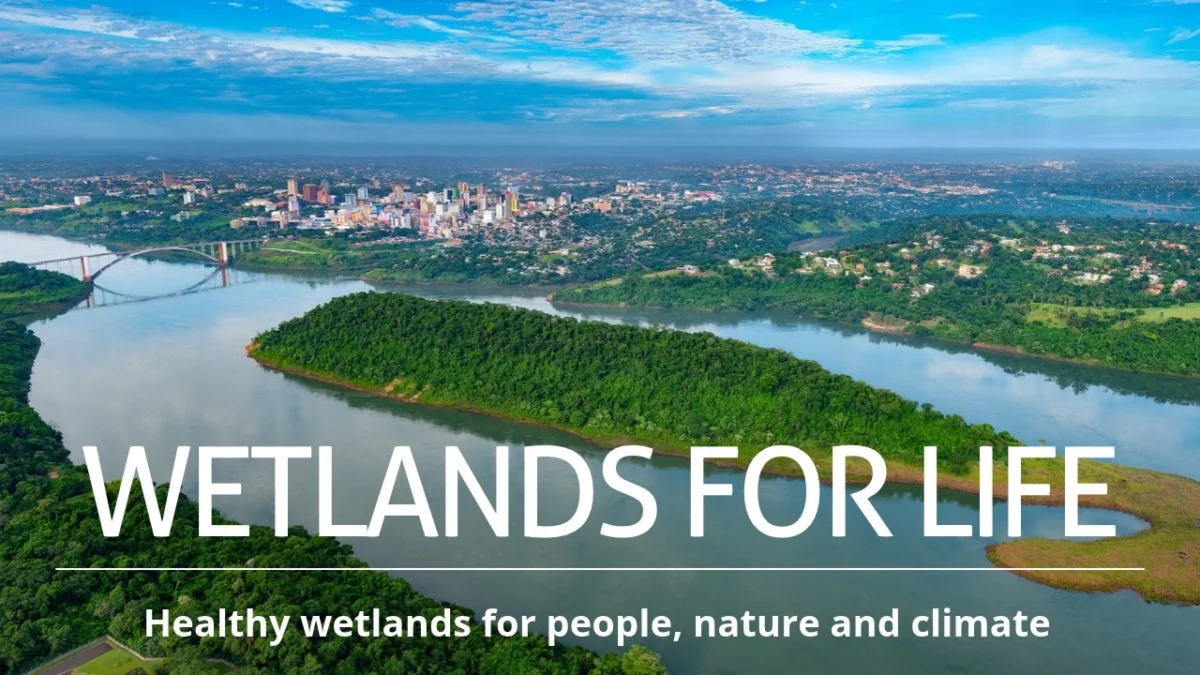
The global community faces a critical juncture in environmental policy as new scientific assessments confirm that planetary temperatures are poised to exceed the vital 1.5°C threshold within the coming years. Published by the United Nations Environment Programme (UNEP), the landmark report titled Limiting Overshoot outlines the grim reality of current emission trajectories while charting a necessary, albeit narrow, path forward. According to the findings, avoiding a permanent catastrophe now relies on executing an "overshoot, peak, and decline" strategy—a multi-pronged approach combining aggressive emissions reductions, large-scale carbon dioxide removal, and the rigorous restoration of foundational natural ecosystems.
While heavy industry and energy sectors dominate climate discourse, international environmental organizations emphasize that technological interventions alone will prove insufficient. The revitalization of the planet’s wetlands—spanning peatlands, mangroves, freshwater marshes, and coastal estuaries—has emerged as a non-negotiable pillar for both climate mitigation and adaptation. As nations grapple with increasingly erratic weather anomalies, water scarcity, and ecosystem collapses, experts argue that protecting these undervalued landscapes is no longer merely an ecological preference, but an absolute necessity for human survival.
The 1.5°C Overshoot: Background Context and Chronology
The 1.5°C threshold has long served as the symbolic and scientific benchmark established by the 2015 Paris Agreement. Governments pledged to pursue efforts to limit the global temperature increase to 1.5°C above pre-industrial levels to stave off the most catastrophic tipping points of climate change. However, decades of insufficient policy implementation, delayed industrial transitions, and escalating greenhouse gas emissions have pushed the Earth’s climate system dangerously close to breaching this boundary.
Chronologically, the warning signs have accelerated rapidly over the past decade. The World Meteorological Organization (WMO) and various climatology bodies repeatedly documented record-breaking global temperatures throughout the early 2020s. By 2024 and 2025, consecutive years shattered previous heat records, accompanied by extreme marine heatwaves and intensified hydrological cycles.
The UNEP Limiting Overshoot report formalizes a sobering consensus: temporarily surpassing the 1.5°C limit is now practically inevitable. The primary debate among scientists and policymakers has consequently shifted from absolute prevention to managing the magnitude and duration of this overshoot. Crossing this threshold—even temporarily—carries exponential risks. Every fraction of a degree beyond 1.5°C amplifies extreme weather events, threatens global food security through agricultural collapse, triggers severe regional water shortages, displaces millions as climate refugees, and places low-lying coastal cities at immediate risk of submersion.
Wetlands as Climate Mitigation Powerhouses
To successfully bend the emissions curve downward following an overshoot peak, humanity must harness Earth’s most efficient biological carbon sinks. Wetlands, encompassing peatlands, mangroves, and salt marshes, absorb and store carbon at rates up to ten times higher than tropical rainforests per unit area.
Peatlands alone, despite covering only about three percent of the global land surface, store twice as much carbon as all the world’s forests combined. When these landscapes remain intact and waterlogged, they lock away millennia of carbon deposits. However, when drained or degraded, they transform from massive carbon sinks into significant carbon emitters, releasing greenhouse gases back into the atmosphere for decades.

Mitigating future temperature spikes demands that global climate strategies prioritize these undervalued ecosystems. Integrating wetland conservation into international carbon accounting frameworks allows countries to leverage biological sequestration as a reliable, immediate tool to help achieve net-zero targets during the critical decline phase of the overshoot pathway.
The Frontline Defense: Wetlands for Climate Adaptation
While mitigation focuses on curbing future warming, adaptation addresses the immediate, devastating consequences already destabilizing human societies. The physical manifestations of the climate crisis are predominantly experienced through water: extreme floods, prolonged droughts, devastating wildfires, violent storm surges, and relentless sea-level rise.
Healthy wetlands function as natural infrastructure, acting as shock absorbers for vulnerable communities and sprawling urban centers. Mangrove forests absorb the kinetic energy of tropical storm surges and shield coastal populations from catastrophic erosion. Inland freshwater marshes and floodplains temporarily store excess runoff during heavy precipitation events, blunting the impact of downstream urban flooding. Conversely, during periods of severe drought, healthy wetlands slowly release stored water, sustaining river flows, supporting agricultural resilience, and recharging critical groundwater aquifers.
Failure to protect these natural buffers exposes cities and rural economies to escalating economic losses and humanitarian crises. Investing in wetland restoration consequently represents a cost-effective insurance policy against water-related climate disasters.
A History of Degradation: The Vulnerability of Global Wetlands
Despite their unparalleled utility for climate resilience, wetlands have historically been treated as wasteland—areas to be drained, filled, dredged, or developed for agriculture and urban expansion. Multiple interacting pressures, including agricultural encroachment, industrial pollution, infrastructure construction, and hydrological disruptions from dams and canals, have severely crippled these ecosystems.
The historical toll is staggering. Data from conservation assessments, including the comprehensive 2025 Global Wetland Outlook published by the Ramsar Convention on Wetlands, reveal that the world has lost approximately 22 percent of its remaining wetlands since 1970. Furthermore, the outlook estimates that an alarming 25 percent of all surviving wetlands are currently classified as degraded.
This ongoing destruction diminishes biodiversity and actively releases stored carbon while stripping local populations of the ecosystem services they rely upon for clean water, flood protection, and sustainable livelihoods. The climate crisis itself has increasingly become a driver of wetland degradation, as warming temperatures, shifting precipitation patterns, and rising seas outpace the natural capacity of these ecosystems to adapt.
Official Responses and Institutional Calls to Action
In response to the mounting crisis outlined in the UNEP report, international environmental bodies and advocacy groups have amplified calls for systemic policy overhauls. Wetlands International and allied conservation organizations are urging national governments to fundamentally re-evaluate the status of wetlands, categorizing them not as marginal real estate, but as indispensable climate champions.

Policy experts stress that protecting and restoring wetlands must no longer be viewed as an optional conservation add-on. Instead, it must be embedded directly into core national climate strategies. Specifically, global coalitions are demanding that governments integrate comprehensive wetland targets into their Nationally Determined Contributions (NDCs) under the Paris Agreement, as well as into their National Adaptation Plans (NAPs).
To facilitate this transition, international financial architecture must evolve. Mobilizing large-scale public and private finance for wetland restoration and conservation remains a primary hurdle. Several targeted global initiatives have been established to bridge this financing gap and accelerate action:
- The Mangrove Breakthrough: A collaborative initiative aiming to restore and protect mangrove ecosystems worldwide through targeted financial commitments and policy alignment.
- The Freshwater Challenge: The world’s largest initiative for freshwater restoration, focused on revitalizing degraded rivers, lakes, and wetlands to secure water security and biodiversity.
- The Peatland Breakthrough: A focused framework designed to halt the degradation of global peatlands and drive investments into large-scale rewetting projects.
These platforms serve as critical vehicles for countries, corporations, and civil society organizations to mobilize resources and implement scalable, measurable interventions that simultaneously advance climate mitigation, adaptation, and biodiversity conservation.
Broader Implications and Future Outlook
The release of the UNEP Limiting Overshoot report and the concurrent warnings regarding wetland degradation highlight a fundamental truth of modern environmental science: technological mitigation strategies cannot succeed in isolation from the biosphere. As global temperatures edge toward and temporarily cross the 1.5°C threshold, the margin for policy error narrows drastically.
The implications for global governance are profound. Economic models that treat natural capital as an infinite, expendable resource are increasingly proving to be financially and socially catastrophic. The financial toll of recovering from unbuffered floods, rebuilding climate-devastated coastal infrastructure, and managing agricultural failures vastly outweighs the capital required for proactive ecosystem restoration.
Ultimately, navigating the turbulent decades ahead requires a paradigm shift in how human societies interact with water and land. Recognizing wetlands as frontline defenses against runaway climate change provides a clear, science-based pathway toward ecological stability. Whether the international community can summon the political will and financial resources to protect these vital landscapes before the overshoot window closes will define the trajectory of human civilization for generations to come.
