
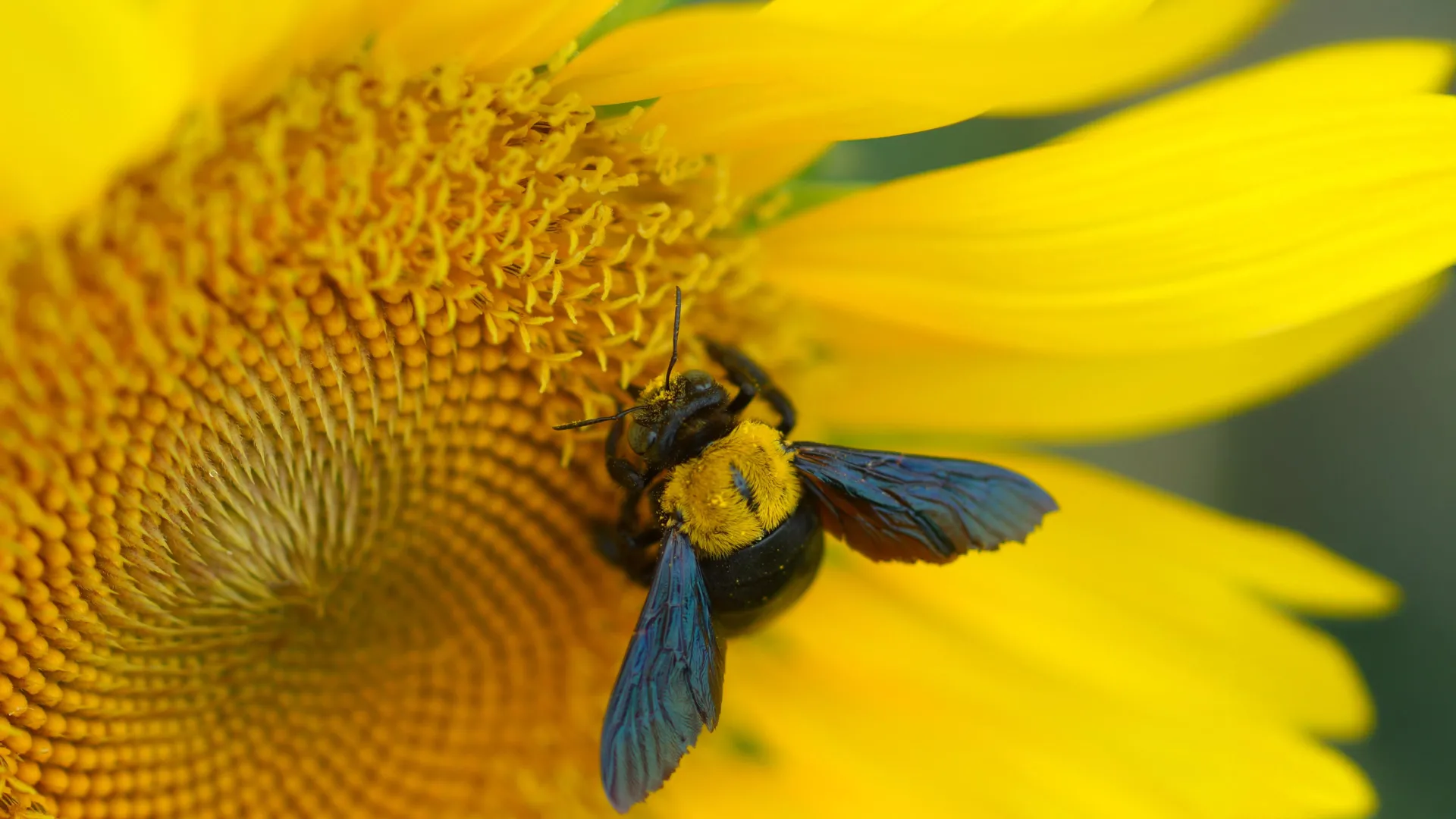
A comprehensive collaborative study published in the peer-reviewed journal Nature Communications has revealed that Australia’s native bee species possessing above-ground, stem-nesting behaviors confront an immediate and disproportionate threat from global climate change. While subterranean counterparts possess natural geological thermal refuges, arboreal and stem-dwelling pollinators face intense, unbuffered temperature spikes that routinely exceed their physiological thresholds.
The extensive research initiative mapped the thermal tolerances of 95 distinct native bee species distributed across the eastern mainland of Australia. Spanning environmental gradients from the humid tropical latitudes of the far north to the temperate and cooler climes of the southern states, the investigation provides unprecedented empirical insight into how evolutionary adaptations and microhabitat choices dictate survival in an era of rapid anthropogenic warming.
Main Facts and Geographic Scope of the Investigation
Australia boasts an estimated 1,700 unique native bee species, displaying an astonishing array of morphological traits, social structures, and ecological niches. Despite this remarkable biodiversity, the vast majority of these insects can be categorized into three primary nesting guilds: subterranean cavity excavators, wood-boring dwellers utilizing pre-existing tree hollows or fallen timber, and stem-nesting specialists that carve out or utilize narrow cavities inside plant stems, dry twigs, and reed beds.
The research consortium—comprising academic heavyweights from Macquarie University, The University of Sydney, La Trobe University, Flinders University, the University of Wollongong, Adelaide University, and The University of Queensland—set out to determine how these distinct nesting strategies modulate thermal exposure. By combining field data with rigorous physiological assays, the multi-university team assessed how evolutionary history has shaped heat tolerance across diverse climates and quantified the immediate risks posed by rising global temperatures.
The empirical findings demonstrate that nesting architecture acts as a primary determinant of vulnerability. Subterranean bees benefit profoundly from the thermal inertia of soil, which dampens extreme ambient temperature fluctuations and provides cool refugia during heatwaves. Conversely, stem-nesting species—particularly those inhabiting slender plant stalks—experience severe thermal exposure. Thin plant walls offer negligible insulation against radiant solar energy and ambient heat waves, leaving these fragile insects highly vulnerable to lethal hyperthermia.
Chronology and Background of the Research Initiative
The origins of this collaborative undertaking trace back to a growing realization within the Australian ecological community that conservation frameworks were suffering from critical blind spots regarding insect vulnerability. For decades, conservation biology prioritized charismatic macrofauna, while vital invertebrate pollinators remained understudied, leading to significant gaps in national biodiversity risk assessments.
In response, leading entomologists, evolutionary biologists, and climate scientists across seven major Australian research institutions initiated a coordinated effort to standardize thermal tolerance metrics for native bees. The project commenced with extensive field collections spanning multiple years, capturing wild specimens across a vast latitudinal gradient. These efforts captured populations adapted to diverse microclimates, ranging from tropical rainforests and arid inland zones to temperate coastal ecosystems.
Following field acquisitions, the research teams conducted standardized thermal limit assays in controlled laboratory settings, measuring critical thermal maxima—the precise temperature threshold at which insects lose motor control due to heat stress. By integrating these physiological datasets with high-resolution climate modeling and microclimate data logger readings from various nesting substrates, the researchers reconstructed the thermal landscapes experienced by bees in real-time across diverse natural habitats.
The culmination of this multi-year analytical pipeline is the newly published Nature Communications paper, which bridges the gap between macro-level climate projections and micro-level behavioral ecology, establishing a new baseline for invertebrate conservation science.
How Nesting Habits Dictate Thermal Exposure
The mechanics of thermal exposure among wild bee populations are intimately tied to physics and microhabitat architecture. According to lead author Dr. Carmen da Silva, a Research Fellow within the Pollinator Futures Research Centre at Macquarie University, the physical properties of nesting substrates dictate whether a species can buffer against extreme weather events.
"Bees that nest underground can hide from extreme heat," explains Dr. da Silva. "As a result, they don’t experience temperatures nearly as high as those that live above ground, particularly species that live in thin plant stems that offer very little insulation from the heat outside."
This lack of thermal buffering creates an acute ecological crisis for arboreal and stem-dwelling species. While subterranean bees can simply burrow deeper into the soil profile during a heatwave to locate cooler thermal strata, stem-nesting bees are locked into their rigid, narrow cavities. Consequently, these populations experience the full force of ambient temperature spikes, which are frequently exacerbated by direct solar radiation striking vegetation surfaces.
"Stem-nesting species appear to have the lowest capacity to escape unfavorable environmental temperatures and are likely to be the most impacted by anthropogenic climate change in the near term," Dr. da Silva warns. This structural vulnerability means that even minor increases in global mean temperatures could trigger local or regional extinctions among specialized stem-dwellers long before subterranean counterparts experience comparable physiological stress.
Geographic Trends and the Tropical Vulnerability Paradox
In addition to nesting guild disparities, the research team identified a striking geographical pattern: bee species inhabiting equatorial and tropical latitudes face significantly higher overall climate risks than their temperate counterparts.
This finding introduces a critical nuance to conservation physiology. While tropical species often exhibit high baseline heat tolerances—having evolved in historically warm environments—they are presently operating dangerously close to their upper physiological limits. The margin of safety, defined as the buffer between an organism’s maximum critical temperature and the maximum environmental temperatures it experiences, is exceptionally narrow in the tropics.
Dr. Vanessa Kellermann, Senior Lecturer in the Department of Ecology, Plant and Animal Sciences at La Trobe University and a senior author of the study, notes that these dynamics complicate traditional assumptions regarding thermal adaptation.
"Predicting which species will be vulnerable to climate change is one of the biggest challenges in ecology," states Dr. Kellermann. "We found bee species with the highest heat tolerance were not necessarily the safest from warming, because many of them already live in extremely hot environments."
This phenomenon highlights the paradox of thermal specialization. Organisms residing in historically hot regions possess little evolutionary or physiological capacity left to spare. When subjected to compounding global temperature anomalies, heat waves push these tropical populations past their physiological breaking points, despite their adaptations to warmth.
Broader Ecological Implications and Agricultural Threats
The implications of these findings extend far beyond academic circles, carrying profound consequences for natural ecosystems and multi-billion-dollar agricultural industries. Native bees are indispensable ecosystem engineers, driving plant reproduction through efficient pollination. The decline or collapse of wild pollinator populations threatens the structural integrity of native flora, which relies exclusively on specialized native insects for fertilization.
Furthermore, Australia’s agricultural sector depends heavily on both introduced honeybees and native wild pollinators for the commercial production of numerous high-value crops. Dr. da Silva emphasizes the direct link between wild bee health and human food security.
"Bees are critical in ecosystems all over the world because of their role as pollinators, and they’re under threat from warming and drying climates," Dr. da Silva notes. "Bees sustain native ecosystems and play a crucial role in agricultural crop production—tropical native bees are vital pollinators for crops like macadamia nuts, avocados, mangos, and lychees."
Any widespread decline in native bee populations, particularly within tropical and subtropical agricultural zones where macadamia and exotic fruit orchards predominate, could destabilize crop yields, drive up production costs, and threaten international export markets. The loss of these pollination services would necessitate costly manual pollination techniques or lead to diminished agricultural output, compounding the economic pressures already facing modern farming in a changing climate.
Gaps in Knowledge and Future Research Directions
Despite the alarming trajectory highlighted by the study, the authors emphasize that profound knowledge gaps persist regarding the basic biology, population dynamics, and behavioral repertoires of Australia’s native bee fauna. The vast majority of the continent’s 1,700 species remain scientifically undescribed or poorly understood in terms of their baseline ecology.
Dr. Ros Gloag, co-senior author and Senior Lecturer in Evolutionary Biology in the School of Life and Environmental Sciences at the University of Sydney, points out that filling these empirical voids is an absolute prerequisite for effective conservation planning.
"We still know so little about most of Australia’s amazing native bees," remarks Dr. Gloag. "This study helps us recognise that having a better understanding of native bee behavior is key to identifying the greatest threats to their wild populations."
Future research initiatives stemming from this collaboration aim to expand thermal tolerance profiling to encompass a broader spectrum of bee life stages, including eggs, larvae, and pupae, which may possess different physiological thresholds compared to adult flying insects. Additionally, scientists hope to model microclimate variations within specific plant species utilized for nesting, assessing whether targeted habitat restoration—such as increasing canopy cover or preserving dead timber and hollow stems—can artificially mitigate the thermal stress experienced by vulnerable guilds.
Policy Implications and Conservation Strategies
As empirical evidence mounts regarding the vulnerability of stem-nesting and tropical native bees, environmental policymakers and land managers face mounting pressure to incorporate microhabitat preservation into national conservation strategies. Traditional protected area frameworks that focus solely on broad landscape boundaries may prove inadequate if critical microhabitats—such as standing dead trees, fallen logs, and specific native plant stems utilized for nesting—are removed or degraded by land clearing, forestry practices, or intensive agriculture.
Conservationists argue that integrated management plans must prioritize the retention of diverse structural elements within agricultural matrices and native forest reserves. Protecting understory vegetation, minimizing the removal of dead wood and woody debris, and maintaining floral continuity across seasons can provide the necessary microclimatic refuges and nutritional resources required for native bees to weather acute thermal stress events.
Ultimately, the study published in Nature Communications serves as an urgent wake-up call to the scientific community, policymakers, and agricultural stakeholders. By demonstrating that climate vulnerability is mediated by subtle behavioral traits like nesting architecture and geographic distribution, the research provides a sophisticated roadmap for future conservation efforts. Safeguarding Australia’s diverse native bee populations will require targeted, microhabitat-informed interventions designed to protect those species operating closest to their physiological limits before escalating global temperatures push them past the point of no return.
