
Conservation policy is often perceived as a spectacle confined to the federal legislative chambers of Washington, D.C., yet the most tangible progress for environmental stewardship is currently unfolding within state capitals and regional legislative districts. Through a combination of grassroots advocacy, science-based lobbying, and strategic partnerships, the National Audubon Society has successfully navigated a complex political landscape in 2026 to secure lasting protections for avian habitats and essential water resources. These victories, spanning from the arid landscapes of the Southwest to the coastal wetlands of the Atlantic, underscore a shift in conservation strategy: moving beyond reactive litigation toward proactive, state-level policy development.
A New Era of State-Level Environmental Governance
The success of Audubon’s regional offices this year highlights a sophisticated approach to environmental governance. By leveraging local expertise, these offices have turned conservation priorities into codified law and budgetary commitments. The 2026 legislative cycle proved particularly significant, as state organizations faced varying pressures—ranging from tight fiscal constraints in Arizona to the fallout of federal regulatory rollbacks in Colorado.
The cumulative effect of these state-level actions is substantial. By securing dedicated funding for ecosystem restoration and passing legislation that addresses site-specific threats, the Audubon network has demonstrated that regional policy can create a resilient patchwork of habitat protection that is often more durable than shifting federal mandates.
Water Security and Habitat Restoration in the Southwest
In the American Southwest, water is the primary currency of conservation. The 2026 legislative session in New Mexico, which spanned a condensed 30-day window from January 20 to February 19, became a focal point for Audubon Southwest. Despite the time constraints, the organization successfully advocated for a robust state budget signed into law by Governor Michelle Lujan Grisham on March 11.
The budget allocates $13 million to the River Stewardship Program and $10 million to the Strategic Water Reserve. These programs are critical for the long-term viability of the Rio Grande and other vital waterways, which serve as lifelines for migratory birds and local communities. Furthermore, the successful modernization of the New Mexico Department of Game and Fish represents the culmination of a multi-year effort to align the agency’s administrative structure with modern wildlife management science.
In neighboring Arizona, the challenge was defined by fiscal austerity. With the state government facing tight budget conditions, the primary goal for conservationists was the preservation of existing funding streams. Through targeted advocacy, Audubon Southwest ensured that the Arizona Department of Water Resources remained fully funded. Additionally, the legislature approved $10 million for wildfire response and $30 million for forest health initiatives. These investments are essential for mitigating the risks of catastrophic wildfires, which destroy the watersheds that provide clean water to human populations and crucial nesting grounds for high-elevation bird species.
The Horseshoe Crab Protection Act: A Coastal Milestone
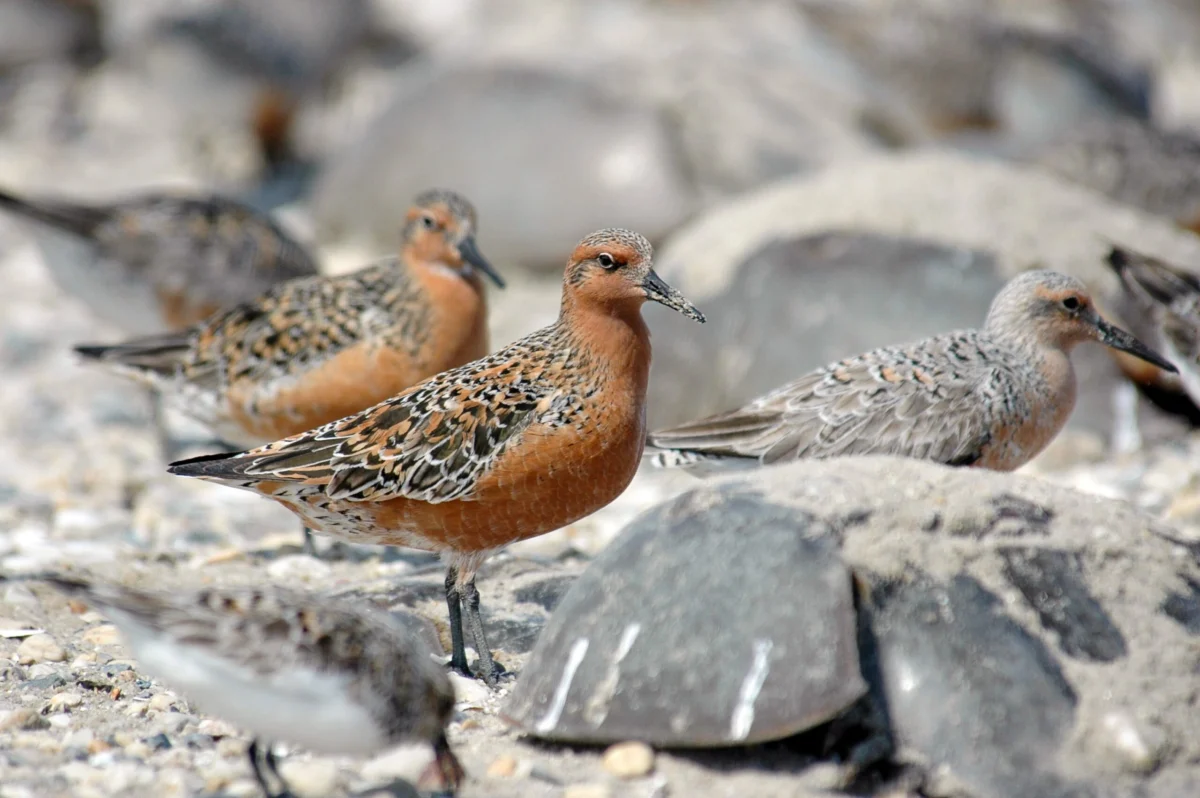
The plight of the Red Knot (Calidris canutus rufa) has long served as a bellwether for the health of the Atlantic coast. This shorebird, known for its extraordinary migration from the southern tip of South America to the Arctic, relies heavily on the eggs of the horseshoe crab (Limulus polyphemus) during its stopover in the Delaware Bay.
For years, Audubon members in New York campaigned for an end to the commercial harvest of these ancient marine arthropods, which are frequently used as bait in the eel and whelk fisheries. Their persistence culminated in the signing of the Horseshoe Crab Protection Act by Governor Kathy Hochul in December 2025, with implementation commencing in early 2026. This victory brings New York into alignment with Connecticut, Massachusetts, and New Jersey, creating a regional sanctuary for the species.
The implications for the Red Knot are profound. Research from the U.S. Fish and Wildlife Service suggests that when horseshoe crab egg densities are high, Red Knot survival rates during migration increase significantly. By curbing commercial exploitation, the state has provided a vital buffer against the compounded threats of climate change and habitat loss, ensuring a food supply that is essential for the survival of this federally threatened species.
Navigating the Post-Sackett Regulatory Landscape
A pivotal moment for water conservation occurred in Colorado, necessitated by the U.S. Supreme Court’s 2023 decision in Sackett v. EPA. By narrowing the definition of "waters of the United States," the ruling stripped federal Clean Water Act protections from millions of acres of wetlands and intermittent streams.
In response, Colorado passed HB24-1379 in 2024, creating a state-level regulatory framework to fill the gap left by the federal withdrawal. The subsequent 18-month rulemaking process was intense, requiring the input of environmental, industrial, and agricultural stakeholders. Audubon served as a technical advisor throughout this period, ensuring that the state’s new dredge-and-fill permitting program was grounded in hydrological science.
In early 2026, the Colorado Water Quality Control Commission approved Regulation 87. This rule establishes clear, enforceable standards for protecting wetlands and streams that are no longer covered by federal law. The implementation of this program is a testament to the power of state-level policy to mitigate the impact of federal regulatory shifts, providing a blueprint for other states facing similar challenges.
Florida: Transparency and Resilience
In Florida, conservation efforts focused on the twin pillars of transparency and restoration. The state’s 2026 legislative session saw the passage of HB 441, a bill that mandates a minimum 30-day public notice period and enhanced disclosure requirements for any sale or exchange of state-owned conservation lands. This reform was a direct response to a controversial, non-transparent land swap proposal at the Guana River Wildlife Management Area.
Simultaneously, the legislature passed SB 302, which bolsters protections for aquatic preserves and prioritizes nature-based infrastructure to combat coastal erosion. Perhaps most notably, the state budget included $645 million for Everglades restoration. Despite a contraction in the overall state budget, this full funding ensures that critical infrastructure projects—designed to restore the natural flow of water and improve the water quality of the River of Grass—continue unabated. These projects are vital for the survival of the Everglades Snail Kite and numerous other endangered species that depend on the unique, shallow-water ecosystem of the southern Florida peninsula.
Defensive Victories: Blocking Misinformation
Not all conservation achievements are defined by the passage of new legislation. In Mississippi, the 2026 session saw an influx of legislative proposals aimed at placing stringent, restrictive barriers on the development of onshore wind energy.
Audubon’s intervention focused on the dissemination of accurate, data-driven information to key committee chairs and legislative staff. By debunking misinformation regarding the impact of wind turbines on bird mortality—which, when responsibly sited, is statistically lower than threats posed by other human-made structures—the organization successfully prevented three restrictive bills from reaching the floor. This "defensive" work is critical, as it ensures that the transition to renewable energy sources remains viable and science-based, preventing policy outcomes that would have hampered progress on carbon reduction targets.
Broader Implications and Strategic Outlook
The events of 2026 illustrate a maturing approach to conservation advocacy. By moving beyond a singular focus on federal agencies, environmental organizations are successfully creating a diverse, decentralized network of protections. This state-centric strategy offers several strategic advantages:
- Legislative Responsiveness: State legislatures are often more accessible to local advocates than the federal government, allowing for faster responses to regional environmental crises.
- Policy Innovation: States act as "laboratories of democracy," where innovative permitting programs, such as those implemented in Colorado, can be refined and later adopted by other jurisdictions.
- Resilience to Political Flux: State-level protections provide a safeguard against the volatility of federal environmental policy. When federal standards are weakened, state-level statutes ensure that foundational environmental safeguards remain intact.
As the Audubon network continues to expand its state-level initiatives, the focus remains on the synthesis of rigorous science and community-driven advocacy. Whether it is securing hundreds of millions of dollars for the Everglades, banning the harvest of a keystone marine species in New York, or filling the regulatory voids left by federal court rulings, the impact of these efforts is clear. By grounding policy in local expertise and the needs of specific ecosystems, the Audubon network is ensuring that the lands and waters that support both bird populations and human communities remain protected for future generations. The successes of 2026 demonstrate that while the national conversation may dominate the headlines, the most enduring conservation victories are those won in the statehouses, one policy at a time.
