
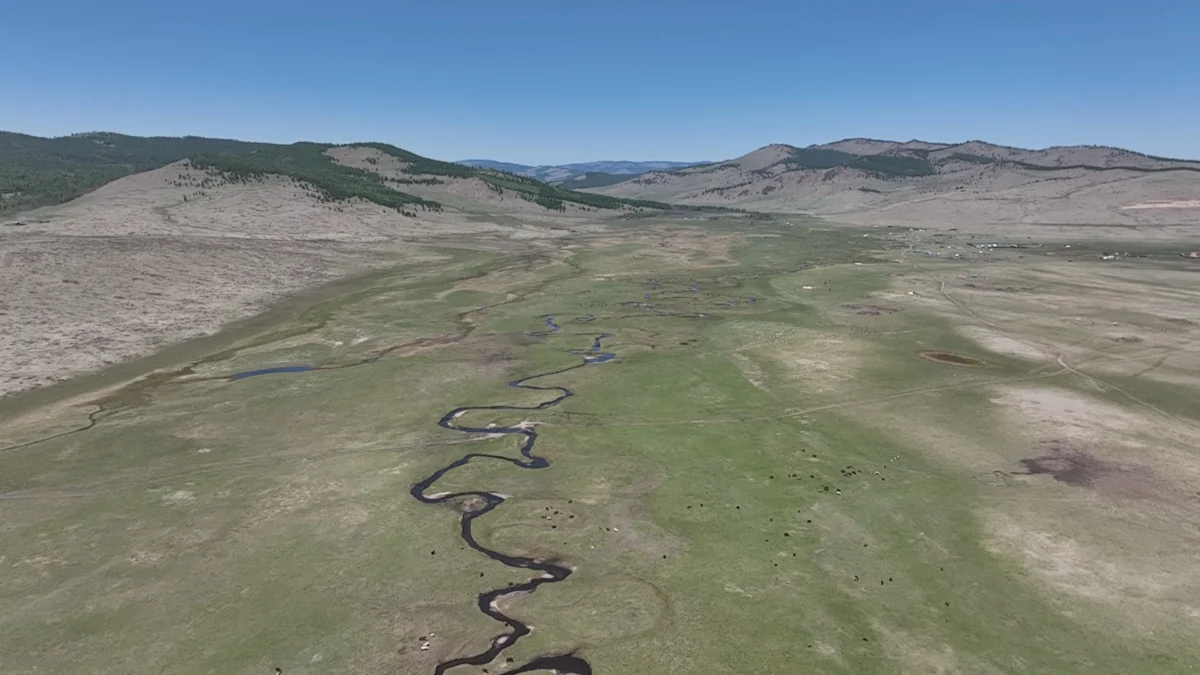
As severe droughts, escalating wildfires, and compounding land degradation continue to destabilize economies and ecosystems across the globe, policymakers, scientists, and civil society leaders are preparing for a critical global summit. In late August 2026, thousands of delegates will descend upon Ulaanbaatar, Mongolia, for the 17th Conference of the Parties (COP17) to the United Nations Convention to Combat Desertification (UNCCD). Operating under the guiding theme "Restoring Land, Restoring Hope," the high-stakes conference arrives at a pivotal juncture, with less than five years remaining for the international community to meet its ambitious targets for halting environmental decline.
Among the prominent organizations shaping the discourse in Mongolia is Wetlands International, which is deploying its largest delegation in the history of the convention. Headed by CEO Coenraad Krijger, the delegation aims to bridge a historical policy gap by ensuring that freshwater wetlands and peatlands are firmly embedded in national and global frameworks designed to combat desertification, land degradation, and recurring droughts.

A Shift in Global Urgency: The Rising Prominence of the UNCCD
For decades, the UNCCD remained overshadowed by its sister Rio Conventions—the United Nations Framework Convention on Climate Change (UNFCCC) and the Convention on Biological Diversity (CBD). While climate change and biodiversity loss regularly dominated international headlines and funding streams, land degradation quietly advanced, eroding the foundations of global food security, economic stability, and rural livelihoods.
Today, that dynamic is shifting rapidly. Governments and international financial institutions are increasingly recognizing that land degradation is not an isolated crisis, but a systemic threat intertwined with climate change and water scarcity. According to recent international environmental assessments, up to 40% of the Earth’s land is already degraded. This degradation directly impacts billions of people worldwide, undermining agricultural productivity, exacerbating rural poverty, and costing the global economy an estimated US$900 billion annually.
Compounding this crisis is the staggering loss of the world’s freshwater systems. Since 1970, the planet has lost more than 22% of its remaining wetlands. This rapid decline has intensified water stress, weakened community resilience against extreme weather events, and accelerated biodiversity loss. Against this stark backdrop, COP17 serves as an essential platform to accelerate momentum toward the UNCCD’s central objective: achieving Land Degradation Neutrality (LDN) by 2030. Because land degradation, water security, and wetland health are inextricably linked, experts argue that achieving LDN is impossible without large-scale, targeted investments in wetland restoration.

Strategic Objectives in Ulaanbaatar
Wetlands International arrives in Ulaanbaatar building on crucial institutional victories achieved during previous convention cycles. Most notably, the organization aims to capitalize on the momentum generated by COP16 in Riyadh, Saudi Arabia, where member states adopted significant mandates requiring the convention to integrate comprehensive water management into its core strategies. Furthermore, the organization will draw upon the foundational commitments established at COP15 of the Convention on Wetlands, which issued a global call to action to protect and restore vital freshwater ecosystems.
Working in close collaboration with national partners—including the Wildlife Science and Conservation Center of Mongolia (WSCC)—Wetlands International will champion the integration of nature-based solutions into national action plans. The organization’s strategy emphasizes that protecting and restoring healthy wetlands is one of the most cost-effective and enduring methods for mitigating the impacts of prolonged droughts and reversing desertification.
"Investing in protecting and restoring healthy wetlands is critical to mitigating the impact of droughts and reversing desertification," stated Coenraad Krijger, CEO of Wetlands International, ahead of the summit. "We see the UNCCD as an important platform for advancing wetland action at national and global levels—wetland action that will benefit people and nature and turbocharge efforts to combat land degradation."
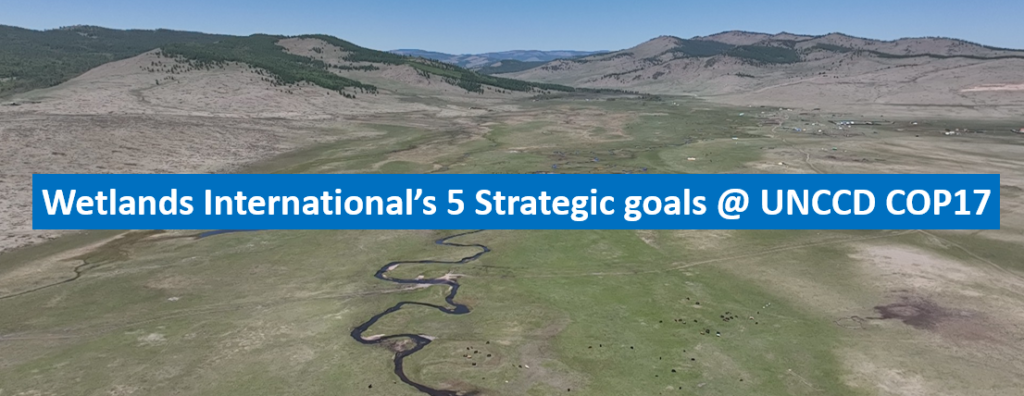
With Mongolia itself facing severe environmental challenges related to land degradation, desertification, and overgrazing, the host country provides a poignant backdrop for these discussions. The nation’s unique landscapes, including vital steppe and high-altitude peatlands, offer a living laboratory for the implementation of sustainable land and water management practices.
High-Level Events and Core Advocacy Focus
Throughout the two-week conference, the Wetlands International delegation will participate in a robust schedule of official side events, high-level dialogues, and technical workshops. These sessions are designed to translate scientific insights into actionable policy frameworks for the 197 member states represented at the COP.
Peatlands as Nature-based Solutions for LDN and Drought Resilience
One of the delegation’s marquee events is an official co-hosted side event focusing on peatlands as powerful nature-based solutions. While peatlands cover only a small fraction of the Earth’s surface, they store vast amounts of carbon and act as critical freshwater regulators.
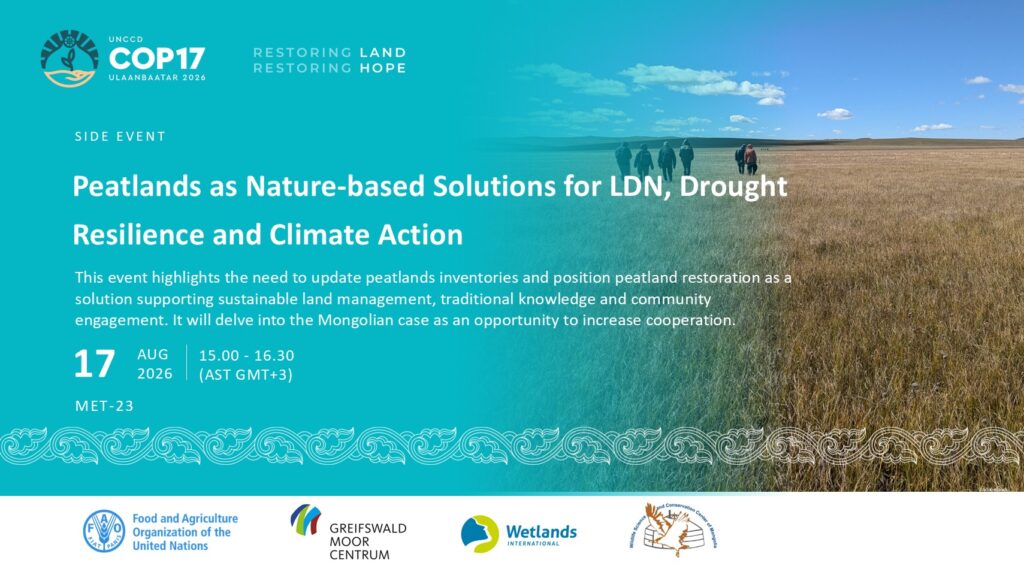
This session will highlight the vital importance of maintaining healthy, wet peatlands to enhance regional drought resilience. Experts will emphasize the urgent need for governments to update and refine their national peatland inventories, arguing that accurate data is a prerequisite for evidence-based decision-making and targeted restoration financing. The session will also showcase the achievements and lessons learned from the Mongolian Peatlands Initiative, offering a practical model for other nations grappling with similar ecological pressures.
Connecting Water, Land, and Climate Governance
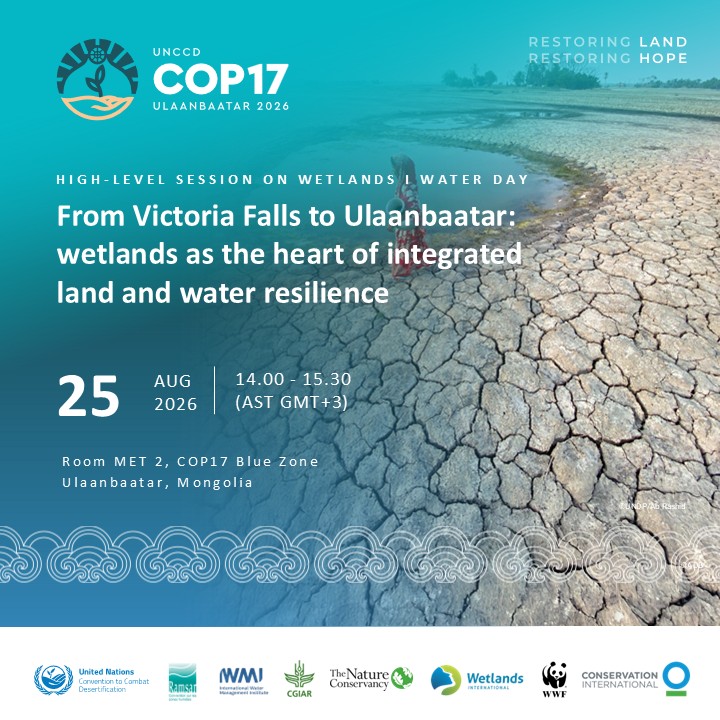
Another focal point for the delegation will be a high-level ministerial session titled "From Victoria Falls to Ulaanbaatar: Wetlands as the Heart of Integrated Land and Water Resilience."
This session serves as a crucial strategic bridge connecting the UNCCD process with upcoming international environmental summits, including upcoming CBD and UNFCCC Conferences of the Parties, as well as the UN Water Conference. Designed to foster cross-sectoral collaboration, the session features high-level representatives and ministers from diverse geographies—including Armenia, Brazil, Türkiye, and Zimbabwe—alongside the Secretary-General of the Ramsar Convention and Wetlands International’s CEO. Discussions will center on positioning freshwater ecosystems as the central thread uniting water management, biodiversity conservation, land stewardship, and climate adaptation strategies.
Accelerating the Freshwater Challenge
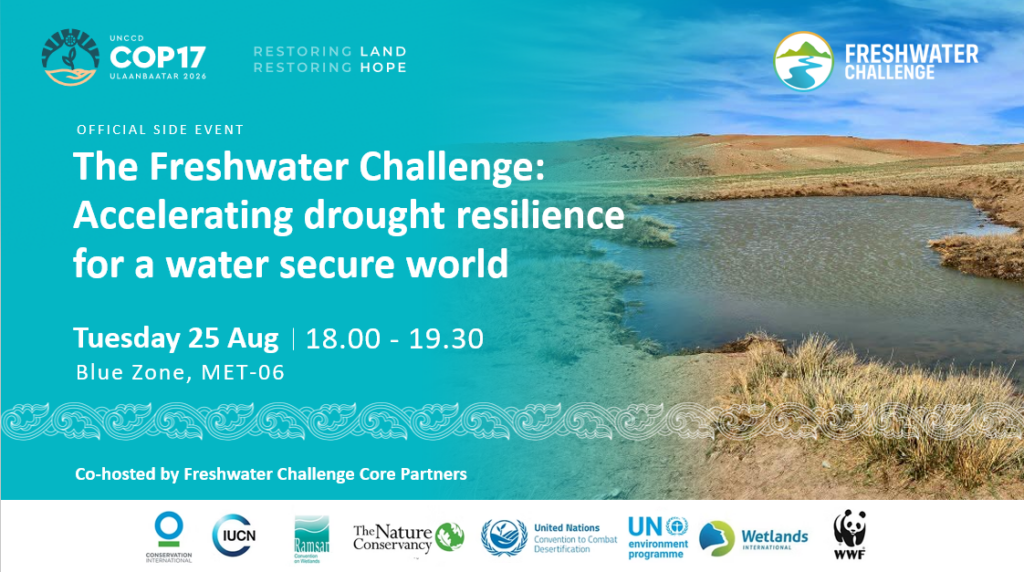
Building directly upon the UNCCD COP16 Riyadh Action Agenda—which established the Freshwater Challenge (FWC) as a flagship initiative—Wetlands International will co-host a dedicated session exploring how healthy freshwater ecosystems underpin Land Degradation Neutrality and long-term drought resilience.
Delegates and technical experts will discuss how national governments can leverage the Freshwater Challenge to upgrade their domestic environmental strategies. The session will explore mechanisms for breaking down institutional silos, fostering synergies across the three Rio Conventions, and mobilizing private and public finance for integrated water-land management.
Broader Implications and the Road to 2030
As the international community crosses the threshold into the final five-year sprint toward the 2030 Sustainable Development Goals and the UNCCD’s Land Degradation Neutrality target, the outcomes of COP17 will carry profound global implications.
Failure to adequately address land degradation and water scarcity risks triggering irreversible ecological tipping points, intensifying global food insecurity, and displacing millions of climate and environmental refugees. Conversely, prioritizing wetland and peatland restoration offers a multi-benefit dividend: stabilizing water supplies, sequestering atmospheric carbon, preserving biodiversity, and safeguarding the livelihoods of pastoralists, farmers, and Indigenous communities who depend directly on healthy soils and steady water sources.
By mobilizing its largest-ever delegation to Ulaanbaatar, Wetlands International aims to ensure that governments move beyond rhetorical commitments and integrate concrete, water-centric targets into their national desertification action plans. As negotiations unfold in the Mongolian capital, the global environmental community will be watching closely to see whether world leaders can marshal the political will and financial resources necessary to turn the tide on land degradation and secure a water-resilient future.
