
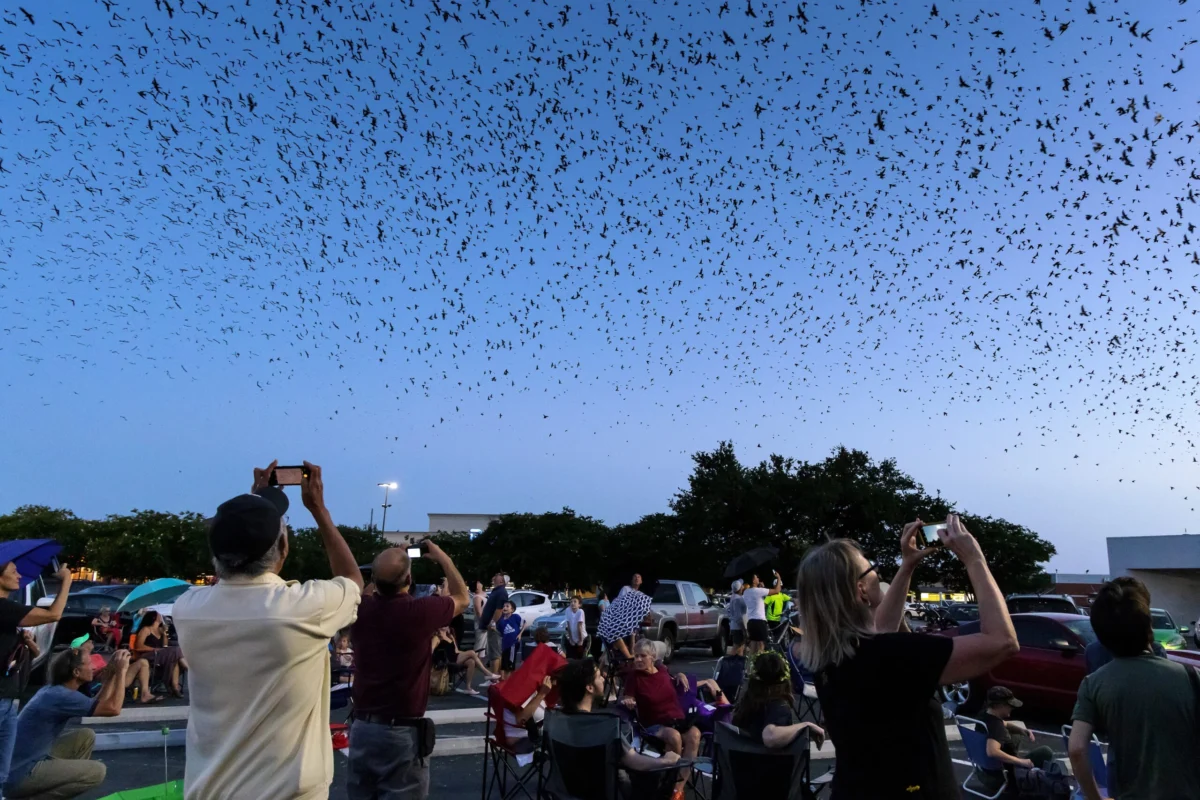
Every summer, as the heat of July gives way to the late-August twilight, a peculiar and breathtaking transformation occurs across the southern United States. In the shadow of suburban strip malls and concrete-heavy city centers, hundreds of thousands of Purple Martins—aerial insectivores known for their shimmering, dark-blue plumage—descend upon urban trees in a display of collective behavior that has captured the imagination of thousands. What might appear to be a nuisance to some is, to an increasing number of enthusiasts and scientists, a vital, living demonstration of avian life cycles and a unique opportunity for community-driven ecological research.
The Dynamics of the Pre-Migration Gathering
The Purple Martin (Progne subis) is a species deeply intertwined with human infrastructure. East of the Rocky Mountains, these birds have become almost entirely dependent on human-provided nesting sites—gourds and multi-story condos erected by dedicated "landlords." However, the roosting behavior observed in mid-summer is distinct from nesting.
According to Joe Siegrist, president of the Purple Martin Conservation Association, these massive gatherings are a critical stage in the species’ annual life cycle. Following the fledgling season, martins congregate in "staging" areas before beginning their arduous migration back to the Amazon basin in South America. These roosts serve multiple evolutionary functions: they provide safety in numbers against nocturnal predators, and they act as a social hub where fledglings learn the intricacies of foraging from more experienced adults.
The choice of urban parking lots as roosting sites is a fascinating case of modern adaptation. To the birds, a cluster of trees surrounded by expansive, heat-retaining asphalt and concrete effectively mimics the thermal and structural environment of a natural wetland, which is their historical roosting preference.
A Chronology of the Purple Martin Parties
The formalization of these gatherings into community events has been a gradual, deliberate process. While birdwatchers have long tracked these flocks, the organized "Purple Martin Party" movement began in earnest around 2010.
- Pre-2010: Informal observations by local birding groups and amateur ornithologists in Texas and Tennessee.
- 2010: Travis Audubon in Austin, Texas, initiates the first structured Purple Martin parties, transforming a casual observation into a public education campaign.
- 2020: A significant turning point occurs in Nashville, Tennessee, when a massive roost at a downtown symphony center leads to conflicts with property managers over bird waste. The subsequent intervention by conservationists prevents the removal of the birds and launches a model for urban coexistence.
- 2024: Following extensive advocacy, Nashville’s Nissan Stadium hosts a series of successful events, drawing massive crowds and signaling a shift in public perception regarding the utility of urban wildlife.
The popularity of these events is staggering. In Austin, annual attendance has climbed to 700 people per season. The demographics of these attendees are shifting as well; organizers note that these events now draw people who do not identify as "birders," effectively bridging the gap between niche nature enthusiasts and the general public.
The Science Behind the Sightings
Locating these massive, ephemeral gatherings is a challenge that requires both field expertise and cutting-edge technology. Because the birds do not necessarily return to the same trees year after year, volunteers like Susanne Harm of Travis Audubon spend weeks conducting "stakeouts" at dawn and dusk.
When human reconnaissance fails, scientists turn to weather radar. Because the flocks are so dense—sometimes numbering in the tens of thousands—they appear on NEXRAD weather radar as distinct, circular blooms that expand outward as the birds depart their roosts at dawn. These "roost rings" have allowed researchers to estimate that approximately 250 such staging sites exist across North America, though the vast majority remain unmapped.
This data is not merely for public interest; it is the backbone of ongoing biological research. Biologists like Dr. Maria Stager of the University of Massachusetts Amherst utilize citizen-science data—including arrival times and fledgling success rates provided by volunteer landlords—to model how climate-driven weather volatility impacts martin populations.
Negotiating Space: The Challenge of Coexistence
The integration of wild migratory birds into high-traffic urban environments is not without friction. Property managers, particularly in urban centers, are often wary of the sanitation issues associated with large-scale roosting.
The Nashville case of 2020 serves as a primary example of the tension between urban development and natural behavior. When the symphony center considered using pest control to disperse the martins, local conservationists had to act quickly to demonstrate the ecological and cultural value of the birds. The success of the subsequent advocacy effort, which moved the public focus from "nuisance" to "spectacle," has become a playbook for other cities.
The strategy involves active communication: educating business owners about the seasonal nature of the roosts and providing support for managing the cleanup. When property managers are brought into the fold, they often transition from antagonists to partners. The 2024 events at Nissan Stadium demonstrated that with proper management, the presence of 150,000 birds could be an asset rather than a liability, drawing tourists and fostering a sense of civic pride.
Broader Implications for Conservation
The decline of Purple Martin populations across North America—driven by a combination of habitat loss, the decline of aerial insect populations, and competition from invasive species like European Starlings and House Sparrows—has made these human-bird relationships more critical than ever.
By fostering "landlord" programs, conservationists are not only providing housing but also gathering essential longitudinal data that would be impossible to collect without a vast network of volunteers. These participants represent a growing trend in conservation: the transition from passive observation to active, data-informed stewardship.
The "spiritual" quality described by spectators—the sound of the birds’ vocalizations, the sheer magnitude of the flock moving in unison, and the sensory experience of the "breeze" created by thousands of wingbeats—serves as a powerful tool for environmental education. It creates an emotional investment in the species that transcends statistical population counts.
Future Outlook
As cities continue to expand, the question of whether urban centers can remain hospitable to migratory species remains paramount. The Purple Martin’s resilience and its ability to adapt to artificial structures offer a glimmer of hope. However, experts emphasize that this coexistence requires intentional planning.
Conservationists are now looking toward a future where urban development incorporates "wildlife-friendly" landscaping that accounts for the needs of migratory species. By protecting the specific tree patches they utilize and continuing to support the network of landlords and party organizers, communities can ensure that these spectacles remain a feature of the urban summer landscape.
For many, the Purple Martin has become a symbol of the urban-wild interface. As Shelia Hargis of Travis Audubon noted, the parties are an invitation to see the world differently. When people stand in a parking lot at dusk, waiting for the "tornado of birds" to descend, they are not just watching a migration; they are participating in a local, tangible effort to sustain a species that has chosen to make our cities its home. In the words of Laura Cook, these birds are, quite literally, "the people’s bird," and their continued presence in our skies may well depend on the strength of that connection.
