
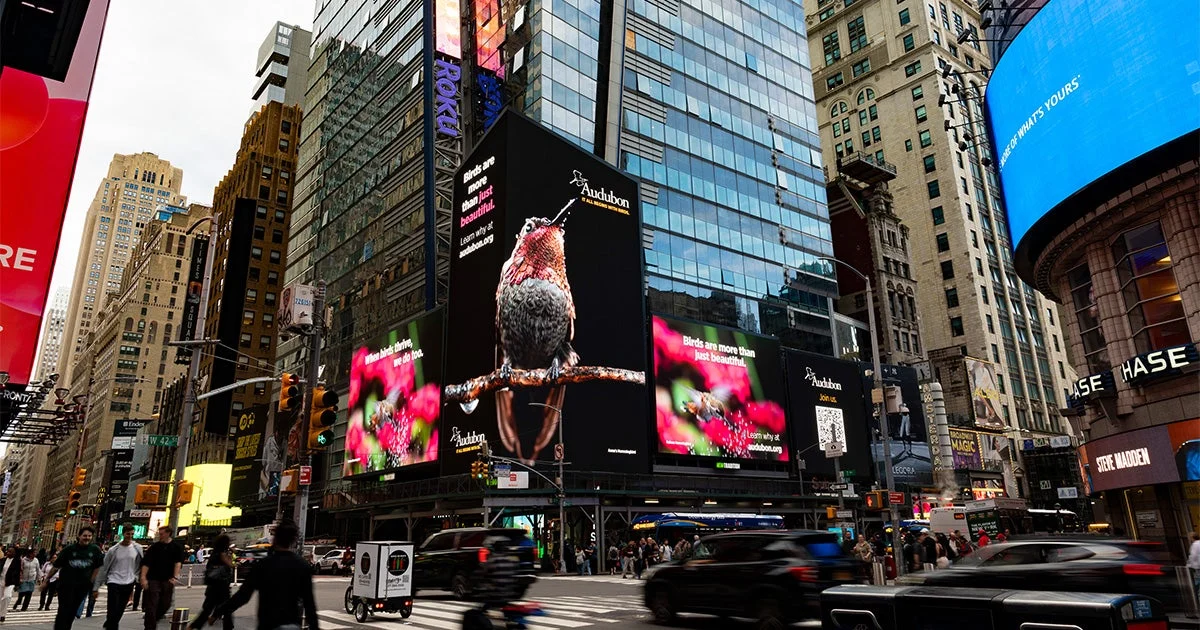
During Climate Week NYC 2026, the National Audubon Society utilized the high-profile global gathering to pivot the conversation on environmental policy, positioning avian populations not merely as subjects of conservation, but as essential indicators for climate resilience. By integrating the biological reality of bird migration and habitat reliance with the logistical complexities of clean energy infrastructure and global finance, Audubon transformed the week into a multifaceted forum for actionable, data-driven climate solutions. The organization’s presence spanned from the physical reality of Central Park birding tours to the digital prominence of a 10,000-square-foot hummingbird display in Times Square, emphasizing that the health of migratory species is inextricably linked to the economic and social stability of human populations.
The Role of Birds in Environmental Monitoring
Birds are widely regarded by ecologists as "canaries in the coal mine" due to their sensitivity to temperature shifts, food availability, and habitat degradation. Because they occupy virtually every ecosystem on Earth, their behavioral changes—such as altered migration timing or range shifts—serve as early warning systems for the broader impacts of a warming planet.
During the events held between September 21 and September 28, 2026, Audubon experts emphasized that the decline of certain species is a diagnostic tool for identifying failing ecosystems. According to recent Audubon research, approximately two-thirds of North American bird species are at risk of extinction if global temperatures rise by 3 degrees Celsius. By framing the climate crisis through the lens of avian survival, the organization successfully bridged the gap between abstract climate modeling and tangible, observable environmental decline, fostering a sense of urgency among policymakers and the private sector.
A Chronology of Engagement: From Policy to Public Art
The week began with a focus on high-level infrastructure and financial planning. On the opening day, Audubon staff co-hosted a pivotal session with the Clean Air Task Force titled "Innovative Alternative Financing Models to Promote Transmission." This discussion addressed one of the most significant bottlenecks in the transition to renewable energy: the aging and insufficient power grid. As the United States seeks to expand its wind and solar capacity, the construction of transmission lines has often faced regulatory and environmental hurdles. By convening industry leaders, conservationists, and government representatives in closed-door sessions, Audubon sought to find a "middle path"—a framework for responsible development that accelerates clean energy while minimizing the impact on sensitive habitats and migratory corridors.
Mid-week, the focus shifted to natural climate solutions (NCS). At the Nature4Climate plenary session, "From Risk to Resilience," leaders explored the concept of "Nature Intelligence"—the application of rigorous data to guide investment in ecosystem services. This session was followed by a roundtable at the Doris Duke Foundation Treehouse, which focused on drafting a cohesive Forest Policy Agenda for 2028 and beyond. These sessions underscored a fundamental shift in climate strategy: the realization that technology alone cannot solve the crisis. The protection and restoration of forests, wetlands, and grasslands—which act as massive carbon sinks—must be central to any credible national or international climate policy.
Data-Driven Perspectives on Global Deforestation
A significant portion of the week was dedicated to international policy, specifically the global mandate to end deforestation by 2030. Audubon participated in a series of high-level dialogues with Indigenous leaders, financial institutions, and government representatives. The discourse was centered on the economic valuation of forests, not just as timber or land, but as essential infrastructure for carbon sequestration and biodiversity maintenance.
Data presented during these sessions highlighted the economic risks associated with forest loss. For instance, the destruction of tropical forests is estimated to account for roughly 10% of annual global carbon emissions. The discussions focused on institutionalizing financing mechanisms such as the Tropical Forests Forever Facility, which aims to provide long-term, predictable funding for tropical forest conservation. By integrating forest carbon markets into the broader financial architecture, the attendees argued that global conservation could move from a philanthropic endeavor to a core component of the global economy.
Empowering the Next Generation of Conservationists
Recognizing that current climate policies will define the landscape for decades, Audubon dedicated significant resources to the next generation of leadership. At "Solutions House," students from the Audubon on Campus network—including representatives from the Yale Birding Student Association, the Howard University Green Coalition, and the HWS Birding Club—presented their findings on how youth-led advocacy is shaping local policy.
The enthusiasm at these sessions was palpable, reflecting a broader cultural trend: birding, once considered a niche hobby, has seen a surge in popularity among younger demographics, particularly on college campuses. This engagement is vital for the future of the movement. During a panel at the Green Jobs Pavilion, the sheer volume of attendees—resulting in standing-room-only conditions—indicated that the workforce is hungry for roles that bridge environmental science, policy, and advocacy. These emerging professionals are looking for pathways that translate climate anxiety into measurable, professional action, and Audubon’s role as a bridge between these students and established conservation organizations was a key takeaway of the week.
Public Engagement and the "Hummingbird Effect"
While the high-level policy meetings addressed the structural causes of climate change, the public-facing elements of the week aimed to connect the average citizen to the cause. The morning birding session in Central Park’s Ramble, conducted in partnership with the NYC Bird Alliance and BirdLife International, served as a "field laboratory." Observers noted the presence of warblers, thrushes, and hummingbirds, providing a concrete example of the species that rely on stable climates for their biannual migrations.
The most visible, however, was the 10,000-square-foot digital billboard in Times Square. By showcasing a hummingbird in one of the most densely populated and commercially driven environments in the world, Audubon created a visual juxtaposition that caught the attention of millions of commuters and tourists. The goal was to humanize the data—to move beyond the "trillion-ton" statistics of carbon emissions and focus on the survival of individual, beautiful, and vulnerable creatures that inhabit our shared spaces.
Analysis of Implications and Future Outlook
The strategic approach taken by Audubon during Climate Week 2026 suggests a maturing of the environmental movement. By moving away from purely reactive advocacy and toward proactive participation in energy and financial sectors, the organization is acknowledging that environmental policy is now inextricably linked to economic policy.
The implications of this shift are twofold. First, the emphasis on "responsible development" for clean energy is a pragmatic admission that the transition to green energy will require massive land use, and that conservationists must have a seat at the table to ensure this transition does not inadvertently harm the very biodiversity they aim to protect. Second, the focus on international financing for forests indicates that the climate crisis is being treated as a systemic risk to the global financial system.
As the world looks toward 2030, the success of these initiatives will be measured not by the number of events held, but by the tangible policy shifts that result from these collaborations. By using birds as a unifying thread—a common language understood by scientists, financiers, students, and the public alike—Audubon has demonstrated that the path to climate resilience lies in the integration of science, policy, and community action. The events of this year’s Climate Week served as a reminder that while the challenges are vast and interconnected, the mechanisms for change—ranging from forest restoration to innovative transmission financing—are within reach, provided that the necessary collaboration is sustained.
