
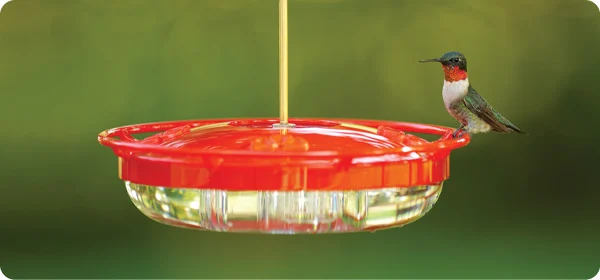
The arrival of spring marks the commencement of one of nature’s most extraordinary migratory spectacles across North America: the return of the hummingbird. For millions of backyard bird enthusiasts, the season brings a familiar routine of cleaning feeders, planting native flora, and scanning the horizon for the first iridescent flash of feathers. According to wildlife experts and naturalists from organizations such as Wild Birds Unlimited (WBU), the anticipation that builds during the early spring months culminates in a rewarding season of backyard observation that lasts through the late summer. While regional variations dictate the exact timing of these arrivals, the underlying biological imperatives driving these remarkable journeys remain a constant focus for ornithologists and amateur bird watchers alike.
The Phenomenon of Spring Migration
The migration of North American hummingbirds is a marvel of avian physiology and endurance. Many species, most notably the Ruby-throated Hummingbird in the eastern half of the continent, undertake grueling journeys spanning up to 2,000 miles from their wintering grounds in Central America and Mexico. Navigating vast geographical barriers, including the Gulf of Mexico—a non-stop, 500-mile open-water crossing completed by some individuals in a single, continuous flight—these tiny birds rely on substantial fat reserves accumulated prior to departure.
Ornithological tracking indicates that the timing of this migration is largely photoperiod-driven, meaning it is triggered by the changing length of daylight rather than weather patterns alone. Consequently, hummingbirds often arrive on their breeding grounds before peak floral blooms are fully established. This biological timing underscores the critical role that supplemental backyard nectar feeders play in supporting early arrivals during periods of temporary resource scarcity.
Regional Variations Across North America
While eastern regions predominantly welcome the Ruby-throated Hummingbird, the western half of the United States and Canada boasts a much richer diversity of migratory and resident species. Bird watchers in western states regularly encounter the Black-chinned, Rufous, and Broad-tailed hummingbirds, each bringing distinct migration timelines and territorial behaviors.
Conversely, not all hummingbirds participate in long-distance migration. In parts of the far western United States, species such as the Anna’s, Costa’s, and Allen’s hummingbirds are permanent residents or short-distance migrants. Residents like the Anna’s Hummingbird often begin nesting as early as December or January, meaning that by the time spring arrives across the rest of the country, western homeowners are frequently observing newly fledged juveniles making their initial exploratory flights to backyard feeders. This geographical diversity ensures that the window of active hummingbird observation varies significantly depending on latitude and local climate conditions.

Anatomy and Feeding Mechanics
Observing hummingbirds at close range reveals a suite of specialized evolutionary adaptations designed for high-energy nectar consumption. Contrary to popular misconception, hummingbirds do not feed by acting as biological straws, suctioning liquids through their bills. Instead, detailed high-speed videography and anatomical studies have demonstrated that these birds utilize a highly specialized, forked, and open-grooved tongue.
When feeding, the hummingbird’s tongue extends rapidly in and out of the bill—reaching frequencies of up to 12 times per second. The tip of the tongue features tiny, hair-like structures called lamellae that curl outward upon contact with liquid, trapping nectar via capillary action before retracting into the bill. This rapid lapping mechanism allows the bird to consume up to its body weight in nectar daily.
Furthermore, close observation at transparent feeder stations often highlights secondary ecological interactions. It is common to spot fine yellow dustings of pollen on a hummingbird’s forehead or bill, evidence of their vital role as pollinators for a wide array of native flowering plants. Their territorial displays—characterized by rapid aerial darting, aggressive chittering calls, and distinctive wing hums produced by air rushing over specialized primary flight feathers—add a dynamic element to backyard ecosystems.
Horticultural Support and Habitat Conservation
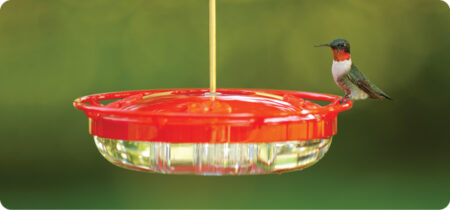
Wildlife biologists and conservation advocates consistently emphasize that optimal hummingbird management extends beyond artificial feeders. Establishing a sustainable habitat requires the intentional integration of native plants that bloom sequentially throughout the spring and summer months. Species rich in nectar, such as tubular perennials, salvias, penstemons, and native honeysuckles, provide a reliable, natural food source that complements supplemental feeding stations.
Experts note that maintaining clean, uncontaminated nectar—typically formulated using a simple four-to-one ratio of water to refined white granulated sugar, without artificial dyes or honey—is paramount to preventing avian disease. As suburban development continues to encroach on natural migratory corridors, residential backyards increasingly function as essential stepping stones, providing vital refueling stations for migratory populations facing habitat fragmentation and climate-related pressures.
Broader Ecological Implications and Expert Insights

The study and monitoring of hummingbird populations offer valuable insights into broader ecological health and climate trends. Citizen science initiatives, such as migration mapping projects and seasonal observation logs, provide ornithologists with vast quantities of crowdsourced data. These datasets help researchers track shifts in migration timing, population density changes, and potential mismatches between the arrival of migratory birds and the blooming cycles of their primary food sources—a phenomenon increasingly studied within the context of global climate change.
Educational outreach programs, including specialized audio resources like the "Nature Centered" podcast series produced by nature specialty organizations, continue to foster public engagement in backyard conservation. By demystifying avian biology and offering practical guidance on habitat enhancement, these initiatives encourage a deeper appreciation for urban and suburban wildlife management. Ultimately, the seasonal return of hummingbirds serves as a powerful reminder of the intricate ecological connections linking tropical wintering grounds with temperate breeding territories, reinforcing the collective responsibility of habitat stewardship across international borders.
