
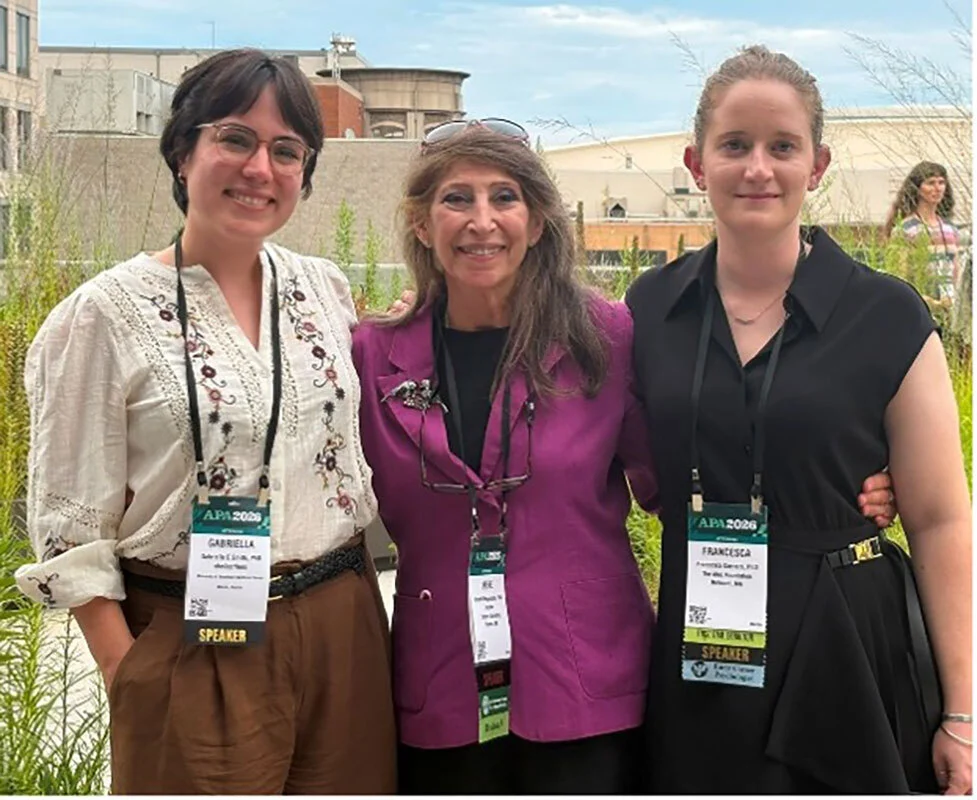
The landscape of comparative psychology in 2026 has been marked by significant turbulence, yet amidst the global geopolitical instability and shifting academic priorities, the field of avian cognition remains a beacon of rigorous scientific inquiry. Dr. Irene Pepperberg, a preeminent researcher whose work fundamentally altered the scientific community’s understanding of animal intelligence, has recently been honored with two lifetime achievement awards. These accolades—granted by the Coller-Dolittle Foundation and Division 3 (Experimental Psychology) of the American Psychological Association (APA)—recognize a career spanning nearly 50 years. Furthermore, Dr. Pepperberg has been elected to a three-year term as a Member-at-Large for APA Division 3, a position that places her at the heart of administrative and academic leadership in experimental psychology.
While these honors are personal in their attribution, Dr. Pepperberg emphasizes that they represent the culmination of a collective endeavor involving a vast network of human collaborators and the avian subjects who provided the data. The following retrospective outlines the evolution of this research from its tenuous beginnings in 1977 to its current standing at the forefront of behavioral science.
The Genesis of a Scientific Paradigm: 1977–1985
The foundation of modern avian cognition research was laid in an unlikely setting: borrowed laboratory space at Purdue University. In June 1977, Dr. Pepperberg began her collaboration with Alex, an African Grey parrot whose cognitive abilities would eventually challenge the long-held dogma that non-human communication was limited to instinctual signaling.
The initial years were defined by professional skepticism. Dr. Pepperberg recalls that her early grant applications to the National Science Foundation were met with profound doubt from reviewers, some of whom questioned the validity of the premise itself. At the time, the prevailing psychological consensus often viewed avian intelligence through a narrow lens, failing to account for the potential for symbolic representation or abstract categorization.
By adopting the modeling technique pioneered by German biologist Dietmar Todt, Dr. Pepperberg and her team—which included early contributors like Robert Mitchell and Kimberly Goodrich Fisher—began to elicit complex responses from Alex. Through this social learning approach, Alex learned to identify materials such as paper, wood, and hide, as well as complex categories including colors and geometric shapes. This empirical success eventually secured the necessary, albeit modest, funding to sustain the research. However, the fragility of these early years was exemplified by the administrative hurdles and institutional instability that forced multiple relocations, a pattern that would persist for decades.
Institutional Transience and the Evolution of the Lab
The trajectory of the laboratory moved from Purdue to Northwestern University, where Dr. Pepperberg served as a visiting assistant professor. This period proved critical for the maturation of the research model, as the lab navigated the complexities of interdisciplinary collaboration within the Department of Anthropology.
The logistical challenges of such research were compounded by the health needs of the subjects. When Alex developed aspergillosis, a severe fungal infection, the research faced a potential premature end. The survival of the research project, and of Alex himself, was secured only through the specialized intervention of a team of veterinarians, including Susan Brown, Richard Nye, Scott McDonald, and Bob Ness, with critical microsurgery performed by Dr. Greg Harrison.
Following the tenure at Northwestern, the lab transitioned to the University of Arizona, where the scope of research expanded to include subjects such as Kyaaro, Alo, and eventually, Griffin. During this period, the lab fostered a pipeline of graduate students, including Pamela Banta Lavenex and Diane Patterson, who contributed to the longitudinal data sets that define the lab’s legacy. Subsequent moves to the MIT Media Lab and Brandeis University underscored the inherent difficulty of maintaining a high-level, independent cognitive research facility within traditional university structures. The support provided by the Radcliffe Institute during this time proved vital, offering both academic and financial stabilization during a period of professional transition.

Harvard, the Vision Lab, and the Modern Era
In the early 2000s, the laboratory established a formal presence within Harvard University’s Department of Psychology, working in conjunction with the Vision Lab led by Ken Nakayama and Patrick Cavanagh. This era was characterized by a shift toward more rigorous, collaborative research, involving scholars like Susan Carey.
The death of Alex in 2007 served as a watershed moment for the field, marking the end of a singular era of discovery. However, the research continued with the addition of Athena, a female African Grey, and the expansion of the team to include researchers such as Francesca Cornero and Gabriella Smith. The global health crisis of the early 2020s necessitated further adaptation; for 18 months, the research was conducted out of the residence of research assistant Diana Greene. Today, the project maintains an institutional affiliation with Boston University, operating under the guidance of faculty members David Somers, Ben Scott, and Chantal Stern.
Analytical Implications: Why This Research Matters
The significance of Dr. Pepperberg’s work extends far beyond the individual accomplishments of her subjects. By documenting that African Grey parrots could acquire the capacity to categorize, quantify, and comprehend concepts such as "same" versus "different," the lab provided a necessary counter-narrative to the behaviorist paradigms of the mid-20th century.
- Cognitive Complexity: The data demonstrated that avian brains, despite their structural differences from mammalian brains, are capable of high-level executive function.
- Methodological Rigor: The modeling/rival technique established a standard for social learning experiments that is now widely cited in studies of animal cognition.
- Longitudinal Value: The nearly 50-year dataset provides a unique look at how cognitive capabilities persist and adapt over the lifespan of a non-human species.
Experts in the field suggest that the longevity of this research program has created a rare archive of behavioral development. "The data generated by Dr. Pepperberg’s lab is foundational," noted one anonymous peer reviewer within the APA. "Without the persistent documentation of these subjects, the field would lack the empirical grounding necessary to argue for the depth of non-human animal consciousness."
A Legacy of Collaboration
Dr. Pepperberg’s recent awards are, by her own account, a recognition of the collective effort of a vast, rotating cast of research assistants, students, and lab managers. Individuals such as Suzanne Gray, who managed the lab through several high-stress transitions, and current research assistant Alana Carroll, represent the backbone of this scientific continuity.
The financial and emotional support of the donor community has also been an essential variable. Maintaining a laboratory that requires 24/7 care for avian subjects is a feat that requires consistent capital and an infrastructure that is rarely provided by traditional academic grants alone. The acknowledgment of these individuals—many of whom sacrificed significant professional and personal milestones to ensure the lab’s survival—speaks to the intense dedication required to sustain such a project.
Conclusion
As Dr. Pepperberg begins her tenure as a Member-at-Large for the APA, her focus remains on the synthesis of five decades of data and the continued advancement of the field. The awards she has received are not merely a retrospective on a career, but an affirmation of the importance of animal cognition as a central pillar of psychology.
The 2026 climate—defined by its global uncertainty—contrasts sharply with the stability sought in the laboratory environment. However, the scientific pursuit of understanding the avian mind continues. As the lab looks toward the future from its current base in Somerville, the emphasis remains on the same principles that defined the first session in 1977: a commitment to objective measurement, a respect for the subjects, and the understanding that scientific advancement is, above all, a human and non-human collaborative achievement.
