
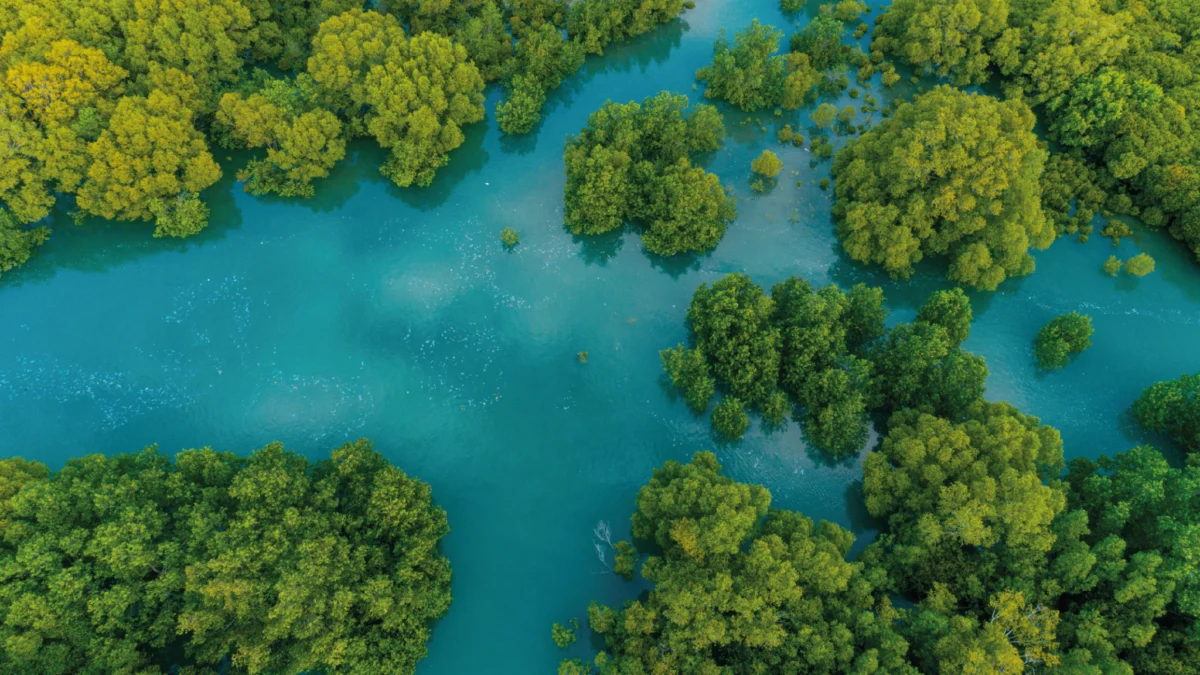
Bogotá, October 26, 2026 — Colombia finds itself at a defining moment in its environmental history regarding the safeguarding and rehabilitation of its vital coastal ecosystems. A newly released report titled Mobilizing the Mangrove Breakthrough in Colombia, developed collaboratively by the Global Mangrove Alliance and the Mangrove Breakthrough, underscores that while the nation has achieved remarkable milestones in increasing its total mangrove cover over the past four decades, persistent systemic threats continue to jeopardize these invaluable natural habitats.
The comprehensive assessment was officially launched to coincide with the ongoing Convention on Biological Diversity COP17 summit taking place in Armenia, where international delegates have gathered to accelerate global action on halting nature loss and fostering ecosystem resilience. The timing of the report highlights Colombia’s potential to serve as a regional and global leader in marine and coastal conservation, provided that public institutions, civil society organizations, and local communities can bridge existing implementation gaps through coordinated, large-scale investments.
Main Facts and Ecosystem Overview
Spanning nearly 3,000 square kilometers, Colombia’s mangrove forests fringe more than 3,800 kilometers of coastline, distributed primarily across the Pacific coast—which accounts for 72.7% of the total expanse—and the Caribbean coast, which hosts the remaining 27.3%. Notably, these Colombian ecosystems are home to some of the tallest mangrove trees found anywhere in the world. Beyond their towering physical presence, these forests function as indispensable natural assets. They act as robust natural barriers that shield vulnerable coastal communities from severe erosion, storm surges, and inland flooding driven by extreme weather events.
Furthermore, these ecosystems play an irreplaceable role in maintaining marine biodiversity. They serve as essential nursery grounds for numerous commercial and artisanal fish species, directly sustaining the food security, cultural heritage, and traditional livelihoods of coastal and Indigenous populations who possess generations of deep ecological knowledge regarding sustainable coastal management.
Despite enduring intense anthropogenic pressures—including poorly planned coastal infrastructure development, shifting land-use policies, industrial and domestic pollution, and resource extraction—Colombia stands out as a conservation anomaly. Data cited in the report reveals that the nation has actually increased its overall mangrove extent by nearly 20,000 hectares since 1985, proving that proactive governance and community stewardship can reverse historical trends of environmental degradation.
Historical Chronology and Policy Evolution
The trajectory of mangrove management in Colombia has evolved significantly over the past several decades, characterized by progressive legal frameworks offset by persistent on-the-ground challenges:
- 1985–2000: A period marked by initial recognition of coastal degradation, during which localized timber extraction and agricultural expansion steadily reduced canopy cover in vulnerable areas along the Caribbean littoral.
- 2002–2024: The Colombian government, alongside non-governmental organizations and community networks, systematically accelerated restoration interventions. Over this twenty-two-year span, approximately 967 hectares of degraded mangroves were successfully rehabilitated through targeted replanting and hydrological restoration projects, supported by large-scale initiatives such as Biomanglar.
- Current Frameworks (Present Day): Colombia has officially surpassed global 30×30 conservation targets for mangrove protection. Over 42% of the country’s mangrove forests now reside within formally designated protected areas. Moreover, national commitments embedded within the country’s Nationally Determined Contributions (NDCs) and the overarching Climate Action Law mandate the restoration of an additional 3,000 hectares by 2030.
Supporting Data and Restoration Potential
The new assessment indicates that Colombia currently harbors approximately 10,270 hectares of land with high mangrove restoration potential. According to the report’s projections, achieving at least 50% of this restoration target by the year 2030 is entirely feasible, provided that current institutional momentum is matched by adequate financial backing.
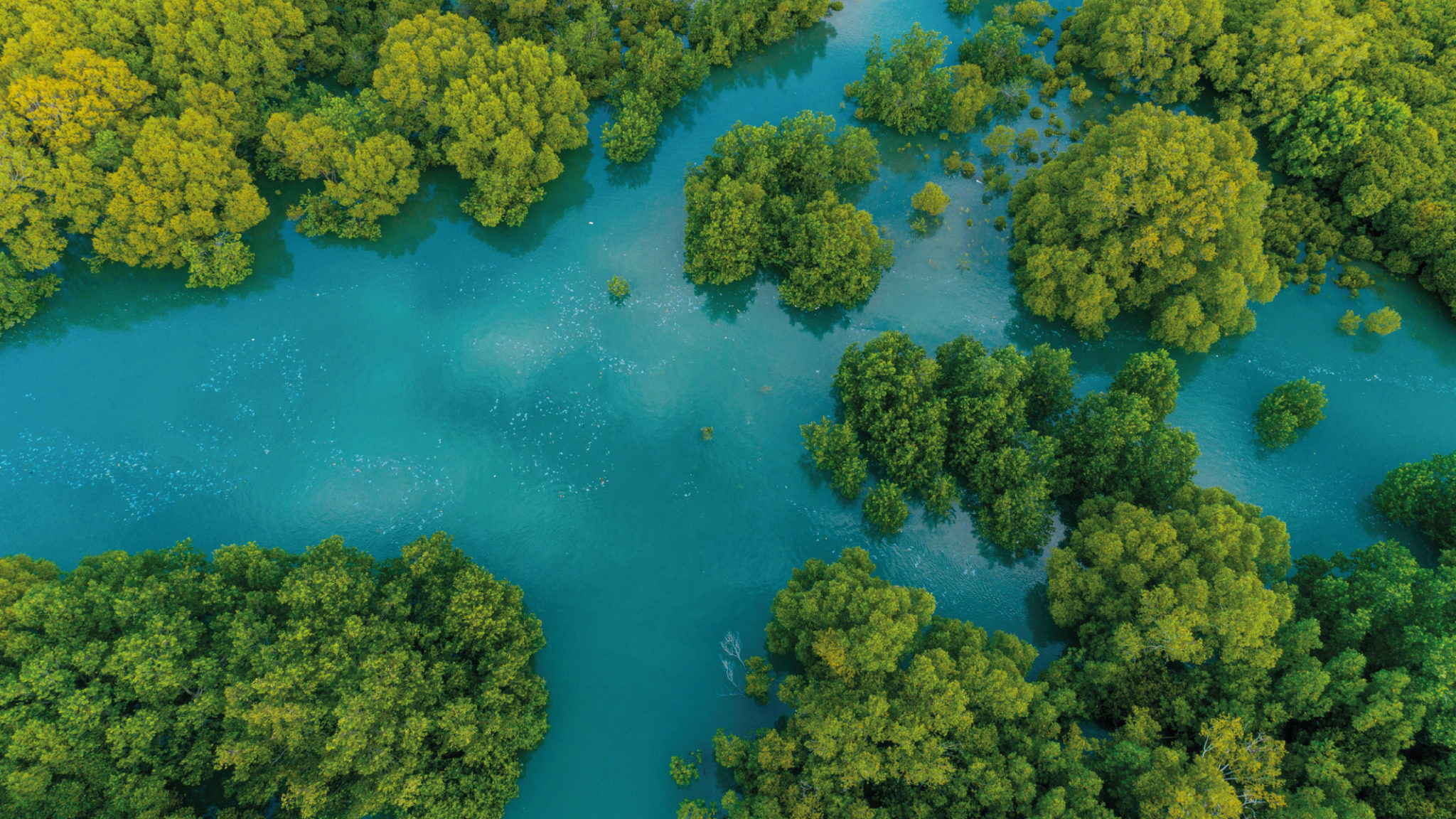
While the country’s existing legal foundation is lauded as robust—declaring mangroves as public goods, legally prohibiting land-use conversion and commercial extraction within mangrove zones, and prioritizing them for strict conservation—the distribution of protected coverage remains uneven. Experts emphasize that strengthening protection in underrepresented regions such as the San Andrés and Providencia archipelago, the Darién-Tacarcuna corridor, and the Micay zone will be critical to doubling effective national protection coverage.
The report also maps out the primary drivers of degradation that must be mitigated to ensure restoration success. Chief among these are hydrological disruptions caused by linear infrastructure projects, such as unmitigated road construction along the Caribbean coast that alters natural tidal flows and induces localized mangrove mortality. Additionally, agricultural conversion for cattle ranching, water buffalo farming, coconut and banana plantations, and commercial shrimp aquaculture continues to chip away at forest margins. Traditional over-extraction of timber and firewood has also altered forest composition, occasionally encouraging invasive fern species that inhibit natural seedling regeneration. Furthermore, chronic pollution from plastic debris and industrial runoff continues to degrade sensitive environments such as the Ciénaga Grande de Santa Marta, Cispatá Bay, and the San Andrés Archipelago.
Institutional Responses and Stakeholder Perspectives
The legal and institutional architecture governing Colombia’s natural resources has drawn praise from international conservation bodies, though implementation hurdles remain a central point of discussion at COP17.
"The report highlights that Colombia already has a strong legal framework that provides a solid basis for expansion," noted Susanna Tol of Wetlands International. "It declares mangroves as public goods, prohibits land-use change and extractive activities in mangrove zones, and recognizes their priority conservation value."
Complementing this perspective, analysts point out that Indigenous territories, Afro-descendant community councils, and local grassroots organizations already act as the de facto guardians of these coastal forests. Their daily management practices represent the cornerstone of equitable, locally led conservation. However, experts stress that unlocking the full potential of these communities requires formalizing land-tenure rights, ensuring transparent benefit-sharing mechanisms, and directly integrating traditional ecological knowledge into national policy execution.
Broader Impact, Financing Opportunities, and Future Implications
Turning these robust legal foundations into tangible, large-scale ecological outcomes will require overcoming fragmented implementation. The report outlines an urgent need for enhanced cross-sectoral coordination—bridging national and regional government bodies, civil society, academic institutions, and private investors—while simultaneously improving long-term ecological monitoring and carbon accounting methodologies.
Financing remains a pivotal frontier. Colombia possesses significant structural advantages for attracting innovative climate finance, supported by the national Fund for Life and Biodiversity, emerging blended-finance instruments, and surging global demand for high-integrity blue carbon credits. By clarifying carbon rights, establishing transparent regulatory frameworks for private sector investment, and scaling results-based climate funding, the country could generate substantial new revenue streams.
Ultimately, initiatives focused on payments for ecosystem services and sustainable bioeconomy models can alleviate socioeconomic pressures on coastal populations, offering viable economic alternatives to destructive land-use practices. If these financial mechanisms are successfully deployed alongside community-led stewardship, Colombia’s upcoming conservation and restoration targets will not only be met, but potentially exceeded, establishing a benchmark for tropical coastal management across the Americas.
