
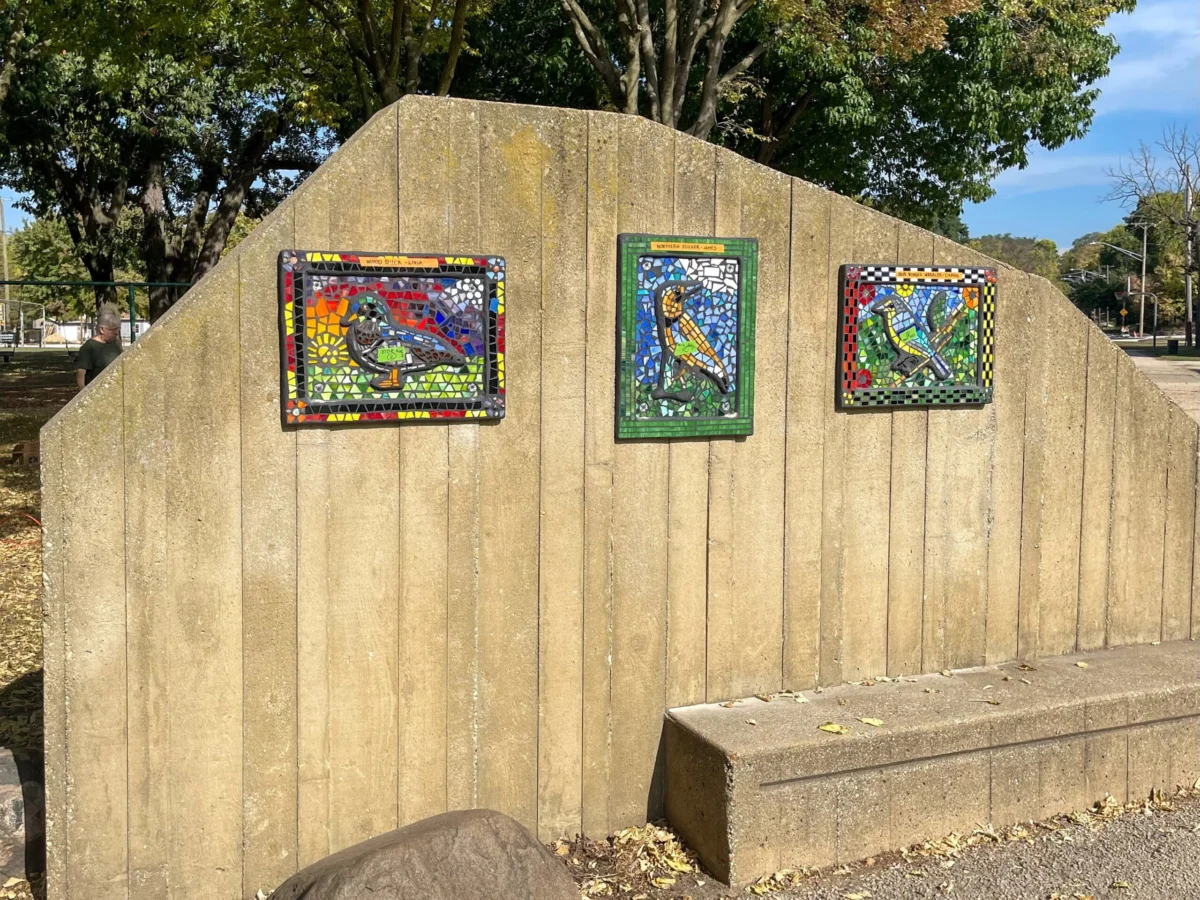
In the industrial heart of Rockford, Illinois, a vibrant intersection of fine art and ecological awareness has emerged, driven by the hands of local youth. Through the SPARK! Mosaic program—a free summer initiative spearheaded by artist Susan Burton—students have spent the 2025 session transforming their creative output into a medium for environmental advocacy. Partnering with the Audubon Mural Project and the Sinnissippi Audubon Society, these students have crafted a multi-dimensional exhibition that highlights the fragility of bird species facing existential threats from a changing climate.
A Partnership Born of Passion and Purpose
The genesis of this collaboration lies in the intersection of local community programming and regional conservation efforts. Jennifer Kuroda, president of the Sinnissippi Audubon Society, has long championed the use of public art to bring visibility to avian conservation. Having worked on various mural projects across northern Illinois, Kuroda identified the SPARK! Mosaic program as an ideal vehicle to engage the next generation.
The collaboration began with a series of exploratory meetings between Kuroda and Burton. The objective was clear: to move beyond traditional art instruction and integrate scientific literacy into the creative process. According to Burton, the engagement was immediate. "Jennifer’s passion was contagious," she noted, describing the process of translating complex climate data into visual art forms that would resonate with both the students and the public.
Chronology of the 2025 Summer Session
The summer program was structured into three distinct phases, each escalating in technical difficulty and scale, ensuring students developed a broad range of artistic competencies.
Phase One: The Gallery Series
The session commenced with an intensive study of avian biology. Students were tasked with selecting a species from the Audubon Survival by Degrees report, a comprehensive scientific study that maps the projected shifts in bird habitats due to rising global temperatures. Students were required to balance creative license in background design with scientific accuracy in the portrayal of the birds. This necessitated a rigorous observation period where students analyzed feather patterns, skeletal structure, and specific color palettes.
Phase Two: Urban Integration
Following the gallery project, the focus shifted to large-scale public art. The students were challenged to design and execute three massive bird installations to be mounted on the exterior of a downtown Rockford parking garage. This phase required an understanding of spatial composition and public-facing design, as the Indigo Bunting, American Goldfinch, and Hooded Warbler had to be visible and striking from a distance.
Phase Three: Three-Dimensional Sculpture
The final, most ambitious undertaking was the construction of "Woodrow the Woodpecker," a nine-foot-tall, three-dimensional mosaic sculpture. This project required architectural planning, structural engineering using mesh and concrete, and the precise application of hundreds of glass tiles. The installation now serves as a landmark at the Nature at the Confluence education center in South Beloit.
Scientific Context and Data Implications
The birds selected by the students serve as more than just aesthetic subjects; they represent critical indicators of regional ecological health. The Audubon Survival by Degrees report provides the scientific backbone for these artistic choices. For instance, the Common Loon, which the students depicted in their gallery series, faces significant reproductive failure due to climate-induced flooding, which destroys nesting sites.
Similarly, the Cerulean Warbler, a species characterized by its vibrant plumage, is highly sensitive to the increasing frequency of spring heat waves, which can disrupt the availability of necessary food sources during their peak breeding periods. The Northern Shrike, also featured, faces a range contraction that could see it pushed entirely out of its current breeding grounds in the Midwest, forced into the northernmost reaches of Canada as temperate zones shift northward.
These projections are not merely theoretical; they are grounded in decades of longitudinal data. The implications of these shifts for the Illinois landscape are profound, threatening the biodiversity that provides essential ecosystem services, including insect control and seed dispersal. By focusing on these specific, vulnerable species, the student project bridges the gap between abstract climate data and the tangible, lived experience of local wildlife.
The Educational Value of Mosaics
For Susan Burton, the mosaic medium serves as a potent metaphor for community action. "One tiny piece by itself doesn’t seem like much, but when everyone contributes, something amazing happens," she explains. This philosophy extends to the pedagogical approach of the SPARK! program. Many of the students entered the summer session with a lack of confidence in their artistic abilities. By focusing on the incremental, methodical nature of mosaic work, Burton observed students shedding their self-doubt, realizing that complex outcomes are achievable through sustained, focused effort.
Furthermore, the program integrated field ornithology. Jennifer Kuroda utilized downtime at the camp to introduce students to the practice of birding, providing binoculars and field guides. For many participants, this was their first encounter with active birdwatching, transforming their perception of local parks from mere recreational spaces to vital habitats.
Official Responses and Community Impact
The impact of the project has been noted by local educational and environmental leaders. Julie Uram, executive director of Nature at the Confluence, highlighted the functional utility of the "Woodrow" sculpture. Beyond its aesthetic appeal, the sculpture acts as a navigational aid for visitors to the center, with its beak strategically pointing toward the main entrance. "It helps welcome and guide people," Uram stated, noting the positive reception the mascot has received from the community.
The integration of QR codes into the gallery displays at the STEAM Academy at Haskell adds a layer of interactive learning. Visitors can scan these codes to access the specific Audubon field guide entries for each species, effectively turning the school hallway into an impromptu learning center. This approach ensures that the art functions as a gateway to further research rather than a static conclusion.
Broader Implications for Environmental Advocacy
The success of the Rockford initiative offers a replicable model for other communities. By embedding climate science into public art, organizations can reach demographics that might otherwise be disengaged from environmental discourse. The project suggests that when climate change is framed through the lens of local species—birds that residents may see in their own backyards—the abstract threats of global warming become more urgent and personally relevant.
The synthesis of art and conservation also addresses a common hurdle in climate communication: "compassion fatigue." By focusing on the beauty and uniqueness of native species, the project fosters a sense of stewardship rather than helplessness. The students involved are not just learning about the risks to the environment; they are actively participating in the creation of a visual narrative that advocates for the protection of that environment.
As climate change continues to alter the distribution of flora and fauna, projects like these provide a necessary, albeit small-scale, counter-narrative of resilience. The students of the SPARK! Mosaic program, through their careful placement of glass and pigment, have created a permanent record of their commitment to the species that share their home. Whether these works will influence policy remains to be seen, but their immediate success in educating the local public and empowering the next generation of conservationists is undeniable.
The legacy of the 2025 session will persist in the physical landscape of Rockford—on the walls of the parking garage, the halls of the STEAM Academy, and the grounds of Nature at the Confluence. It is a testament to the idea that, much like a mosaic, the collective effort of a community can piece together a more informed and proactive response to the challenges of the 21st century. As the students move forward, the lessons they learned—that observation leads to empathy, and that individual contributions are essential to the whole—will remain as enduring as the glass they set in mortar.
