
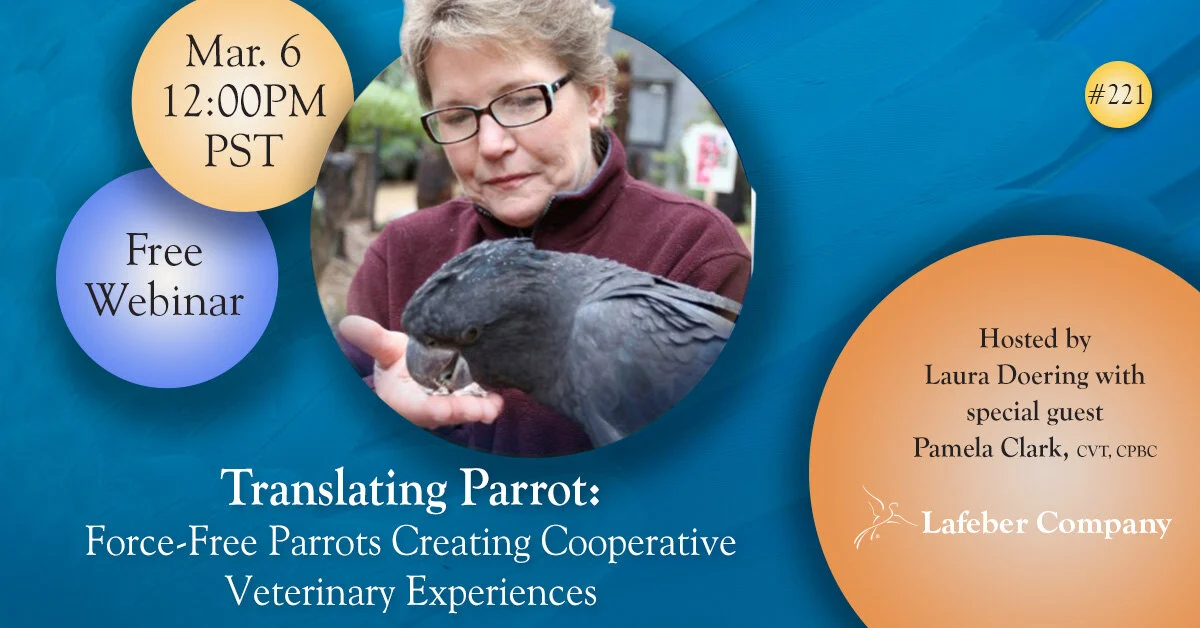
A pivotal webinar, "Force-Free Parrots: Creating Cooperative Veterinary Experiences," is scheduled for Friday, March 6, 2026, at 12:00 p.m. PST. This online event aims to revolutionize the approach to avian veterinary care, focusing on methods that prioritize the psychological well-being of parrots and foster a more trusting relationship between birds and their caregivers, including veterinary professionals. The session will be led by Pamela Clark, CPBC (Certified Parrot Behavior Consultant), a recognized expert in avian behavior and welfare.
The webinar is designed to address a pervasive issue in parrot ownership: the often stressful and traumatic nature of veterinary visits. Historically, and still commonly, veterinary examinations for birds involve physical restraint techniques. While these methods may enable essential procedures, they frequently lead to significant fear, anxiety, and behavioral resistance in parrots, making future interactions with veterinarians increasingly challenging. This can create a cycle of distress for both the bird and its owner, and potentially compromise the quality of care received.
"Force-Free Parrots: Creating Cooperative Veterinary Experiences" proposes an alternative paradigm. The core philosophy revolves around force-free handling and cooperative care, principles adapted from successful applications in other animal welfare fields. These methodologies emphasize building trust and empowering the animal to participate voluntarily in its own healthcare. By understanding parrot behavior and employing positive reinforcement techniques, caregivers and veterinary professionals can learn to significantly reduce stress levels during examinations and procedures.
The webinar will delve into practical strategies for implementing these force-free techniques. Attendees will gain insights into how to desensitize parrots to common veterinary tools and procedures, establish clear communication signals, and reward cooperative behavior. The goal is to transform the veterinary visit from a dreaded ordeal into a predictable and manageable experience, fostering a stronger bond between the parrot and its human caretakers.
The importance of this shift is underscored by the growing awareness of animal sentience and the ethical imperative to minimize suffering. Scientific research increasingly highlights the complex emotional lives of birds, including parrots, demonstrating their capacity for stress, fear, and distress. Consequently, traditional handling methods that rely on coercion are being re-evaluated across the animal care industry.
Background and Context
The development and popularization of force-free handling and cooperative care principles have been a gradual but significant evolution in animal welfare. Originating in fields like zoo animal management and dog training, these positive reinforcement-based approaches have gained traction in companion animal care due to their efficacy and ethical advantages. For parrots, a species known for its intelligence, complex social structures, and susceptibility to stress, the application of these principles is particularly relevant.
Pamela Clark, the presenter, brings a wealth of experience in this domain. As a Certified Parrot Behavior Consultant, her work focuses on understanding and addressing the behavioral needs of parrots. Her expertise is crucial in translating theoretical concepts into actionable techniques that can be applied in real-world scenarios, from home environments to professional veterinary clinics. The webinar is therefore not just an educational session but a platform for disseminating evidence-based best practices.
The date, March 6, 2026, positions this webinar as a timely event, potentially preceding or coinciding with broader discussions and advancements in avian welfare legislation or professional veterinary guidelines. The inclusion of a time zone converter link is a practical consideration, acknowledging the global nature of online learning and ensuring accessibility for a diverse audience.
The Promise of Cooperative Care
The fundamental concept of cooperative care is to shift the power dynamic. Instead of restraining a parrot for a procedure, the goal is to train the bird to offer behaviors that facilitate the procedure. This might involve training a parrot to present its wing for blood collection, to hold still for a physical examination, or to tolerate the placement of a microchip. This training process is broken down into small, manageable steps, with positive reinforcement (treats, praise, favored activities) used to reward the desired behavior.
This approach offers numerous benefits:
- Reduced Stress and Anxiety: Parrots that are trained to participate in their care experience significantly less fear and stress during veterinary visits. This can have long-term positive effects on their overall well-being and reduce the likelihood of developing phobias or behavioral problems.
- Enhanced Trust and Bond: By engaging in cooperative care, parrots learn to trust their caregivers and veterinary professionals. This strengthens the human-animal bond, making all interactions more positive.
- Improved Diagnostic Accuracy: A less stressed bird is more likely to cooperate, allowing for more thorough and accurate physical examinations and diagnostic procedures. This can lead to earlier detection and better management of health issues.
- Increased Safety: While seemingly counterintuitive, a cooperative bird is often safer to handle than a fearful, struggling one, reducing the risk of injury to both the bird and the handler.
- Empowerment for the Bird: Cooperative care respects the parrot’s autonomy, allowing it to have some control over its environment and experiences.
Practical Strategies and Learning Objectives
Attendees of the webinar can expect to learn about:
- The Science Behind Force-Free Handling: Understanding the neurobiological basis of stress and fear in birds and how force-free methods mitigate these responses.
- Building Foundational Trust: Techniques for establishing a positive relationship with a parrot, laying the groundwork for cooperative care.
- Desensitization and Counter-Conditioning: Practical methods for gradually exposing parrots to veterinary stimuli (e.g., stethoscopes, thermometers, examination tables) and associating them with positive experiences.
- Shaping Cooperative Behaviors: Training specific behaviors that facilitate veterinary procedures, such as presenting body parts, holding still, or tolerating handling.
- Managing Veterinary Visits: Strategies for planning and executing veterinary appointments in a way that minimizes stress for the parrot.
- Collaboration Between Owners and Vets: How to effectively communicate and work with veterinary professionals to ensure a force-free approach is adopted.
The inclusion of a video embed, titled "Translating Parrot 16 – Force-Free Parrots: Creating Cooperative Veterinary Experiences," suggests that the webinar may also draw upon or present visual demonstrations of these techniques, enhancing the practical applicability of the information. This visual component is crucial for understanding the nuances of animal behavior and training.
Supporting Data and Research
While specific data points were not provided in the original content, the efficacy of force-free and cooperative care methods is supported by a growing body of scientific literature. Studies in animal behavior, veterinary medicine, and animal welfare consistently demonstrate the benefits of positive reinforcement-based training. For instance, research on stress indicators in animals, such as heart rate variability, cortisol levels, and behavioral observation, has shown marked reductions when force-free methods are employed compared to traditional restraint.
Furthermore, the "One Health" initiative, which recognizes the interconnectedness of human, animal, and environmental health, implicitly supports approaches like cooperative care. By promoting the well-being of animals, we contribute to a healthier ecosystem and reduce the risk of zoonotic diseases, which can be exacerbated by stressed animal populations.
The field of avian veterinary medicine is also evolving. Organizations like the American Association of Avian Veterinarians (AAAV) and the European Association of Avian Veterinarians (EAV) are increasingly advocating for improved welfare standards and the adoption of less stressful handling techniques. Webinars like this serve as vital educational tools for disseminating these evolving professional standards.
Implications for Parrot Welfare and Ownership
The widespread adoption of force-free and cooperative care principles has profound implications for the well-being of pet parrots. It promises to:
- Enhance Quality of Life: Parrots will experience less fear and distress throughout their lives, leading to a higher overall quality of life.
- Prolong Lifespans: By reducing chronic stress and facilitating timely veterinary intervention, these methods may contribute to longer and healthier lives for pet parrots.
- Reduce Surrender Rates: Behavioral issues stemming from fear and anxiety are a significant factor in pet surrender. Improved handling and veterinary experiences can help mitigate these issues, keeping more parrots in their homes.
- Elevate Professional Standards: The webinar can serve as a catalyst for veterinary professionals to integrate these modern, humane techniques into their practices, setting a new benchmark for avian veterinary care.
The event’s designation for both "caregivers and veterinary professionals" is a strategic choice. It acknowledges that successful cooperative care requires a unified approach. Owners need to understand and practice these methods at home, and veterinarians must be equipped to support and implement them during clinical visits. This collaborative aspect is critical for creating a truly stress-free veterinary experience for parrots.
Conclusion
"Force-Free Parrots: Creating Cooperative Veterinary Experiences" represents a significant step forward in the compassionate care of pet parrots. By moving away from outdated restraint methods and embracing the principles of force-free handling and cooperative care, this webinar offers a pathway to reduce fear, build trust, and ensure that parrots receive the veterinary attention they need in a way that respects their well-being. As awareness of animal sentience grows, such educational initiatives are vital for promoting humane practices and fostering stronger, healthier relationships between humans and their avian companions. The date of March 6, 2026, marks an opportunity for a community of caregivers and professionals to unite in advancing the standard of care for these intelligent and sensitive creatures.
