
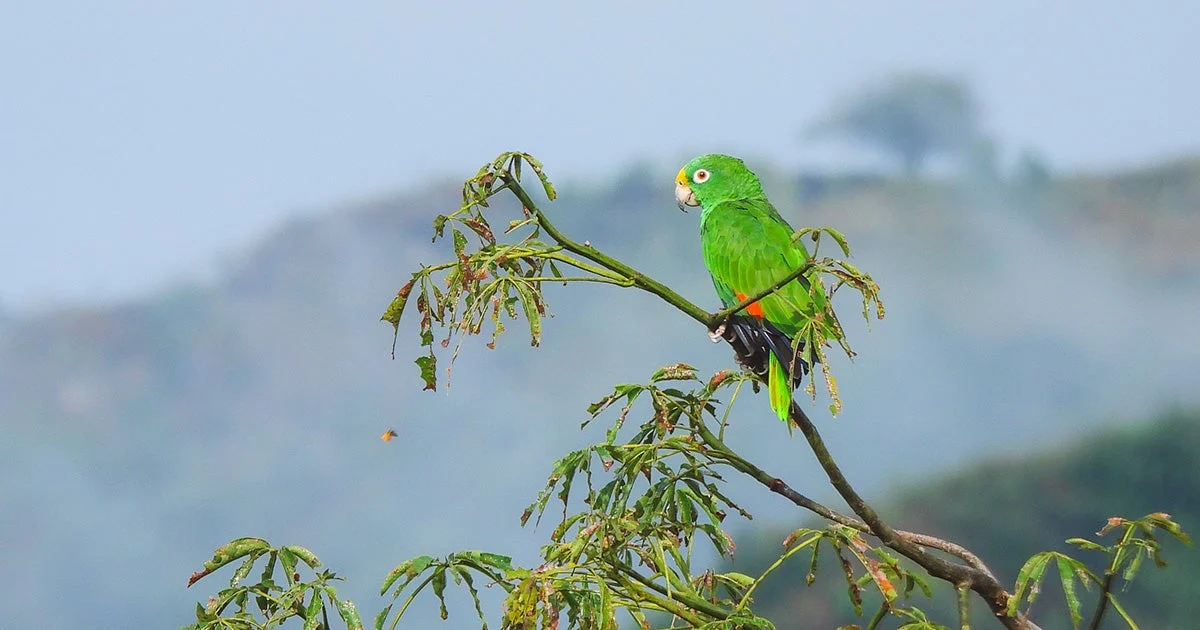
Scientists have developed a groundbreaking fecal-sampling method designed to accurately identify illegally captured wild birds that are illicitly sold as captive-raised, offering a powerful new tool in the global struggle against wildlife trafficking. This innovative technique promises to revolutionize how law enforcement agencies distinguish between legally bred and illegally wild-caught parrots, which remain among the most heavily trafficked animals worldwide.
The illegal wildlife trade is a vast, shadow economy, estimated by organizations like the United Nations Office on Drugs and Crime (UNODC) and INTERPOL to be worth between $7 billion and $23 billion annually, ranking it among the largest illicit trades globally, alongside drugs, arms, and human trafficking. Within this grim statistic, parrots hold a particularly vulnerable position. Highly intelligent, vibrant, and often long-lived, these birds are prized in the pet trade, fueling an insatiable demand that frequently translates into devastating impacts on wild populations. Species like the Yellow-crowned Amazon, along with numerous other Amazon parrot varieties and the iconic African Grey Parrot, are consistent targets for sophisticated trafficking networks.
The Global Crisis of Illegal Parrot Trafficking
For decades, conservationists and law enforcement officials have grappled with the complex challenge of parrot trafficking. The Convention on International Trade in Endangered Species of Wild Fauna and Flora (CITES) regulates the international trade of thousands of species, including nearly all parrots, categorizing them based on their conservation status. While CITES aims to ensure that international trade does not threaten the survival of species, loopholes and sophisticated illicit practices often undermine these efforts.
A major impediment to effective enforcement lies in the deceptive practice known as "laundering." Traffickers capture wild parrots, often through brutal and unsustainable methods, and then attempt to pass them off as captive-bred individuals. This can involve falsifying documents, bribing officials, or integrating wild birds into legitimate breeding operations to obscure their origins. The sheer difficulty in visually distinguishing a wild-caught parrot from one raised in captivity means that many illegally acquired birds slip through customs checkpoints, further enriching criminal networks and depleting wild populations.
Parrots, as a group, face a significantly higher risk of extinction than most other bird species. Habitat destruction, climate change, and the pet trade are the primary drivers of these declines. While captive breeding programs have expanded in recent decades with the intention of offsetting demand for wild-caught birds, studies have shown that this legal trade can inadvertently mask or even stimulate the market for illegal wild-caught birds. This paradox underscores the urgent need for robust, reliable methods to differentiate between the two.
Current Enforcement Challenges and Their Limitations
Wildlife and customs officials stationed at ports, airports, and borders are often in an unenviable position. They are tasked with intercepting illicit shipments, but the tools at their disposal for identifying illegal parrots are frequently inadequate. As Steven Janssen, a mobile veterinarian for the World Parrot Trust and a lead researcher on the new project, explains, existing methods require specialized training, are time-consuming, and can inflict considerable stress on the animals.
Traditional forensic methods, such as DNA analysis or stable isotope analysis, while scientifically sound, are often impractical for frontline enforcement. DNA testing can be expensive, requires specialized laboratory equipment, and the results can take weeks or months to process – a timeline incompatible with the fast-paced environment of customs inspections. Stable isotope analysis, which can reveal the geographical origin of an animal based on the isotopes absorbed from its diet and environment, also demands sophisticated equipment and expertise, making it less suitable for rapid field deployment. Microchipping, another method used to identify individual captive birds, can be circumvented by traffickers who remove or counterfeit chips.
Consequently, officials frequently rely on subjective assessments. "You base your decision on behavior. Is this an animal that is timid and starts screaming when you approach?" Janssen elaborates. "Even for people who are into birds and know birds, this is difficult." This reliance on behavioral cues is inherently unreliable; a wild bird can become accustomed to human presence, and a captive-bred bird might exhibit fear under stressful inspection conditions. The inherent ambiguity of these subjective evaluations means that countless wild-caught birds likely continue to enter the legal market undetected, perpetuating the cycle of illegal trade and contributing to the escalating crisis for parrot species globally.
A Microbiome Fingerprint: The Innovative Solution
Against this backdrop of complex challenges, a collaborative effort between scientists at the World Parrot Trust, the South African National Biodiversity Institute, the University of Colorado Boulder, and Nature Iraq has yielded a promising new solution: a method that leverages the distinct "microbiome fingerprints" found in parrot fecal samples. This technique aims to remove the guesswork for customs officers, providing an objective, rapid, and non-invasive way to distinguish wild birds from their captive-bred counterparts.
The core principle of this new tool lies in the fundamental differences in diet between wild and captive parrots. Wild parrots consume a highly diverse array of natural foods – berries, nuts, seeds, insects, nectar, and various plant matter – dictated by their natural habitat and foraging behaviors. This varied diet fosters a rich and complex gut microbiome, a unique community of microorganisms residing in their digestive tracts. In stark contrast, captive parrots are typically fed commercial bird feeds, often consisting of processed pellets and seeds, and sometimes supplemented with antibiotics. This uniform, controlled diet leads to a less diverse and distinct microbiome, creating a clear biological signature that researchers can identify.
"The new method aims to remove the guesswork for customs officers. It’s based on what the birds eat," states the research team. This dietary divergence creates a unique bacterial profile that can be detected and analyzed from a simple fecal swab. "Let’s say you’re a customs officer at an airport and you have a crate with like 20 parrots, you have to decide whether they’re captive bred, whether they’re legal birds," Janssen explains. "For our method, you just stick a swab in the cage and you sweep over the bottom, collect some fecal material, and you can determine it that way." The ease of sample collection is a critical advantage, significantly reducing the time and stress associated with traditional inspection methods.
From Lab to Frontline: Implementation and Future Prospects
The development of this fecal-sampling method has progressed through rigorous scientific stages. The team has successfully tested the tool in laboratory settings, validating its accuracy and reliability. The current phase of the project focuses on transitioning this laboratory success into practical, real-world applications. This involves implementing the method in diverse operational settings, including breeding facilities, transit hubs, and international airports, where its utility for frontline enforcement officers can be thoroughly evaluated.
A crucial aspect of this implementation involves establishing clear, legally defensible protocols. Since these tests could serve as forensic evidence in court, ensuring that the collection, processing, and analysis of samples meet stringent legal standards is paramount. Janssen emphasizes the importance of creating an easy-to-use kit with clear instructions that can be reliably applied by customs officials without constant scientific oversight.
To maximize the effectiveness and accuracy of the test, the researchers are also dedicated to expanding their reference database. The tool functions by comparing fecal samples from unknown birds against a comprehensive database of known captive and wild parrot samples. A larger, more diverse database allows for more precise comparisons and, consequently, more accurate determinations of origin. However, collecting samples from wild populations presents its own set of challenges. "We try to find spots in the wild where parrots nest or roost, but they’re really hard to find and really hard to access once you find them," Janssen notes. To overcome this hurdle, researchers often collect samples from confirmed wild birds that have recently been confiscated by law enforcement, providing invaluable data points for their growing database.
Looking ahead, the project has a clear roadmap. For now, Janssen and his team are actively involved in all testing and validation processes. However, within the next two years, their objective is to develop and provide self-contained kits that customs officials can deploy independently, without requiring direct assistance from the research team. Beyond parrots, the long-term vision includes expanding the application of this innovative methodology to other trafficked species where dietary differences between wild and captive populations might similarly yield distinct microbiome fingerprints, such as certain reptiles or small mammals.
Broader Implications for Wildlife Conservation
The implications of this fecal-sampling tool extend far beyond immediate enforcement. For wildlife conservation, it represents a significant leap forward. By making it substantially harder for traffickers to "launder" wild-caught birds, the method directly addresses a major driver of population declines for endangered parrot species. It offers a tangible mechanism to reduce the pressure on wild populations, allowing them a greater chance of recovery and survival.
For enforcement agencies, the tool promises to be incredibly valuable. It will empower frontline officers with an objective, scientific basis for their decisions, reducing reliance on subjective judgments and potentially increasing the rate of successful interceptions and prosecutions. This could lead to a tangible disruption in the illegal supply chain, making the trade riskier and less profitable for criminal syndicates. The efficiency and non-invasiveness of the method also mean that inspections can be conducted more quickly and with less stress to the animals, aligning with ethical animal welfare standards.
The Role of the Public and Responsible Consumption
While scientific advancements like this new fecal-sampling method are crucial, experts emphasize that a multi-faceted approach is necessary to truly curb wildlife trafficking. Sara Walker, Senior Advisor on Wildlife Trafficking for the Association of Zoos and Aquariums, who is not directly involved in the project, underscores the critical role of public awareness and responsible consumer behavior.
Walker points out that animal lovers, often with the best intentions, could inadvertently be contributing to the demand for trafficked birds. This includes purchasing a pet parrot without thoroughly investigating its origins or even simply sharing "cute parrot videos" online without understanding the broader implications for the species. "They need to understand that there is this illegal trade sometimes masked through the legal trade," she asserts, "and they need to be responsible consumers."
The demand for exotic pets, driven by social media trends and a lack of awareness, can indirectly fuel the illegal market. Responsible pet ownership entails rigorous research into the source of an animal, ensuring that it comes from a reputable, ethical breeder with verifiable documentation, and questioning any claims that seem too good to be true. Educating the public about the devastating impact of illegal wildlife trade on biodiversity and ecosystems is an ongoing challenge, but one that is essential for long-term conservation success.
In conclusion, the development of this fecal-sampling method marks a pivotal moment in the fight against illegal parrot trafficking. By offering a rapid, reliable, and non-invasive way to distinguish wild from captive-bred birds, scientists have provided a powerful new weapon for conservationists and law enforcement. This innovative tool, combined with sustained enforcement efforts and heightened public awareness, holds immense potential to turn the tide for some of the world’s most charismatic and threatened avian species, ensuring their survival for generations to come.
