
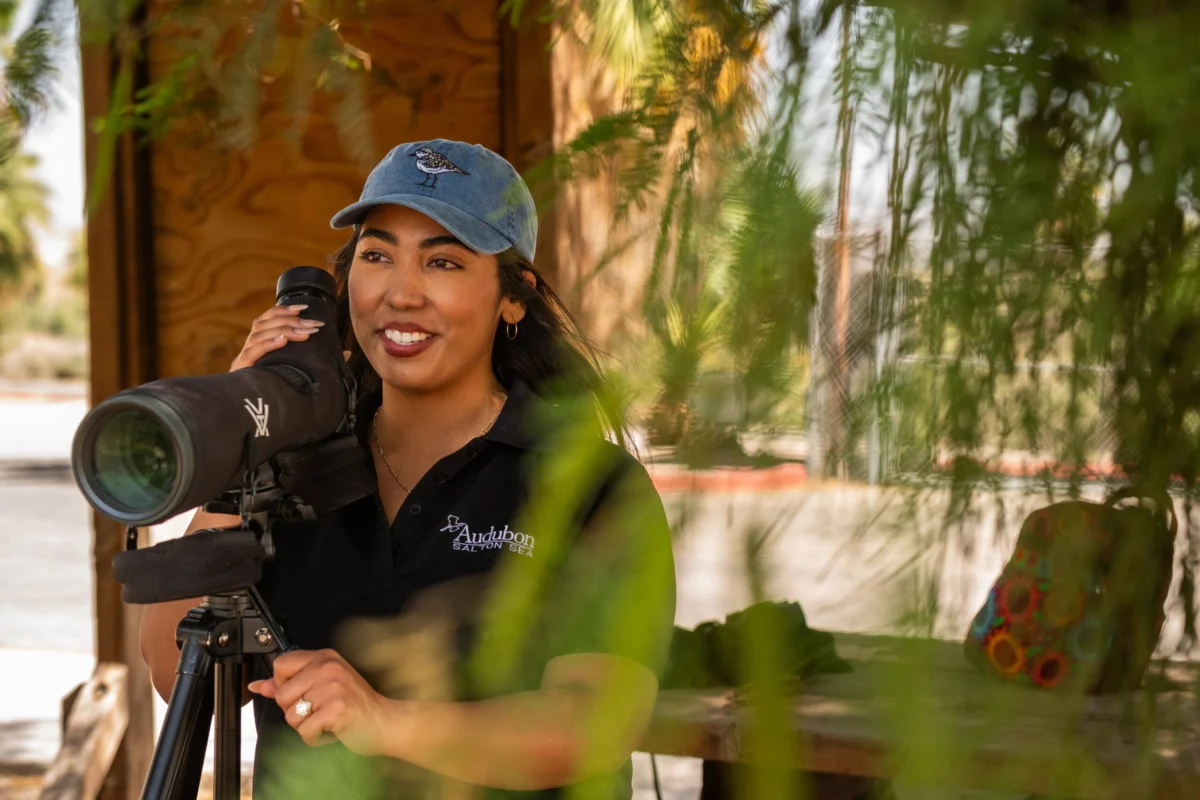
(April 13, 2026) Governor Gavin Newsom and California Natural Resources Agency (CNRA) Secretary Wade Crowfoot have officially announced the appointment of Camila Bautista, Audubon California’s esteemed Salton Sea & Deserts Program Manager, to the newly established Salton Sea Conservancy Board. This significant appointment marks a pivotal moment for the long-beleaguered Salton Sea, ushering in a renewed era of concentrated effort towards comprehensive habitat restoration, enhanced public access, and robust community engagement. As the only environmental conservation nonprofit organization represented on the board, Audubon California, through Bautista, will serve as a crucial advocate for the millions of migratory and resident birds that depend on this vital ecosystem, while also providing invaluable scientific and practical expertise gained from decades of dedicated work in the region.
The formation of the Salton Sea Conservancy Board itself represents a critical milestone in California’s ongoing commitment to addressing the complex ecological and public health crises facing the state’s largest lake. Tasked with the formidable responsibility of overseeing the progress of all conservation and restoration projects in the region, the Conservancy is designed to streamline efforts, coordinate stakeholders, and ensure accountability in the ambitious undertaking of revitalizing the Salton Sea. This dedicated body is poised to become a central pillar in the broader Salton Sea Management Program (SSMP), which has grappled with the immense scale and urgency of the environmental challenges for years.
A Decades-Long Struggle: The Salton Sea’s Ecological Odyssey
To fully appreciate the significance of this new board and Bautista’s appointment, one must understand the unique and often tragic history of the Salton Sea. Accidentally formed between 1905 and 1907 when the Colorado River breached an irrigation canal, inundating a vast desert basin, the Salton Sea initially thrived as a vibrant freshwater lake, rapidly becoming a popular tourist destination and a critical ecological haven. Over the subsequent decades, however, its fate began to shift dramatically. Without a natural outlet, the Sea’s water levels became entirely dependent on agricultural runoff from the Imperial and Coachella Valleys, carrying with it a cocktail of pesticides and fertilizers. Evaporation under the intense desert sun led to a relentless increase in salinity, far surpassing that of the Pacific Ocean.
By the late 20th and early 21st centuries, the Salton Sea had transformed into an ecological disaster zone. Its shrinking size, exacerbated by reduced inflows from water conservation measures and prolonged drought, exposed vast expanses of playa – the dried lakebed. These exposed areas, laden with dust and harmful particulates, became a significant public health hazard, particularly for the low-income, predominantly Latinx communities living in the surrounding areas of the Imperial and Coachella Valleys. Respiratory illnesses, including asthma, saw alarming spikes, highlighting a profound environmental justice crisis. Furthermore, the increasing salinity and diminishing water levels decimated fish populations, leading to mass bird die-offs as their primary food sources vanished. The once-thriving ecosystem, a crucial stopover on the Pacific Flyway for an estimated four million migratory birds annually – including endangered species like the Yuma clapper rail, as well as vast populations of pelicans, avocets, stilts, and various duck species – was on the brink of collapse. Estimates indicated that without significant intervention, over 90% of the bird species relying on the Sea could face severe population declines or local extinction.
Camila Bautista: A Voice for Wildlife and Community
Camila Bautista, a native of the Coachella Valley, brings a unique blend of scientific expertise, deep community roots, and passionate advocacy to her new role. Her appointment is not merely a political decision but a recognition of her tireless work and profound understanding of the Salton Sea’s intricate challenges and opportunities.
"The Salton Sea is full of possibilities for the future and I’m honored to represent the vision of our communities and the needs of our incredible wildlife," Bautista stated, encapsulating her dual commitment to both human and ecological well-being. Her perspective is shaped by countless interactions with local residents. "I’ve had the chance to meet with hundreds of our residents and I know that while we face undeniable challenges, we are a resilient region that holds so many opportunities," she added. This emphasis on resilience and opportunity underscores a hopeful, action-oriented approach to a problem often viewed through a lens of despair.
Bautista’s academic background further bolsters her credentials. She holds a bachelor’s degree in Biology from UCLA and a master’s degree in Environmental Science from California State University, Los Angeles. Her master’s thesis, which garnered the prestigious Farvolden Scholarship at the National Groundwater Association (NGWA) Groundwater Week 2023 conference, focused on analyzing the water sources sustaining the Bombay Beach Wetland Project through isotopic techniques – a clear indication of her hands-on, scientific approach to restoration. More recently, her contributions to a study on the increase of shorebirds at the Sea were published in Waterbirds, demonstrating her commitment to rigorous scientific inquiry and data-driven conservation.
Audubon California’s Enduring Legacy and Impact
Audubon California has been a stalwart advocate for the Salton Sea for over two decades, consistently championing its importance as a vital refuge for birds and other wildlife. Their long-term engagement has established them as a critical partner with the state in restoration efforts, providing invaluable scientific guidance and practical project implementation.
Andrea Jones, Vice President of California for the National Audubon Society, lauded Bautista’s appointment, stating, "Audubon California is deeply committed to the health and future of the Salton Sea, a vital refuge for birds and other wildlife, and has championed its importance for over 20 years. Camila’s appointment to the board is an important continuation of that work and a testament to her tireless advocacy, invaluable scientific expertise, and commitment to environmental justice." This statement highlights the continuity of Audubon’s mission and the personal qualities that make Bautista an ideal choice for this demanding role.
Audubon’s work in the region extends beyond advocacy. They have been instrumental in numerous on-the-ground projects, including the Species Conservation Habitat Project, which aims to create and maintain crucial wetland habitats. One of their flagship initiatives, the Bombay Beach Wetland Enhancement Project, has been particularly successful. This project not only stabilizes and expands vital habitat for various bird species but also directly addresses public health and access issues for local communities. Through strategic partnerships and persistent effort, Audubon California has brought in millions of dollars of funding for these projects, including recent federal community project appropriations, showcasing their ability to translate scientific understanding into tangible, funded solutions. The Bombay Beach project alone has demonstrated how targeted interventions can create vibrant ecosystems even within a challenging environment, serving as a blueprint for future endeavors.
Community Engagement: A Cornerstone of Restoration
A hallmark of Bautista’s approach and Audubon California’s philosophy is the profound commitment to community engagement. Recognizing that successful conservation cannot happen in isolation from the people most affected, Bautista played a critical role in the Salton Sea Public Access Community Study. This extensive study engaged more than 600 residents from communities around the Sea, including Spanish and Purépecha-speaking populations, ensuring a diverse and inclusive representation of local voices.
The study’s results were clear and compelling, articulating a unified community vision that prioritizes clean air, clean water, and safe, accessible opportunities to connect with the Salton Sea. These findings underscore the interconnectedness of environmental health and human well-being, reinforcing the notion that restoration efforts must deliver tangible benefits to local residents. Bautista’s pledge to expand work through "deeper community engagement and broader public access" directly reflects these community aspirations. Her experience bridging scientific data with community needs will be invaluable in ensuring that the Conservancy’s projects are not only ecologically sound but also socially equitable and publicly supported.
Implications and the Path Forward for the Conservancy
The establishment of the Salton Sea Conservancy Board and Camila Bautista’s appointment herald a new, more focused chapter for the Salton Sea. This dedicated body is expected to have several profound implications:
- Streamlined Governance and Project Execution: By centralizing oversight, the Conservancy can reduce bureaucratic hurdles that have historically slowed restoration projects. It can ensure more efficient allocation of resources and foster greater accountability in achieving the SSMP’s ambitious goals. This could mean faster implementation of projects aimed at creating new wetlands, dust suppression, and improving water quality.
- Enhanced Funding and Investment: A unified, official body like the Conservancy can better attract and manage diverse funding streams, including state appropriations, federal grants, and private philanthropic investments. Its clear mandate and leadership could instill greater confidence in potential donors and partners, accelerating the flow of much-needed capital to the region. The scale of the Salton Sea crisis requires billions of dollars in investment, and a dedicated board can make a compelling case for this funding.
- Holistic Approach to Restoration: With Audubon California’s representation, the Conservancy is well-positioned to adopt a holistic, science-driven approach that balances ecological restoration with community needs. This means not only focusing on bird habitat but also addressing air quality, water quality, and creating recreational opportunities for local residents. The expertise brought by Bautista will ensure that the voice of the natural world is strongly represented in all decision-making.
- Strengthened Interagency Collaboration: The Conservancy can serve as a powerful convener, improving coordination between various state agencies (e.g., California Department of Fish and Wildlife, Department of Water Resources), federal partners (e.g., U.S. Fish and Wildlife Service, Bureau of Reclamation), local governments, and tribal nations. This collaborative framework is essential for tackling a challenge as multifaceted as the Salton Sea.
- Long-Term Vision and Sustainability: The board’s mandate for "long-term habitat restoration goals" emphasizes sustainability. This goes beyond temporary fixes, aiming for solutions that will endure for generations, adapting to the ongoing impacts of climate change and water scarcity in the arid West. This includes exploring innovative water management strategies and resilient habitat designs.
While the challenges facing the Salton Sea remain immense – including the accelerating impacts of climate change on water availability, the sheer scale of the exposed playa, and the intricate socio-economic dynamics of the region – the creation of the Salton Sea Conservancy Board and the appointment of dedicated, experienced leaders like Camila Bautista offer a potent symbol of hope and renewed determination. Governor Newsom and Secretary Crowfoot’s commitment to this "special place" and their championship of "nature for all" resonate strongly with the urgent need for action. This new chapter promises a more coordinated, community-focused, and scientifically informed approach to securing a healthier, more accessible future for the Salton Sea and all who depend on it.
Media contact: Shineh Rhee, Communications Director, Audubon California
[email protected]
415.644.4605
Audubon California is a regional office of the National Audubon Society. Learn more at audubon.org/california and follow us on Instagram, Facebook, and Twitter @AudubonCA.
The National Audubon Society is a leading nonprofit conservation organization with 120 years of science-based, community-driven impact, dedicated to protecting birds and the places they need, today and tomorrow. Birds are powerful indicators of our planet’s health, acting as sentinels that warn us of environmental change and inspire action. Audubon works across the Western Hemisphere, driven by the understanding that what is good for birds is good for the planet. Through a collaborative, bipartisan approach across habitats, borders, and the political spectrum, Audubon drives meaningful and lasting conservation outcomes. With 800 staff and over 1.9 million supporters, Audubon is a dynamic and ever-growing force committed to ensuring a better planet for both birds and people for generations to come.
