
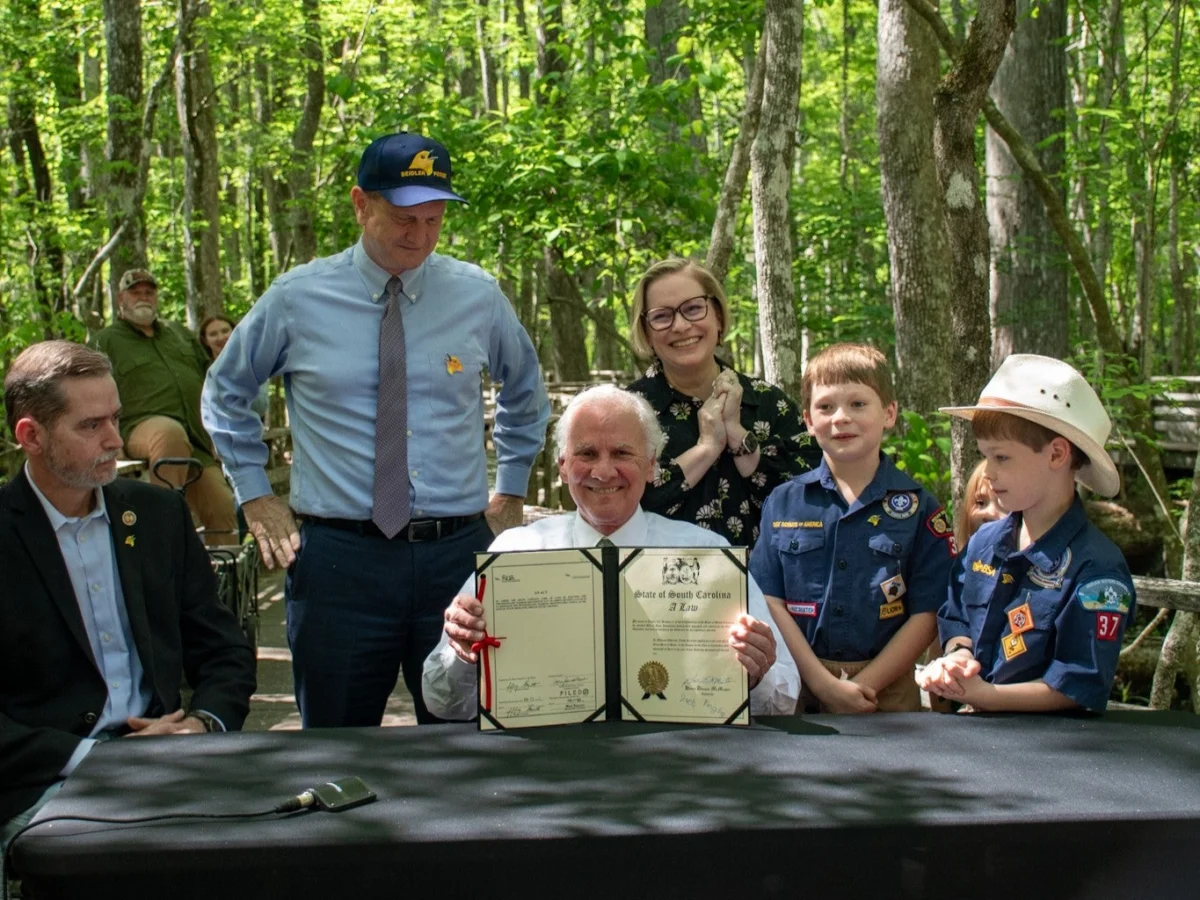
HARLEYVILLE, S.C. – In a landmark move underscoring a profound commitment to environmental stewardship, South Carolina Governor Henry McMaster officially designated the Prothonotary Warbler as the state’s migratory bird today at the iconic Francis Beidler Forest. The ceremonial bill signing of the "Prothonotary Warbler Recognition Act," which passed unanimously through both chambers of the General Assembly, marks a significant bipartisan achievement aimed at raising awareness for the conservation of vital wetland habitats. This legislative action highlights the intrinsic connection between the state’s rich natural heritage and the protection of its diverse avian populations.
A Bipartisan Triumph for Conservation
The "Prothonotary Warbler Recognition Act" represents a rare and commendable display of bipartisan unity on an environmental issue. Its unanimous passage through the South Carolina House of Representatives and Senate reflects a widespread consensus among lawmakers regarding the importance of preserving the state’s natural resources. This legislative journey began with proposals championed by various conservation groups, notably Audubon South Carolina, who advocated for a state migratory bird designation that would draw attention to critical, yet often threatened, ecosystems. The swift and decisive legislative approval demonstrates that environmental protection can transcend political divides when a shared vision for the state’s future is at stake. Lawmakers from across the political spectrum voiced their support, recognizing the dual benefits of wildlife conservation: safeguarding biodiversity and enhancing the state’s natural beauty for future generations.
The "Swamp Canary": A Profile of the Prothonotary Warbler
The Prothonotary Warbler (scientific name: Protonotaria citrea), affectionately known as the "swamp canary," is a truly striking avian species. Males boast a brilliant, iridescent golden-yellow plumage across their heads and underparts, contrasting sharply with blue-gray wings and tail feathers. Their vibrant appearance makes them easily identifiable amidst the verdant greens of their preferred habitats. Females share a similar, though slightly duller, coloration. These small songbirds are unique among North American warblers for their preference for nesting exclusively in tree cavities, often utilizing abandoned woodpecker holes or natural crevices in dead or decaying trees found within forested wetlands.
Each year, approximately 50,000 Prothonotary Warblers undertake an extraordinary migratory journey of nearly 5,000 miles. They travel from their wintering grounds in Central and South America – particularly regions spanning from southern Mexico down to northern South America, including countries like Colombia, Venezuela, and Panama – to their breeding grounds across the southeastern United States. South Carolina is a critical destination along the Atlantic Flyway, serving not merely as a stopover but as an essential nursery for these birds. They typically arrive in the state in early spring, often returning to the very same nesting sites in swamps and river corridors year after year, a testament to their remarkable navigational abilities and site fidelity. Their distinctive, loud, and ringing "sweet-sweet-sweet-sweet" song is a characteristic sound of spring in the lowcountry’s flooded forests.
Francis Beidler Forest: A Jewel of the Lowcountry and Critical Habitat
The ceremonial signing could not have taken place at a more fitting location than the Francis Beidler Forest Audubon Center and Sanctuary in Harleyville. This expansive sanctuary, spanning over 18,000 acres, is a globally recognized ecological treasure. It is home to the largest remaining tract of old-growth Cypress-Tupelo swamp forest in the world, a truly primeval landscape where ancient bald cypress and water tupelo trees, some over 1,000 years old, rise majestically from the blackwater. These towering giants create a unique microclimate and habitat structure that is indispensable for the survival of the Prothonotary Warbler and countless other species.
Beidler Forest serves as a critical stopover and breeding ground for numerous migratory birds traveling along the Atlantic Flyway, one of North America’s major migratory routes. Beyond the Prothonotary Warbler, the forest supports a rich tapestry of biodiversity, including various wading birds, raptors, reptiles, amphibians, and mammals. Its extensive boardwalk system allows visitors to immerse themselves safely within this ancient ecosystem, offering unparalleled opportunities for birdwatching, nature photography, and environmental education. The forest’s pristine condition and ongoing protection efforts by Audubon South Carolina exemplify the type of habitat conservation that the "Prothonotary Warbler Recognition Act" seeks to promote statewide.
Official Statements and a Shared Vision
Governor McMaster, speaking from the heart of Beidler Forest, emphasized the state’s natural bounty and the collective duty to preserve it. "South Carolina is uniquely blessed with beautiful natural resources, and we have a responsibility to protect them," Governor McMaster stated. "Naming the Prothonotary Warbler as our state migratory bird represents the importance of preserving our wetlands and ensuring future generations can experience places like Beidler Forest." His remarks underscore a gubernatorial commitment to environmental stewardship, recognizing that the state’s economic vitality and quality of life are inextricably linked to the health of its ecosystems.
Rebecca Haynes, Executive Director at Audubon South Carolina, articulated the broader strategic intent behind the designation. "This designation is about awareness and education, because the more people understand these birds and the habitats they depend on, the more likely we are to protect them for the long-term," Haynes explained. She highlighted the critical role South Carolina plays in the warbler’s life cycle. "For species like the Prothonotary Warbler, South Carolina isn’t just a stop along the way—it’s where they nest and raise their young, and is essential to their survival. What we do to conserve habitat here has an out-sized impact on the future of this species." Her statement emphasizes the scientific rationale and the urgent need for local action to support globally migratory species. This sentiment was echoed by legislative sponsors and community advocates, who praised the collaborative effort that brought the bill to fruition, viewing it as a testament to the power of collective action in conservation.
The Imperative of Wetland Conservation in South Carolina
The designation of the Prothonotary Warbler serves as a powerful symbol for the broader imperative of wetland conservation. Wetlands are among the most productive ecosystems on Earth, providing an array of invaluable ecological services. They act as natural filters, improving water quality by trapping pollutants and sediments. They serve as critical buffers against flooding, absorbing excess rainwater and storm surges, thereby protecting communities and infrastructure. Furthermore, wetlands are vital carbon sinks, playing a role in mitigating climate change by sequestering atmospheric carbon.
Historically, South Carolina, like many other states, has experienced significant wetland loss due to agricultural conversion, urban development, and other anthropogenic pressures. Estimates suggest that over half of the original wetlands in the contiguous United States have been lost since the 1700s, with ongoing threats from climate change, altered hydrology, and invasive species. The protection of remaining wetlands, particularly those critical for migratory birds, is therefore paramount. This legislative act is expected to galvanize further efforts in wetland restoration and protection across the state, encouraging both governmental agencies and private landowners to prioritize the health of these vital ecosystems. The health of these wetlands directly impacts the state’s economy through fisheries, tourism, and freshwater resources.
Broader Implications and Future Endeavors
The "Prothonotary Warbler Recognition Act" carries significant implications beyond its immediate symbolic value. Firstly, it provides a unique educational hook for engaging the public, especially younger generations, in environmental issues. Schools, nature centers, and conservation organizations can leverage the "swamp canary" to teach about migration, habitat interdependence, and the importance of biodiversity. This increased awareness is crucial for fostering a culture of conservation.
Secondly, the designation could bolster ecotourism, particularly birdwatching, which is a growing industry globally. South Carolina’s diverse habitats, from coastal plains to mountain foothills, already attract bird enthusiasts. By elevating a specific migratory species, the state enhances its appeal as a premier birdwatching destination, potentially generating economic benefits for local communities through increased visitor spending.
Thirdly, this bipartisan success sets a positive precedent for future environmental policy. It demonstrates that collaboration can yield tangible results, potentially inspiring more legislative initiatives aimed at protecting other vulnerable species or ecosystems. The act reinforces South Carolina’s identity as a state deeply connected to its natural environment, one that is willing to take proactive steps to safeguard it.
Finally, the focus on wetlands also implicitly addresses climate change resilience. Healthy, intact wetland systems are more capable of absorbing the impacts of extreme weather events, which are becoming more frequent and intense due to a changing climate. By championing the Prothonotary Warbler and its habitat, South Carolina is investing in its own long-term ecological and societal resilience.
Audubon South Carolina and the National Audubon Society: Guardians of Avian Life
The passage of this act owes much to the tireless advocacy and scientific expertise of Audubon South Carolina, the state office of the National Audubon Society. Audubon South Carolina protects birds and the places they need, representing nearly 30,000 members and supporters across the state. They work in conjunction with 10 Audubon chapters and bird club partners, managing two Audubon sanctuaries and one nature center, and overseeing more than 30,000 acres of land using bird- and climate-friendly forestry practices. Their work embodies a century-long legacy of science-based, community-driven impact.
The National Audubon Society, with over 1.9 million supporters and 800 staff, is a leading nonprofit conservation organization dedicated to protecting birds and the places they need, today and tomorrow. Recognizing birds as powerful indicators of planetary health, Audubon operates across the Western Hemisphere, advocating for conservation outcomes through a collaborative and bipartisan approach. This designation of the Prothonotary Warbler in South Carolina perfectly aligns with their mission to ensure a better planet for both birds and people for generations to come.
This legislative milestone not only celebrates a vibrant migratory bird but also reaffirms South Carolina’s profound responsibility to its natural heritage. As the "swamp canary" continues its annual journey, it will serve as a living symbol of the state’s commitment to protecting the irreplaceable wetlands that sustain it, and countless other species, along the Atlantic Flyway. The Prothonotary Warbler’s bright presence will undoubtedly inspire greater appreciation and dedicated action for conservation across the Palmetto State.
