
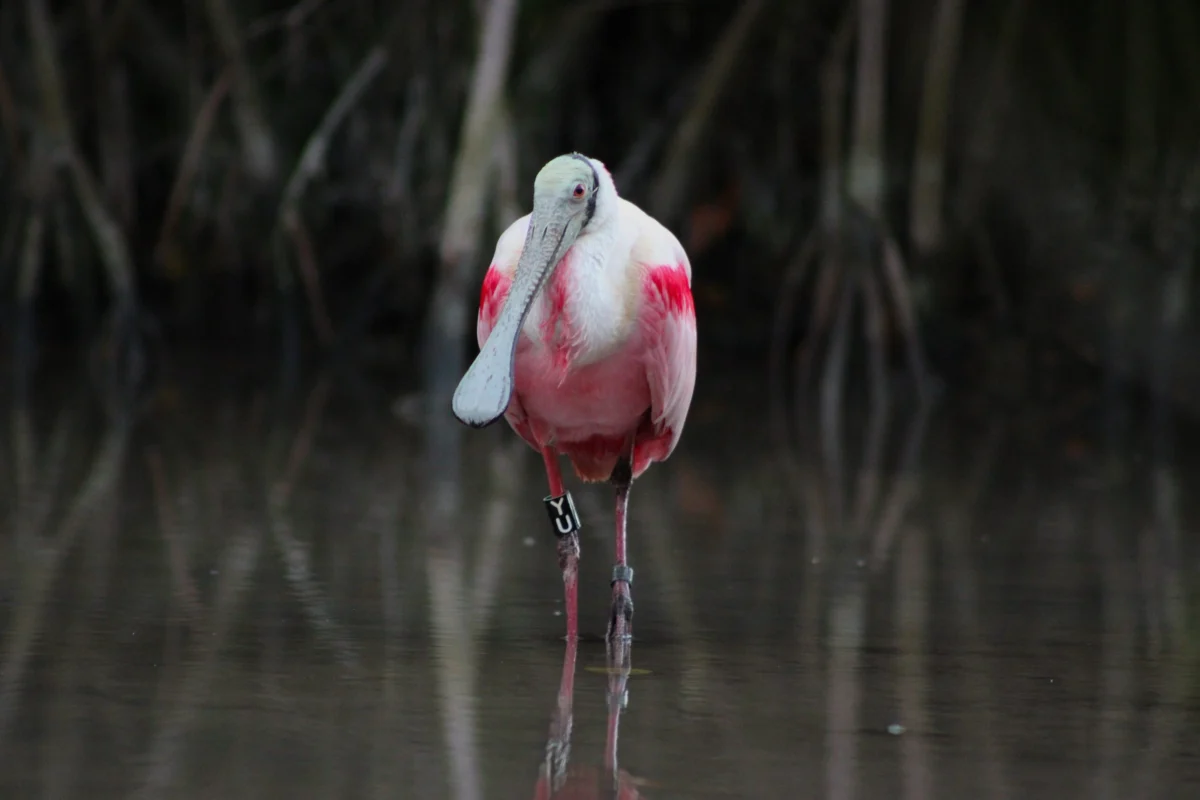
A recent sighting by Wading Bird Research Specialist Shauna Sayers of a banded Roseate Spoonbill has provided crucial data, reinforcing the profound value of long-term ecological research and the indispensable role of citizen science in understanding the health of Florida’s vital ecosystems. The discovery of the elusive band on the leg of the distinctive wading bird represents more than just a momentary observation; it is a critical piece in a complex puzzle that brings the movement patterns, behavioral characteristics, and population dynamics of these iconic birds into sharper focus. This particular resight, made during a routine field survey, underscores Audubon’s ongoing commitment to monitoring the Roseate Spoonbill, a species widely regarded as a key indicator of the environmental well-being of the vast Everglades region.
The Significance of a Single Spotting
On a particularly picturesque January evening, as the sun dipped below the horizon, casting vibrant hues across the landscape, Sayers was traversing a trail leading to a secluded pond within the Florida Keys Wild Bird Sanctuary. It was there, amidst the tranquil beauty of the twilight, that her trained eye discerned the tell-tale glint of a band on the leg of a Roseate Spoonbill. This was no ordinary bird; the band, upon closer inspection, revealed a unique alphanumeric code. Subsequent analysis of this code linked the male spoonbill to a banding event on Pigeon Key in 2021. This information immediately established the bird’s age at a minimum of six years and provided invaluable insight into its dispersal from its natal colony. Such a seemingly singular event contributes directly to a comprehensive database, enabling researchers to track individual birds over years and across significant distances, thereby building a robust picture of survival rates, migratory routes, and habitat utilization critical for conservation planning.
Roseate Spoonbills: A Barometer of Ecosystem Health
The Roseate Spoonbill (scientific name: Platalea ajaja) is an unmistakable sight in Florida’s wetlands, renowned for its striking pink plumage, which can vary in intensity, and its unique spatulate bill, perfectly adapted for sifting through shallow waters to catch small fish, crustaceans, and insects. These social birds thrive in brackish and saltwater habitats, including estuaries, mangroves, and tidal flats. Beyond their aesthetic appeal, Roseate Spoonbills hold significant ecological importance as an "indicator species" for the Everglades ecosystem. An indicator species is an organism whose presence, absence, or abundance reflects a specific environmental condition. For the spoonbills, their health and reproductive success are directly tied to the availability of clean, fresh water, abundant prey populations, and intact nesting habitats – all factors that are under constant threat from human development, agricultural runoff, and the impacts of climate change.
Historically, Roseate Spoonbill populations faced severe declines in the late 19th and early 20th centuries due to hunting for their vibrant feathers, which were highly prized in the millinery trade. Protective legislation, such as the Migratory Bird Treaty Act, helped their numbers rebound, but new challenges have emerged. Today, issues such as altered freshwater flow into Florida Bay, increased salinity, habitat degradation from coastal development, and the long-term effects of sea-level rise directly impact their foraging grounds and nesting success. Monitoring spoonbill populations thus offers a critical gauge of the broader health and effectiveness of Everglades restoration efforts. Declines in spoonbill numbers or reproductive output can signal underlying problems in the ecosystem that require urgent attention, making every piece of data, including individual bird resights, profoundly important.
A Legacy of Research: Audubon’s Long-Term Commitment
Audubon’s dedication to understanding and protecting Roseate Spoonbills spans decades, forming a cornerstone of wading bird research in Florida. The Audubon Everglades Research Station, a hub of scientific inquiry, spearheads weekly surveys of Roseate Spoonbill colonies in Florida Bay, particularly during the critical nesting season. This meticulous data collection effort, focused on nesting success and general population dynamics, has been ongoing for an impressive 30 years for two specific colonies, providing an invaluable longitudinal dataset. Such extended monitoring periods are rare and highly prized in ecological research, allowing scientists to track long-term trends, observe responses to environmental changes, and differentiate natural population fluctuations from human-induced impacts.
The formal banding program, a key component of this research, commenced in 2003. Audubon scientists began applying leg bands to spoonbill chicks in nests located within Florida Bay, a vast and ecologically sensitive estuary at the southern tip of the Florida peninsula. Simultaneously, banding efforts were initiated at the Richard T. Paul Alafia Bank Bird Sanctuary in Tampa Bay. This sanctuary, a vital nesting and roosting site, is managed in a collaborative partnership with Mosaic, a leading phosphate and potash producer, and Port Tampa Bay, highlighting the potential for successful conservation initiatives on industrial lands. A decade later, in 2013, the program expanded to include birds hatching from nests at the St. Augustine Alligator Farm, further broadening the geographical scope of the study and encompassing different coastal habitats. In total, Audubon has successfully banded approximately 3,000 Roseate Spoonbills, creating one of the most comprehensive datasets for this species in North America.
The Science and Art of Bird Banding
Bird banding is a cornerstone technique in ornithological research, offering a direct, verifiable method for tracking individual birds. The process involves carefully capturing a bird, typically a chick still in its nest for minimal stress, and attaching a lightweight, uniquely coded metal band to one of its legs. In the case of Roseate Spoonbills, these bands often carry a combination of letters and numbers that are unique to that individual. The bands are designed to be durable, non-invasive, and do not impede the bird’s natural movements or survival. Each band is assigned a specific identifier, which is then entered into a central database along with details such as the banding location, date, species, and the bird’s estimated age and sex at the time of banding.
The primary purpose of banding is to gather data on avian life histories. When a banded bird is subsequently "resighted" – either alive by an observer or recovered deceased – the unique code allows researchers to trace its origin and history. This enables scientists to:
- Track Dispersal and Migration: Understand the routes birds take after fledging from their natal colonies, their foraging ranges, and their migratory pathways between breeding and wintering grounds. The Pigeon Key male, for instance, has demonstrated movement from its hatching site to the Florida Keys Wild Bird Sanctuary, providing direct evidence of post-fledging dispersal.
- Estimate Survival Rates and Longevity: By tracking individual birds over time, researchers can calculate survival rates at different life stages and determine the maximum lifespan of the species in the wild.
- Study Reproductive Success and Site Fidelity: Repeated resights at breeding colonies can reveal how many times a bird nests, its success in raising chicks, and whether it returns to the same nesting sites year after year.
- Assess Population Dynamics: The cumulative data from thousands of banded birds helps estimate population size, recruitment rates (new individuals entering the breeding population), and overall population trends.
- Inform Conservation Strategies: All this data directly informs conservation efforts by identifying critical habitats, understanding threats at different life stages, and evaluating the effectiveness of management interventions.
While modern technology offers tools like satellite telemetry and geolocators for tracking birds, traditional banding remains crucial for its cost-effectiveness, the ability to track a large number of individuals over very long periods, and the detailed demographic data it provides that other methods cannot always capture.
Inferred Statements and Reactions
"Every single band resight is a moment of pure excitement and scientific triumph," remarked Shauna Sayers, reflecting on her recent discovery. "It’s like finding a missing piece of a very large and intricate puzzle. Seeing that male spoonbill, knowing exactly where and when he was banded, immediately connects him to years of research and tells us a piece of his life story. It reinforces why we do what we do."
An Audubon spokesperson, addressing the broader impact of the program, stated, "Our 30-year commitment to monitoring these Florida Bay colonies and our extensive banding program, now encompassing 3,000 Roseate Spoonbills, represents an unparalleled investment in understanding the health of the Everglades. The data we collect, augmented by crucial sightings from dedicated individuals like Shauna and our citizen scientists, directly informs our advocacy for sound water management policies and habitat protection. These birds are telling us a story about the health of our environment, and we must listen."
Representatives from Mosaic and Port Tampa Bay, key partners in the Tampa Bay banding efforts, have often reiterated their commitment to environmental stewardship. "Our collaboration with Audubon at the Richard T. Paul Alafia Bank Bird Sanctuary demonstrates how industry and conservation can work hand-in-hand to protect vital wildlife habitats," a joint statement would likely read. "We are proud to contribute to the understanding and protection of Roseate Spoonbills and other wading birds that depend on these critical coastal ecosystems."
Broader Impact and Implications for Conservation
The insights gleaned from spoonbill banding and resights extend far beyond academic curiosity. They hold profound implications for the broader conservation landscape of Florida and the entire southeastern United States. The data directly informs:
- Everglades Restoration Projects: Understanding spoonbill foraging ranges and nesting success helps evaluate the effectiveness of multi-billion dollar efforts to restore natural water flow and quality in the Everglades. If spoonbills are thriving in certain areas and struggling in others, it can pinpoint successes or failures in restoration strategies.
- Water Management Policies: As an indicator species, spoonbill health provides feedback on the impact of decisions regarding freshwater allocation, nutrient runoff, and pollution control. Their decline could signal an urgent need for policy adjustments to protect water quality.
- Climate Change Adaptation: Long-term data helps predict how spoonbill populations might respond to rising sea levels, changes in salinity, and altered storm patterns. This allows conservationists to identify critical refugia and implement adaptive management strategies.
- Habitat Protection: The identification of key foraging and nesting sites through banding data strengthens the case for permanent protection of these areas from development and degradation.
The ability to track dispersal rates and behavioral structures after the nesting season concludes in Florida Bay has been particularly enlightening. It has revealed how juvenile spoonbills, once fledged, explore vast new territories, sometimes traveling hundreds of miles from their birthplaces. This knowledge is crucial for defining the full geographic scope of conservation needs, recognizing that protecting a species requires safeguarding habitats across its entire life cycle, not just its breeding grounds.
Citizen Science: A Call to Action for Naturalists
The success of long-term bird banding programs relies heavily on the active participation of the public. Every band resight, whether made by a professional researcher or an amateur birder, contributes valuable data. Audubon actively encourages naturalists, birdwatchers, and interested members of the public to report any sightings of banded Roseate Spoonbills. The organization has established an accessible online form at audubon.org/florida/spoonbills for this purpose.
When reporting a sighting, it is crucial to provide as much detail as possible, including:
- The exact date and time of the sighting.
- The precise location (GPS coordinates if possible, or a detailed description).
- The letters and numbers visible on the band (taking a clear photograph with a zoom lens is highly recommended).
- Any distinguishing features of the bird, such as its age (juvenile or adult), sex (if discernible), and observed behavior.
- The environmental conditions at the time of the sighting.
To encourage participation, Audubon offers a special sticker to every spotter whose report contributes to critical population data. In an exciting initiative, anyone who submits a report in the year 2026 will receive a limited-edition sticker, adding a unique incentive for continued public engagement.
A crucial ethical guideline accompanies this call to action: observers must always prioritize the well-being of the birds. When attempting to read a bird band or capture a photograph, it is imperative to maintain a respectful distance. Use binoculars, spotting scopes, or long zoom lenses to avoid disturbing or "spooking" the birds, which could cause them to flush from their foraging or nesting sites, expending valuable energy or even abandoning nests. Observing wildlife responsibly ensures that the data collected is both valuable and ethically sound.
The continued dedication of researchers like Shauna Sayers, combined with the power of citizen science and the long-term commitment of organizations like Audubon and its partners, forms a robust framework for the conservation of Roseate Spoonbills. Each banded bird represents a living data point, a silent sentinel whose journey helps illuminate the intricate health of Florida’s irreplaceable wetlands, guiding the path toward a sustainable future for both wildlife and humanity.
