
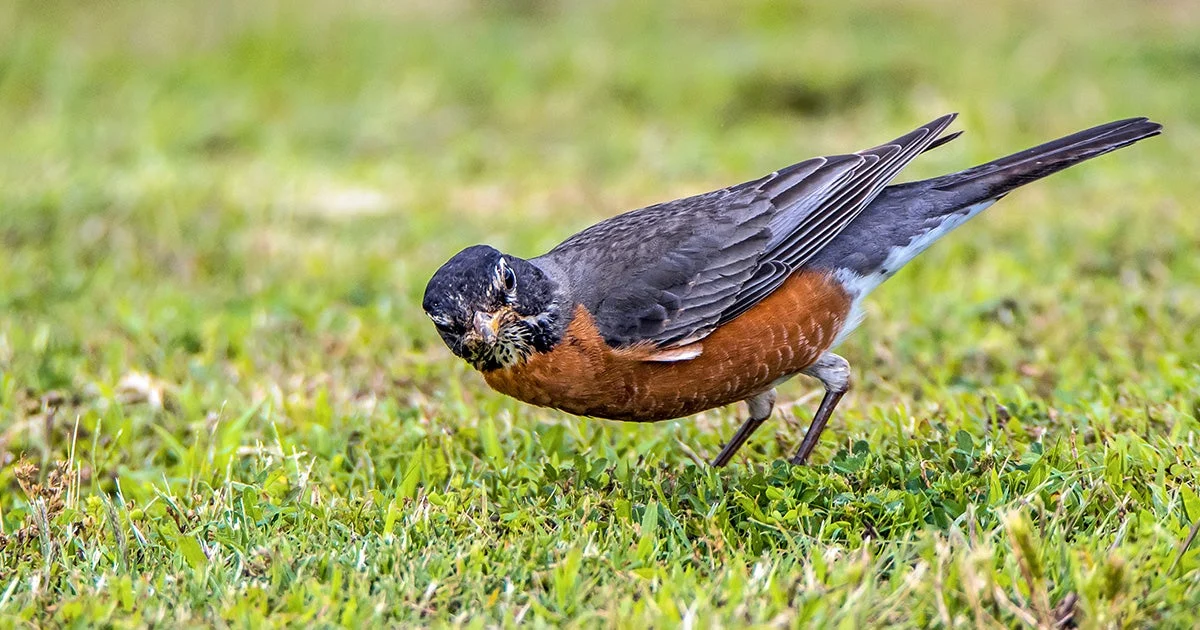
From the common robin diligently plucking a worm from a dewy lawn to the nocturnal owl pinpointing a scurrying vole beneath a blanket of snow, birds possess an astonishing array of sensory adaptations that allow them to locate food hidden beneath the earth’s surface. This remarkable ability to perceive and interpret an unseen world highlights a profound divergence from human sensory experience, revealing a complex tapestry of sight, sound, touch, and even smell that underscores their millions of years of evolutionary refinement and their remarkable ecological success.
The Enigma of the Robin’s Feast: A Century of Scientific Inquiry
The sight of an American Robin (Turdus migratorius) hopping across a lawn, suddenly pausing, tilting its head, and then swiftly plunging its bill into the ground to extract a wriggling earthworm is a familiar spectacle across North America. Yet, the precise mechanism by which this ubiquitous bird detects its subterranean prey has been a subject of scientific debate and evolving understanding for decades. Earthworms, particularly species like the common nightcrawler (Lumbricus terrestris), constitute a significant portion of the robin’s diet, typically residing several inches, and sometimes up to a foot, below the surface, making their detection a significant sensory challenge.
Early scientific consensus, influenced by a 1965 study published in the esteemed journal The Condor, largely posited that robins relied almost exclusively on visual cues. This foundational research, conducted by ornithologists observing robins in natural settings, suggested that the birds meticulously observed subtle disturbances in the soil, such as fresh worm burrows, visible castings, or minute movements of vegetation, which provided "peepholes" or indicators into the underground realm. The hypothesis was that robins would peer intently into these openings, visually identifying occupied tunnels before precisely targeting their strike with their bills. This view, while seemingly logical given birds’ renowned eyesight and the visible signs of worm activity, would later be challenged by more nuanced and controlled investigations that sought to isolate individual sensory inputs.
Three decades later, a pivotal study in the mid-1990s, published in a leading biological journal, presented a compelling counter-argument, suggesting that auditory perception played a far more crucial role in the robin’s foraging strategy. Researchers meticulously designed experiments where worms were presented in conditions specifically engineered to eliminate visual, olfactory (smell), and tactile (feel) cues for the birds. Despite these limitations, robins consistently demonstrated remarkable success in locating their hidden prey. However, a critical aspect of this study involved introducing ambient white noise to mask other sounds. Under these conditions, the birds’ foraging efficiency significantly declined, indicating a strong reliance on sound. This finding provided robust evidence that American Robins might be listening for the faint vibrations or rustling sounds produced by worms as they navigate through the soil, burrow, or pull vegetation into their underground tunnels. While worms themselves are not vocal in the traditional sense, their movement through soil, especially damp earth, can create subtle acoustic signals and vibrations that are imperceptible to human ears but potentially detectable by a robin’s finely tuned auditory system and sensitive leg receptors.
Current scientific thought tends towards a more integrated and multifaceted approach, suggesting that robins likely employ a combination of both sight and sound, adapting their strategy based on environmental conditions. An initial visual scan might help identify promising foraging areas or visible signs of worm activity, followed by a period of auditory assessment to pinpoint the exact location for a strike. This integrated sensory strategy would maximize foraging success in varied environments, such as dense grass, compacted soil, or different lighting conditions throughout the day. The difficulty in definitively isolating one sensory input over another in complex field studies, coupled with the inherent challenges of translating animal sensory experiences into human terms, contributes to the ongoing "fuzziness" of a singular, definitive answer. As Graham Martin, a retired biologist from the University of Birmingham in England and author of the illuminating book "Bird Senses," aptly notes, "We see the world in a very particular way, which is not shared by the majority of birds. They live in a different world to what we do." This fundamental difference in sensory perception makes a complete human understanding of avian foraging strategies an ongoing and fascinating scientific endeavor. When we observe a robin cocking its head, it could indeed be precisely aligning its ears to listen for subterranean movements, or it could be adjusting its gaze to scan the sky for aerial predators—a testament to its dual sensory challenges.
Beyond Human Perception: The Avian Sensory Spectrum
The robin’s sensory complexity is but one illustration of the broader, often alien, sensory worlds inhabited by birds. Humans, with our forward-facing eyes, trichromatic vision, and limited auditory range (typically 20 Hz to 20 kHz), often project our own sensory biases onto other species, failing to grasp the full spectrum of environmental information birds process. Understanding these differences is crucial for appreciating the intricate ecological roles birds play.
Auditory Acuity and Specialized Structures: The ability to detect subtle sounds extends far beyond the robin. Owls, particularly species like the American Barn Owl (Tyto furcata), exemplify extreme auditory specialization. Their distinctive heart-shaped facial discs, composed of stiff, acoustically transparent feathers, act as highly efficient parabolic reflectors, funneling even the faintest sound waves directly to their asymmetrically placed ear openings. This remarkable anatomical asymmetry—one ear opening being higher and slightly forward of the other—allows them to precisely triangulate the source of sounds in both the horizontal and vertical planes. This adaptation enables them to pinpoint the exact location of a vole or shrew tunneling up to a foot beneath a layer of snow or dense vegetation, even in complete darkness. Studies have shown barn owls can successfully strike prey in light conditions as low as 0.0000003 lux (far below what the human eye can discern), relying almost entirely on their hearing for successful nocturnal hunting. Their auditory sensitivity typically ranges from 100 Hz to 12 kHz, with peak sensitivity around 5 kHz, which is ideally suited for detecting the high-pitched rustling, squeaking, and chewing sounds of small mammals.
Expanded Visual Horizons: Ultraviolet and Panoramic Views: Avian vision far surpasses human capabilities in several critical aspects. While human vision relies on three types of cone cells (photoreceptors) to perceive red, green, and blue light (trichromatic vision), most birds possess a fourth type of cone cell, specifically tuned to detect light in the ultraviolet (UV) spectrum. This "tetrachromatic" vision means their world is dramatically more colorful, vibrant, and information-rich than ours. UV light plays a crucial role in various avian behaviors, including mate selection (plumage often has UV-reflective patterns that signal fitness), foraging (UV-reflective fruit, nectar guides in flowers, or insect exoskeletons), and even identifying urine trails left by prey. For instance, European Kestrels (Falco tinnunculus) are believed to use UV vision to spot UV-reflective rodent urine trails, guiding them to prime hunting grounds. The ability to see UV also helps birds navigate, using polarized UV light patterns in the sky as a compass.
Furthermore, the spatial arrangement of bird eyes provides a vastly different perspective on the world. While human eyes are positioned frontally, offering excellent binocular vision for depth perception crucial for tasks like tool use, many birds, especially prey species, have eyes located on the sides of their heads. This grants them an almost panoramic field of view, sometimes exceeding 300 degrees, allowing them to detect predators approaching from nearly any direction without moving their heads. While this wide field of view might reduce the area of binocular overlap (the region seen by both eyes), many birds compensate with rapid head movements to gain depth information. Graham Martin explains this profound difference: "We see the world as in front of us, and we move constantly into the world and it disappears behind us. Whereas the vast majority of birds, they flow through the world." This "flowing" perception, constantly aware of their surroundings, is a testament to their evolved strategies for survival and foraging in complex, often dangerous, environments.
Specialized Foragers: Bills as Sensory Probes and Olfactory Organs
Beyond the general sensory adaptations, many bird species have evolved highly specialized bill structures to extract food from underground. These bills are not merely mechanical tools for digging but sophisticated sensory organs, finely tuned to detect hidden prey.
Shorebirds and Remote Touch: Coastal and wetland environments are incredibly rich feeding grounds for shorebirds, which routinely probe mudflats, shallow water, and wet sands for a diverse array of invertebrates. These birds, including sandpipers, snipes, curlews, godwits, and avocets, employ a unique form of "remote touch." The tips of their long, slender bills are densely packed with specialized sensory nerve endings known as Herbst corpuscles. These mechanoreceptors are highly sensitive to minute changes in pressure and vibration within the substrate. When a worm, mollusk, or crustacean moves through the mud or wet sand, it creates subtle pressure waves or vibrations that are detected by these corpuscles, even when the prey is not directly touching the bill. The bird can then precisely locate and extract the prey without needing to see or directly touch it.
The density of Herbst corpuscles in shorebird bill tips can be astounding, with some species having thousands per square millimeter. This incredible sensitivity allows them to construct a detailed "vibrational map" of their immediate subsurface environment, effectively "feeling" their way to a meal. For instance, the Avocet’s upturned bill allows it to sweep through water, detecting small crustaceans, while the long, curved bill of a curlew is perfect for probing deep into soft mud for lugworms and crabs. Intriguingly, recent research from institutions like Queen Mary University of London suggests that human hands, too, may possess a rudimentary form of "remote touch," capable of detecting subtle vibrations through objects without direct contact, hinting at a shared, albeit highly refined in birds, sensory principle.
Kiwis: The Olfactory Pioneers: Among birds, New Zealand’s enigmatic kiwis (Apteryx spp.) stand out for an unparalleled sensory adaptation: they are the only birds known to possess nostrils at the very tip of their long bills. This unique anatomical feature allows them to smell food underground, a capability virtually unheard of in the avian world. Kiwis are nocturnal, flightless birds inhabiting dense native forests, where visual foraging is severely challenged by low light and dense undergrowth. Their powerful sense of smell, combined with the sensitive Herbst corpuscles in their bill tips (providing remote touch), makes them exceptionally efficient hunters of worms, insects, larvae, and grubs buried deep in the forest floor. Studies have shown kiwis can detect prey from several centimeters away, demonstrating the potency of their olfactory abilities. This adaptation is a testament to their evolutionary journey into a specialized ecological niche, filling a role often occupied by mammals in other ecosystems. Their keen sense of smell, coupled with their nocturnal activity, makes them analogous to small mammals in terms of their foraging strategy.
American Woodcocks: Woodland Shorebirds with a Twist: The American Woodcock (Scolopax minor) is an intriguing paradox – technically a shorebird by taxonomy, yet it thrives in deciduous woodlands and brushy fields across eastern North America. Like its coastal cousins, the woodcock possesses a remarkably adapted bill: long, slender, and tipped with a high concentration of Herbst corpuscles, making it an excellent probing tool for soft forest soils. What further distinguishes the woodcock’s bill is its unique flexibility. The upper mandible (maxilla) can be independently moved and opened at the tip, allowing the bird to grasp and extract earthworms – its staple food – from the soil while its bill is still fully inserted. This pincer-like action, combined with a muscular tongue, enables them to slurp up worms with impressive efficiency, a critical adaptation for a bird that can consume its body weight in worms daily during peak foraging periods.
The Science of Subterranean Signals: Worm Charming and Vibrations
Perhaps one of the most curious and debated foraging behaviors among birds is the American Woodcock’s "earthworm dance." This distinctive maneuver involves the bird placing its weight on one foot, then rocking back and forth rhythmically, seemingly treading the ground. For decades, it has been widely speculated that this "dance" is not merely a quirky habit but a deliberate strategy to create vibrations in the soil, mimicking rainfall or perhaps a burrowing predator, thereby coaxing earthworms to the surface for an easy meal.
This hypothesis finds intriguing parallels in human culture. In various parts of the world, notably the annual "World Worm Charming Championships" in Blackawton, Devon, U.K., humans engage in competitive "worm charming" or "worm fiddling." Participants use various methods, often involving sticking a pitchfork into the ground and striking it with another implement, vibrating a wooden stake, or even playing specific musical instruments, to generate ground vibrations. The remarkable outcome is that these vibrations consistently draw hundreds, sometimes thousands, of earthworms to the surface from within a designated area. Scientific studies on this phenomenon suggest that worms interpret these vibrations as either the drumming of heavy rain, prompting them to surface to avoid drowning in waterlogged soil, or as the footsteps of a mole, a significant subterranean predator, causing them to flee to safety above ground. Research indicates that specific frequencies and amplitudes of vibration are more effective, with worms responding most vigorously to frequencies between 50 and 200 Hz, consistent with natural ground disturbances. The exact mechanism of perception within the worm and its subsequent behavioral response remains a subject of ongoing research, but the effectiveness of the technique is undeniable.
For the woodcock, this "dance" would represent an energetically efficient foraging strategy, potentially yielding a higher caloric return for less effort than continuous probing, especially in areas with high worm density. While direct scientific proof definitively linking the woodcock’s dance to increased worm availability at the surface remains somewhat elusive due to the challenges of controlled field studies in natural environments, the compelling analogy with human worm charming lends significant credence to the hypothesis. Graham Martin acknowledges the plausibility, noting the widespread success of human worm charming techniques. This behavior serves as a powerful reminder of the intricate and sometimes surprising ways in which organisms interact with their environment and exploit its physical properties for survival.
Broader Impact and Implications: A Lesson in Sensory Diversity
The diverse and highly specialized sensory adaptations of birds for locating subterranean food offer profound insights into evolutionary biology, sensory ecology, and even biomimetics. Understanding these mechanisms helps scientists appreciate the incredible plasticity of life and the myriad ways organisms can perceive and interact with their surroundings, challenging anthropocentric views of reality.
Conservation and Habitat Management: A deeper understanding of avian sensory ecology has direct and critical implications for conservation efforts. For instance, knowing that certain species rely heavily on auditory cues for foraging can inform decisions about mitigating noise pollution in critical habitats, particularly for nocturnal predators like owls. Recognizing the importance of specific soil conditions for the presence of prey, detectable by remote touch, can guide habitat restoration projects and land management practices to ensure the availability of foraging resources. Protecting areas rich in biodiversity means not just preserving visible flora and fauna, but also understanding and maintaining the invisible sensory landscapes that sustain them. Climate change and altered rainfall patterns could also impact soil moisture and, consequently, worm behavior and detectability, posing new challenges for these specialized foragers.
Bio-inspired Innovation: The sophisticated sensory systems of birds, from the acoustic precision of an owl’s ears to the "remote touch" capabilities of a shorebird’s bill, serve as powerful inspiration for bio-inspired engineering. Researchers are actively exploring how these natural mechanisms could inform the development of advanced sensors for detecting objects buried underground, improving medical imaging techniques (e.g., for detecting subtle tissue changes), or even designing more efficient robotic probes for environmental exploration, agriculture, or search and rescue operations. The Herbst corpuscles, for example, provide a blueprint for tactile sensors that could operate effectively in diverse media, including soil, sand, or even underwater, offering enhanced sensitivity and discrimination capabilities beyond current technologies.
Challenging Anthropocentric Views: Ultimately, the study of avian senses, particularly their ability to navigate and exploit the hidden subterranean world, serves as a vital reminder to challenge our anthropocentric view of reality. Humans perceive the world through a relatively narrow sensory lens, often limited by our evolutionary history and ecological niche. Birds, with their tetrachromatic vision, extraordinary auditory range, acute olfactory senses, and specialized mechanoreceptors, demonstrate that reality is far richer, more complex, and perceived in countless ways that our own senses cannot fully grasp. As Graham Martin succinctly concludes, "Most people think the world
