
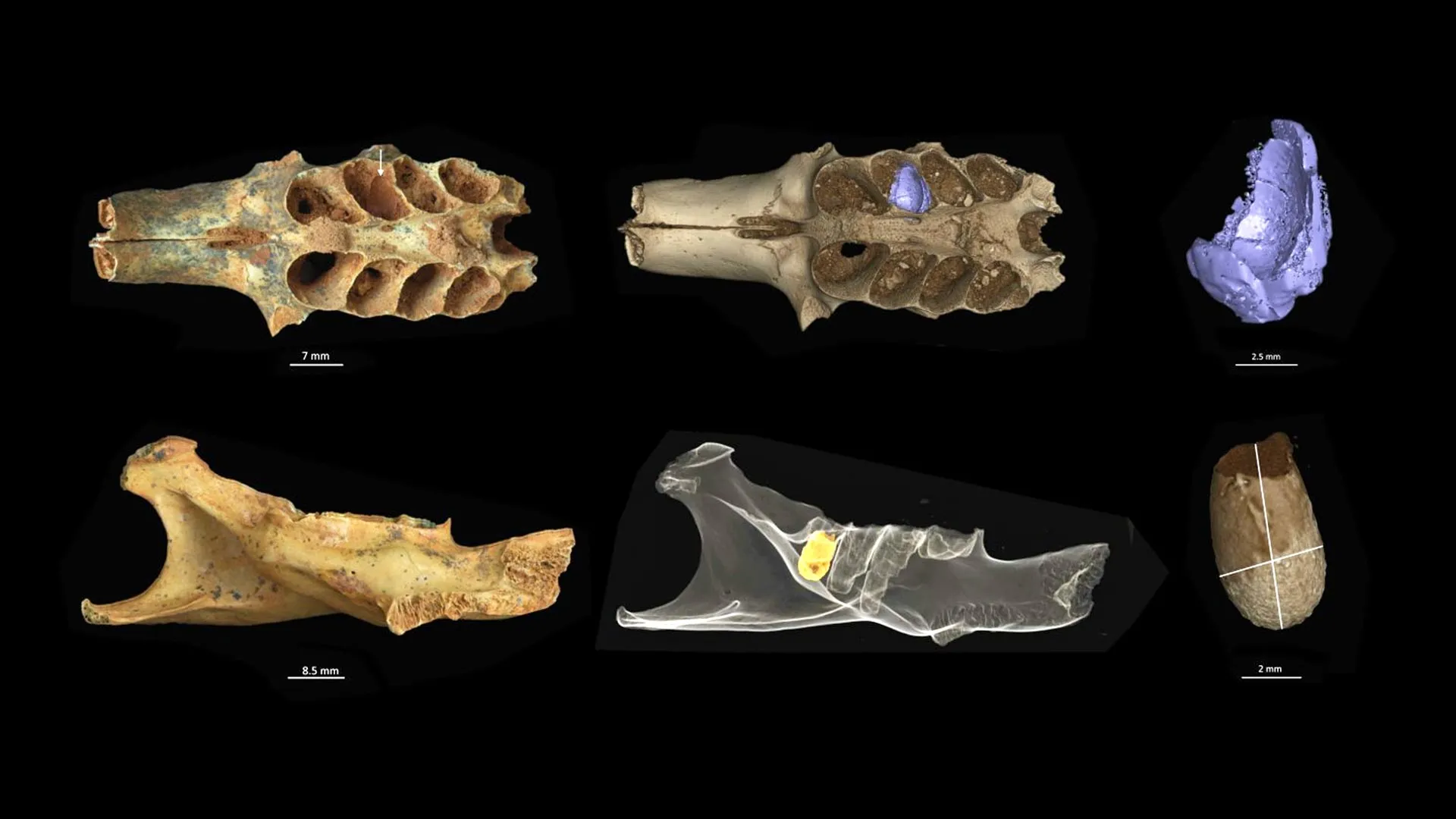
This intriguing riddle, rooted in an extraordinary paleontological discovery, unveils a remarkable narrative spanning millennia on the Caribbean island of Hispaniola. The tale begins with an apex predator, a giant barn owl, carrying its prey—a hutia, an endemic Caribbean rodent—back to its subterranean lair to feed its hungry young. The swift consumption left behind scattered remains of the unfortunate rodent across the cave floor. Eons later, an entirely different inhabitant arrived: a burrowing bee, seeking a secure location to construct its nest amidst the ancient debris. What transpired next reveals an unprecedented example of ecological adaptation and resourcefulness, now meticulously documented by paleontologists.
The Ancient Ecosystem of Hispaniola: A Stage for Interconnected Lives
Hispaniola, shared today by Haiti and the Dominican Republic, boasts a rich and complex paleontological history, marked by unique endemic species and significant extinction events, particularly following human arrival. Thousands of years ago, its ecosystems were vibrant, supporting diverse flora and fauna, many of which are now extinct. Among the island’s impressive megafauna were giant barn owls, formidable predators whose size dwarfed their modern counterparts. These nocturnal hunters, likely species like Tyto noeli or similar large Tyto owls, played a crucial role in regulating rodent populations. Their habit of returning to specific roosts or nesting sites over generations created invaluable "bone beds"—accumulations of prey remains that serve as paleontological time capsules.
The primary prey in this particular story was the hutia, a diverse group of large, caviomorph rodents native to the Caribbean. While some hutia species persist today, many, particularly the larger forms, vanished in the wake of human colonization and associated environmental changes. The specific hutia species found in Cueva de Mono, the site of this discovery in the southern Dominican Republic, appears to have been a common food source for the resident giant barn owls, indicating its prevalence in the ancient Hispaniolan landscape. Another key player, though less frequent in the cave’s fossil record, was the tree sloth, a group of mammals that once thrived in the Caribbean but became extinct on the islands after human settlement. Their presence further paints a picture of a diverse, pre-Columbian island ecosystem.
A Millennia-Spanning Chronology of Adaptation
The sequence of events leading to this unique fossil record unfolded over vast stretches of time:
- Late Pleistocene/Early Holocene Epoch (Thousands of Years Ago): Giant barn owls repeatedly utilize Cueva de Mono as a feeding and nesting site. They capture hutias (and occasionally sloths), bringing them back to the cave.
- Owl Activity and Prey Deposition: Over many generations, the owls accumulate vast quantities of prey remains. After the soft tissues decompose, bones, teeth, and other skeletal elements are left behind, scattering across the cave floor.
- Sedimentation and Fossilization: Over centuries, fine clay-rich silt, washed in by rain or blown by wind, gradually accumulates in the darker, undisturbed parts of the cave. This sediment buries the skeletal remains, protecting them from further degradation and initiating the fossilization process.
- Formation of Natural Cavities: As the organic components of the bones and teeth mineralize, certain hollow spaces within them—such as the alveoli (tooth sockets) in jaws, the pulp cavities of teeth, and the neural canal of vertebrae—remain intact and empty, perfectly preserved within the fossilized structures.
- Holocene Epoch (Later Period): Burrowing bees, facing environmental pressures on the surface, discover the cave. They seek suitable nesting sites in the accumulated silt.
- Discovery and Utilization of Fossil Cavities: Bees encounter the fossilized remains. Remarkably, they find that the pre-existing, naturally occurring cavities within these ancient bones and teeth are perfectly sized and shaped for their nests, negating the need for extensive digging.
- Repeated Nesting and Preservation: Over generations, more bees adopt this ingenious strategy, utilizing and sometimes reusing these fossilized "apartments." Their nests, often lined with a waxy, waterproof secretion, also become part of the cave’s unique paleontological record.
- Modern Era (21st Century): Paleontologists excavate the cave, uncovering this extraordinary interspecies interaction preserved in stone. The meticulous observation of these researchers brings this ancient tale to light.
The Discovery Unfolds: Meticulous Observation in Cueva de Mono
The initial discovery of these unique bee nests was a testament to the meticulous attention to detail during paleontological excavation, a process that often prioritizes the removal of surrounding sediment from fossils. Lazaro Viñola Lopez, then a doctoral student at the Florida Museum of Natural History, was excavating fossils in Cueva de Mono. His particular interest lay in the hutia species found there, as it was rarely encountered elsewhere on the island. The cave proved to be an exceptionally rich site, yielding thousands of fossils, primarily from what appeared to be the same hutia species, reinforcing the hypothesis that it was a long-term feeding ground for giant barn owls.
During the painstaking process of cleaning the recovered fossils, Viñola Lopez noticed something unusual. While standard practice dictates removing all sediment from internal cavities like alveoli, one particular cavity stood out. Its inner surface was remarkably smooth, a stark contrast to the rough, porous texture of bone. This anomaly piqued his curiosity, preventing him from simply cleaning it away as he normally would. His earlier experiences, including a 2014 dinosaur fossil excavation in Montana where wasp cocoons were found mixed with fossil material, immediately led him to a preliminary hypothesis: perhaps these were ancient wasp nests. He envisioned a concise scientific paper reporting this intriguing occurrence.
From Misidentification to Revelation: The Scientific Process in Action
Viñola Lopez shared his initial thoughts with his colleague, Mitchell Riegler, another doctoral student at the museum. Riegler, initially focused on other projects, was not immediately swayed by what he perceived as a "niche project." However, a subsequent challenge from a former advisor—to write a scientific paper within a week—reignited their collaboration. This informal "game" provided the impetus to revisit the intriguing cavities.
As they delved deeper into the research, initially assuming they were documenting wasp nests, they consulted literature on ichnofossils – trace fossils that provide evidence of ancient life activity, such as footprints, burrows, or nests. This review proved pivotal. They discovered that wasp nests typically exhibit rough walls, constructed from chewed plant material mixed with saliva. The smooth, polished interior of the structures in their Hispaniolan fossils did not align with this characteristic.
It was this crucial detail that led to a significant re-evaluation. Bees, particularly certain burrowing species, often line their nests with a waxy, waterproof secretion. This secretion creates a distinctive smooth, sometimes glossy, interior surface. This revelation marked a turning point: they weren’t studying wasps at all; they were documenting the nesting activities of ancient bees. This correction immediately elevated the significance of their findings.
Unprecedented Behavior: A Deeper Dive into Bee Nests
The identification of bee nests, rather than wasp nests, transformed the discovery into something far more extraordinary. While there is one other documented case of burrowing bees nesting inside a cave, there are no known instances where bees utilized pre-existing fossil structures without any modification. A previously reported case involved bees actively drilling into human bones to create nests, demonstrating a degree of alteration. In contrast, the Hispaniolan bees had simply occupied natural cavities, perfectly pre-formed and ready for use. This passive utilization of ancient, fossilized bone structures represents an unprecedented behavior in the paleontological record.
Realizing the profound importance of their findings, the researchers expanded their study, consulting with experts in modern bee biology and conducting an exhaustive review of scientific literature. Viñola Lopez even returned to Cueva de Mono to conduct further geological surveys, examining the layers of sediment to better understand the cave’s chronology and environmental history.
The study’s comprehensive nature was almost derailed by a concerning incident. At one point, the cave faced a direct threat when local development plans proposed converting it into a septic tank. This alarming prospect prompted an urgent "rescue mission" by the team. "We had to go on a rescue mission and get as many fossils out as possible, and we got a lot of them," Viñola Lopez recounted, highlighting the dedication required to preserve such invaluable scientific sites. Their swift action undoubtedly saved countless fossils and ensured the continued study of this remarkable locality.
The detailed analysis, which included advanced imaging techniques like CT scans, provided further insights. The nests were not confined solely to hutia jaws. In one instance, a bee nest was discovered within the pulp cavity of an extinct tree sloth tooth. Another was found within the spinal cord canal of a hutia vertebra. The CT scans proved particularly illuminating, revealing that some cavities contained multiple layers of nests, stacked like "Russian dolls." This indicated that rather than excavating new tunnels, certain bees reused existing ones, a testament to their efficiency and adaptability. One specific alveolus contained an astonishing six nests, arranged concentrically.
The Karst Conundrum: Why the Cave Became a Home
The study also provided a compelling environmental explanation for this highly unusual nesting behavior. The surrounding landscape of the southern Dominican Republic is characterized by karst topography. Karst is a distinctive type of landscape formed from the dissolution of soluble rocks such as limestone, dolomite, or gypsum. This geological process creates unique surface features like sinkholes, caves, and fissures, but critically, it also leads to poor soil development. The sharp, edgy limestone terrain typically lacks stable, deep soil layers suitable for burrowing insects.
"The area we were collecting in is karst, so it’s made of sharp, edgy limestone, and it’s lost all of its natural soils," Riegler explained, adding a personal anecdote, "I actually fell on it at one point, so I can tell you all about it." Any thin topsoil that does accumulate on the surface is frequently washed into the numerous caves and fissures by rainfall, where it settles and creates pockets of sediment. These protected, fine-grained deposits within the caves would have represented some of the only viable and stable nesting conditions for burrowing bees in the entire region. This environmental scarcity likely drove the bees to adopt such an opportunistic and unique nesting strategy, utilizing the abundant, ready-made cavities offered by the ancient fossilized bones.
Broader Implications and Future Research
This groundbreaking research, published in the prestigious journal Proceedings of the Royal Society B, offers profound insights into ancient ecosystems and the extraordinary adaptability of life. It serves as a powerful example of paleoecology, demonstrating how interspecies interactions, even across vast spans of time and involving disparate groups like owls, rodents, and insects, can leave an indelible mark on the fossil record.
The discovery underscores the importance of meticulous excavation and the interdisciplinary nature of modern paleontological research, requiring collaboration between paleontologists, entomologists, and geologists. It also highlights the critical role of caves as exceptional archives of past life, preserving not just skeletal remains but also intricate behavioral traces.
For modern bee conservation, this finding speaks to the remarkable resilience and resourcefulness of these vital pollinators. In the face of challenging environmental conditions, ancient bees found ingenious solutions, a trait that may offer clues for understanding and supporting bee populations in today’s rapidly changing world.
Furthermore, the "rescue mission" necessitated by the threat of development serves as a stark reminder of the vulnerability of paleontological sites globally. Such unique windows into Earth’s ancient past are irreplaceable and require robust protection from human encroachment and destruction.
The researchers are continuing their work on other fossils recovered from Cueva de Mono, with additional findings anticipated in future publications. This cave, rich with the remains of past meals and the innovative shelters of subsequent inhabitants, clearly holds many more stories waiting to be told, promising further revelations about Hispaniola’s deep past and the intricate web of life. The discovery not only enriches our understanding of ancient behaviors but also inspires a renewed appreciation for the wonders that careful observation can unveil in the depths of our planet’s history.
