
Washington, D.C. (April 7, 2026) – The National Audubon Society today announced it has been awarded a pivotal $4 million grant from the National Fish and Wildlife Foundation (NFWF) through the landmark Grassland Resilience and Conservation Initiative. This significant investment is poised to dramatically scale regenerative grazing practices across the Central Grasslands, a vast and critically important ecosystem spanning North America, providing a crucial lifeline for some of the continent’s most imperiled bird populations while simultaneously enhancing the sustainability and productivity of agricultural operations.
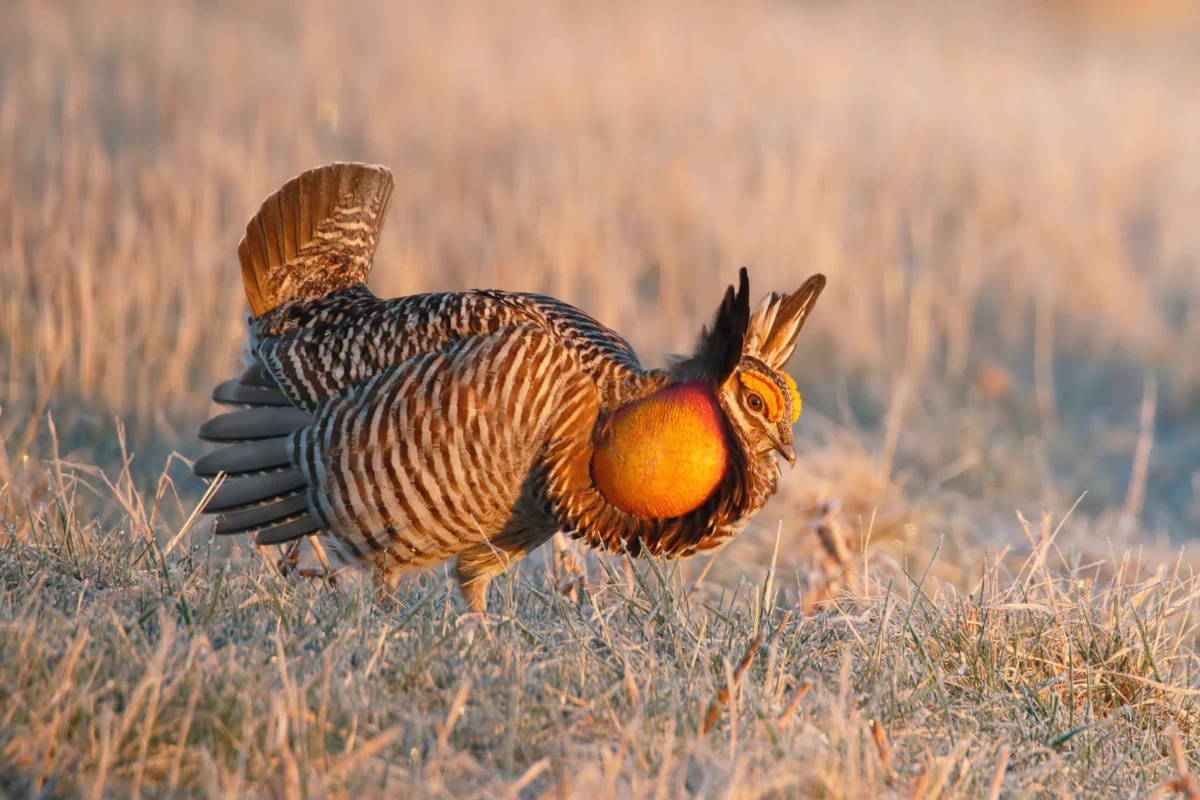
The Central Grasslands, stretching from Canada to Mexico, represent one of the world’s most productive and biologically diverse biomes. Historically shaped by grazing bison and natural fires, these expansive prairies and plains are now facing unprecedented threats, primarily from habitat loss, agricultural conversion, and climate change. As a direct consequence, grassland birds have suffered the steepest declines of any avian guild on the continent, with some estimates indicating a loss of over 50% of their populations since the 1970s. Iconic species like the Greater Prairie-Chicken, Western Meadowlark, Bobolink, and Upland Sandpiper are among those struggling for survival as their vital breeding and foraging grounds disappear or degrade.
This substantial NFWF funding will empower Audubon to significantly expand its highly successful Audubon Conservation Ranching program. Over the next three years, the initiative aims to enroll 32 new ranches into the program, bringing an additional 500,000 acres across 13 states under bird-friendly management. These newly certified lands will join a growing network of properties managed to meet the rigorous standards of Audubon Certified Bird-Friendly Land, a unique certification that assures consumers that the beef products they purchase support ecologically sound ranching practices.
The Urgent Need for Grassland Conservation
The ecological crisis facing North America’s grasslands is profound. Once covering over 400 million acres, only a fraction of these vital ecosystems remains intact. The conversion of native prairies to row crops, coupled with unsustainable grazing practices, has fragmented habitats, degraded soil health, and disrupted critical ecological processes. This degradation has direct consequences for a myriad of wildlife, from pollinators and insects to large mammals, but it is particularly acute for grassland birds, many of which rely on specific grass heights and structural diversity for nesting, brooding, and foraging.
Regenerative grazing offers a powerful solution to this multifaceted challenge. By mimicking the historical grazing patterns of large herds like bison, regenerative practices involve strategically moving livestock across pastures, allowing for periods of intense grazing followed by extended rest. This approach promotes deeper root growth, increases soil organic matter, enhances water infiltration, improves forage quality, and fosters a diverse array of plant species. Crucially for birds, it creates a mosaic of habitat structures—from short, grazed areas to taller, undisturbed patches—that cater to the varied needs of different species. Healthy grasslands also act as significant carbon sinks, playing a vital role in climate change mitigation by sequestering atmospheric carbon in the soil.
Audubon Conservation Ranching: A Proven Model for Success
The Audubon Conservation Ranching program, launched less than a decade ago, has rapidly emerged as a leading force in grassland conservation. Its success lies in its collaborative approach, working directly with ranchers to implement science-based habitat management plans tailored to local ecological conditions and ranching operations. The program provides technical assistance, market access for certified products, and a framework for continuous improvement.
Currently, the program boasts a network of 150 farms and ranches, collectively managing nearly 4.5 million acres for bird habitat. The expansion funded by NFWF will push this total past 5 million acres, marking a significant milestone in large-scale private lands conservation. The certification process involves third-party verification that ranches adhere to strict protocols for grassland management, including grazing intensity, rest periods, and efforts to control invasive species and enhance biodiversity. Consumers purchasing beef from Audubon Certified Bird-Friendly Land ranches can trace their product back to operations committed to these high environmental standards.
Marshall Johnson, Audubon’s Chief Conservation Officer, underscored the significance of the NFWF grant, stating, "This funding from NFWF and our dedicated program partners is not just an investment in acres; it’s an investment in a true producer-led conservation movement. It amplifies the power and profile of voluntary, rancher-led efforts to deliver tangible benefits for working lands, for the diverse wildlife that call these grasslands home, and for the economic vitality of rural communities across half a million acres in America’s Central Grasslands." His statement highlights the program’s foundational belief that ranchers are not just land users, but essential stewards of critical ecosystems.
Ranchers as Conservation Leaders
The success of the Audubon Conservation Ranching program is inextricably linked to the dedication and expertise of the ranchers themselves. Dave Haubein, owner of Round Rock Ranch in Missouri and the pioneering rancher to achieve Audubon Certified Bird-Friendly Land certification, emphasized this crucial role. "It’s heartening to see growing support for partnerships that center on ranchers as conservation stewards for our nation’s grasslands," Haubein said. His perspective reflects a growing understanding within the agricultural community that environmental health and economic viability are not mutually exclusive but deeply interconnected.
Haubein continued, "Ranchers know if soil, water, and grasslands aren’t healthy, neither are our operations. Being part of Audubon Conservation Ranching helped us put a name and a framework around practices we believe in, while showing that proper grazing can not only support birds and wildlife, but can increase productivity of the land and the animals." His testimony illustrates the tangible benefits of regenerative practices: improved soil health leads to better forage, which in turn supports healthier livestock and more resilient ranching businesses, all while creating thriving bird habitats. This holistic approach offers a sustainable path forward for agriculture in the face of environmental challenges.
The Grassland Resilience and Conservation Initiative: A Collaborative Vision
The NFWF grant to Audubon is part of a much larger, ambitious undertaking: the Grassland Resilience and Conservation Initiative. This landmark public-private partnership, spearheaded by NFWF, represents a commitment of over $200 million over seven years to support voluntary conservation efforts across working lands. The initiative aims to restore and enhance millions of acres of grasslands, recognizing that private landowners are critical to achieving conservation at scale.
Audubon is one of six initial grantees selected for this initiative, joining other prominent conservation organizations and academic institutions including the American Bird Conservancy, American Farmland Trust, Mule Deer Foundation, Sand County Foundation, and the University of Missouri. These initial grants are projected to engage more than 750 private cattle ranch operations across an astounding 26 states, underscoring the continental scope of the conservation challenge and the collaborative spirit of the solution.
The Grassland Resilience and Conservation Initiative receives crucial financial backing from a diverse coalition of partners. Significant support comes from McDonald’s USA, the USDA Natural Resources Conservation Service (NRCS), and several key McDonald’s USA beef and beverage suppliers. This multi-sectoral funding model demonstrates a shared commitment to sustainable supply chains, resilient ecosystems, and thriving rural economies. The involvement of a major corporation like McDonald’s USA signals a growing recognition within the food industry of the importance of regenerative agriculture and its role in meeting consumer demand for sustainably sourced products.
Jeff Trandahl, Executive Director and CEO of NFWF, articulated the profound implications of this partnership: "Today is a great day for America’s wildlife, its ranching communities, and its beef supply chain. This first round of grants from the Grassland Resilience and Conservation Initiative shows what can happen when corporations, federal agencies, conservation organizations, and private landowners join forces to support both wildlife conservation and economic prosperity. This initiative is just getting started. We are confident it will play a leading role in grasslands conservation across the nation for years to come." His statement emphasizes the synergistic potential of such collaborations, where environmental goals align with economic interests, creating a robust framework for long-term conservation success.
Strategic Impact and Future Outlook
The Audubon Conservation Ranching project, titled "Implementing regenerative grazing and habitat conservation practices to enhance the biodiversity and resilience of grassland ecosystems in the Central Grasslands through the Audubon Conservation Ranching program," is strategically designed to yield multiple benefits. Its primary scope is to advance improved grazing management and conservation practices across 500,000 acres in 13 states, with the key action being the enrollment of 32 new farms and ranches.
Expected outcomes are far-reaching:
- Enhanced Biodiversity: Direct benefits for grassland birds through improved nesting, foraging, and brooding habitats, contributing to the recovery of declining populations. This includes supporting species that require specific grass structures, such as the Henslow’s Sparrow (tall grass) and Piping Plover (short grass/bare ground along wetlands).
- Ecosystem Resilience: Restoration of soil health, increased water retention, and enhanced carbon sequestration capabilities, making grasslands more resilient to drought, extreme weather, and climate change.
- Economic Prosperity: Strengthening the productivity and resilience of grass-based agricultural operations, providing ranchers with sustainable income streams and market advantages through the Audubon Certified Bird-Friendly Land label.
- Community Engagement: Fostering a producer-led conservation movement that empowers rural communities and strengthens the connection between agriculture and environmental stewardship.
- Scalability and Replication: Demonstrating a successful model that can be replicated and scaled across other grassland regions, influencing broader agricultural practices.
The implications of this initiative extend beyond the immediate conservation targets. It underscores a paradigm shift in how large-scale conservation is approached, moving away from purely protective measures towards integrated solutions that recognize working lands as vital components of healthy ecosystems. By aligning the economic interests of ranchers with the ecological needs of birds, the program creates a powerful incentive for voluntary adoption of sustainable practices. Furthermore, the involvement of major corporations like McDonald’s USA signals a growing trend towards supply chain sustainability, where consumer demand for ethically and environmentally responsible products can drive significant positive change.
Ranchers interested in participating with Audubon through the Grassland Resilience and Conservation Initiative are encouraged to contact Thomas Schroeder, Senior Partnership Manager with the Audubon Conservation Ranching program, at [email protected]. This direct outreach mechanism ensures that the benefits of this program are accessible to those on the front lines of grassland stewardship.
About Audubon Conservation Ranching
Audubon Conservation Ranching partners with ranchers to sustain healthy grasslands, abundant birdlife, and resilient rural communities. Through its bird-friendly land certification and science-based approach, the program empowers land stewards to enhance habitat, improve soil health and water quality, and strengthen the connection between conservation and ranching. By purchasing products from Audubon Certified Bird-Friendly Land, consumers become conservationists, helping protect America’s grasslands and the birds, wildlife, and people that depend on them. For more information, visit www.audubon.org/ranching.
About the National Fish and Wildlife Foundation
The National Fish and Wildlife Foundation (NFWF) works with partners to foster sustainable and impactful conservation solutions so that people and nature thrive together. Chartered by Congress in 1984, NFWF has grown to become the nation’s largest conservation foundation. Since its founding, NFWF has funded more than 23,900 projects that have generated a total conservation impact of more than $12 billion. Learn more at nfwf.org.
