
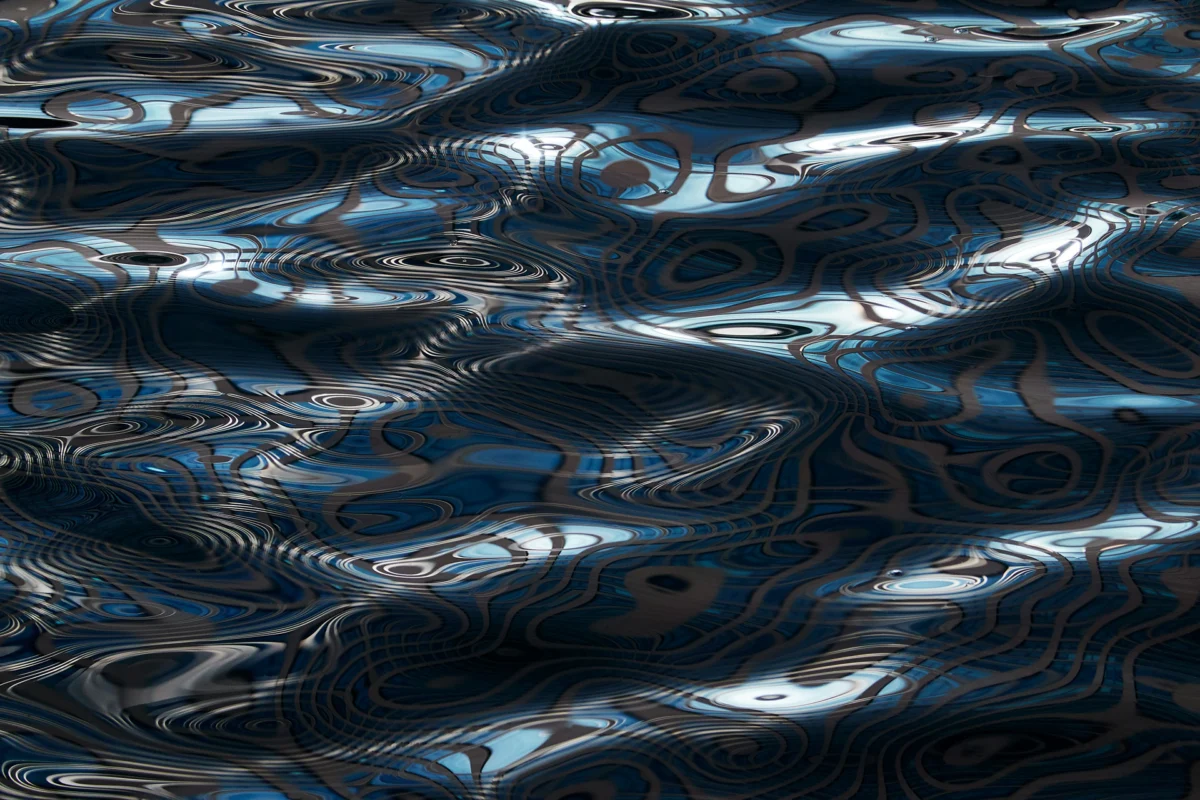
For those encountering the captivating images of the Fleeting Reflections series for the first time, the immediate assumption often leans towards digital manipulation. However, the creator behind these mesmerizing abstracts consistently reveals a more profound truth: each image is a meticulously captured interplay of light, glass, steel, and water, recorded directly in-camera. This innovative approach, sometimes involving single frames and at other times carefully layered in-camera multiple exposures, underscores a philosophy rooted in attention, repetition, and the crucial element of time. Far from digital trickery, these photographs are a testament to observational mastery and unwavering commitment.
At the core of this decade-long photographic endeavor lies a profound understanding of artistic process, particularly within the realms of nature and abstract photography. The photographer identifies three fundamental pillars supporting this work: accessibility, repeatability, and patience. These tenets, rather than technical specifications like camera models or lens choices, form the true engine driving the Fleeting Reflections series, highlighting the deep relationship between a chosen location, persistent engagement, and disciplined execution.

The Urban Canvas: Canary Wharf as an Unconventional Muse
The conventional wisdom in nature photography often posits that truly remarkable images necessitate arduous journeys to remote, dramatic landscapes. The Fleeting Reflections series challenges this notion entirely, demonstrating that profound creative work can emerge from the most accessible and seemingly mundane environments. The entirety of this extensive body of work has been forged within a mere square mile of water nestled amidst the towering financial architecture of Canary Wharf in London.
Canary Wharf, internationally recognized as a bustling hub of commerce characterized by its gleaming steel and glass skyscrapers, is re-envisioned by the artist not merely as an economic landmark but as a dynamic array of light sources. These architectural behemoths, rather than static structures, actively participate in the artistic process, casting an ever-changing palette of colors and lines onto the water’s surface. The natural elements then collaborate, with the wind sculpting these reflected lights into transient patterns – waves, ribbons, and intricate fractures. The photographer’s role becomes one of acute observation, "listening" to the visual dialogue unfolding on the water.

The critical factor enabling such intimate engagement is the unparalleled accessibility of the location. Unlike expeditions requiring extensive travel, permits, or significant time off, Canary Wharf allows for impromptu visits, sometimes for as little as 40 minutes. This ease of access liberates the artist from the constraints of ideal conditions, enabling photographic sessions during "bad" light by conventional standards, or even amidst rain, which transforms the water’s surface into a textured, hammered metal expanse. This seemingly prosaic aspect—accessibility—is, in fact, foundational. Without the practical ability to frequently return to a subject, the depth of familiarity required to transcend the superficial and truly explore its nuances remains elusive. Consistent presence fosters an honest and thorough study of the subject, allowing for insights that fleeting visits cannot yield.
The Dynamic Flux: Embracing Repeatability
The second pillar, repeatability, is equally crucial to the longevity and richness of the Fleeting Reflections series. This principle advocates for selecting a subject that possesses an inherent capacity for constant change, offering fresh surprises and new possibilities with each encounter. The docks of Canary Wharf exemplify this quality with remarkable abundance. The environment is never truly static; no two moments are identical.

A serene morning might present long, glassy expanses of color, reflecting the urban skyline with liquid precision. In stark contrast, a blustery afternoon can shatter these same architectural reflections into jagged, serrated lines, evoking the iconic waveform imagery of Joy Division’s Unknown Pleasures. The passage of a boat can smear and distort the reflections into painterly, hand-drawn appearances. Even ephemeral phenomena like diesel sheen on the water’s surface can create iridescent interference patterns that may last mere minutes and never recur in the same fashion. This continuous metamorphosis ensures that the "same" scene can be photographed hundreds or even thousands of times, yet each session yields genuinely new work. The photographer often dedicates hours to a single patch of water, observing its "personalities" cycle through various moods and formations. At such moments, the focus transcends mere architecture, shifting instead to the dynamic "behavior" of light and water.
This inherent repeatability is where specific in-camera techniques truly come into their own. Fast burst rates become essential for freezing micro-moments in the water before their delicate structures collapse. Multiple exposure modes are employed to layer gestures, extending the natural abstraction already present in the reflections. However, these technical skills are only potent because the subject consistently provides an endless supply of novel raw material. The visual palette shifts dramatically with the weather; the geometry of reflections bends and warps with the wind; the entire mood of the scene transforms with the ebb and flow of the tide. Without the capacity for repeatability, photographic endeavors might result in mere postcards; with it, a cohesive and evolving body of work emerges.
The Virtue of Waiting: Patience as an Active Force

The final and perhaps most underestimated pillar of this photographic practice is patience. Its influence begins long before the shutter is pressed. The photographer must first align the opportune weather conditions with personal availability – a delicate balance, as hard sun on still water produces vastly different effects from flat light in a drizzle, and not every combination yields useful results. This often means extended walks, meticulously checking angles in the water, only to find nothing suitable for the day’s conditions.
Even when conditions appear promising, patience transforms into a physical discipline. The artist may remain at a single location for up to four hours, capturing as many as 3,000 frames of what, to an casual observer, might appear to be an identical scene. The objective is to isolate that singular, fleeting instant where color, rhythm, structure, and tension coalesce perfectly. This process cannot be rushed; it demands sustained presence and keen observation to recognize the precise moment of alignment.
The exercise of patience extends into the post-capture phase. Upon returning home, thousands of nearly identical images are downloaded, initiating a slow, deliberate culling process on an iMac. Here, discipline is paramount. The photographer moves through the vast collection purposefully, seeking the exact frame where every element aligns, rigorously rejecting the overwhelming majority. The "keep rate" is, by design, brutally low, a testament to the uncompromising standards applied.

Furthermore, the processing workflow is characterized by restraint. Working predominantly in Capture One, the photographer applies only global adjustments: levels, clarity, sharpness, and contrast. Crucially, no shapes are manipulated in Photoshop. The intent is not to "create" forms but to "reveal" what was authentically present in the water. This choice carries a significant philosophical weight, reinforcing the aesthetic commitment to honesty. The ability to affirm, "this happened," is central to the integrity of the work.
Beyond the immediate acts of shooting and editing, there is a deeper, longer form of patience: the patience required for the work itself to mature. The Fleeting Reflections project was not publicly exhibited in any significant way for many years. It was a sustained, private journey of returning to the docks, shooting, refining, and continuously learning to discern the essential from the visual noise. It took approximately seven years before the photographer felt the body of work had achieved sufficient coherence to be presented to a publisher. This culminated in the release of the first book, Fleeting Reflections, by Triplekite in 2017. Subsequent milestones included exhibitions at the Greenwich Gallery in 2017 and Anise Gallery in London in 2019, followed by a second volume, Fleeting Reflections II, in 2023.
While these public achievements might suggest a swift or seamless progression, the reality was one of slow, deliberate, and obsessive dedication. The photographs themselves, as striking as they are, represent merely the visible tip of an immense iceberg. Beneath them lies an investment of thousands of hours spent walking, watching, waiting, shooting, editing, rejecting, and persistently returning to the subject. This hidden labor is the true foundation of the series’ depth and resonance.

Implications for the Broader Photographic Community
The profound lessons gleaned from the Fleeting Reflections project offer invaluable insights for aspiring and established photographers alike. The most compelling takeaway is the powerful rebuttal of the myth that compelling, personal, and distinctive creative work necessitates dramatic landscapes or exotic locales. Instead, the essential ingredients are demonstrably access, repeatability, and patience.
Photographers are encouraged to seek out environments that are easily and frequently reachable, whether it be a local canal, a harbor wall, a marsh on the outskirts of town, or even the seemingly unremarkable puddles of rainwater in a car park. The key is to commit to returning to these chosen locations across all seasons and weather conditions, developing an intimate understanding of how the place responds to varying light and atmospheric elements. This sustained engagement then enables the slow, deliberate work of walking, waiting, refining compositions, and maintaining rigorous honesty during the editing process.

Patience, in this context, is anything but passive. It is an intensely active decision—a conscious choice to invest oneself deeply in a subject for precisely as long as it takes to genuinely comprehend it. Over time, this profound patience becomes intrinsically visible within the photographs themselves. While viewers may initially be drawn to the captivating colors and shapes, what they are ultimately perceiving is the palpable result of unwavering attention. The Fleeting Reflections series stands as a powerful testament to the idea that true artistic vision is often cultivated not through grand gestures or digital wizardry, but through sustained, humble, and deeply observational engagement with the world immediately around us.
