
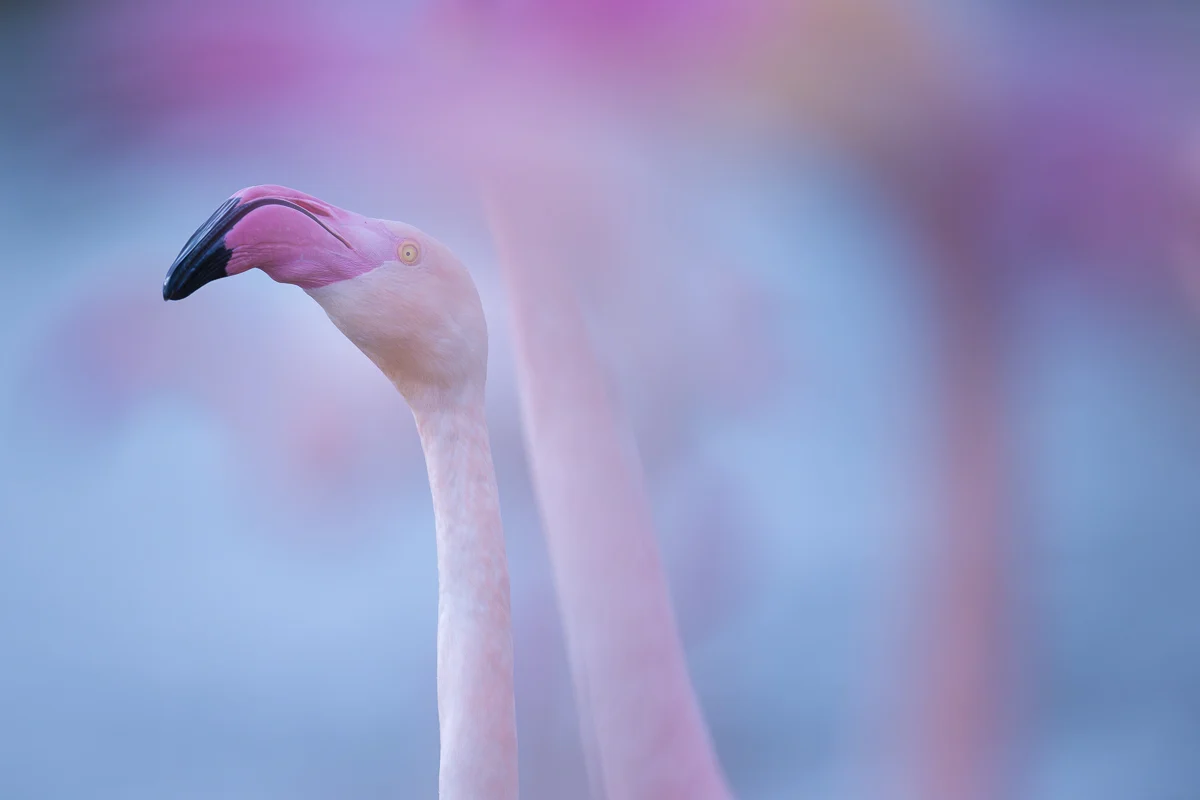
In the evolving landscape of wildlife photography, what lies just beyond the realm of sharp focus is increasingly recognized for its subtle yet profound power in shaping an image’s atmosphere. Rather than merely presenting a subject with clinical clarity, the deliberate blurring of the foreground serves as a sophisticated compositional tool, guiding the viewer’s eye, evoking a specific mood, and injecting an emotional depth that sharpness alone often fails to convey. This technique moves beyond simple documentation, transforming a fleeting moment into a meaningful visual narrative that expresses and suggests as much as it shows.
The Art of Obscurity: Beyond Pin-Sharp Focus

Foreground blurs are a refined photographic technique involving the strategic placement of an object or element between the camera lens and the primary subject. When rendered out of focus, this foreground element creates soft, ethereal blurs that partially drape across the subject without diminishing its visual prominence. Far from being a distraction, these carefully crafted blurs are designed to enrich the image, layering it with depth, spatial awareness, an intriguing sense of mystery, and nuanced emotional resonance. This approach aligns with a growing trend in nature photography that prioritizes artistic interpretation and emotional impact over purely scientific recording.
Historically, photography’s primary function was often seen as capturing reality with utmost fidelity. However, as the medium matured, artists began to explore its expressive potential. Echoing the soft focus and atmospheric qualities of Impressionist painting, contemporary wildlife photographers are now leveraging technical advancements to achieve painterly effects directly in-camera. The use of foreground blur, or bokeh, creates a sense of authenticity, as if the scene were meticulously composed brushstroke by brushstroke on a canvas. It invites the viewer to engage more intimately, to decipher the subtle cues embedded within the scene, and to connect with the subject on a deeper, more empathetic level.
When executed effectively, foreground blurs are not haphazard but meticulously planned to direct the viewer’s gaze along a deliberate visual pathway. The main subject remains the anchor of this visual journey, yet the presence of blurs introduces understated information about the environment, the prevailing mood, or even the underlying narrative context of the scene. This technique transcends a mere compositional trick; it evolves into a potent storytelling device that compels the viewer to scrutinize the image more closely, fostering a profound connection with the photograph as a cohesive entity.

Technical Mastery: Achieving the Foreground Blur
Mastering foreground blur relies on a combination of photographic principles, primarily aperture, focal length, and the distances between the camera, the foreground element, and the subject. A wider aperture (smaller f-number, e.g., f/2.8, f/4) is crucial, as it creates a shallower depth of field, rendering elements outside the plane of focus beautifully blurred. Telephoto lenses, commonly used in wildlife photography, naturally compress perspective and enhance background/foreground separation, making them ideal for this technique. The closer the foreground element is to the lens and the further the subject is from that element, the more pronounced the blur will be.
Achieving the perfect balance often requires switching to manual focus, as the camera’s autofocus system may struggle to lock onto the intended subject when a blurred element is significantly closer to the lens. While manual focusing demands precision, it grants the photographer complete creative control over which elements are sharp and which are diffused. Photographers might accept a slight reduction in absolute sharpness of the subject in favor of the overall artistic quality and emotional impact conveyed by the soft, atmospheric foreground. This deliberate choice underscores the artistic intent, prioritizing mood and narrative over technical perfection alone.

Natural Elements: The Photographer’s Palette
The wilderness itself offers an inexhaustible array of natural elements that can be creatively harnessed to produce foreground blurs. Photographers must be opportunistic, experimenting with whatever is available in the immediate environment. This can include:
- Vegetation: Branches, leaves, flowers, tall grasses, or dense underbrush can create soft, organic veils. For instance, in the example of the Pyrenean capercaillie, local shrubs and underbrush form a natural filter, adding depth and a sense of concealment. The low, crepuscular light of early morning further enhances this effect, casting long shadows and imbuing the forest scene with quiet mystery, transforming the photograph from mere documentation into evocative storytelling.
- Environmental Features: Water, snow, or geological formations can be used. The photograph of vultures, for example, taken at a feeding site in the Pyrenees, showcases how even other animals can serve as foreground elements. While precise overlaps are rare, the presence of multiple individuals can create dynamic, blurred layers, hinting at the bustling activity of the scene. Similarly, a flock of flamingos in a shallow lagoon can offer a myriad of blurred forms and colors in the foreground, creating a vibrant, abstract impression.
- Light and Shadow: Beyond physical objects, the interplay of light and shadow itself can act as a foreground element. By carefully adjusting exposure and white balance, a photographer can sculpt the scene, creating contrast between illuminated and shaded areas. This reinforces three-dimensionality and subtly guides the viewer’s eye to the focal point, as seen in the photograph of a goshawk, where light and shadow speak with both clarity and depth.
These elements, when used judiciously, allow for a minimalist aesthetic that nonetheless conveys a rich sense of the surrounding environment. They can hint at the subject’s relationship with its habitat, or suggest the specific moment of capture—and by extension, the animal’s behavior and habits. This layering of visual cues allows the viewer to infer more than what is explicitly shown, creating a deeply immersive experience.

Crafting the Narrative: Scene and Subject Control
The application of foreground blur is heavily influenced by the setting and the degree of control a photographer can exert. In certain scenarios, such as photographing less skittish species from a hide, photographers may have the luxury of subtly arranging or recreating elements within the scene. This allows for meticulous planning, shaping the environment according to an artistic vision and carefully pre-visualizing the shot.
However, many wildlife encounters are unpredictable, demanding a more reactive approach. In these "photographic hunts," control is minimal, and ethical considerations for the animal’s well-being are paramount. The photographer must approach cautiously, prioritize the animal’s comfort, and often, the best strategy is simply to wait. This patience, this "art of waiting," becomes an integral part of the creative process, fostering a unique and serendipitous interaction with the wild. As exemplified by images of razorbills on a cliff edge or a majestic fallow deer emerging from dense foliage, these reactive situations imbue the photography with a raw authenticity. The unpredictable nature of the environment and the animals themselves adds an element of excitement and challenge, demanding a high tolerance for failure but often yielding the most significant and unexpected rewards. This intrinsic link to direct wildlife observation is what many photographers find most appealing, making the photographic act an extension of their naturalistic engagement.

Genre and Application: Where Blurs Thrive
While foreground blurs are a versatile technique, they find their most harmonious application in certain genres of wildlife photography. Portrait photography, where the subject is often relatively stationary and the focus is on conveying character and mood, is particularly well-suited. The ethereal atmosphere created by soft blurs naturally complements the intended emotional weight of the image, adding an almost dreamlike quality to portraits of animals like the Arctic fox or the European bison.
Conversely, in highly dynamic scenes—such as birds in flight, mammals in pursuit, or rapid action sequences—the transient nature of events significantly limits the opportunities for deliberate compositional intervention with foreground blurs. The speed at which these moments unfold often makes it nearly impossible to precisely position foreground elements or to achieve the desired blur effect without sacrificing the critical sharpness of the moving subject. While some motion blur might be incorporated through slower shutter speeds, the controlled, static foreground blur is largely impractical in such high-octane scenarios. The challenge then shifts from creating atmospheric depth to capturing peak action and conveying dynamism.

Even in less dynamic contexts, the judicious use of blur can enhance a narrative. A red kite soaring against a blurred backdrop of trees might not have a foreground blur, but the principle of selective focus to create atmosphere remains. However, for a stationary kite perched on a branch, foreground branches could be used to frame it artistically, adding a layer of depth and context to its environment.
Typologies of Blur: Techniques and Effects
Foreground blurs can be categorized by their placement and effect, offering photographers a range of artistic choices:

- Proximity to Camera vs. Subject: Objects can be placed very close to the camera for maximum abstraction, creating large, soft, indistinct blobs of color or light that function almost as a frame. Alternatively, placing elements closer to the subject allows them to be more recognizable, adding valuable context or content to the photograph, such as a specific type of flower or blade of grass endemic to the habitat.
- Veils vs. Partial Coverage: Photographers can create soft "veils" that wash over the entire image, imparting a dreamlike quality. Or, they can strategically use blur to partially cover different parts of the animal, often meticulously preserving the subject’s gaze to maintain eye contact and emotional connection with the viewer.
- "Look-Throughs" and "Look-Overs": A "look-through" involves composing the shot by pointing the camera through a small opening in dense foliage or other elements, framing the subject precisely. When such an opening isn’t available, a "look-over" technique involves filling the bottom of the frame with a blurred foreground, anchoring the image and providing a sense of depth and perspective. This is often seen in photographs of animals moving through tall grass, like a fallow deer partially obscured by the soft blades.
Regardless of the specific type of blur, photographers must be prepared to switch to manual focus when autofocus struggles with the foreground elements. While this may sometimes result in a slight loss of minute detail in the subject, the trade-off is often a more artistic, evocative image that communicates beyond mere factual representation.
The Broader Impact: Conservation, Competitions, and Artistic Evolution
The increasing adoption of foreground blurs and other atmospheric techniques marks a significant evolution in wildlife photography. This shift from purely documentary capture to artistic expression has profound implications across several domains.

Firstly, by imbuing images with emotional depth and a sense of mystery, these photographs can foster a stronger emotional connection between viewers and the natural world. This emotional resonance is crucial for conservation efforts, as people are more likely to protect what they feel connected to. Images that evoke wonder, vulnerability, or the serene beauty of wildlife can serve as powerful advocacy tools, raising awareness and inspiring action. Environmental organizations and conservationists often highlight such evocative imagery for its ability to transcend scientific data and touch the human heart.
Secondly, this artistic approach is gaining significant traction and recognition in prestigious wildlife photography competitions. Judges are increasingly looking beyond mere technical perfection, valuing creativity, originality, and the ability of an image to tell a story or evoke an emotion. Photographs utilizing foreground blurs often stand out for their artistic merit, demonstrating a photographer’s mastery of composition, light, and narrative. Awards like Wildlife Photographer of the Year or Nature Photographer of the Year frequently feature images that employ such techniques, signaling a broader acceptance and celebration of artistic interpretation within the genre. Experts in photojournalism and visual storytelling frequently note that images with a strong emotional narrative tend to resonate more deeply with audiences and often garner greater critical acclaim.
Finally, foreground blurs are entirely compatible with a myriad of other creative techniques related to composition or light. They can be combined with intentional over- or underexposure to create dramatic effects, movement blur from slower shutter speeds to convey dynamism, backlighting to sculpt subjects with light, double exposures for abstract impressions, and other forms of abstraction. This versatility makes it a compelling technique for photographers seeking to push the boundaries of their craft and develop a unique aesthetic.

In conclusion, foreground blurs represent a potent and broadly applicable creative technique. They empower photographers to move beyond the literal, allowing for improvisation and inspiration in diverse contexts, from controlled environments to serendipitous encounters in the wild. This technique offers a fresh and original way to photograph even familiar species, breathing new life into recurring subjects. Used by masters and visionaries throughout photographic history, it is a powerful invitation to explore the artistic potential inherent in every wildlife encounter. Any photographer seeking to enrich their visual storytelling and evoke deeper emotions in their audience is strongly encouraged to give it a try.
