
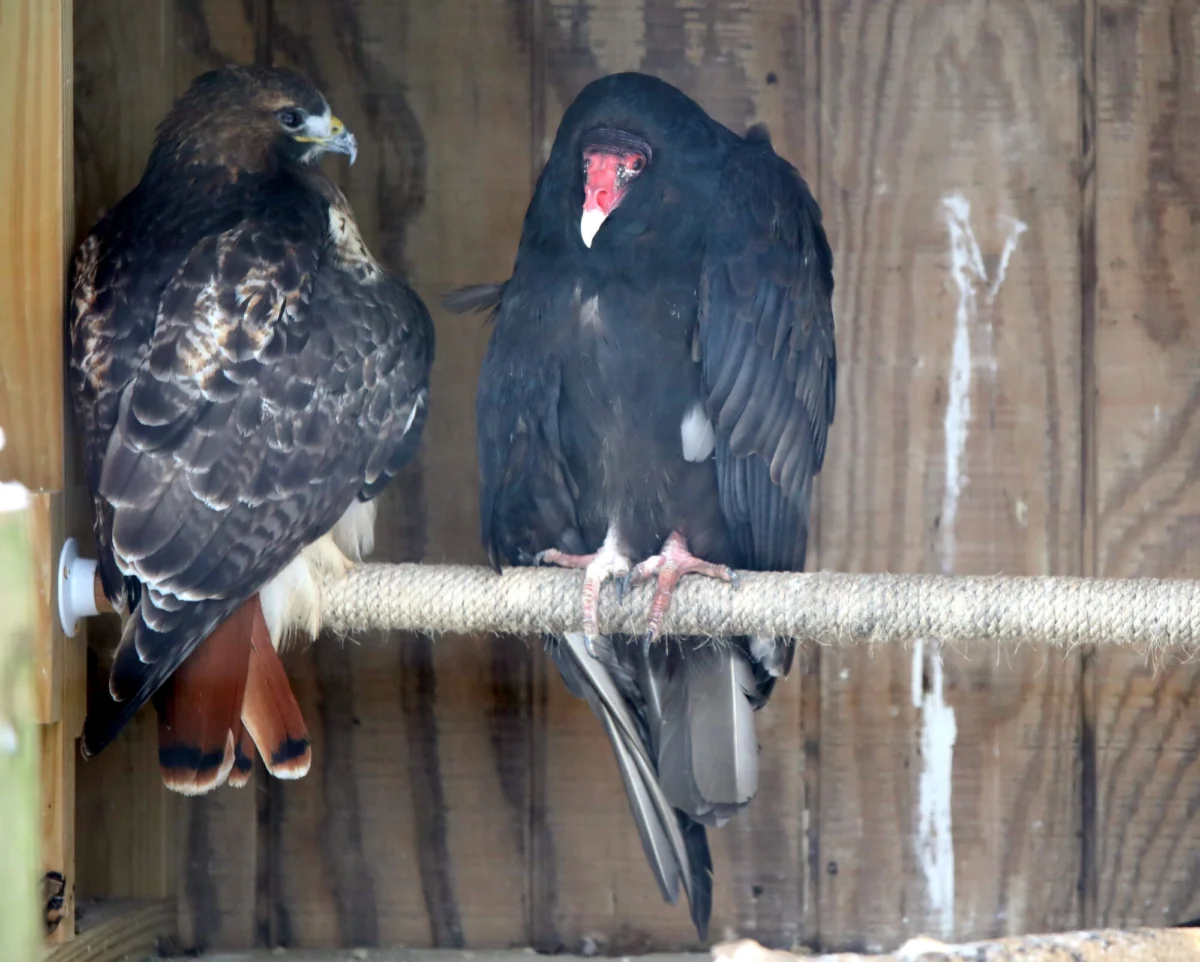
The extraordinary capacity for connection, often perceived as a uniquely human trait, finds a compelling parallel in the animal kingdom, demonstrating that companionship can transcend species boundaries and forge bonds of remarkable depth. At the Elmwood Park Zoo in Norristown, Pennsylvania, the story of Stan, a Turkey Vulture, and Hunter, a Red-tailed Hawk, serves as a profound testament to this phenomenon. These two avian residents, both brought to the zoo due to debilitating injuries sustained in the wild, have cultivated an enduring friendship that has captivated zookeepers and visitors alike for over a decade. Their shared aviary has become a sanctuary, not just for their physical recovery, but for the development of a mutualistic relationship that defies conventional expectations.
Stan, a 20-year-old female Turkey Vulture, and Hunter, a 22-year-old female Red-tailed Hawk, are living proof that shared vulnerability can be a powerful catalyst for connection. Both birds arrived at the zoo with severe wing injuries that permanently limited their ability to fly. These injuries, inflicted by human actions, rendered them non-releasable and necessitated lifelong care. It was within the confines of their shared enclosure, designed to accommodate their physical limitations, that an unexpected alliance began to blossom.
A Shared Past of Injury and Resilience
The narrative of Stan and Hunter’s friendship is intrinsically linked to their individual journeys to the Elmwood Park Zoo. Hunter’s arrival predates Stan’s by just over a year. She was transferred to the zoo in July 2005 from a now-defunct rehabilitation center. Her injury was a direct consequence of human cruelty: an air-rifle pellet lodged in her right wing. The impact fractured her humerus, the bone in the upper arm, and due to the severity and nature of the damage, it never healed correctly. This left Hunter with a permanent impairment, preventing her from soaring through the skies as nature intended.
Stan’s story mirrors Hunter’s in its tragic origins and its fortunate conclusion. She arrived at the zoo in August 2005, a month after Hunter, via Tri-State Bird Rescue & Research, a reputable avian conservation organization. The Newark Police Department had discovered Stan with a pellet lodged in her right wing. Similar to Hunter, this injury likely resulted in fractures to her radius and ulna, bones in the forearm. The healing process for Stan was also compromised, leading to a permanent reduction in her flying capacity.
These parallel circumstances, the shared experience of being injured by human carelessness and the resulting permanent loss of flight, appear to have laid the foundation for their remarkable bond. Confined to an environment where flight is not a prerequisite for survival or social interaction, Stan and Hunter found common ground in their shared limitations. This shared vulnerability fostered an environment of mutual reliance and comfort, allowing them to form a deep and lasting connection.
The Development of an Unconventional Companionship
For at least the past ten years, the Elmwood Park Zoo staff has observed Stan and Hunter as being “bonded.” This term, used by animal care professionals, signifies a strong and consistent social attachment between individuals. Their shared aviary, a spacious enclosure designed to provide ample room for ground movement and limited flight, has become the stage for their remarkable interspecies relationship.
The zoo’s decision to house these two predators together, while unusual, has proven to be a serendipitous choice. In the wild, Turkey Vultures and Red-tailed Hawks occupy different ecological niches and would rarely interact in such close proximity. Vultures are primarily scavengers, while hawks are active predators. However, within the controlled environment of the zoo, and with their shared physical limitations, their natural instincts have been redirected and adapted.
Their interactions are characterized by a gentle camaraderie that belies their predatory nature. One of the most heartwarming observed behaviors is food sharing. When enrichment items or meals are provided, Hunter, despite her natural hunting prowess, will often gather the food and present it to Stan. This act of sharing is a significant deviation from typical predatory behavior and highlights the depth of their bond.
Furthermore, the pair engages in allopreening, a behavior where individuals groom each other’s feathers. This is a common social bonding activity among many bird species, reinforcing social ties and promoting hygiene. Seeing a hawk and a vulture engage in this mutual grooming further underscores the unique nature of their friendship.
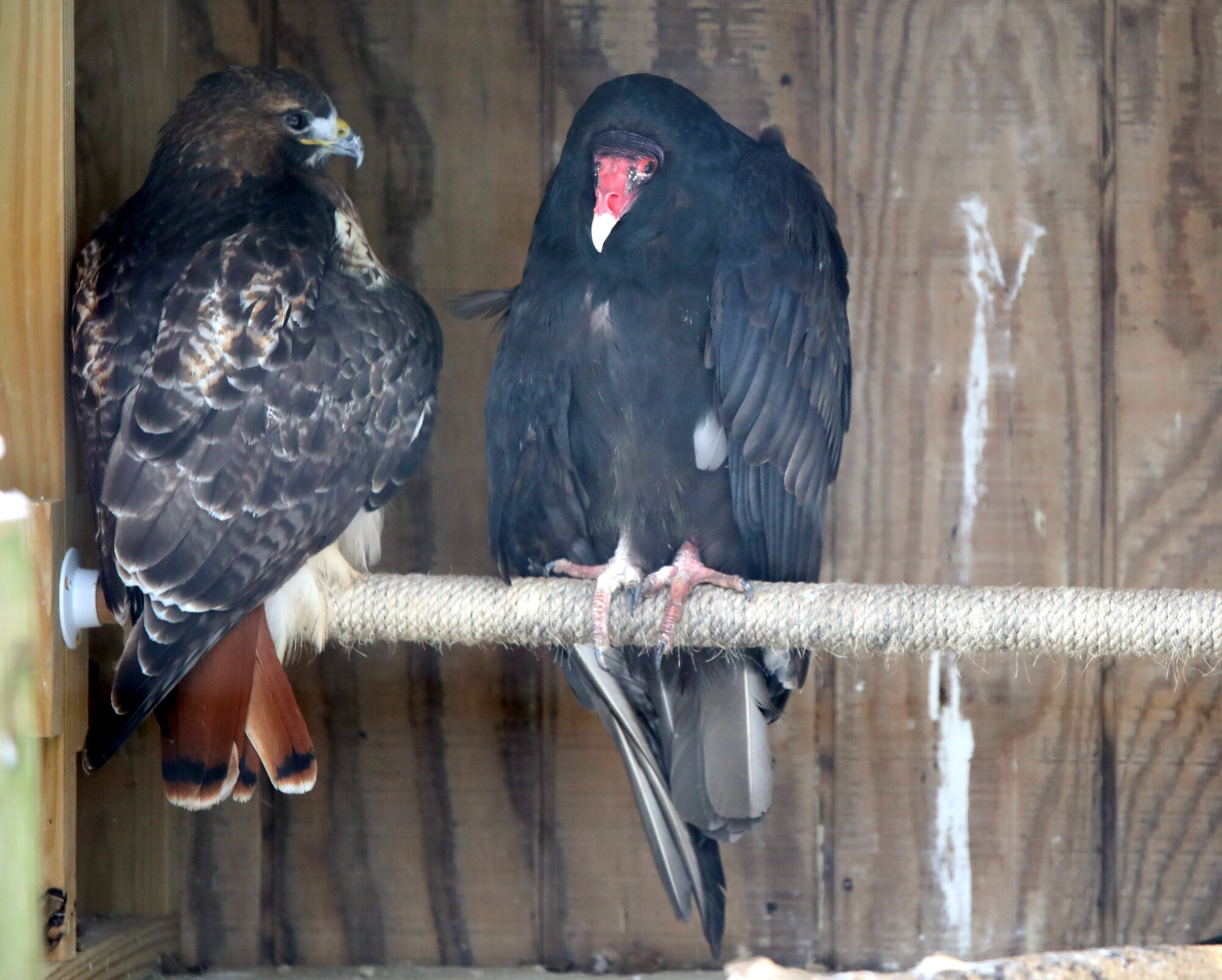
Perhaps the most striking display of their bond occurs when Hunter lays eggs. Although the eggs are infertile and cannot hatch, Stan has been observed to sit on them, mimicking a brooding behavior. This protective and nurturing action from Stan towards Hunter’s eggs is a profound indicator of their emotional connection and the extent to which they have integrated into each other’s lives.
Expert Perspectives and Zoo Management
Janet Miner, the photographer whose images captured the essence of their friendship, notes the remarkable nature of their cohabitation. The Elmwood Park Zoo’s decision to house them together was a deliberate one, aimed at providing a stimulating and enriching environment for these injured animals. Zookeepers recognized the potential for social interaction and the positive impact it could have on their well-being.
“It’s just as remarkable to see animals form close bonds and find ways to keep connections strong,” Miner commented in the original reporting. This sentiment is echoed by the zoo staff, who have witnessed the evolution of Stan and Hunter’s relationship firsthand.
The zoo’s aviary management for Stan and Hunter prioritizes their individual needs while fostering their social connection. The enclosure is designed to mimic natural habitats, providing perching opportunities, varied substrates, and ample space for movement. Enrichment activities are regularly implemented to stimulate their natural behaviors and prevent boredom. The successful integration of these two distinct species suggests a well-thought-out habitat design and a deep understanding of their behavioral needs by the zoo’s animal care team.
The fact that they are housed together without other birds in their enclosure likely played a significant role in their development of a strong bond. In a multi-species environment, their interactions might have been different. By having each other as their primary social companions, they have developed a reliance and comfort that is unique to their pairing.
Broader Implications and Conservation Messaging
The story of Stan and Hunter offers valuable insights into animal behavior, interspecies relationships, and the impact of human actions on wildlife. Their friendship serves as a powerful reminder of the sentience and emotional complexity of animals. It challenges anthropocentric views and encourages a more empathetic understanding of the creatures with whom we share the planet.
From a conservation perspective, the story of these two injured birds highlights the devastating consequences of wildlife cruelty, such as the pellet injuries sustained by both Stan and Hunter. It underscores the importance of responsible gun ownership and the need for greater public awareness regarding the protection of wild animals. Rehabilitation centers and zoos play a crucial role in providing care for injured wildlife, but prevention remains the ultimate goal.
The Elmwood Park Zoo’s decision to showcase Stan and Hunter’s unique bond also serves an educational purpose. Visitors are exposed to a compelling narrative that goes beyond simple observation of animals. It encourages reflection on the nature of friendship, resilience, and the unexpected connections that can form in life. The zoo effectively uses this story to advocate for wildlife conservation and responsible stewardship of the natural world.
A Legacy of Unconventional Love
Stan and Hunter’s enduring friendship is a testament to the power of companionship. Their story, born from shared trauma and nurtured in a sanctuary of care, transcends the typical boundaries of the animal kingdom. They have found solace, comfort, and a deep, abiding connection in each other’s presence. Their shared aviary is more than just an enclosure; it is a testament to the remarkable capacity for love and friendship that exists, often unexpectedly, in the most unlikely of pairings. As they continue to live out their days side-by-side, Stan and Hunter offer a profound and heartwarming message about the universal language of connection, a language spoken fluently by two birds who, against all odds, found a true friend in one another. Their continued cohabitation and evident affection are a beacon of hope, demonstrating that even in the face of adversity, the bonds of friendship can flourish and endure.
