
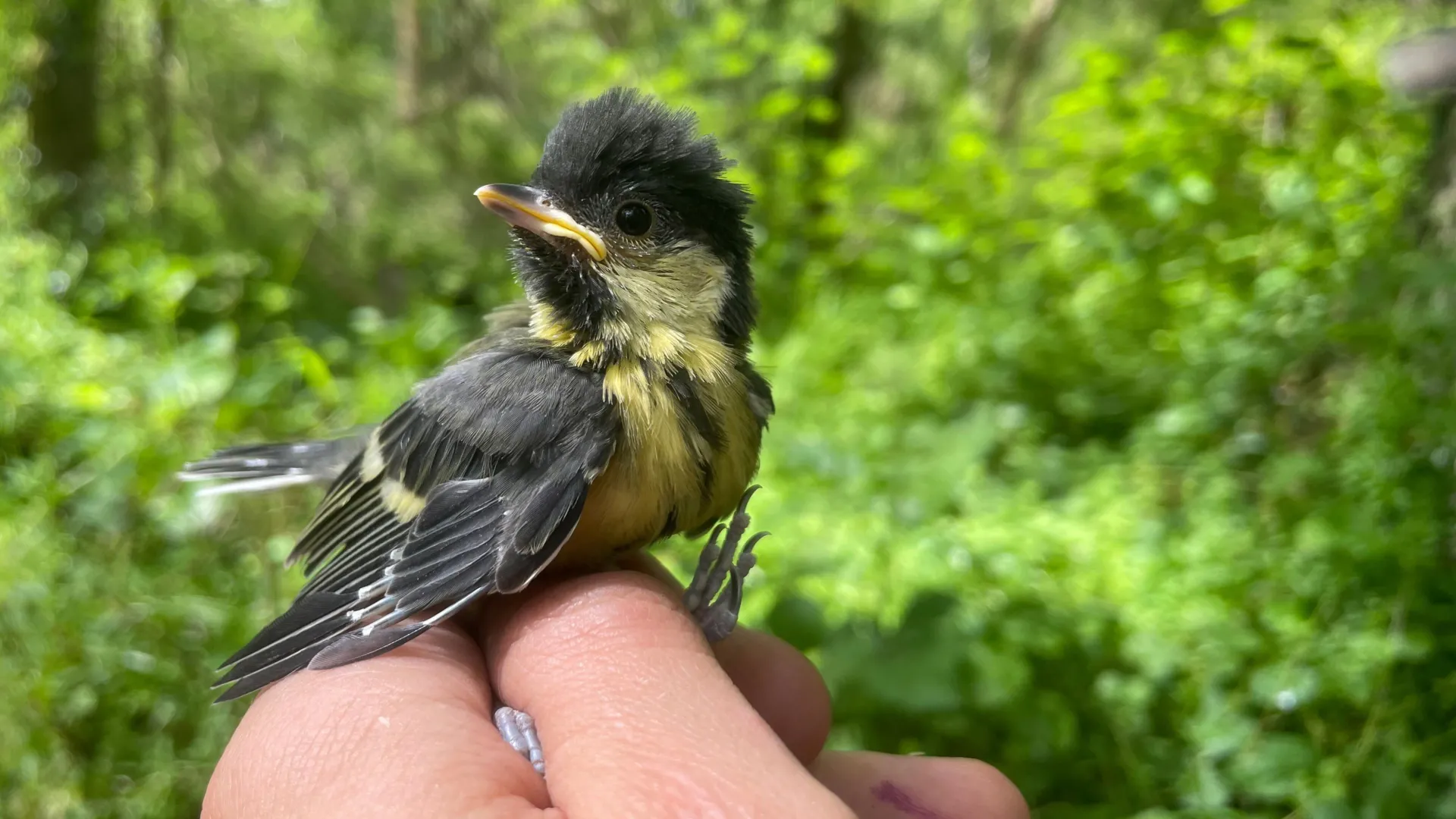
A new study from the University of Oxford, published on March 11, reveals that sudden cold spells and heavy rainfall can significantly slow growth and reduce survival chances for young great tits (Parus major) in the UK. The research, which draws on an unprecedented 60-year dataset, also suggests a crucial adaptive strategy: birds that begin breeding earlier in the season may successfully avoid many of the most harmful effects linked to these increasingly frequent weather extremes. This finding offers a glimmer of hope amidst growing concerns about climate change’s impact on vulnerable wildlife populations, highlighting both the challenges and potential coping mechanisms for species adapting to a rapidly changing environment.
The findings are the culmination of an unusually long-term ecological study, rooted in the meticulously maintained records from Oxford’s Wytham Woods, a site renowned globally for its continuous, multi-generational ecological research. Scientists delved into six decades of data, encompassing detailed life histories of over 80,000 individual wild great tits. This vast biological dataset was then meticulously paired with comprehensive daily weather records, allowing researchers to pinpoint the precise timing and intensity of climatic events. By identifying the coldest, wettest, and hottest days within each breeding season, the team was able to quantify how often these extremes coincided with critical stages of chick development and, crucially, how they influenced body mass when nestlings fledged—a well-established and vital predictor of a young bird’s subsequent survival into adulthood.
Six Decades of Ecological Insight: The Wytham Woods Legacy
The Wytham Woods study, initiated in 1947 by David Lack, has become one of the world’s longest-running and most comprehensive studies of a single wild population. Located just a few miles west of Oxford city centre, this ancient semi-natural woodland provides an ideal laboratory for understanding ecological processes over generational timescales. For over 70 years, researchers have systematically monitored the great tit population, marking individuals, recording breeding attempts, clutch sizes, hatching dates, and the ultimate success of each brood. This unparalleled continuity of data collection is what lends particular weight and robustness to the recent findings. The ability to track individual birds across their lifespans and link their reproductive success to daily environmental variables provides an invaluable lens through which to observe the subtle and complex interactions between climate, ecology, and evolutionary adaptation. The 60-year span of the analyzed dataset, covering 1960 to 2020, allows for the detection of long-term trends and the impact of fluctuating weather patterns that shorter studies might miss.
The Perils of Early Life: Cold and Rain’s Detrimental Impact
The study unequivocally revealed that severe cold during the first week after hatching is particularly detrimental to great tit chicks. During this delicate phase, newly hatched chicks are highly altricial, meaning they are born helpless and lack the ability to regulate their own body temperature (thermoregulate) effectively due to an absence of insulating feathers. Consequently, in cold conditions, a disproportionate amount of their metabolic energy must be expended simply to maintain core body temperature, diverting vital resources away from growth and development. This energy deficit can have profound and lasting consequences on their physiological state.
As chicks mature and begin to develop feathers, the threat shifts, with heavy rainfall becoming the greater hazard. Intense precipitation can not only expose the nestlings to hypothermia but also significantly impede the parents’ foraging efforts. Both extreme cold and heavy rain were found to reduce body mass at fledging by as much as 3%. While this percentage might seem modest, even small deficits in body mass at fledging can translate into significantly reduced chances of survival in the challenging post-fledging period, where young birds must learn to forage independently and avoid predators.
Compounding Threats: The Synergistic Effect of Heat and Rain
The research further uncovered a particularly concerning synergistic effect when intense heat occurs concurrently with heavy rain. In such scenarios, the impact on nestling development becomes drastically more severe. The study found that fledging mass could plummet by up to 27%, especially for broods that hatch later in the breeding season. This severe reduction underscores the complex and often interacting ways in which different weather extremes can combine to amplify stress on developing birds. While the exact mechanisms for this synergistic effect require further investigation, it is plausible that the combination of high humidity from rain and elevated temperatures creates an environment conducive to pathogen growth, or that the extreme conditions further limit parental foraging, leading to acute nutritional stress.
Lead researcher Devi Satarkar from the Department of Biology at the University of Oxford emphasized the adaptive shifts already observed in these populations. "In the Wytham population, great tits have already adjusted to warmer springs by breeding earlier to track the peak abundance of their main prey, caterpillars," Satarkar stated. "This overall earlier laying is demonstrably beneficial, buffering them against many impacts of extreme weather. However, it also inherently exposes them to cold spells early in the season, which can still be unpredictable in early spring. Even small early-life deficits can have large implications for survival. It will only get tougher for birds to keep up with these adaptive changes as extreme weather increases in frequency and intensity with climate change." Her comments highlight the delicate balance species must strike when adapting to environmental shifts, where a beneficial adaptation to one aspect of climate change might inadvertently expose them to new vulnerabilities.
Ecological Mechanisms: Why Weather Matters to Baby Birds
The biological reasons behind these observed impacts are multifaceted. As previously noted, newly hatched chicks possess limited thermoregulatory capabilities. Their lack of fully developed feathers means they are highly susceptible to heat loss in cold conditions. Parents must spend more time brooding, or the chicks must huddle together more tightly, burning precious energy reserves that would otherwise be allocated to growth.
Beyond direct physiological effects, bad weather critically impacts food provision. Extreme cold and heavy rain limit how often parent birds can safely and effectively leave the nest to search for food. For great tits, the main food source for their rapidly growing chicks is caterpillars, which are rich in protein and fat. Heavy rainfall can physically dislodge caterpillars from plants, making them less accessible or even washing them away, thereby reducing the available prey base at a time when chicks have exceptionally high energy demands. This reduction in food availability, coupled with increased energy expenditure for warmth, creates a double burden that severely compromises chick development and survival prospects.
The Paradox of Warmth: A Nuanced Finding
One of the more unexpected and nuanced findings of the study was that warmer extremes were, in some cases, linked to heavier fledging weights during the nestling stage. High temperatures are frequently associated with heat stress in many species, particularly in hotter climates. However, in the context of Oxfordshire, the warmer periods identified in the study appear to be relatively mild compared with the more extreme, often lethal, heatwaves observed in southern Europe or other arid regions.
Devi Satarkar further elaborated on this intriguing finding: "Extreme weather events are affecting wild bird populations in complex ways. The level of warmth we see in these heat extremes in Oxfordshire might actually boost growth because it can increase insect activity and visibility—making caterpillars easier to find—while simultaneously allowing parents to forage more extensively and reducing the nestlings’ own thermoregulatory costs. The high water content in caterpillars also helps against dehydration during warmer periods. This contrasts sharply with hotter regions like the Mediterranean, where similar events can exceed 35°C and pose a direct, severe threat to nestlings through heat stress and dehydration." This observation underscores the importance of local context and the precise thresholds at which environmental factors shift from beneficial to detrimental. In the temperate UK climate, moderate warmth might optimize foraging conditions and reduce energy expenditure for chicks, thus promoting growth, whereas in hotter climes, the same degree of warming could push physiological limits.
Adaptive Strategies: The Early Bird Advantage
A critical insight from the study is the protective effect of early breeding. Broods that hatch earlier in spring tend to benefit from occasional warm spells, which often coincide with the peak abundance of caterpillars, and when ambient temperatures generally remain within safe, growth-promoting limits. These early broods capitalize on optimal foraging conditions and milder weather, leading to better growth and higher fledging success.
In stark contrast, birds that breed later in the season face significantly tougher conditions. Even when the warmest days they experience reach similar moderate temperatures of about 16-17°C, their fledglings are, on average, about one-third lighter than those from earlier broods. This disparity highlights that the overall environmental context—including prey availability, cumulative exposure to adverse weather, and the physiological state of the parents—is crucial. Later in the season, the cumulative effects of earlier cold spells or prolonged rainfall might have already depleted prey resources or stressed parent birds, irrespective of the temperature on a given warm day.
Over longer periods, the analysis confirmed that extreme cold and rainfall slightly reduce the odds that young birds will survive to adulthood. Conversely, warm extremes, within the Oxfordshire context, can have small but positive effects on survival. Overall, the consistent message is that breeding earlier within a season appears to be a robust strategy that shields many birds from the worst consequences of unpredictable weather fluctuations. This phenological shift in breeding timing is a well-documented response to climate change in many species, as organisms attempt to align their life cycles with increasingly earlier springs.
Broader Implications for Wildlife Conservation
The findings from Wytham Woods carry significant implications far beyond the great tit population. As climate change intensifies, leading to an increased frequency and intensity of extreme weather events globally, scientists stress the growing importance of monitoring small-scale environmental conditions. This includes detailed observation of microclimates within habitats and subtle differences in local habitat structure. For instance, a dense canopy might offer more protection from heavy rain or direct sun, while certain plant species might host caterpillars for longer durations, creating micro-refuges for prey.
This type of granular research is indispensable for guiding effective conservation strategies. Such strategies could include targeted nestbox placement, ensuring boxes are situated in locations that offer maximal protection from prevailing winds, heavy rain, or direct sun exposure. Woodland management practices could also be adapted, for example, by promoting a diverse understory that supports a longer season of caterpillar availability or provides more sheltered foraging grounds for parent birds during adverse weather. The goal is to better protect vulnerable chicks during key stages of development, mitigating the impacts of climatic volatility.
The Road Ahead: Continued Monitoring and Future Challenges
Researchers plan to continue their meticulous monitoring of the great tit population in Wytham Woods. A key question for future investigation is how these weather effects may shift as global temperatures continue their upward trajectory. Heatwaves that are currently moderate and potentially beneficial in Oxfordshire’s temperate climate could eventually cross a critical threshold, becoming harmful as temperatures continue to rise. Understanding this dynamic threshold is crucial for predicting the long-term viability and adaptive capacity of species in a warming world.
The study serves as a powerful reminder of the intricate connections between climate, ecology, and evolution. It highlights the remarkable capacity of species to adapt to changing conditions, as evidenced by the great tits’ earlier breeding, but also underscores the limits of such adaptation in the face of increasingly severe and unpredictable weather. For conservationists and policymakers, the message is clear: understanding and mitigating the impacts of climate change on biodiversity requires not only broad-scale climate action but also highly localized, nuanced ecological research and management strategies tailored to the specific vulnerabilities and adaptive potentials of individual species. The Wytham Woods great tit study, with its rich historical data and forward-looking research agenda, continues to provide an invaluable blueprint for navigating these complex challenges.
