
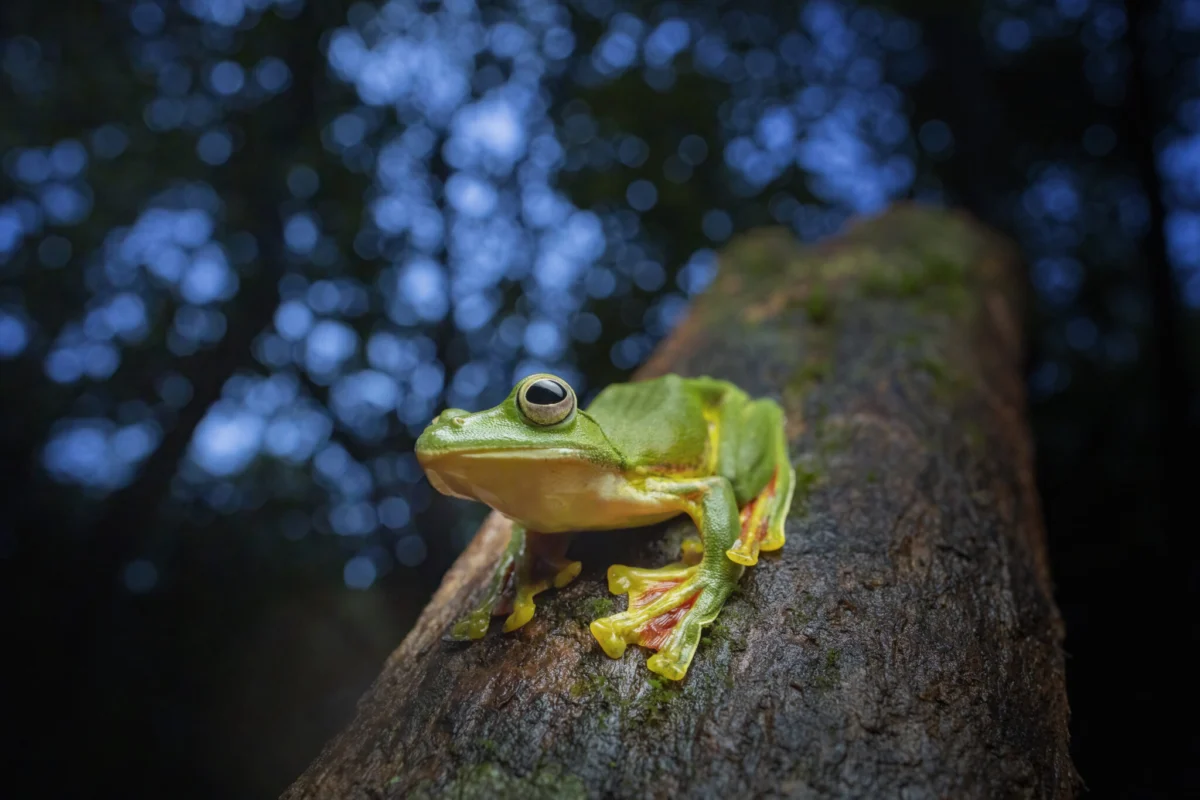
The field of nature photography is continually evolving, with practitioners constantly seeking innovative ways to present the natural world. Among these advancements, the technique of wide-angle macro photography has emerged as a particularly powerful method for creating immersive, storytelling images. This approach transcends traditional close-ups by capturing small subjects within their natural habitat, effectively transporting the viewer directly into the scene and making them feel an integral part of the subject’s world. It meticulously reveals the subject’s intricate details while simultaneously placing them within their broader ecological context, thereby highlighting the delicate and often unseen balance between an organism and its surrounding ecosystem. The resulting images are not merely visually striking; they serve as compelling invitations, encouraging audiences to look closer and experience the natural world from the subject’s unique vantage point. This blend of intimacy and environmental context is driving a significant shift in how nature stories are told visually, moving beyond mere aesthetic appreciation to foster a deeper understanding and connection with biodiversity.
Defining the Genre: Beyond Traditional Macro
Technically, wide-angle macro photography involves utilizing a wide-angle lens at extremely close focusing distances to achieve magnified reproductions of subjects. This distinguishes it from conventional macro photography, which typically relies on dedicated macro lenses designed for 1:1 (life-size) or greater magnification ratios, primarily focusing on the subject’s details with a shallow depth of field that often blurs the background into abstraction. While many wide-angle lenses may not meet the strict definition of "true macro" in terms of magnification ratio, the term "wide-angle macro photography" has gained widespread acceptance within the photographic community to describe this distinct style of imagery. For clarity and simplicity, this guide adopts the widely recognized nomenclature.

The genesis of this technique can be traced back to a growing desire among nature photographers and conservationists to convey more than just anatomical precision. As early as the late 20th century, a subtle shift began to occur, moving away from purely taxonomic representations towards images that emphasized the interdependence of species and their environments. This artistic and scientific evolution laid the groundwork for wide-angle macro, allowing photographers to bridge the gap between microscopic detail and panoramic context, thereby offering a more holistic view of nature’s smaller inhabitants. The increasing availability of specialized lenses with close-focusing capabilities further accelerated its adoption, transforming it from a niche experiment into a recognized and celebrated genre.
The Significance of Context and Conservation
The emphasis on showing a subject within its habitat is not merely an artistic choice; it carries profound implications for environmental storytelling and conservation. By illustrating the intricate connection between a creature and its environment, wide-angle macro images serve as powerful tools for education and advocacy. For instance, an image of a rare insect nestled amongst specific foliage not only highlights the insect itself but also implicitly underscores the importance of that particular plant species or microhabitat for its survival. This contextualization helps viewers understand that conservation efforts must extend beyond protecting individual species to safeguarding the ecosystems they depend upon.
According to a 2023 report by the International League of Conservation Photographers (ILCP), images that depict wildlife in their natural settings tend to elicit a stronger emotional response and greater public support for conservation initiatives compared to isolated portraits. Such imagery provides a tangible link between abstract environmental issues and the immediate realities of wildlife. Furthermore, the immersive quality of these photographs can foster empathy, encouraging audiences to recognize the inherent value of biodiversity and the delicate balance of natural systems. This is particularly relevant in an era where habitat loss is a primary driver of species extinction, making the visual narrative of "home" more critical than ever.

Essential Tools for the Immersive Shot
Achieving compelling wide-angle macro photographs requires a specific suite of equipment tailored to the unique demands of the genre.
Camera: While the adage "the best camera is the one you already own" holds true for beginners, modern mirrorless cameras offer features that significantly enhance the wide-angle macro experience. Advanced autofocus systems, including animal eye detection and focus tracking, can be invaluable for capturing fast-moving or skittish subjects at close range. Live view and articulating or tilt screens facilitate shooting from challenging low angles without requiring the photographer to contort into uncomfortable positions. Additionally, cameras with superior dynamic range are crucial for balancing the often contrasting light of a brightly lit background and a flash-illuminated subject. Good weather sealing is a practical necessity for field work in diverse environments, while a high burst rate can increase the chances of capturing that perfect moment. While these advanced features simplify the process, a committed photographer can still produce strong images with less sophisticated gear, emphasizing skill over cutting-edge technology. Market trends show a steady increase in sales of mirrorless cameras, with features catering to specialized photography like macro, indicating a growing demand for such capabilities.
Lens: This component is undeniably crucial. A wide-angle lens with an exceptionally low minimum focusing distance (MFD) is paramount. Standard wide-angle lenses typically used for landscapes will not suffice, as their MFDs prevent getting close enough to the subject for significant magnification. Fortunately, several leading brands (e.g., Laowa, Olympus with their specialized macro lenses, and some offerings from Canon, Nikon, and Sony) as well as third-party manufacturers, now produce wide-angle lenses that boast true macro capabilities (1:1 reproduction ratio) or remarkably low MFDs. A lens with a short MFD is essential for filling the frame with your small subject while still including its surroundings, creating an engaging and contextual composition. Without it, the subject can appear insignificantly small, lost within an expansive background. The innovation in lens design, specifically for close-focusing wide-angle optics, has been a key enabler for the widespread adoption of this photographic style.

Flash: An external flash unit is a valuable, often indispensable, addition to the wide-angle macro kit, even when shooting during daylight hours. When narrowing the aperture to ensure both the subject and its environment are in focus (to maximize depth of field), a significant amount of ambient light is lost, leading to underexposure. A flash effectively compensates for this light loss, illuminating the subject. Key features to look for in a flash include both ETTL (Through The Lens) and manual modes for maximum control, a fast recycle time to capture sequential shots, a guide number above 60 for ample power, high-speed sync (HSS) capability for shooting at faster shutter speeds than the camera’s native sync speed, and remote operation functionality for off-camera lighting setups. These features provide the versatility needed to overcome diverse lighting challenges in the field.
Diffuser: To mitigate harsh highlights and create soft, flattering illumination on the subject, particularly when it is wet or glistening, a diffuser is essential. Traditional macro diffusers (typically 90–100 mm in size) designed for longer macro lenses often present challenges with wide-angle setups. Without adequate base support, the front section of such a diffuser can droop, or its edges may intrude into the wide frame. To circumvent these issues, photographers can either opt for smaller, purpose-built diffusers that remain outside the frame or explore custom-made solutions tailored to their specific wide-angle lens. Smaller diffusers, such as dome diffusers or mini softboxes, are easier to manage with wide-angle lenses, though they may offer less diffusion than larger surfaces. Recognizing that larger diffusion surfaces generally yield softer, more pleasing light, photographers often adapt regular, larger diffusers through creative hacks. This can involve elevating the diffuser’s height using a trigger mounted on the camera, with the flash and diffuser then mounted atop the trigger. Alternatively, disc-style diffusers, which provide effective top-lighting, can be employed. An off-camera flash setup with a diffuser, while challenging to manage solo, offers the greatest flexibility in light placement.
Protective Clothing and Field Gear: Just as with any macro photography expedition, appropriate protective clothing and field gear are non-negotiable. This includes robust rain gear to safeguard both the photographer and equipment from unpredictable weather, sturdy footwear for navigating uneven terrain, and leech guards or gaiters to protect against insects, reptiles, and leeches, allowing for confident movement across forest floors and marshy lands. Finally, reliable mosquito and insect repellents are crucial for comfort and safety during extended periods in nature.
Strategic Timing: Day and Night Operations

The choice of shooting time significantly impacts the aesthetic and narrative potential of wide-angle macro photography, particularly concerning the visibility of the subject’s environment.
Shooting During the Day: The core objective of wide-angle macro photography is to showcase the subject within its habitat, a goal best achieved in daylight hours when the environment is naturally illuminated and visible. One of the genre’s most significant challenges is effectively portraying nocturnal creatures, such as many reptiles and amphibians, within their natural settings. These fascinating subjects often become active and most photogenic in rainforests and other habitats at night, making it inherently difficult to capture their surroundings. Traditional flash photography at night frequently results in images where the subject is well-lit but stands against a dark, featureless background, thereby losing the crucial contextual details of its habitat.
While the natural world’s rhythms cannot be altered, careful planning can mitigate these challenges. Extensive research into a location, the species found there, and their diurnal behaviors (if any) is essential before embarking on such a trip. Consulting local naturalists or field guides can provide invaluable insights into what to expect and where to find subjects active during daylight or crepuscular hours. Crucially, the ethical imperative must always guide practice. The capture or manipulation of animals for photographic purposes, even if they are later released, is widely condemned. The integrity of the image relies on its authenticity; if a subject is not photographed in situ and behaving naturally, it compromises the core principles of responsible nature photography.
Shooting During the Night: As noted, shooting nocturnal subjects without careful lighting strategies can lead to images resembling traditional macro photographs – a well-lit subject against a dark or black background, devoid of environmental context. This approach fundamentally undermines the purpose of wide-angle macro photography, which prioritizes showcasing the habitat.

However, advanced techniques offer solutions to this nocturnal dilemma. The strategic use of multiple flashes can illuminate both the subject and its background, creating a more natural and contextual image. One common method involves using a master trigger on the camera to wirelessly fire multiple slave flashes positioned strategically around the scene. These slave flashes can be placed to illuminate different planes of the background, creating depth and revealing the habitat. Alternatively, constant LED lights, often portable and powerful, can be used to illuminate backgrounds at night, providing a continuous light source that allows for careful composition and exposure adjustments. While managing multiple light sources in the field, especially when working alone, can be complex, mastering this technique unlocks the full potential of wide-angle macro for nocturnal subjects, transforming what would otherwise be a featureless void into a vibrant, contextual narrative.
The Art of Composition: Framing the Narrative
Effective framing and composition are paramount in wide-angle macro photography, as the primary objective is to weave a visual narrative that integrates the subject with its environment. While most standard rules of composition apply, special attention must be paid to balancing the subject, foreground, and background elements.
Incorporating multiple layers or elements of depth is crucial for adding visual interest and conveying the three-dimensionality of the habitat. This can be achieved by placing elements in the immediate foreground, framing the subject, and extending into the background. Experimenting with various angles significantly enhances creativity and drama. Shooting from very low angles, for instance, can include the forest canopy or the vastness of the sky, offering a unique "worm’s eye view" of the subject’s world. Conversely, shooting from slightly higher angles can encompass more of the forest floor, revealing patterns or other small creatures in the immediate vicinity. Utilizing leading lines, such as a blade of grass, a winding branch, or a ripple in water, can effectively guide the viewer’s eye directly to the subject, establishing a clear visual path. Furthermore, incorporating natural elements like leaves, twigs, flowers, or rock formations to naturally frame the subject can enhance the sense of place and draw attention to the main point of interest without distracting the viewer. The thoughtful application of negative space can also highlight the subject by giving it room to breathe within the frame, preventing clutter and emphasizing its presence within the larger scene.

Overcoming Technical Hurdles
Despite its immense storytelling potential, wide-angle macro photography presents a unique set of technical challenges that photographers must learn to navigate.
Distortion: Wide-angle lenses inherently exaggerate perspective, making foreground subjects appear disproportionately large compared to background elements. While this can be a powerful creative tool to emphasize intimacy and scale, it requires careful composition to avoid an unnatural or unsettling appearance. Understanding how specific focal lengths distort perspective is key to using this effect intentionally rather than accidentally.
Depth of Field: At macro focusing distances, the depth of field becomes extremely shallow, even with a wide-angle lens. Balancing sharpness across both the minute details of the subject and the broader context of the background can be difficult. The common solution is to use as narrow an aperture as possible (e.g., f/11, f/16, or even f/22). However, stopping down too far can introduce diffraction, which reduces overall image sharpness. Photographers must make a careful judgment, often balancing the desire for deep focus with the need for optical clarity. Advanced techniques like focus stacking, where multiple images are taken at different focus points and later combined, can provide exceptional depth of field from foreground to background, though this requires a static subject and more post-processing.

Lens Flare and Corner Softness: Wide-angle optics, particularly when combined with extension tubes or adapters (which are sometimes used to achieve even closer focusing distances), can suffer from reduced sharpness at the edges of the frame and increased susceptibility to lens flare. It is generally advisable to avoid extension tubes or adapters if critical sharpness across the entire frame is desired, unless the intention is to specifically achieve a softer, more ethereal effect or intentional flare. Using a lens hood and carefully positioning light sources can help mitigate flare.
Blocking Light: Due to the extremely short minimum focusing distances involved, the lens itself, and sometimes even the photographer’s body, can inadvertently cast shadows on the subject. This necessitates careful positioning and often requires the use of external light sources like flashes and diffusers. A well-designed diffuser can wrap light around the subject, minimizing shadows cast by the lens.
Balancing Lighting: Macro subjects often require strong, direct light to bring out their intricate details, while the wide background needs natural, even exposure to convey its context. Balancing these two distinct lighting requirements in a single frame is a significant challenge. This frequently involves using a flash to illuminate the subject while relying on ambient light for the background, or employing multiple flashes – one for the subject and others to subtly light the background. Blending multiple exposures (one for the subject, one for the background) in post-processing is another advanced strategy.
Working Distance: Wide-angle macro setups often demand incredibly short minimum focusing distances, sometimes mere centimeters from the subject. This proximity makes it challenging to get into position without disturbing the subject or its environment. It requires immense patience, a slow approach, and often necessitates getting very low to the ground.

Size of the Gear: While it is true that larger diffusers generally provide softer, more even light, in wide-angle macro photography, an oversized setup can easily disturb a skittish subject as the photographer approaches. In such situations, a smaller, more discreet diffuser might be more effective, even if it offers a slightly less diffused light. The choice ultimately becomes a pragmatic trade-off between ideal light quality and the ability to approach the subject without causing disturbance, depending on the subject’s behavior and specific field conditions.
Stability: Shooting at such close distances with a wide-angle lens often demands extremely precise focus and steady positioning. Any slight movement by the photographer or the subject is significantly magnified in the final image, potentially leading to blur or missed focus. While handheld shooting is common for flexibility, using a monopod or even a lightweight tripod in certain situations can greatly enhance stability, particularly when using multiple flashes or trying to achieve very precise compositions.
The Enduring Legacy of Immersive Nature Photography
Wide-angle macro photography stands at the intersection of intimacy and grand storytelling, offering a unique window into the miniature worlds that often go unnoticed. It allows photographers to reveal not only the exquisite fine details of tiny subjects but also the rich, expansive environments they call home. While the technique is undeniably challenging—grappling with lighting constraints, short working distances, and compositional complexity—it is precisely through the mastery of these obstacles that true artistry emerges. The right combination of specialized equipment, innovative diffuser use, and thoughtful fieldcraft can transform these challenges into unparalleled opportunities for creative expression.

By meticulously balancing the prominence of the subject with the context of its surroundings, photographers can craft images that are simultaneously personal and expansive. These photographs capture not merely what a creature looks like, but profoundly, where it belongs. This genre transcends purely technical pursuit; it represents a powerful way of connecting the smallest wonders of nature with the larger, interconnected world they thrive in. In an era where understanding and appreciating biodiversity is more critical than ever, wide-angle macro photography serves as a vital tool, inspiring awe, fostering environmental awareness, and ultimately, encouraging a deeper commitment to conservation efforts across the globe.
